

As a gardener, I’ve found that natural soil amendments boost plant health and help the planet. Traditional gardening can harm the environment. But, using sustainable gardening materials cuts down our ecological footprint.
I’ve seen how organic materials make plants healthier and gardening more eco-friendly. This guide will show you the benefits and how to use organic substrates in your garden.
Key Takeaways
- Benefits of using natural soil amendments for plant health
- How sustainable gardening materials reduce environmental impact
- Practical tips for incorporating organic substrates into your gardening practice
- The importance of sustainable gardening for the future
- Initial steps to transitioning to organic gardening methods
What Are Organic Substrates?
As a gardener, I’ve learned how vital organic substrates are. They give plants a healthy place to grow. These materials come from nature.
These eco-friendly mediums help plants grow well and improve soil. Using them means less need for harmful chemicals. It makes gardening better for the planet.
Definition and Importance
Organic substrates come from nature and help plants grow. They include things like peat moss, coconut coir, and compost. They create a good home for plant roots to thrive.
Key benefits of organic substrates include:
- Improved soil structure
- Increased nutrient availability
- Enhanced water retention
- Support for beneficial microbial activity
Common Types of Organic Substrates
There are many organic substrates for gardening. Each has its own benefits. Here are some popular ones:
| Type of Organic Substrate | Description | Benefits |
|---|---|---|
| Peat Moss | A acidic, highly water-retentive material derived from peat bogs | Retains moisture, suppresses weed growth |
| Coconut Coir | A sustainable, renewable resource made from coconut husks | Good water-holding capacity, improves soil aeration |
| Compost | A nutrient-rich material made from decomposed organic matter | Provides essential nutrients, supports beneficial microbes |
Knowing about organic substrates helps gardeners choose the best. They’re key for a green garden. Whether you want better soil or healthier plants, organic substrates are a must.
Benefits of Using Organic Substrates
Using organic substrates in your garden has many benefits. It makes your soil healthier, helps your plants grow better, and supports sustainable gardening.
Improved Soil Health
Organic substrates are key to better soil health. They improve soil structure, fertility, and biodiversity. For example, compost boosts soil nutrients, helping plants grow strong.
A USDA study showed organic amendments increase soil organic matter. This supports a wide range of microbes.
Jeff Cox, a gardening expert, says, “Healthy soil is the heart of a thriving garden. Organic substrates are essential for this.”
“The soil is full of life. Organic substrates help support this ecosystem, which benefits your plants.”
| Soil Characteristic | Conventional Substrates | Organic Substrates |
|---|---|---|
| Nutrient Content | Limited by synthetic fertilizers | Rich in organic matter |
| Microbial Activity | Often disrupted by chemicals | Promotes beneficial microbes |
| Water Retention | Poor water holding capacity | Improved water retention |
Enhanced Plant Growth
Organic substrates lead to better plant growth. They improve soil conditions, making plants stronger and healthier. For instance, tomatoes grown in organic soil produce more fruit than those in conventional soil.
Using biodegradable planting resources like coconut coir or peat moss also helps. They improve soil structure, allowing for better aeration and water penetration. This supports root growth and overall plant health.
Eco-Friendliness
Organic substrates are eco-friendly. They are biodegradable and non-toxic, unlike synthetic options. Choosing organic substrates reduces environmental harm and supports sustainable gardening.
As gardening evolves, organic substrates become more important. They lead to healthier plants, better soil, and a clear conscience.
Choosing the Right Organic Substrate
As a gardener, picking the right organic substrate is key for great plant growth. The best choice depends on your plants, the climate, and your soil.
Factors to Consider
When picking an organic substrate, think about a few important things. First, consider the nutrient needs of your plants. Different plants need different nutrients, so choose a substrate that fits these needs.
Also, look at the water-holding capacity of the substrate. Substrates that hold water well mean you won’t need to water as often. This is great for dry climates.
- Soil type and pH
- Climate and weather conditions
- Type of plants being grown
- Desired level of maintenance
Popular Brands and Options
Many trusted brands offer top-notch organic substrates. Here are some well-liked ones:
| Brand | Product | Key Features |
|---|---|---|
| Brand A | Organic Compost Mix | Rich in nutrients, improves soil structure |
| Brand B | Chemical-Free Potting Soil | Non-toxic, safe for vegetables and herbs |
| Brand C | Eco-Friendly Soil Enhancer | Enhances soil fertility, environmentally friendly |
When picking a brand, think about your garden’s needs and what each product offers. For example, if you want a non-toxic soil enhancer, Brand B’s Chemical-Free Potting Soil is a good pick.
Preparing Organic Substrates for Use
Good gardening starts with the right organic substrates. The quality of your substrate greatly affects plant growth and health.
Steps for Preparation
To prepare organic substrates, follow a few easy steps. First, check the substrate for debris or contaminants. This makes sure it’s clean and safe for your plants.
Then, moisten the substrate as the manufacturer suggests. The right moisture is key for its effectiveness.
- Read the packaging for prep instructions.
- Measure out the right amount for your garden.
- Mix the substrate well, making sure it’s airy.
Tips for Mixing and Enhancing
Improving your organic substrate can make it even better. Add natural amendments like compost or worm castings to increase nutrients.
| Amendment | Benefit | Recommended Amount |
|---|---|---|
| Compost | Rich in nutrients, improves soil structure | 10% of total substrate volume |
| Worm Castings | High in microbial activity, enhances plant growth | 5% of total substrate volume |
Mixing different substrates can create a balanced blend for your plants.
By following these steps and tips, your organic substrates will be ready to support healthy plant growth.
How to Apply Organic Substrates in Your Garden
To get the most out of your organic substrates, it’s key to apply them right. You need to know the best ways to do it, when, and how often.
Best Practices for Application
When using organic substrates, follow some important steps. First, spread the substrate evenly over the soil. This keeps the soil healthy and prevents uneven growth.
- Mix the substrate into the top few inches of soil to help roots grow and absorb nutrients better.
- Don’t overdo it, as too many nutrients can harm your plants.
- Choose the right organic substrate for your plants’ needs.
Timing and Frequency
The right time and how often to apply organic substrates vary. It depends on your plants and the substrate you’re using.
- Start with organic substrates at the beginning of the growing season.
- You might need more during the season, if your substrate breaks down quickly.
- Watch how your plants do and adjust your schedule as needed.
By following these tips and considering your garden’s needs, you can make the most of sustainable gardening materials and eco-friendly growing mediums. This boosts plant growth and helps the environment.
Maintaining Organic Substrates
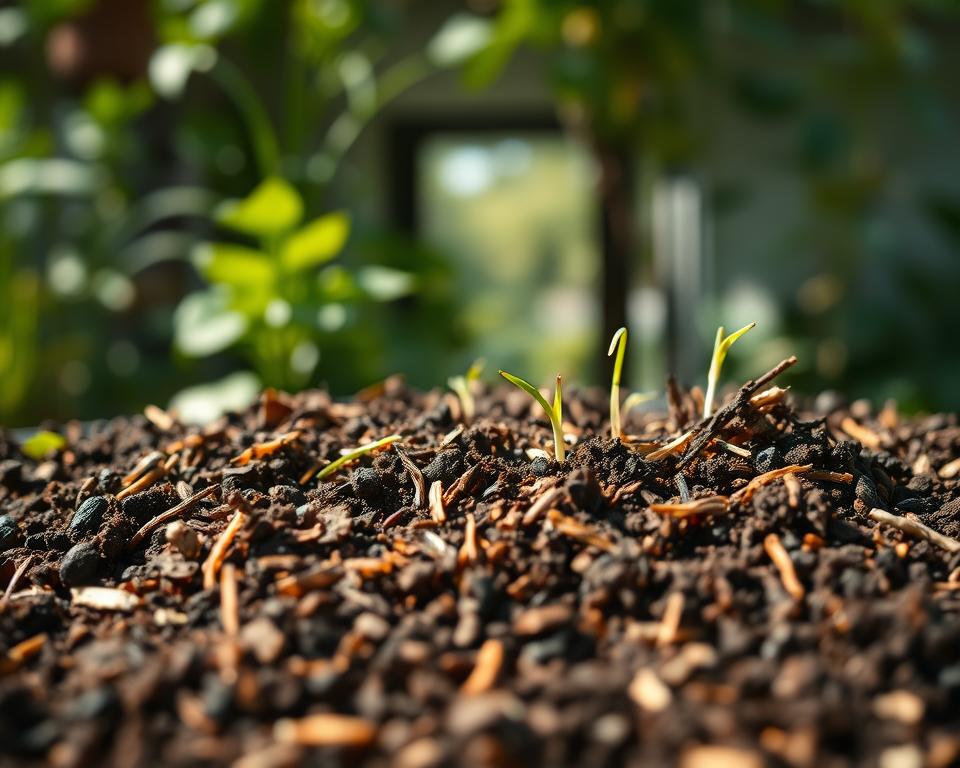
Keeping your organic substrates in good shape is vital for healthy plant growth. Regular care not only extends their life but also boosts their effectiveness. This is something I’ve learned from my gardening journey.
Monitoring Nutrient Levels
It’s important to check the nutrient levels in your organic substrates. Nutrients can deplete over time, harming plant health. I suggest checking these levels often and adding more as needed. Using environmentally friendly fertilizers helps keep your substrates organic while feeding your plants.
Understanding what nutrients your plants need is key. Some plants need more fertilizer, while others do just fine with less. Adjust your care routine based on your plants’ needs.
Avoiding Compaction
Preventing soil compaction is also critical. Compacted soil hinders root growth and reduces substrate effectiveness. To prevent this, I use mulch or other coverings on the soil. Also, try to limit foot traffic and avoid heavy machinery in your garden beds.
“The right maintenance routine can make all the difference in the health and productivity of your garden.”
By following these tips, your organic substrates will keep supporting your plants’ growth. Remember, a thriving garden is not just about the initial setup. It’s about the ongoing care and attention you give it.
Troubleshooting Common Issues
Using organic substrates can sometimes lead to challenges. But, I’ve found some practical solutions to help. These substrates, like biodegradable planting resources and non-toxic soil enhancers, are generally easy to work with. Knowing how to fix common problems can greatly improve your gardening success.
Identifying Problems with Organic Substrates
The first step is to identify the problem. Issues like poor drainage, not enough nutrients, and pests are common. For example, if plants lack nutrients, it might be because the substrate doesn’t provide enough nutrients. It’s important to check the substrate’s composition and make sure it’s right for your plants.
Compaction is another problem that can stop roots from growing. To prevent this, regularly check the substrate’s condition. Adding a non-toxic soil enhancer can help improve soil structure and prevent compaction.
Solutions I’ve Found Effective
Mixing different organic substrates can solve some common problems. For instance, combining a biodegradable planting resource with something like perlite or vermiculite can improve soil health.
Here are some solutions I’ve found to be effective:
- Regularly check and adjust the pH level of your organic substrate to ensure it’s suitable for your plants.
- Use compost tea or other organic fertilizers to supplement nutrient supply.
- Avoid overwatering, which can lead to poor drainage and root rot.
By being proactive and addressing issues early, you can enjoy the benefits of organic substrates. These include better soil health and improved plant growth.
Tips for Specific Plants and Crops
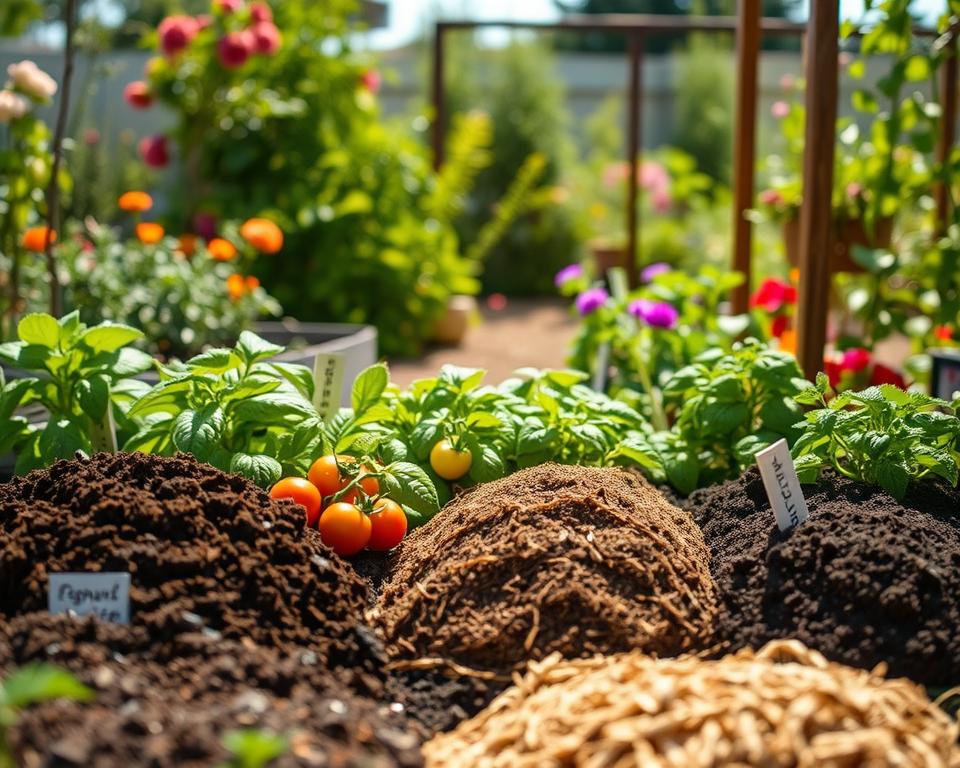
Different plants need different things. Choosing the right organic soil is key for their health. Whether it’s veggies, herbs, flowers, or ornamentals, the right soil makes a big difference.
Vegetables and Herbs
Vegetables and herbs need a balanced organic soil. Look for a mix rich in organic matter and good drainage. A high compost content is great for nutrients.
For heavy feeders like tomatoes and cucumbers, choose a nutrient-rich soil. Herbs like basil and mint do well in well-aerated, moisture-retaining soils. A chemical-free planting substrate keeps your herbs safe to eat.
Flowers and Ornamentals
Flowers and ornamentals need a different kind of soil. They do best in a mix that holds moisture but drains excess water. Berger’s insights on perennials suggest using coconut coir for better soil structure and root growth.
Adding organic fertilizers to the soil can boost flower blooms. It’s also important to check the soil’s pH level. Different flowers like different pH levels. For example, roses do well in slightly acidic to neutral soil.
Conclusion: Embracing Organic Substrates for Gardening Success
As we wrap up this guide, it’s clear that organic substrates are key for sustainable gardening. They help improve soil health and support a balanced ecosystem. This leads to healthy plant growth.
Using organic substrates in our gardens boosts nutrient cycling and reduces environmental harm. It also increases biodiversity. We’ve seen how important it is to prepare and maintain these substrates. The benefits are well worth the effort.
By choosing organic substrates, we can make our gardens both productive and eco-friendly. I urge you to dive into the world of eco-friendly growing mediums. See how it positively changes your gardening journey.