

Aquarium fans often miss the key role of a good substrate. But, a deep sand bed can change the game for your tank’s health. Learning how to set up a deep sand bed right can make your tank a great home for your fish and plants.
A deep sand bed is 6″ to 8″ deep. This depth lets many good bacteria grow. Bulk Reef Supply says the top sand layer has aerobic bacteria. The deeper parts have anaerobic bacteria, which break down nitrates well. This natural process makes your tank healthier and easier to care for.
Key Takeaways
- Create a thriving environment with a well-designed deep sand bed
- Beneficial bacteria colonize in a deep sand bed, improving biological filtration
- A deep sand bed requires careful setup and maintenance to avoid stagnation
- Fine-grain sand is recommended for deep sand beds to prevent detritus buildup
- A clean-up crew is essential for maintaining a healthy deep sand bed
Understanding the Concept of Deep Sand Beds
My journey into aquarium care started with learning about deep sand beds. I found out they are more than just a substrate. They are key to keeping my aquarium healthy.
What is a Deep Sand Bed?
A deep sand bed is a layer of sand that’s 4-6 inches deep in my aquarium. This depth helps beneficial bacteria and organisms thrive. They break down waste products.
This setup is simple yet powerful. It creates a space where these beneficial organisms can live. This makes my aquarium cleaner and healthier.
Benefits of a Deep Sand Bed
Deep sand beds offer many benefits. Improved water quality is a big plus. The bacteria in the sand help break down waste. They also provide a home for some invertebrates and fish.
Another advantage is the aesthetic appeal it adds. A well-kept deep sand bed looks amazing. It serves as a natural backdrop for my aquarium’s decorations and inhabitants.
Key Components Needed for Setup
To set up a deep sand bed, I need a few things. First, I must pick the right substrate for my deep sand bed. The sand I choose must be safe for my aquarium and good for beneficial bacteria.
- High-quality sand that is safe for aquarium use
- A sufficient quantity to achieve the desired depth
- Beneficial bacteria or live sand to kick-start the colonization process
Knowing these components helps me create a thriving deep sand bed. It improves my aquarium’s ecosystem.
Choosing the Right Sand for My Setup
Creating a successful deep sand bed starts with the right substrate. When setting up my aquarium, I must think about several key factors. These ensure the sand supports a healthy environment for my fish and plants.
Types of Sand Suitable for Deep Sand Beds
Not all sands are good for deep sand beds. Some top choices include:
- Aragonite sand, known for its buffering and used in reef aquariums.
- Play sand, a favorite for its fine grain and easy find.
- Pool filter sand, a good option for its coarse grain.
Experts say, “The sand you choose greatly affects your aquarium’s balance.”
“Aragonite sand is great for high bioload aquariums because it buffers pH.” – Aquarium Expert
Grain Size and Its Importance
The sand’s grain size is key for a deep sand bed. Fine-grained sand can compact and cause anaerobic issues if not managed. On the other hand, coarser grains help with water flow and prevent dead spots.
| Grain Size | Characteristics | Impact on Aquarium |
|---|---|---|
| Fine | Compacts easily, can lead to anaerobic conditions | Risk of dead spots, requires careful management |
| Medium | Balances water circulation and stability | Ideal for most deep sand bed setups |
| Coarse | Allows for good water circulation | Less risk of compaction, suitable for certain types of aquatic life |
Where to Purchase Quality Sand
You can find quality sand at local pet stores, aquarium specialty stores, and online. When shopping online, it’s important to read reviews and check the product details. This ensures it fits my aquarium’s needs.
By picking the right sand type and grain size, and buying from trusted sources, I can make a deep sand bed thrive. This will improve my aquarium’s ecosystem.
Preparing My Aquarium for a Deep Sand Bed
A clean and ready aquarium is key for a healthy deep sand bed. Before I start, I make sure my tank is clean and has the right gear. I also check the water’s condition.
Cleaning and Sterilizing the Aquarium
Cleaning and sterilizing my tank is the first step. I remove any debris or waste. Then, I use a method to kill off harmful bacteria.
Key steps in sterilizing the aquarium include:
- Removing all decorations and equipment
- Washing the aquarium with a mild detergent
- Rinsing thoroughly with dechlorinated water
Necessary Equipment for Setup
To set up a deep sand bed, I need specific tools. This includes quality sand, a gravel vacuum, and a water test kit. Investing in the right equipment is important for my tank’s health.
The right equipment helps keep the water quality good. It also makes a healthy space for the deep sand bed.
Establishing Proper Water Parameters
Setting up the right water conditions is vital. I need to check and adjust pH, ammonia, nitrite, and nitrate levels. Regular tests help keep the water perfect.
Key water parameters to monitor include:
- pH levels
- Ammonia and nitrite levels
- Nitrate levels
By keeping the water just right, I make a great home for my deep sand bed.
Layering Techniques for Deep Sand Beds
A well-layered deep sand bed is key to a healthy aquarium. When setting up, it’s important to layer correctly. This ensures your aquarium stays healthy and stable.
How Thick Should My Sand Bed Be?
The thickness of your sand bed matters a lot. A 2-4 inches depth is usually best. This depth helps create the right conditions for Deep Sand Bed Cycles to happen.
A sand bed that’s too thin might not work well. And a bed that’s too thick can cause problems with organic buildup and hydrogen sulfide.
Optimal Layering Methods
Begin with a layer of coarser sand at the bottom. This helps with water flow and keeps the sand from getting too packed. Then, add the main sand bed material, making sure it’s spread out evenly.
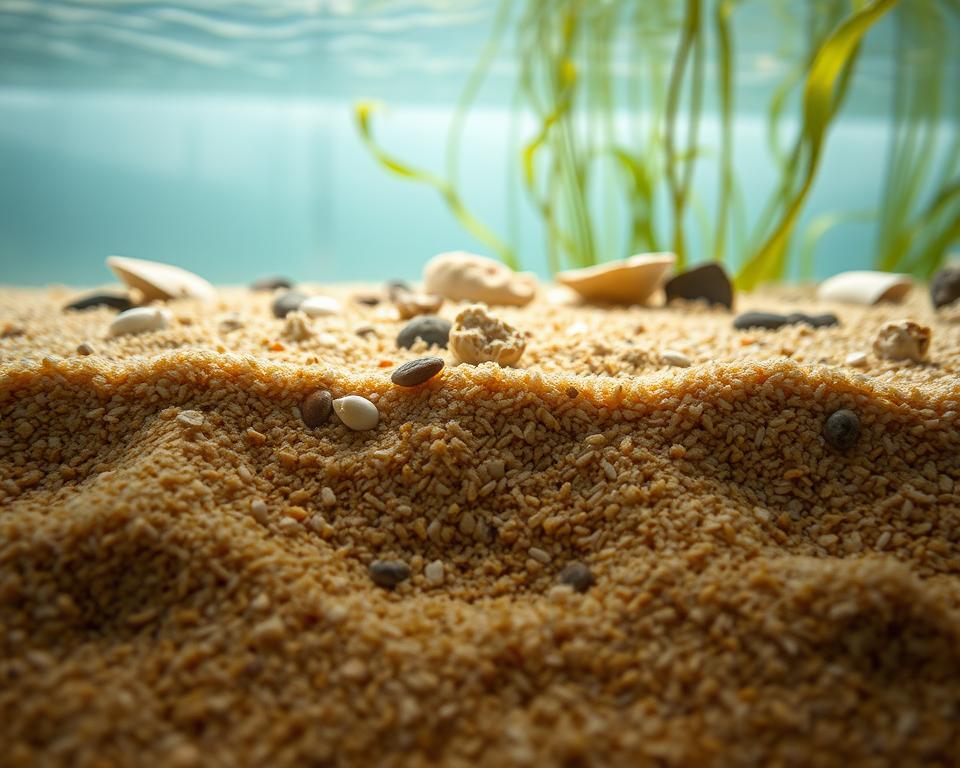
Adding a layer of activated carbon or other materials can also help keep the water clean.
Tips for Achieving Uniform Distribution
To spread the sand evenly, use a sand distribution tool or something similar. This helps avoid uneven spots and keeps the sand bed level.
- Start by adding sand slowly and evenly.
- Use a tool to gently spread the sand across the aquarium floor.
- Monitor the sand bed for any uneven areas and adjust as necessary.
By using these layering techniques, you can make a deep sand bed that supports a healthy aquarium.
Adding Beneficial Organisms to My Sand Bed
Creating a thriving deep sand bed is more than just the right sand. It needs a diverse group of beneficial organisms. These organisms are key to keeping the sand bed healthy and stable. They help create a balanced ecosystem in my aquarium.
Live Sand vs. Dry Sand: What’s Better?
Choosing between live sand and dry sand is my first decision for a deep sand bed. Live sand comes from marine environments and is full of beneficial bacteria and microorganisms. This is a big plus as it starts the biological balance in my sand bed.
Dry sand, on the other hand, needs me to start the biological activity from scratch. While I have more control over the start, it’s a slower and harder process.
Recommended Species for My Deep Sand Bed
To make my deep sand bed thrive, I need to add species that fit well in this environment. Sand-sifting invertebrates like Valvata snails and certain sea cucumbers are great. They help aerate the sand and prevent it from becoming anaerobic.
Also, introducing various bacteria that break down organic matter is important. These bacteria help cycle nutrients in the sand bed. By adding these species, I create a strong and self-sustaining ecosystem.
Benefits of Biodiversity in Sand Beds
Biodiversity is essential for a healthy deep sand bed. A diverse range of organisms makes my sand bed resilient and better at handling changes. A diverse community also boosts the biological processes in the sand, improving water quality and my aquarium’s health.
Also, a biodiverse sand bed is more likely to stay stable and avoid problems like sand compaction and anaerobic conditions. By choosing and adding beneficial organisms carefully, I create a thriving environment. This environment supports the well-being of my entire aquarium.
Maintaining My Deep Sand Bed Environment
A thriving deep sand bed needs regular care to keep your aquarium healthy. I’ve learned the value of consistent upkeep for my deep sand bed aquarium.
Regular Care and Maintenance Practices
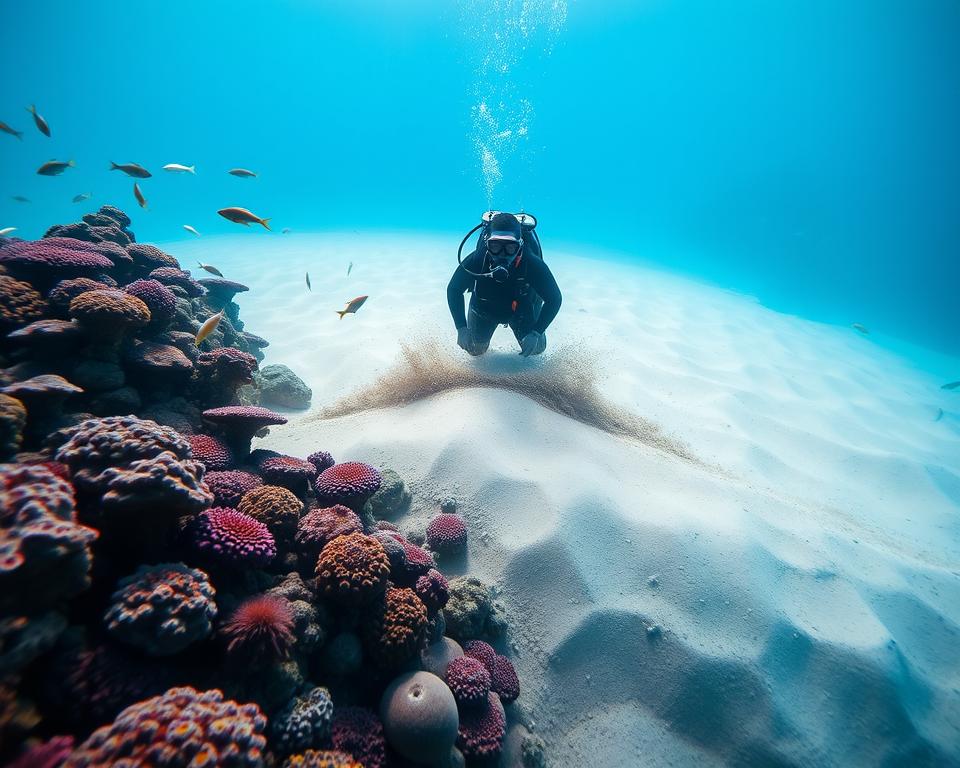
To keep my deep sand bed in top shape, I do several routine tasks. First, I make sure the sand isn’t compacted, which can cause anaerobic conditions. Stirring the top layer of the sand bed regularly helps avoid this.
It’s also key to check the sand bed’s depth and adjust it if needed. The sand can become uneven over time. So, I regularly check the depth and smooth out any uneven spots.
- Regularly check for signs of anaerobic conditions.
- Stir the top layer of the sand bed weekly.
- Monitor sand bed depth and adjust as necessary.
Troubleshooting Common Issues
Even with the best care, issues can pop up in my deep sand bed aquarium. One common problem is anaerobic pockets, which smell bad. To fix this, I stir the affected area to add oxygen back in.
Another issue is detritus building up in the sand bed. To deal with this, I use a gravel vacuum to remove debris gently. This way, I don’t upset the sand bed’s ecosystem.
Signs of a Healthy Deep Sand Bed
A healthy deep sand bed shows signs like sand-sifting invertebrates and a lively microorganism community. These are key indicators of a thriving environment.
Also, a well-kept deep sand bed has a stable ecosystem. It should not have anaerobic conditions or too much algae. By following these tips, my aquarium stays a vibrant and healthy home for its inhabitants.
By following these Deep Sand Bed Maintenance practices and tips, I keep my aquarium a healthy and thriving place for its inhabitants.
Enhancing Filtration with Deep Sand Beds
Adding a deep sand bed to my aquarium has changed the game for water quality. It’s not just for looks; it’s key to a better filtration system.
Impact on Filtration
A deep sand bed affects filtration by helping beneficial bacteria grow. These bacteria are vital for breaking down waste and recycling nutrients. This keeps the water clean and healthy.
- Beneficial bacteria colonization
- Organic waste decomposition
- Nutrient recycling
This setup works well with other filters in the aquarium, like mechanical and biological ones.
Best Practices for Combining with Other Filters
To get the most out of a deep sand bed, pair it with other filters. Here’s how:
- Use a mix of mechanical and biological filters for different waste types.
- Make sure water flows well to avoid dead spots in the sand bed.
- Keep an eye on water quality to adjust the filters as needed.
Monitoring Water Quality
It’s important to check water quality regularly with a deep sand bed. Look at ammonia, nitrite, and nitrate levels. This helps me adjust my filtration system.
Regular water changes are also key for good water quality. With a deep sand bed, a strong filtration system, and regular care, my aquarium thrives.
Plant Life in a Deep Sand Bed
Adding plants to my deep sand bed aquarium is key to a thriving ecosystem. The right plants improve health and beauty. It’s all about choosing wisely and understanding their role.
Selecting the Right Plants for My Aquarium
Finding the right plants for my deep sand bed is essential. I pick plants that fit well with the sand bed and can grow well there. Some top picks include:
- Java Moss: A versatile and hardy plant that grows well in low light.
- Anacharis: A fast-growing plant that keeps water quality high.
- Cabomba: A plant that adds variety and helps control algae.
These plants not only make my aquarium look good but also help keep it balanced.
How Plants Contribute to Sand Bed Health
Plants are key to keeping my deep sand bed healthy. They help in:
- Keeping the sand stable and preventing it from getting too dense.
- Adding oxygen to the water and improving its quality.
- Providing shelter and food for the fish and other creatures.
By adding plants, I make my deep sand bed more dynamic and strong.
Arranging Aquatic Plants for Maximum Benefit
How I arrange plants in my deep sand bed is important. I think about the plants’ mature size, growth habits, and how they fit with the sand bed and other life. A good plan keeps my aquarium healthy and looking great.
By choosing and arranging plants carefully, I create a thriving ecosystem. This makes my aquarium healthier and more beautiful.
Integrating Aquatic Life with My Deep Sand Bed
Adding aquatic life to my deep sand bed is key to a balanced aquarium. I pick fish and invertebrates that fit well in this setup.
Best Fish and Invertebrates for Deep Sand Beds
I choose fish and invertebrates that match the sand bed’s needs. Small, peaceful species like the Clown Gobie and Yellow Watchman Goby are good. They won’t mess up the sand. For invertebrates, cerith snails and nassarius snails are great. They clean up detritus.
Compatibility and Community Considerations
It’s important to make sure all the aquatic life gets along. I look at the fish’s size, how they eat, and how they act. Some fish are too territorial for a community tank. Researching species helps me build a peaceful community.
- Research the adult size of fish to ensure they fit in the tank.
- Consider the feeding habits to ensure all fish are well-fed.
- Understand the social behavior of the fish to avoid conflicts.
Feeding and Maintaining Livestock
Feeding and caring for my fish and invertebrates is a big job. I make sure they get a varied diet and don’t overfeed. Regular water changes and checking water quality are also important for their health.
By following these tips, I can make a deep sand bed aquarium that’s full of life. For more Deep Sand Bed Aquarium Tips, I keep learning from my aquarium.
Final Tips for a Successful Deep Sand Bed
Setting up and keeping a deep sand bed has taught me a lot. It’s a key part of my aquarium, bringing many benefits. A well-kept deep sand bed can make my aquarium beautiful and lively.
Pitfalls to Watch Out For
Keeping a deep sand bed means avoiding common mistakes. Too much food can create dead zones. I watch my aquarium’s waste and adjust feeding to prevent this.
Continuing Education
Learning more about my deep sand bed setup is important. I find great tips and advice online. Forums, communities, and blogs are full of helpful information.
Embracing Aquarium Care
Looking after a deep sand bed is a journey. It needs patience, observation, and flexibility. By understanding and acting on Deep Sand Bed Maintenance, I get to enjoy a thriving aquarium.