


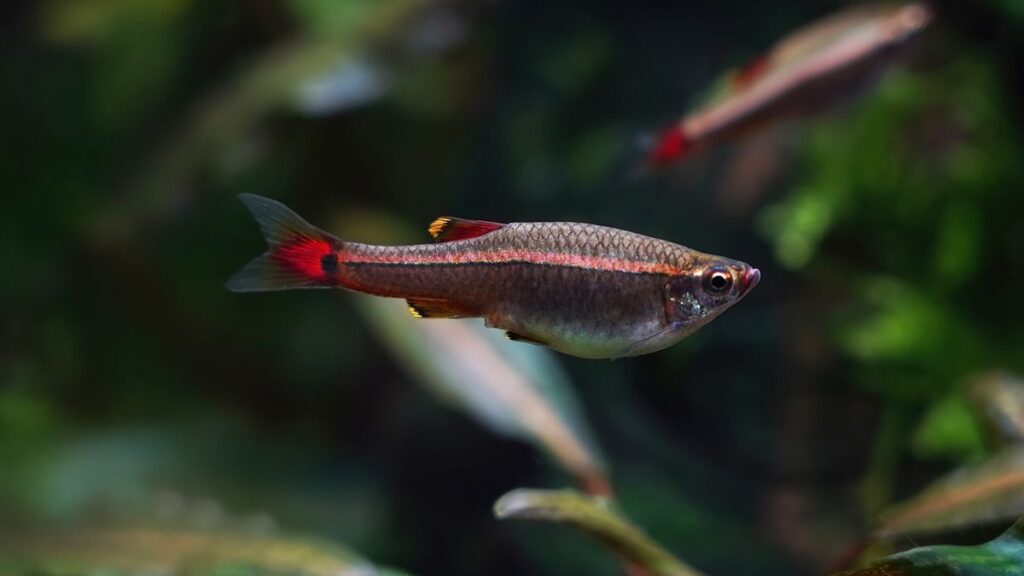
If you want a lively, colorful fish that does not need a heater in most homes, the White Cloud Mountain minnow deserves a close look. This small schooling fish has been a favorite of beginners for decades because it tolerates a wide range of water conditions, eats almost anything and stays peaceful with its tank mates.
In this guide you will learn what makes White Clouds so hardy, how to set up a simple tank for them, which water conditions they prefer, what and how often to feed them, which tank mates work and which do not, and the mistakes that most often cause problems. By the end you will know whether this fish fits your home and how to keep a group healthy with very little effort.
Why White Cloud Mountain minnows are so hardy
White Cloud Mountain minnows (Tanichthys albonubes) come from cool, flowing streams in southern China. That origin explains most of their toughness. Unlike many tropical aquarium fish, they are adapted to cooler water and to seasonal changes in temperature, so an ordinary room is usually comfortable for them without extra equipment.
Other reasons they suit low-maintenance tanks:
- Small size: Adults stay small, typically around an inch and a half long, so a modest tank can hold a proper group.
- Peaceful temperament: They rarely bother other fish or plants.
- Easy diet: They accept flakes, micro pellets and frozen foods readily.
- Bright color: Males show red fins and an iridescent stripe, especially when they display to each other.
- Tolerance for imperfect conditions: They cope well with small fluctuations in temperature and water chemistry that would stress more delicate species.
Hardy does not mean indestructible, though. They still need clean, cycled water and a stable routine to live a full life.
Setting up a simple White Cloud tank
A White Cloud tank can be one of the simplest setups in the hobby. Focus on space, gentle filtration and a secure lid.
Tank size and group size
White Clouds are schooling fish and feel safest in a group. Keep at least six, and more if space allows; larger groups show more natural behavior and better colors as males display to one another. A tank of around 10 gallons is a common starting point for a small group, and a longer tank gives them more swimming room than a tall one of the same volume.
Filtration
A sponge filter or a small hang-on-back filter with adjustable flow works well. They appreciate some gentle current, which echoes their native streams, but strong flow from an oversized filter will tire them out. A sponge filter also protects fry if you ever want to raise a few.
Heater or no heater
In many homes, White Clouds do not need a heater at all. They prefer cooler water than typical tropical fish, roughly in the mid-60s to low-70s °F (about 18 to 22 °C), and tolerate brief dips below that. Avoid keeping them warm year-round, since constantly high temperatures can shorten their lives. If your home gets very cold in winter, a low-wattage adjustable heater set to the lower end of their range keeps things stable.
Lid, substrate and decor
- Use a lid. Like many active small fish, White Clouds can jump, especially when startled.
- Any smooth gravel or sand works as substrate.
- Add live plants such as java fern, anubias, cryptocorynes or floating plants. Many easy plants grow well at cooler temperatures and give the fish cover and a place to explore.
- Leave open space at the front and middle for the school to swim.
Water conditions they prefer
The key to keeping White Clouds is not hitting perfect numbers but keeping conditions stable and clean.
- Cycled water: Always add fish to a tank that has completed the nitrogen cycle, so ammonia and nitrite stay at zero.
- Nitrate: Keep it low with regular partial water changes.
- pH and hardness: They adapt to a broad range of pH and hardness, from slightly acidic to slightly alkaline, so most tap water treated with a dechlorinator is suitable.
- Temperature stability: Avoid placing the tank near heating vents, radiators or a sunny window, which cause daily temperature swings.
A simple test kit for ammonia, nitrite and nitrate tells you everything you need. Test weekly while the tank is new and less often once it is stable.
Water changes
A partial water change of around a quarter of the tank every week or two keeps nitrate low in a lightly stocked tank. Match the temperature of the new water to the tank roughly and treat it with dechlorinator before adding it.
Feeding: what and how much
White Clouds are omnivores with small mouths. A varied diet keeps them colorful and active.
- Staple: A good quality flake or micro pellet food sized for small fish.
- Treats: Frozen or live daphnia, brine shrimp or bloodworms a couple of times a week.
- Plant matter: Some flake foods include spirulina or vegetable content, which is a useful addition.
Feed once or twice a day, offering only what the group eats within a couple of minutes. In cooler water fish digest more slowly, so err on the side of less food. Overfeeding is the most common way beginners pollute a small tank, and leftover food quickly turns into ammonia.
A healthy, adult group can usually handle a day or two without food, so a short weekend away is rarely a problem in an established tank.
Good and bad tank mates
Because they prefer cooler water, White Clouds are best kept with other fish and invertebrates that share their temperature range.
Good choices
- Other cool-tolerant peaceful fish such as zebra danios.
- Small peaceful species that do well at the lower end of tropical temperatures, if the overlap in requirements is comfortable for both.
- Snails such as nerites or ramshorns for algae and leftover food.
- Cherry shrimp and other hardy dwarf shrimp, though very small shrimplets may occasionally be eaten.
Fish to avoid
- Large or predatory fish that can fit a White Cloud in their mouth.
- Fin nippers that may bother males’ flowing fins.
- Strictly tropical species that need warm water year-round, since one of the two will always be outside its comfort range.
- Goldfish: They share a liking for cool water, but goldfish grow large, produce a lot of waste and may eat small fish.
When in doubt, research each species’ temperature range and adult size before combining them, and ask a knowledgeable local fish store for advice.
Breeding and behavior you can expect
One of the pleasures of keeping White Clouds is watching their behavior. Males spread their fins and spar briefly with each other to show off for females. These displays look dramatic but rarely cause injury.
White Clouds often breed in well-planted community tanks without any help. Eggs scatter among plants, and adults generally pay them little attention compared with many other species. If you want to raise more fry, dense plants such as java moss give the young places to hide, and a sponge filter prevents them from being pulled into the intake.
Please never release aquarium fish, plants or snails into local waterways. Released animals can harm native wildlife and spread disease. If you need to rehome fish, contact a local fish store or aquarium club.
Common mistakes and how to avoid them
Most problems with White Clouds come from a few predictable mistakes.
- Keeping too few: One or two fish become shy and stressed. Keep a group of at least six.
- Keeping them too warm: Constant tropical temperatures can shorten their lifespan. Let them live in cooler water.
- Adding fish to an uncycled tank: Hardy fish can survive ammonia spikes for a while, but they still suffer. Cycle first.
- Overfeeding: Small portions, especially in cool water.
- No lid: A startled fish can end up on the floor.
- Strong current: Gentle flow is enough; turn down or baffle strong filters.
If fish look pale, hide constantly, clamp their fins or gasp at the surface, test the water first. Most issues trace back to water quality, and a partial water change is the first step. If a problem persists, consult an aquarium specialist or an aquatic veterinarian.
Summary
White Cloud Mountain minnows are a great choice for a low-maintenance aquarium. They come from cool mountain streams, which makes them comfortable at room temperature in many homes and tolerant of a wide range of water conditions. Keep a group of at least six in a cycled tank of around 10 gallons with gentle filtration, a lid and some easy plants. Feed small portions of varied food, change part of the water regularly and avoid heat, overcrowding and strictly tropical tank mates.
Do that, and you will be rewarded with a peaceful, colorful school that displays, explores and may even breed on its own, all with very little day-to-day work.
Photo: White Cloud Mountain minnow (Tanichthys albonubes) captive adult female, by Ethmostigmus, license CC BY-SA 4.0, via Wikimedia Commons. Cropped.