
Did you know that the Environmental Protection Agency (EPA) says contaminated water can have harmful bacteria, viruses, and other microorganisms? These can cause many health problems.
As a homeowner, it’s key to make sure your drinking water is clean. I’ll show you why water quality testing is important and how to keep your family safe.
Learning about the basics of water testing helps spot possible contaminants and health risks. It’s a simple yet powerful way to protect your family’s health.
Key Takeaways
- Regular water testing is essential for ensuring drinking water safety.
- Contaminants in water can lead to serious health issues.
- Understanding water testing basics helps in identifying possible health risks.
- Simple water testing can safeguard your family’s health.
- Water quality testing is a key part of home maintenance.
Understanding the Importance of Water Testing
Water testing is very important for our health. It makes sure our water is safe to drink. Regular tests help keep our water clean.
Why Water Quality Matters
Water quality is key for public health. Bad water can cause many health problems, from mild stomach issues to serious diseases. It can also change how water tastes, smells, and looks.
I’ve seen how bad water can hurt communities. It’s important to know that water quality affects more than just drinking water. It also impacts water for cooking, bathing, and other uses.
Common Contaminants in Water
Many things can pollute water, like lead, bacteria, nitrates, and pesticides. These can get into water from old pipes, farm runoff, and industrial waste.
| Contaminant | Potential Health Effects | Common Sources |
|---|---|---|
| Lead | Neurological damage, developmental issues | Aging pipes, plumbing fixtures |
| Bacteria (e.g., E. coli) | Gastrointestinal illness | Contaminated wells, sewage overflow |
| Nitrates | Blue baby syndrome, cancer concerns | Agricultural runoff, fertilizers |
Knowing about these pollutants and their health risks is vital. Regular tests can find these, helping us fix the problem.
Types of Water Testing
Water testing isn’t the same for everyone. Different methods are used for various needs. The type you need depends on your water source, how you plan to use it, and local laws.
Residential Water Tests
Homeowners need residential water tests. These tests find common contaminants that can change your water’s taste, smell, or safety. They look for bacteria, nitrates, and other pollutants in your tap water.
Key parameters tested in residential water include:
- pH levels
- Presence of lead
- Bacterial contaminants
- Nitrates and nitrites
Municipal Water Tests
Municipal water tests check if public water systems meet federal and state standards. These tests are detailed and look for many contaminants, like bacteria, viruses, and chemicals.
Municipal water testing is key for:
- Keeping water safe for everyone
- Finding and fixing contamination sources
- Keeping water systems working well
Well Water Analysis
Private well owners must test their water regularly. Well water tests check for bacteria, nitrates, and other contaminants that can get into groundwater.
Important considerations for well water testing include:
- How close you are to possible contamination sources
- The area’s geology
- Results from previous tests
Picking the right water test is key for getting good results. It’s also vital to choose a certified lab for the best analysis.
Testing Methods Explained
Understanding water testing methods is key to getting accurate results. It’s important for ensuring your drinking water is safe and of good quality. Let’s look at the different ways to test water.
DIY Home Test Kits
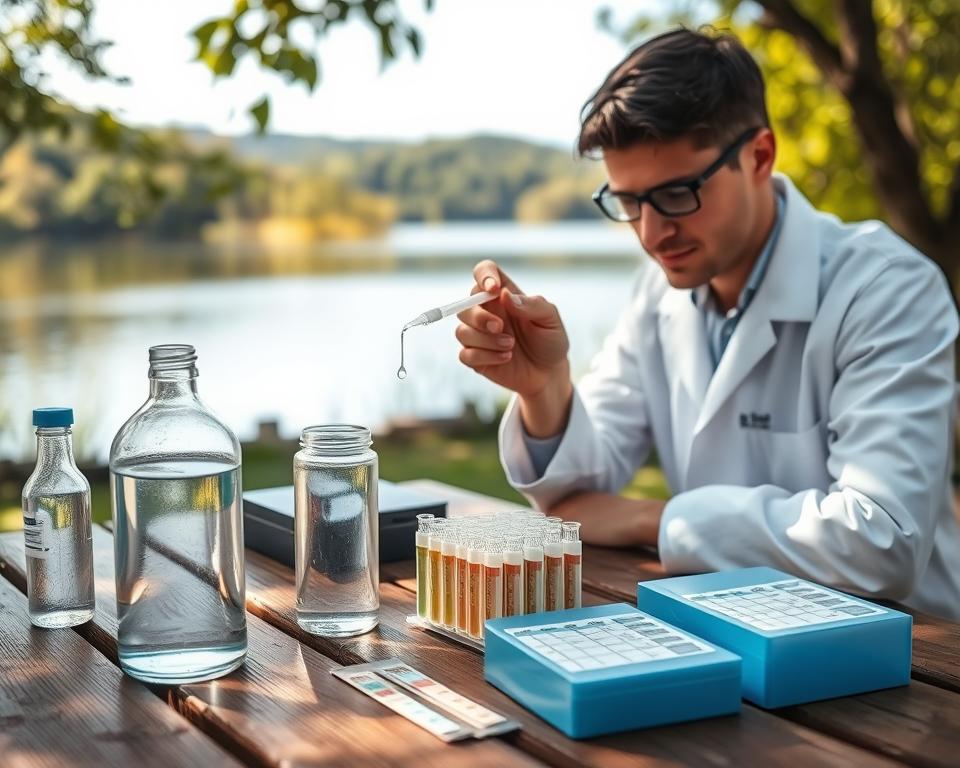
DIY home test kits are easy to use and affordable. They come with test strips or a sampling device. You use these to collect a water sample and analyze it.
DIY kits are great for initial screening. They are easy to use and give quick results. But, they might not be as accurate as professional lab tests. It’s essential to follow the instructions carefully for reliable results.
Professional Lab Testing
Professional lab testing sends a water sample to a certified lab for analysis. This method checks for many contaminants, like bacteria and heavy metals. Lab testing is considered the gold standard for water quality analysis.
Lab testing is very accurate and can find many contaminants. But, it’s more expensive than DIY kits and might need professional help. The EPA says, “lab testing is the most reliable method for detecting water contaminants.”
“The most reliable method for detecting water contaminants is through professional lab testing, as it provides a complete analysis of water quality.”
Differences Between Testing Methods
The main difference between DIY kits and lab testing is accuracy and cost. DIY kits are easy and cheap but not as detailed as lab tests. Lab testing is more accurate but costs more.
| Testing Method | Accuracy | Cost |
|---|---|---|
| DIY Home Test Kits | Moderate | $20-$100 |
| Professional Lab Testing | High | $100-$500 |
Choosing between DIY kits and lab testing depends on your needs and budget. DIY kits are good for a quick check. But, for a detailed analysis, lab testing is better.
When to Test Your Water
Knowing when to test your water is key to spotting problems early. Regular tests keep your water safe and healthy.
Recommended Testing Frequency
How often you should test your water depends on several things. This includes where your water comes from and any changes in its look, taste, or smell. Most people should test their water at least once a year.
If you get your water from a well or worry about contaminants, test more often. Also, test after big weather events or if your water changes.
Signs of Water Contamination
Knowing the signs of contaminated water is important. Look out for:
- Unusual odors or tastes
- Visible sediment or particles
- Changes in water color
- Health issues that may be related to water quality
If you see any of these signs, test your water right away. This will help find the problem and fix it.
Seasonal Considerations
Seasonal changes can affect your water quality. Heavy rain or flooding can pollute water, while drought can make contaminants worse.
Knowing this helps you plan when to test your water. This way, your water stays safe and healthy all year.
| Season | Potential Water Quality Issues | Recommended Action |
|---|---|---|
| Spring | Runoff from melting snow, possible contamination from farming | Test for bacteria, nitrates, and other contaminants |
| Summer | Higher risk of algae blooms, warmer water | Test for algae toxins, watch water temperature |
| Fall | Runoff from farming, leaf litter | Test for bacteria, nitrates, and other contaminants |
| Winter | Risk of pipe freezing and contamination | Check pipes, test for contaminants after thawing |
Interpreting Water Test Results
It’s important to understand your water test results to keep your drinking water safe and clean. When you get your results, you’ll see a list of contaminants and their levels.
Understanding Measurement Units
Water test results are often in milligrams per liter (mg/L) or parts per million (ppm). You might also see micrograms per liter (μg/L) or parts per billion (ppb). Sometimes, the results are in parts per trillion (ppt) for very small amounts.
For example, a contaminant might be at 0.5 mg/L, which is the same as 0.5 ppm. Knowing these units helps you understand the levels of contaminants in your water.
Recognizing Safe vs. Unsafe Levels
After you know the measurement units, you need to check if the contaminant levels are safe. You can find safe limits on the Simcoe Muskoka Health website.
If a contaminant level is above the EPA’s maximum limit, it’s not safe. If this happens, you’ll need to take steps to fix the problem.
What to Do With Your Results
If your test shows contamination, don’t worry. First, find out where the contamination is coming from. This might mean checking your plumbing or looking for nearby pollution sources.
Depending on the contaminant and its level, you might need a water filter, treatment, or a different water source. Regular testing and upkeep are key to keeping your water safe.
By understanding your water test results and acting on them, you can keep your water safe and healthy.
Drinking Water Standards
Drinking water standards are key to keeping us healthy. They limit contaminants in our water. This makes sure our water is safe and free from harmful stuff.
EPA Guidelines
The Environmental Protection Agency (EPA) sets these standards. They do this under the Safe Drinking Water Act (SDWA). The EPA watches over more than 150 contaminants, like bacteria and chemicals.
Key aspects of EPA guidelines include:
- Setting Maximum Contaminant Levels (MCLs) for various contaminants
- Requiring public water systems to test for contaminants regularly
- Ensuring that water treatment processes are adequate to remove contaminants
State Regulations
States also have their own rules for water quality. These rules can be stricter than the EPA’s. It’s important to know what rules apply in your area.
Some states have adopted more rigorous standards for certain contaminants, such as arsenic or lead. Knowing these rules helps you understand your drinking water better.
Understanding NSF Certification
NSF International is a group that tests water products. They make sure these products meet standards. NSF certification is important for checking if a water filter works well.
When you’re looking for a water filter, check for NSF certification. This ensures it meets EPA guidelines and removes contaminants from your water.
Learning about drinking water standards helps you make better choices. Organizations like the EPA and NSF International play a big role in this.
The Role of Water Filters
Water filters are key in keeping our water clean. They protect us from harmful contaminants. This is essential for our health and wellbeing.
Different Types of Water Filters
There are many water filters out there. Each one targets different contaminants. Here are a few examples:
- Activated carbon filters remove chlorine, taste, and odor.
- Reverse osmosis systems get rid of dissolved solids and other impurities.
- Ultraviolet (UV) light filters kill bacteria and other microorganisms.
For those curious about how water purification filtration works, learning about the technology is interesting.
Effectiveness of Water Filters
The effectiveness of a water filter depends on its type and what it can remove. For example, filters certified by NSF International have been tested to remove certain contaminants.
When checking if a filter works well, consider these:
- The contaminants it’s meant to remove.
- If it’s certified by NSF International.
- How often it needs to be maintained.
Maintenance of Water Filtration Systems
Keeping your water filter in good shape is important. This means replacing cartridges as needed and cleaning the system.
“Regular maintenance keeps the filter working well and makes it last longer.”
Knowing about water filters, their types, how well they work, and how to care for them helps us choose better. This way, we can ensure our drinking water is safe and clean.
Cost of Water Testing
The cost of water testing varies based on several factors. It’s important to know what affects the price and how to choose the right test for you.
Influencing Factors
Several factors can affect the cost of water testing. These include:
- The type of test being performed – different tests have varying complexities and costs.
- The laboratory conducting the test – lab fees can vary significantly.
- The location of the testing facility – proximity to your location can impact costs, as travel may be needed.
- The number of parameters being tested – more tests cost more.
Knowing these factors can help you plan and save money. For example, choosing a local lab or starting with a basic test can be cheaper.
Budget-Friendly Options
Even though thorough testing is important, there are ways to save money:
- DIY Test Kits: Use DIY kits for a quick and affordable initial check.
- Basic Lab Tests: Start with a basic test to find major problems without spending too much.
- Package Deals: Look for deals that test multiple things at once for a better price.
These options help you get the testing you need without breaking the bank.
Long-Term Investment in Water Safety
Regular water testing is a smart long-term choice for keeping your water safe. While it costs money, the benefits are much greater. Testing regularly can:
- Prevent health problems by catching contaminants early.
- Save money in the long run by avoiding expensive fixes.
- Give you peace of mind knowing your water is safe.
Given how important water testing is, the initial cost is a small price to pay for your health and safety.
Water Testing Resources
To make informed decisions about your water quality, it’s vital to know about the various resources at your disposal. Ensuring you have access to reliable information can make a significant difference in maintaining safe drinking water.
Online Information Sources
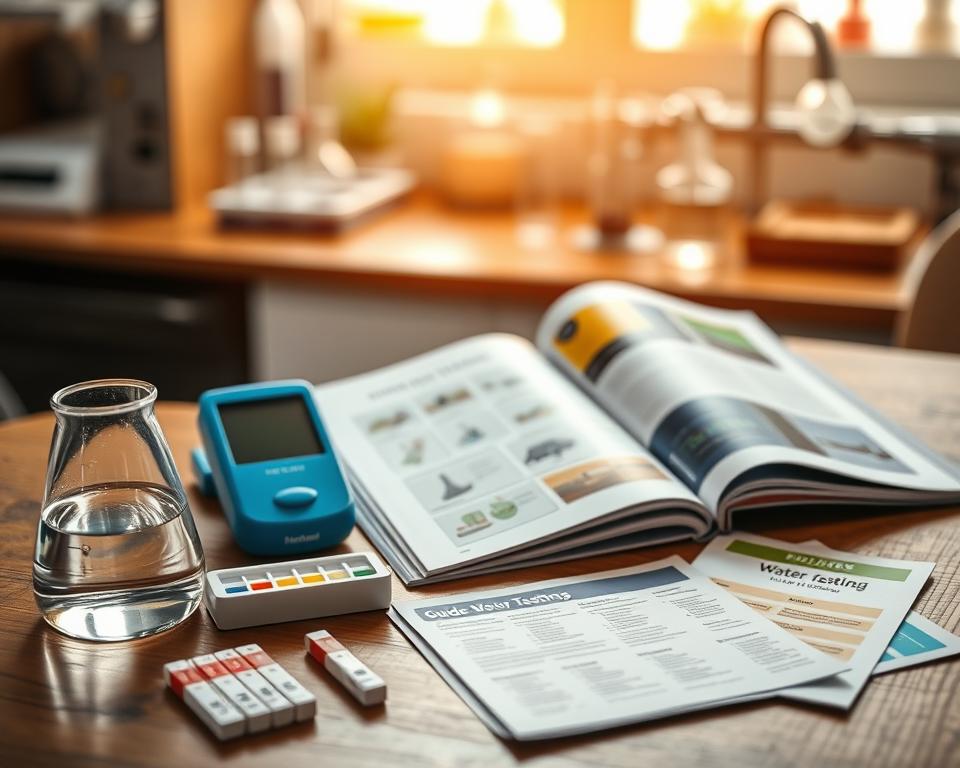
The internet is a vast repository of information on water testing. It offers a range of resources from government websites to educational articles. You can find detailed guides on water analysis methods and water testing procedures that can help you understand the process better.
Some reputable online sources include the Environmental Protection Agency (EPA) website. It provides information on drinking water standards and contaminants. Local health department websites also offer region-specific advice and resources.
Community Assistance Programs
Many communities have programs in place to assist residents with water testing. These programs can offer free or low-cost testing services and educational workshops on water safety. It’s worth checking with your local government or community center to see what resources are available.
Community assistance programs can also provide valuable information on how to interpret test results. They can guide you on what steps to take if your water is contaminated. They may offer guidance on water filtration systems and other treatment options.
Professional Testing Services
For those who prefer a more hands-off approach, professional testing services are available. These services can come to your home to collect water samples, which are then analyzed in a laboratory. While this option may be more expensive, it provides accurate and reliable results.
When selecting a professional testing service, it’s essential to choose a certified laboratory that follows EPA guidelines. Look for certifications such as NSF International or the American National Standards Institute (ANSI).
| Resource Type | Description | Benefits |
|---|---|---|
| Online Information | Websites and articles providing information on water testing and safety. | Accessible, free, and extensive. |
| Community Programs | Local initiatives providing testing services and educational workshops. | Often free or low-cost, community-specific advice. |
| Professional Services | Laboratories and companies providing water testing and analysis. | Accurate, reliable, and certified. |
Addressing Water Issues
First, we need to spot the signs of water contamination. This could be a change in taste, smell, or look. Knowing these signs is key to acting fast.
Identifying the Source of Contamination
Finding out where the contamination comes from is vital. It could be from farms, factories, or old pipes. We should test the water at various points to find the source.
Common Contaminants and Their Sources
| Contaminant | Common Source |
|---|---|
| Nitrates | Agricultural runoff |
| Lead | Aging infrastructure |
| Microplastics | Industrial waste |
Steps for Remediation
After finding the source, we need to fix it. This might mean using filters, changing laws, or suing. It’s wise to talk to water experts to find the best fix.
Remediation Strategies
- Installing home water filtration systems
- Advocating for policy changes at the local or state level
- Pursuing legal action against contaminating entities
Legal Considerations
It’s important to know the laws about water. In the U.S., the Safe Drinking Water Act sets water quality rules. If you think your water is bad, talk to a lawyer who knows about environmental law.
By tackling water problems head-on, we can make sure everyone has clean drinking water. This includes finding where contamination comes from, fixing it, and knowing our legal rights.
Improving Water Quality
Clean water is key to public health. It needs a full plan that includes treatment, testing, and community help. We see that many steps are needed to make water better.
Treatment Options for Contaminated Water
There are many ways to clean up contaminated water. Each method has its own benefits and uses. Here are a few:
- Activated carbon filtration removes chlorine, taste, and odor, and some organic stuff.
- Reverse osmosis pushes water through a special membrane to get rid of lots of bad stuff.
- UV treatment kills bacteria and other tiny bugs with ultraviolet light.
The EPA says, “Drinking water treatment systems can really help clean up water. But, it’s important to pick one that meets EPA standards.”
“The right treatment system can make water much safer to drink.”
| Treatment Method | Effectiveness | Maintenance |
|---|---|---|
| Activated Carbon | High for chlorine and taste | Regular filter replacement |
| Reverse Osmosis | High for dissolved solids | Periodic membrane replacement |
| UV Treatment | High for microbial contaminants | Regular lamp replacement |
Importance of Regular Testing
Testing water often is key to finding and fixing problems. I suggest testing your water yearly. Or more often if you notice changes in taste, smell, or look.
Regular testing catches problems early. This lets us fix them fast and avoid bigger issues.
Community Initiatives
Community efforts are very important for better water. They include teaching the public, testing water together, and pushing for better rules.
Together, we can find and fix water problems. This way, everyone can have clean, safe water to drink.
Staying Informed
Knowing about water quality is key to safe drinking water. We’ve talked about water testing basics and DIY methods. These steps help ensure your water is safe.
Staying Up-to-Date with Water Quality Reports
Following water quality reports is important. They show the state of your local water. This helps you make smart choices about drinking water.
Engaging with Local Authorities
Talking to local water authorities is also helpful. By going to community meetings and asking questions, you learn more. You find out about water quality and efforts to improve it.
Continuing Education
Learning more about water safety is vital. Keeping up with new water testing and treatment info helps. This way, you can protect your health and your family’s.