
Did you know millions of Americans keep aquariums? Many struggle to care for their aquatic pets when they’re away. As someone who owns an aquarium, I get how stressful it is to leave your beloved fish behind.
In this guide, I’ll show you how to keep your fish healthy and happy while you’re away. We’ll cover everything from their needs to how to prepare your aquarium. You’ll be all set for a worry-free vacation.
Key Takeaways
- Understand your fish’s specific needs before you leave.
- Prepare your aquarium to maintain a healthy environment.
- Explore automated feeding options for your trip.
- Ask a friend or hire a professional for regular checks.
- Create a checklist to ensure a stress-free vacation.
Understanding Your Fish’s Needs Before You Leave
As you get ready for your trip, think about what your aquarium fish need. Knowing their health and happiness needs is key. This means understanding their specific needs.
Importance of Routine Care
Keeping a routine is key for a healthy aquarium. Tasks like water changes and cleaning the gravel are musts. They help keep the environment stable and prevent toxins.
Types of Fish and Their Requirements
Different fish need different things. Some like warmer or cooler water, while others need special food. Knowing what your fish need is important for their care.
The Role of Water Condition
Water quality is very important for your fish’s health. Things like pH levels and ammonia levels matter a lot. Testing the water often and making changes when needed is essential.
By focusing on these areas, you can make sure your fish stay healthy and happy while you’re away.
Preparing Your Aquarium for Your Trip
Getting your aquarium ready for your trip is important. It keeps your fish healthy. This way, you can relax knowing your tank is in good hands.
Cleaning and Maintenance Checklist
Start by cleaning your aquarium well before you leave. This means:
- Changing 25% of the tank water to keep it clean.
- Cleaning the gravel and decorations to remove dirt.
- Checking and replacing any old equipment, like filters or heaters.
Ensuring Water Quality
Keeping the water quality right is key for your fish’s health. Here’s how:
- Check the water’s pH, ammonia, and nitrite levels.
- Adjust the water chemistry to keep it perfect for your fish.
- Use a water conditioner to remove chlorine and chloramines.
Stable water conditions help reduce stress on your fish.
Adjusting Feeders and Lighting
If you’ll be away for a while, adjust your feeders and lights. Think about:
- Setting your automated feeder to feed the right amount at the right time.
- Changing your lighting schedule to mimic day and night.
- Using a timer for your lights to keep things consistent.
These changes help keep your fish in a stable environment.
Choosing the Right Feeding Method
Choosing the right feeding method for your aquarium fish is key to their health while you’re away. A good feeding plan keeps your aquarium stable.
Automatic Feeders: Pros and Cons
Automatic feeders are popular for regular fish feeding while you’re on vacation. They can be set to feed at specific times, keeping feeding consistent.
The benefits of automatic feeders include:
- Consistent feeding times
- Less chance of over or underfeeding
- Can be programmed ahead of time
But, there are downsides to consider:
- Cost of the device
- Risk of mechanical failure
- Need for proper setup and calibration
To set up an automated fish feeder, follow the manufacturer’s instructions. It’s wise to test it before you leave to make sure it works.
Freeze-Dried and Slow-Release Foods
Freeze-dried or slow-release foods are also good for feeding your fish while you’re away. They provide nutrients for a longer time.
Freeze-dried foods keep their nutritional value by removing water. Slow-release foods dissolve slowly, releasing nutrients into the water.
| Food Type | Nutritional Value | Release Mechanism |
|---|---|---|
| Freeze-Dried | High | Immediate |
| Slow-Release | Variable | Gradual |
Enlist a Trusted Friend or Neighbor
If you’re not sure about automated feeders or pre-prepared foods, ask a trusted friend or neighbor to help. This way, your fish get personal care and flexibility.
“Having someone check on your fish and feed them manually can reduce stress for both you and your fish, as it mimics their natural feeding routine more closely.”
Make sure your friend or neighbor knows how to care for your fish. Give them instructions on feeding, water quality, and any special needs your fish have.
Monitoring Water Parameters
Checking your aquarium’s water is key before you leave. It keeps your fish healthy and happy. Good water conditions mean less stress for your fish.
Test Kits: What You Need
You’ll need a good test kit to check your water. These kits test for pH, ammonia, nitrite, and nitrate. Testing often lets you catch and fix any water problems.
Key components of a good test kit include:
- pH test: Shows if the water is too acidic or too alkaline.
- Ammonia test: Finds ammonia, which is bad for fish.
- Nitrite test: Looks for nitrites, which harm fish too.
- Nitrate test: Checks nitrate levels, showing your tank’s health.
Ideal Temperature Ranges
Keeping the right temperature is very important. Each fish type needs a certain temperature. Make sure you know what your fish need.
| Fish Type | Ideal Temperature Range (°F) |
|---|---|
| Tropical Fish | 76-82 |
| Cold Water Fish | 65-75 |
Oxygen Levels and Filtration Systems
Your fish need enough oxygen to live. A good filter keeps water clean and adds oxygen. You might need a better filter or aerators.
Here are some tips to boost oxygen levels:
- Keep your filter clean for best performance.
- Plant oxygen-making plants like Anacharis or Hornwort.
- Use aerators or air stones for better water flow and oxygen.
Setting Up Fish Sitters
Leaving your fish behind can be stressful. But, setting up a fish sitter can give you peace of mind. It’s important to ensure your fish get the care they need while you’re away.
How to Select a Responsible Person
Choosing the right person to care for your fish is key. Look for someone reliable and knowledgeable about fish care. They should also be willing to follow your instructions.
You might consider a friend, neighbor, or a professional fish sitter. Make sure they understand the importance of keeping your aquarium’s environment right. They should also be comfortable with the tasks involved.
Creating a Care Guide
A detailed care guide is essential for your fish sitter. Include instructions on feeding schedules, water quality checks, and any specific needs your fish may have. You can refer to a vacation fish care checklist to ensure you cover all necessary aspects.
Conducting a Pre-Trip Training Session
Before you leave, conduct a training session with your fish sitter. Go over the care guide and demonstrate any specific tasks. This is also a good opportunity to answer any questions they may have.
By following these steps, you can enjoy your vacation knowing that your fish are in good hands. Remember, a well-prepared fish sitter is key to a stress-free experience for both you and your aquatic pets.
Emergency Preparedness for Fish Care
Before you leave for your trip, it’s smart to prepare for emergencies. This helps keep your fish healthy. Being ready for surprises is key to a thriving aquarium.
Essential Supplies for Quick Access
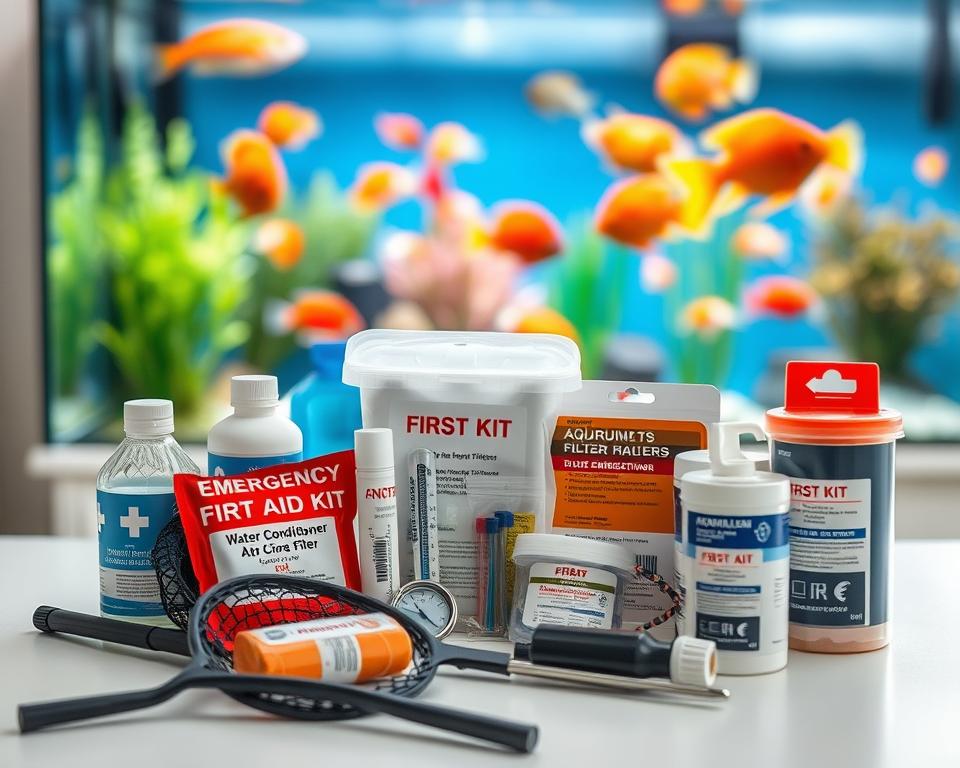
Having the right supplies can be a big help in emergencies. I suggest keeping a first-aid kit for fish. It should have water conditioners, disease meds, and a gravel vacuum for quick water changes.
Also, having a backup power source is a good idea. This could be a battery-powered aerator or a portable generator. It ensures your fish get oxygen when the power goes out.
Contacting a Local Aquarist or Vet
Knowing who to call in an emergency is vital. Look up local aquarists or vets who know fish care. Keep their numbers handy.
Having a local expert to call can give you peace of mind. It ensures your fish get the care they need if you’re away.
Identifying Problems Before They Happen
Anticipating problems is a great way to handle emergencies. Keep an eye on your tank’s water and watch for signs of stress or disease in your fish. Being aware of changes in your tank’s environment can help you spot issues early.
By being proactive, you can prevent serious problems. This keeps your fish healthy while you’re on vacation.
Preparing for Extended Absences
Going on vacation without worrying about your fish is possible. With some planning, your aquarium will stay healthy and happy while you’re away. It’s all about making sure everything is set up right.
Long-Term Feeding Options
For longer trips, finding a reliable way to feed your fish is key. Automated feeders are a great option. They can be set to feed your fish at regular times. This keeps them well-fed while you’re away.
There are many types of automated feeders out there. You can choose from:
- Mechanical feeders that release food at set times
- Digital feeders that can be programmed with specific feeding schedules
- Slow-release food blocks that dissolve over time, releasing food into the water
When picking an automated feeder, think about your tank’s size, how many fish you have, and their food needs.
Hiring Professional Fish Care Services
If you’re worried about your fish or don’t want to use automated feeders, think about hiring a professional fish care service. They can visit your tank to feed your fish, check the water, and do any needed maintenance. To find a good service, ask friends or look up reviews online.
Automating Tank Maintenance Tasks
Automating some tank tasks can keep your fish’s home stable. You can use automatic water changers or algae scrubbers. This makes caring for your tank easier while you’re away.
Some tasks you might want to automate include:
- Regular water changes to keep water parameters stable
- Monitoring and adjusting water temperature
- Cleaning the tank to prevent algae buildup
Keeping Tank Environment Stable
Keeping your fish tank stable is key when you’re away. A stable tank means your fish stay healthy and happy. To keep this up, you need to manage a few important things.
Importance of Temperature Regulation
Keeping the tank’s temperature right is very important. Most fish don’t like big changes in temperature. This can stress them out or even be deadly. To keep the temperature steady:
- Use a good aquarium heater with a thermostat.
- Keep your tank away from direct sunlight and drafts.
- Think about getting a temperature monitor that tells you if it changes.
Keeping the temperature the same helps your fish stay calm. This makes them less likely to get sick.
Reducing Light Exposure
Light can really affect your tank’s environment. Too much light can cause algae to grow. Too little can mess with your fish’s natural behavior. To control light:
- Use a timer for your aquarium lights to mimic day and night.
- Change the lighting based on your fish and plants.
- Try using low-intensity lights to stop algae from growing.
Less light helps keep your tank’s ecosystem balanced.
Keeping Access to Natural Habitats
Letting your fish explore natural habitats in the tank helps them relax. You can do this by:
- Adding plants and decorations that look like nature.
- Not overcrowding the tank so fish have room to swim and hide.
- Making sure the filtration system works well to keep the water clean.
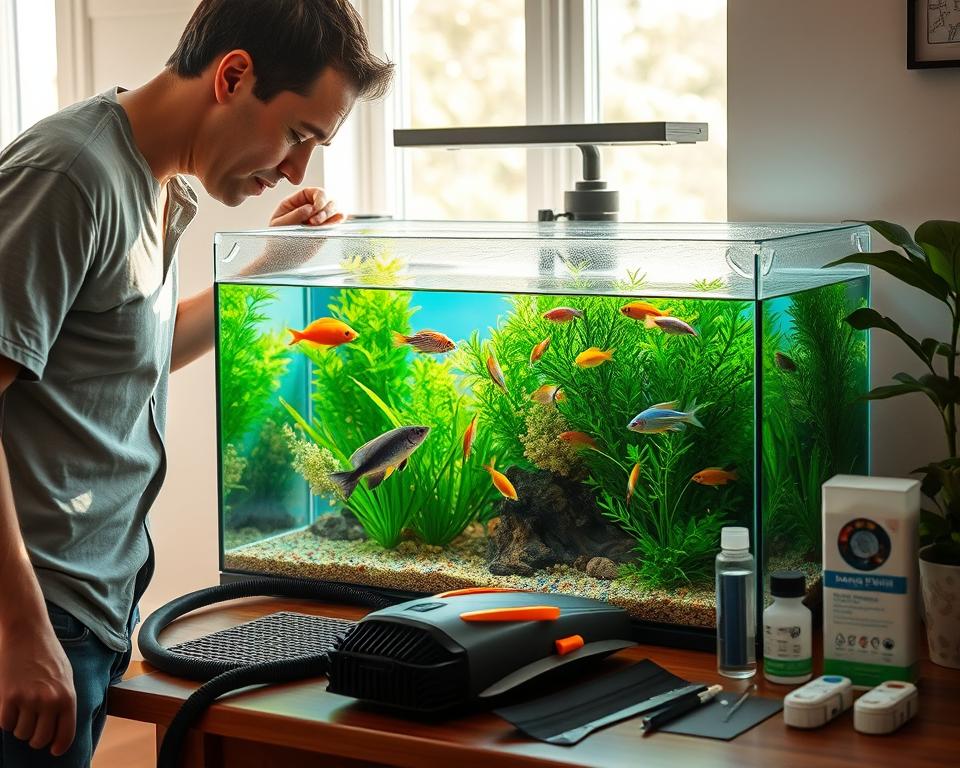
By making your tank feel like home, you create a better place for your fish to live.
Post-Vacation Check-Up for Your Fish
After you get back from vacation, it’s important to check your fish. This helps spot any health problems early. Keeping your fish healthy and happy is key.
Signs of Stress or Illness
Watch your fish for signs of stress or illness. Look for labored breathing, being very tired, or not wanting to eat. Regularly checking your fish can catch issues early.
Some common signs include:
- Discoloration or fading of colors
- Visible injuries or infections
- Erratic swimming patterns
Water Testing After Your Return
After you return, testing the water quality is key. Use a good water test kit to check pH, ammonia, nitrite, and nitrate levels.
| Parameter | Ideal Range |
|---|---|
| pH | 6.5-8.5 |
| Ammonia | 0 ppm |
| Nitrite | 0 ppm |
| Nitrate | <20 ppm |
Implementing a Recovery Plan
If you see signs of stress or illness, or if water tests are off, act fast. Implement a recovery plan. This might mean changing water, using treatments, or adjusting feeding times.
Quick action can help your fish get better. Always follow your vacation fish care checklist and fish sitter instructions for the best care.
Helping Your Fish Transition Back
When you get back to your routine, your fish need time to adjust too. They might feel out of place after your vacation. It’s important to help them get back to normal.
Acclimatizing Fish After Time Away
After you return, check your fish for any signs of stress or illness. Fish can get shocked by changes, even if an automated system managed it. Start by observing their behavior and checking the water.
Monitor their activity levels and watch for signs like lethargy or loss of appetite. If you see these, try adjusting the water temperature or making small changes to the tank.
Returning to Regular Feeding Schedules
Getting back to their regular feeding schedule is key. If you used an automated fish feeder, make sure it’s set right. Start feeding them regularly again to avoid over or underfeeding.
| Fish Type | Feeding Frequency | Recommended Food |
|---|---|---|
| Goldfish | 2-3 times a day | Flakes or pellets |
| Tropical Fish | 2-3 times a day | Flakes, pellets, or frozen foods |
Maintaining Tank Conditions
To keep the tank stable, check the water parameters often. Make sure the water temperature and pH levels are right for your fish. Clean the tank and check the filter to keep it healthy.
By following these steps, you can help your fish adjust back to their routine. This ensures they stay healthy and happy.
Conclusion: Enjoy Your Vacation with Peace of Mind
With the right preparation, you can relax on vacation knowing your fish are safe. Just a few simple steps can keep your aquarium healthy and thriving. This way, you can enjoy your time off without worry.
Key Steps Recap
To care for your fish while away, prepare your aquarium well. Choose the right feeding method, like automatic feeders or slow-release foods. Also, make sure your tank’s water is stable. For more fish care tips while on vacation, check out these resources.
Responsible Aquarists
As a responsible aquarist, caring for your fish on vacation is key. Plan ahead and use a vacation fish care checklist. This way, you can enjoy your vacation without stressing about your fish.
Ongoing Fish Care Resources
For ongoing fish care, staying informed is vital. Look for valuable resources online. They offer guides on Vacation Fish Care and tips for a stable tank.