


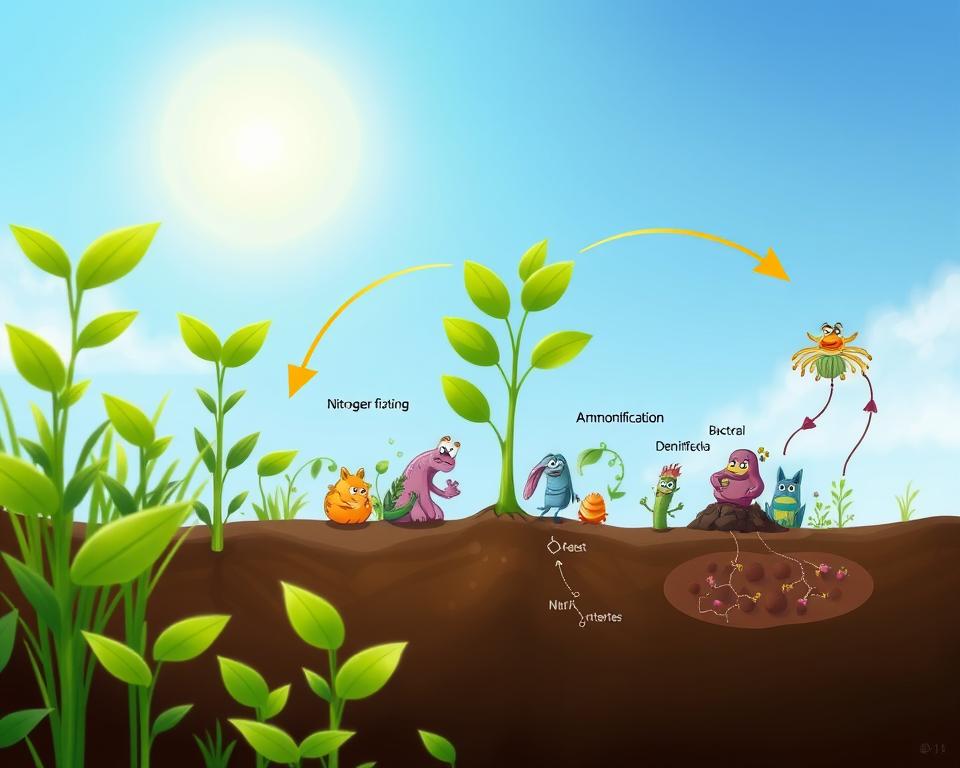
The natural world is full of fascinating processes. One of the most critical is the Nitrogen Cycle. Without it, life as we know it wouldn’t be possible. It’s a complex process that keeps ecological balance and supports plant and crop growth.
In this guide, I’ll explain the Nitrogen Cycle’s significance and its processes. You’ll see how it affects our environment. By the end, you’ll understand this vital ecological process better.
Key Takeaways
- Understand the importance of the Nitrogen Cycle in sustaining life.
- Learn about the different processes involved in the Nitrogen Cycle.
- Discover how human activities impact the Nitrogen Cycle.
- Explore ways to maintain ecological balance through the Nitrogen Cycle.
- Gain insights into the role of the Nitrogen Cycle in soil fertility.
Introduction to the Nitrogen Cycle
Understanding the nitrogen cycle is key to knowing how our ecosystem works. It’s a complex process that changes nitrogen into forms living things can use.
What is the Nitrogen Cycle?
The nitrogen cycle is how nitrogen changes forms. It goes from nitrogen gas (N2) to ammonia (NH3), nitrite (NO2–), and nitrate (NO3–). This cycle is vital because it gives plants the nitrogen they need to grow.
Importance of the Nitrogen Cycle
The nitrogen cycle is important for many reasons. It gives plants the nitrogen they need to grow, supporting the food chain. It also keeps nitrogen levels in check, preventing problems like eutrophication.
In agriculture, nitrogen-based fertilizers boost crop yields. But using too much can harm the environment.
| Aspect | Importance | Impact |
|---|---|---|
| Agriculture | Nitrogen for crop growth | Enhanced crop yields |
| Environment | Regulation of nitrogen levels | Prevention of eutrophication |
| Ecosystem | Support for the food chain | Maintenance of ecosystem balance |
Key Terms to Know
To fully understand the nitrogen cycle, you need to know key terms. These include nitrogen fixation, nitrification, assimilation, and denitrification. These are all important parts of the nitrogen cycle.
- Nitrogen fixation: The process by which nitrogen gas is converted into a usable form.
- Nitrification: The process by which ammonia is converted into nitrite and then nitrate.
- Assimilation: The process by which organisms incorporate nitrogen into their biomolecules.
- Denitrification: The process by which nitrate is converted back into nitrogen gas.
Stages of the Nitrogen Cycle
To fully understand the nitrogen cycle, we must explore its stages. This cycle changes nitrogen into forms that living things can use. It’s key for life on Earth, making nitrogen available for proteins and other important molecules.
Nitrogen Fixation
Nitrogen fixation is the first step. It turns nitrogen (N2) from the air into ammonia (NH3) or nitrate (NO3–). Bacteria like Rhizobia and Frankia do this. They live in soil or with legume roots. These bacteria use nitrogenase to break nitrogen’s strong bonds, making it usable.
Nitrification
Nitrification is a two-part process. It changes ammonia (NH3) into nitrite (NO2–) and then nitrate (NO3–). The first step is done by Nitrosomonas bacteria. The second by Nitrobacter. It’s important because it makes ammonia safe for plants.
Assimilation
Assimilation happens when plants, algae, and some bacteria take in nitrate or ammonia. They turn it into organic nitrogen like amino acids. This is vital for making proteins and other molecules needed for growth. For more on nitrogen assimilation, check out this resource.
Denitrification
Denitrification is the last step. It turns nitrate (NO3–) back into nitrogen gas (N2). Denitrifying bacteria like Pseudomonas and Bacillus do this in low-oxygen places. It’s key for the nitrogen cycle, returning nitrogen to the air.
The nitrogen cycle is vital for life on Earth. Knowing its stages helps us manage ecosystems and improve farming. It shows the importance of nitrogen fixation, nitrification, assimilation, and denitrification.
The Role of Bacteria in the Nitrogen Cycle
Bacteria are key players in the nitrogen cycle, turning nitrogen into different forms. They play a vital role in keeping the cycle running smoothly.
Types of Bacteria Involved
Many types of bacteria are part of the nitrogen cycle. Nitrogen-fixing bacteria, like Rhizobia and Azotobacter, change atmospheric nitrogen (N2) into a form plants can use. Other bacteria, such as Nitrosomonas and Nitrobacter, help by changing ammonia (NH3) into nitrite (NO2–) and then nitrate (NO3–).
How Bacteria Facilitate the Cycle
Bacteria help the nitrogen cycle in different ways. Nitrogen-fixing bacteria use nitrogenase to turn N2 into ammonia. Nitrifying bacteria use ammonia and nitrite for energy, turning them into nitrate. This nitrate is important for plants.
Denitrifying bacteria, like Pseudomonas and Alcaligenes, finish the cycle by turning nitrate back into N2. This N2 is released back into the air.
These bacterial processes are vital for keeping nitrogen levels balanced in ecosystems. Without them, nitrogen levels would be off, causing big problems for the environment.
The Impact of Bacteria on Nitrogen Levels
Bacteria’s work in the nitrogen cycle greatly affects nitrogen levels. They change nitrogen into different forms, affecting how available it is for plants and other living things. For instance, nitrogen-fixing bacteria make soil more fertile. Denitrifying bacteria, on the other hand, can lower nitrate levels in soil and water, helping to reduce nitrogen pollution.
It’s important to understand how bacteria work in the nitrogen cycle to manage ecosystems better. By knowing how bacteria and nitrogen interact, we can use nitrogen-based fertilizers more wisely. This helps lessen the environmental harm caused by farming.
Human Impact on the Nitrogen Cycle
Human activities have a big impact on the nitrogen cycle. Our actions, from farming to industry, change how nitrogen moves in our environment.
Agricultural Practices
Farming practices alter the nitrogen cycle a lot. Using synthetic fertilizers adds more nitrogen to soil. This leads to nitrogen runoff into water bodies.
This runoff can cause eutrophication, harming water ecosystems.
- Using nitrogen-based fertilizers boosts crop yields but also increases pollution risk.
- Crop rotation and cover crops can lessen negative effects by reducing synthetic fertilizer use.
- Precision agriculture aims to use fertilizers better, reducing waste and environmental harm.
Industrial Sources
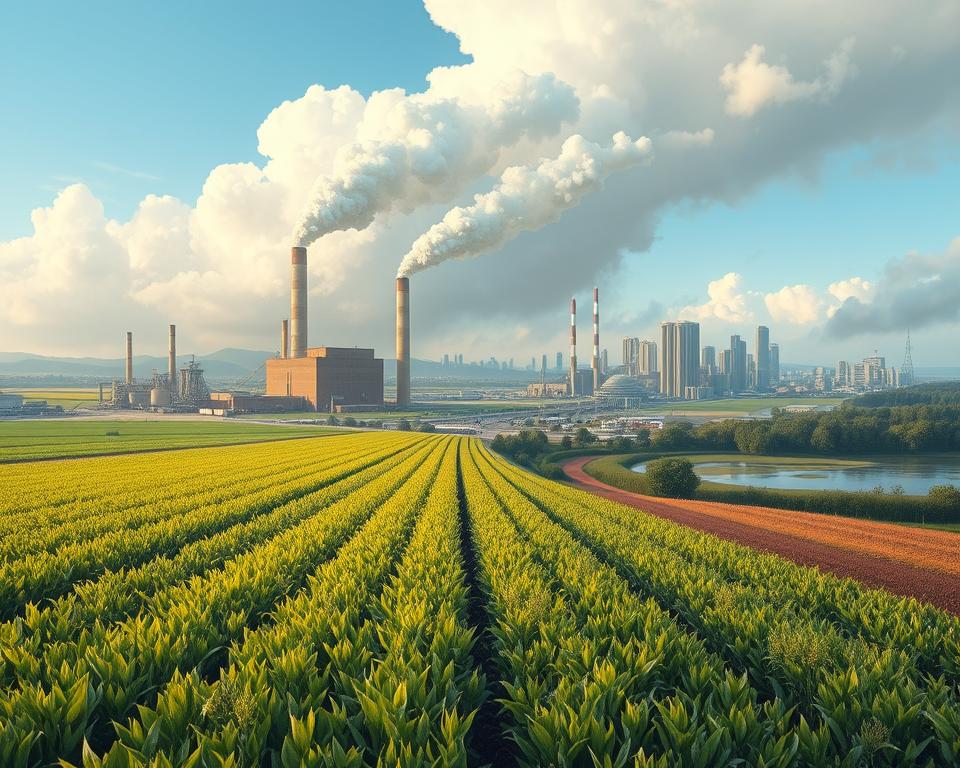
Industrial activities also pollute the nitrogen cycle. Making nitrogen-based chemicals and fertilizers releases nitrogen oxides into the air. This adds to air pollution.
- Industrial processes, like making nitric acid and using fossil fuels, release nitrogen oxides.
- These emissions can cause ground-level ozone and smog, harming health and the environment.
- Using cleaner production and stricter emissions controls can lessen industrial impact on the nitrogen cycle.
Urbanization and its Effects
Urban areas also change the nitrogen cycle. They produce a lot of nitrogen pollution from cars, waste, and other human activities.
Urban planning strategies can help lessen these effects. Green spaces can absorb nitrogen pollutants. Practices that reduce nitrogen waste are also important.
- Green infrastructure, like parks and green roofs, can absorb nitrogen oxides and reduce pollution.
- Good waste management systems can cut down nitrogen waste in the environment.
- Supporting cleaner transport options can lower vehicle emissions and their nitrogen cycle impact.
The Importance of Nitrogen in Agriculture
Understanding nitrogen’s role in agriculture is key to better crop production and less environmental harm. Nitrogen is vital for amino acids, which are protein building blocks. This makes it essential for plant growth and development.
Nitrogen as a Nutrient
Nitrogen is vital for plant health, supporting leaf growth and development. Adequate nitrogen levels are critical for high crop yields. Without enough, plants grow poorly and produce less.
The USDA says nitrogen is often the limiting nutrient in farming. Making sure plants have enough nitrogen is vital for their best performance.
“Nitrogen is a critical element for plant growth, and its management is essential for sustainable agriculture.”
Fertilizers and their Role
Fertilizers are key in adding nitrogen to crops. Synthetic fertilizers are often used to boost soil nitrogen. This helps increase crop yields and food availability.
| Type of Fertilizer | Nitrogen Content (%) | Application Rate (kg/ha) |
|---|---|---|
| Ammonium Nitrate | 33-34 | 100-200 |
| Urea | 46 | 150-300 |
| Ammonium Sulfate | 21 | 200-400 |
Sustainable Practices for Nitrogen Use
Using sustainable practices is vital for effective nitrogen management. Techniques like crop rotation, cover cropping, and precision agriculture help use nitrogen better and lessen environmental harm.
- Crop rotation: Alternating between nitrogen-fixing crops and nitrogen-demanding crops.
- Cover cropping: Planting cover crops to capture residual nitrogen and reduce erosion.
- Precision agriculture: Using technology to apply nitrogen fertilizers precisely where and when needed.
By adopting these practices, farmers can keep soil fertile, cut down on nitrogen waste, and help the environment.
Measuring Nitrogen Levels in the Environment
To manage nitrogen levels, it’s key to measure them accurately. We need to check nitrogen in soil, water, and air. Each area requires its own way of testing.
Soil Testing Techniques
Soil testing is vital for finding out nitrogen levels in the soil. There are a few methods:
- Sampling: Taking soil samples from the field.
- Laboratory Analysis: Testing these samples for nitrogen in labs.
Precision agriculture uses these soil nitrogen tests to apply fertilizers better.
| Soil Testing Method | Description | Advantages |
|---|---|---|
| Kjeldahl Method | A traditional way to measure nitrogen. | Very accurate for total nitrogen. |
| Dumas Method | A newer method for nitrogen analysis. | Quicker and better for the environment than Kjeldahl. |
Water Quality Assessments
Testing nitrogen in water is important. It shows how nitrogen runoff affects water. The methods include:
- Nitrate Testing: Checking nitrate levels in water.
- Total Nitrogen Analysis: Looking at all nitrogen types in water.
Nitrogen pollution in water can cause eutrophication. This harms water life.
Air Quality Monitoring
It’s important to watch nitrogen oxides (NOx) in the air. We use:
- Sensor Technologies: Sensors to measure NOx levels.
- Satellite Monitoring: Satellites to track NOx emissions.
Too much NOx can make smog. This is bad for people’s health.
By using these methods, we can understand nitrogen better. This helps us reduce its harmful effects on the environment.
Common Misconceptions About the Nitrogen Cycle
Learning about the nitrogen cycle helps clear up many myths. It’s important for those who care about the environment. Many people don’t understand its role in our lives.
Myths vs. Facts
Some think the nitrogen cycle only happens naturally. But, human activities like farming and industry really affect it.
- Myth: The nitrogen cycle is simple with just a few steps.
- Fact: It’s actually complex, with stages like nitrogen fixation and denitrification.
- Myth: Nitrogen is always good for the environment.
- Fact: While it’s key for plants, too much nitrogen can pollute and harm water bodies.
Understanding Nitrogen Use
Nitrogen is vital for plants, and it’s used a lot in farming. But, too much nitrogen can harm the environment.
It’s important to see both sides of nitrogen. It boosts crop yields, helping feed more people. Yet, it can also pollute.
Clarifying Nitrogen Pollution
Nitrogen pollution happens when too much nitrogen gets into the environment. This can come from farms or factories. It can make water and air dirty.
- Nitrogen oxides in the air can cause breathing problems and other health issues.
- Nitrates in water can be dangerous, mainly for pregnant women and babies.
Knowing about the nitrogen cycle helps us fight pollution. We can use better farming methods, cut down on factory emissions, and spread the word about its importance.
Restoring Balance to the Nitrogen Cycle
My journey into understanding the nitrogen cycle has shown me its importance. This cycle, vital for life on Earth, faces big challenges from human actions. To fix this, we need a team effort from everyone.
Efficient Strategies for Reduction
Reducing nitrogen emissions is key to fixing the cycle. We can do this with efficient agricultural practices and smart use of fertilizers. Also, better waste management helps a lot.
- Implementing precision agriculture to minimize fertilizer use
- Enhancing wastewater treatment processes
- Promoting sustainable land use practices
The Role of Policy and Regulations
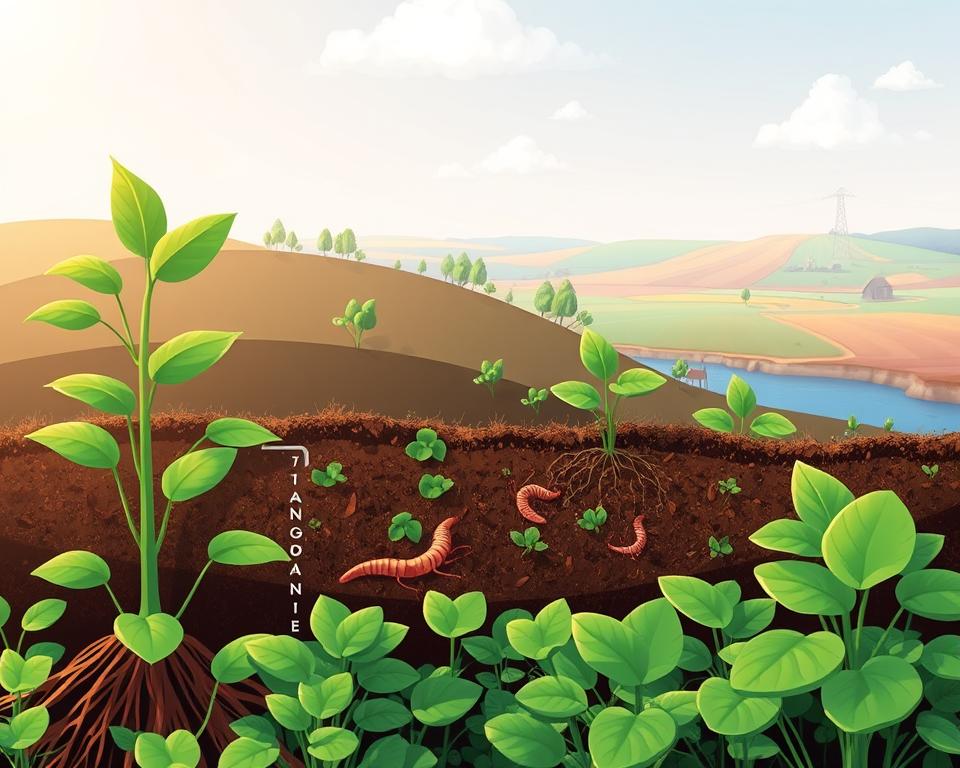
Policies and rules are essential for fixing the nitrogen cycle. Governments can make laws to cut down on nitrogen pollution. For example, rules on fertilizer use can stop nitrogen from getting into water.
Community Involvement and Education
Getting the community involved is critical. Teaching people about the nitrogen cycle and getting them to help can make a big difference. Events like local clean-up events and educational workshops can inspire environmental care.
Together, we can fix the nitrogen cycle and make the world a better place for all.
Tools and Resources for Understanding the Nitrogen Cycle
Learning about the nitrogen cycle is easier with the right tools and resources. We need reliable information and educational materials to understand this complex process.
I’ve gathered a list of valuable resources for you. You’ll find books, articles, online courses, and organizations focused on the nitrogen cycle. These resources offer insights, interactive learning, and the latest research.
Books and Articles
For a solid start, check out these recommended books on the nitrogen cycle. They cover the basics and more, with diagrams and illustrations to help you understand, like a detailed Nitrogen Cycle Diagram.
- “The Nitrogen Cycle: A Guide for Beginners” – A great introduction for newcomers.
- “Nitrogen in the Environment” – Explores nitrogen’s effects on ecosystems.
Scientific journals and publications also have valuable articles. Look for “Understanding the Nitrogen Cycle: A Review” and “The Role of Nitrogen in Agriculture.” They’re perfect for beginners.
Online Courses and Webinars
Online platforms offer courses and webinars on the nitrogen cycle. They’re designed for all levels of interest and knowledge. You’ll find quizzes and forums to make learning fun.
Popular courses cover nitrogen fixation, nitrification, and how human activities affect the nitrogen cycle. They aim to make complex topics easy to understand.
Organizations to Follow
Many organizations focus on nitrogen cycle research, education, and policy. Following them keeps you updated on new developments and initiatives.
- The Nitrogen Cycle Association – Works globally to improve nitrogen cycle understanding and management.
- The Environmental Nitrogen Network – A group of researchers, policymakers, and practitioners tackling nitrogen challenges.
Using these tools and resources helps deepen your nitrogen cycle knowledge. You’ll also stay current with the latest research and findings.
Conclusion: My Journey with the Nitrogen Cycle
Reflecting on my journey with the Nitrogen Cycle, I see its key role in our ecosystem. It’s vital to understand the Nitrogen Cycle to manage this important process.
Key Insights
The Nitrogen Cycle’s importance is huge, impacting agriculture, water quality, and the environment. Knowing the Nitrogen Cycle helps us see how bacteria and other microorganisms play a part.
Future Directions
We need more research to find ways to cut down nitrogen pollution and support sustainable practices. Studying the Nitrogen Cycle further can lead to new solutions for our environmental problems.
Continuing the Journey
I urge readers to keep learning about the Nitrogen Cycle. Dive into its details and uses. Together, we can deepen our understanding of this essential process and help our planet.