
Did you know that keeping an aquarium can lower stress by up to 12%?
Starting with fishkeeping can feel daunting. I’ll show you the key gear and supplies for a thriving aquarium. This makes low-maintenance fishkeeping achievable.
With the right aquarium essentials, you can make a stunning and healthy space for your fish. In this article, I’ll cover the basics to get you started.
Key Takeaways
- Understand the basic equipment needed for a thriving aquarium
- Learn how to choose the right fish for a low-maintenance aquarium
- Discover the importance of water quality and how to maintain it
- Find out how to create a balanced ecosystem in your aquarium
- Get tips on setting up your aquarium for long-term success
Introduction to Low-Maintenance Fishkeeping
Low-maintenance fishkeeping is perfect for beginners. It lets you start with an aquarium without feeling stressed. You can pick the right fish and gear for a stunning tank with little effort.
This method is great for those who are busy or new to aquariums. It offers the calm and beauty of fish without needing to spend a lot of time or know a lot.
Benefits of Choosing Low-Maintenance Fish
Choosing easy-to-care-for fish makes your aquarium experience better. These fish are tough, simple to look after, and do well in a clean tank with basic equipment. Some benefits include:
- They are less likely to get sick
- They need less special water conditions
- Feeding them is easy, as they eat standard fish food
Popular Low-Maintenance Fish Species:
| Fish Species | Water Temperature | Diet |
|---|---|---|
| Guppies | 72-82°F | Omnivorous |
| Zebra Danios | 65-75°F | Omnivorous |
| Corydoras Catfish | 70-80°F | Omnivorous |
Key Considerations for Your Fish Tank
Setting up your tank needs careful thought for a healthy aquarium. Key things to remember include:
Tank Size: The right tank size is important. A bigger tank is more stable and easier to keep up than a small one.
Equipment: Good equipment, like a reliable filter and the right lights, is key for a healthy tank.
By knowing these tips and picking the right fish, you can have a beautiful, easy-to-care-for aquarium. It will add joy and calm to your life.
Essential Aquarium Tank Equipment
Starting a thriving aquarium requires the right equipment. The correct gear keeps your fish healthy and makes care easier. This leads to a stress-free experience for you.
Choosing the Right Tank Size
The tank size is key for your fish’s health and tank upkeep. A bigger tank is more stable, less prone to sudden water changes. Beginners should aim for a tank of at least 20 gallons.
Think about your home’s space and the fish you want. Bigger tanks offer more fish options and are simpler to care for.
Importance of a Quality Filter
A good filter is vital for clean, healthy water. It removes waste, excess food, and debris. This keeps your tank clean and your fish healthy. There are many filter types, like hang-on-back, canister, and internal filters.
Key Features of a Good Filter:
- Effective biological filtration
- Mechanical filtration to remove debris
- Adjustable flow rates
Choose a filter based on your tank size and fish type. Some fish like calm waters, while others prefer stronger currents.
Types of Heaters and Thermometers
For tropical fish, the right water temperature is essential. Aquarium heaters warm the water, and thermometers monitor the temperature.
| Heater Type | Description | Pros | Cons |
|---|---|---|---|
| Submersible Heater | Placed directly in the water | Easy to install, accurate temperature control | Risk of breakage if not handled carefully |
| External Heater | Attached outside the tank | Less risk of breakage, can be more durable | More difficult to install, may not be as precise |
Thermometers, digital or analog, are key. They ensure your heater works right and the water is healthy for your fish.
Water Quality Management Tools
Keeping water quality right is key in fishkeeping. The right tools can make a big difference. It’s important for your fish’s health and happiness.
Testing Kits for pH, Ammonia, and Nitrate
A good testing kit is a must-have. It lets you check pH, ammonia, and nitrate levels. This keeps your water safe for your fish.
Testing often helps spot problems early. This way, you can fix them fast.
There are many testing kits out there. Liquid tests are more precise, but strip tests are easier to use. I suggest using both for the best results.
Dechlorinators and Water Conditioners
Removing bad chemicals from water is also important. Dechlorinators get rid of chlorine and chloramines. Water conditioners do more, removing heavy metals and reducing stress in fish.
Choose products made for aquariums. Always follow the instructions for how much to use. This keeps your water safe for your fish.
Using these tools regularly helps keep your aquarium healthy. By checking and adjusting often, you avoid water problems. This makes a happy home for your fish.
Aquarium Substrate and Decorations
Setting up your aquarium means picking the right substrate and decorations. They make your tank look good and keep your fish healthy. A good substrate improves your tank’s look and helps keep the water clean.
Best Types of Substrate for Easy Cleaning
Choosing the right substrate is key for a clean aquarium. Gravel is popular because it’s easy to vacuum and doesn’t hold onto debris. But, sand can be harder to clean, causing water to cloud if it’s fine.
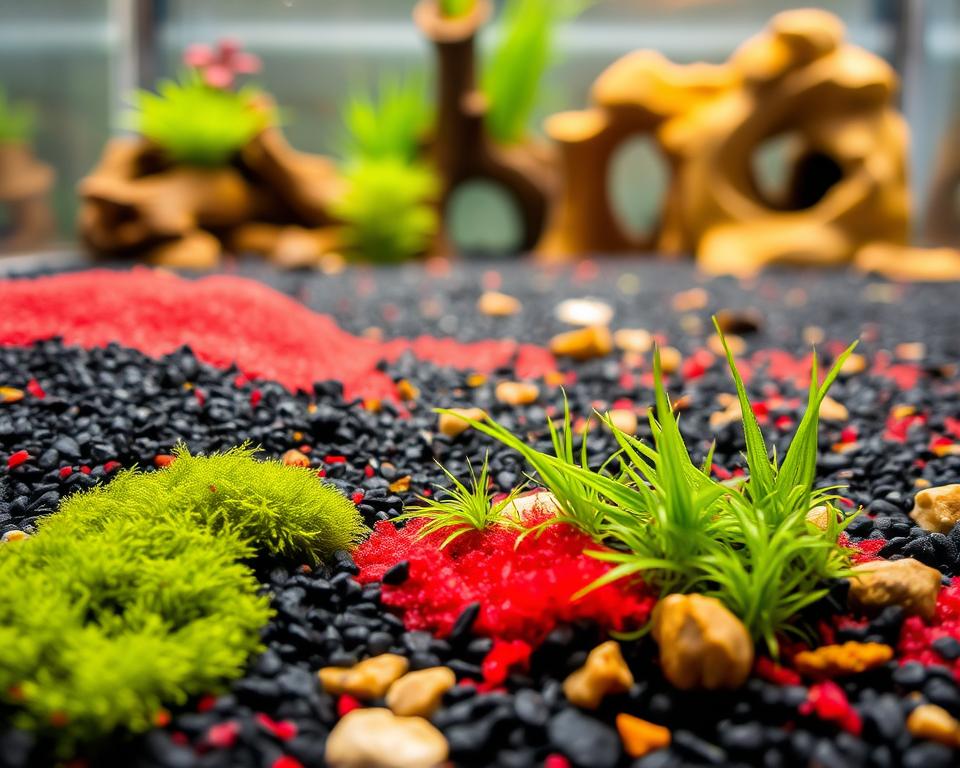
Think about your fish when picking a substrate. Some fish like sand, while others don’t care. Look for a substrate that helps beneficial bacteria grow, keeping your tank healthy.
Choosing Fish-Friendly Decorations
Decorations do more than look good. They give your fish places to hide and claim as their own. This reduces stress and makes them feel safe. Make sure your decorations are safe for your fish. Stay away from sharp edges or anything that can trap them.
Natural decorations like driftwood and rocks are great. They make your tank feel like your fish’s natural home. But, don’t overdo it. Too many decorations can stress your fish and cut down on swimming space. Aim for a mix of open swimming areas and decorated spots.
Lighting Solutions for Your Fish Tank
A well-lit aquarium is not just pretty, but also key for your fish’s health. Good lighting brings out your fish’s colors, helps plants grow, and even changes how they act.
Choosing the right lighting is important. You need to think about the type of lighting and how often to use it. The right choice can make your aquarium easy to keep up.
LED vs. Fluorescent Lighting
LED and fluorescent lighting are two top picks for aquariums. LED lighting is energy-saving and lasts a long time. It lets you control the light spectrum, which is great for plants and fish colors.
Fluorescent lighting has been around for a while. It comes in different types, like those that help plants grow and make fish look better. But, it uses more energy and doesn’t last as long as LED.
“LED lighting has revolutionized the aquarium hobby by providing a highly customizable and energy-efficient lighting solution.” – Aquarium Expert
Lighting Schedules for Low-Maintenance Aquariums
Having a good lighting schedule is vital for your aquarium’s health. Most aquariums do well with a 10-12 hour light and 12-14 hour dark cycle. This helps your fish act naturally and stay healthy.
- Use a timer to automate your lighting schedule, ensuring consistency.
- Consider the specific needs of your fish and plants when determining the lighting duration.
- Avoid sudden changes in lighting, as this can stress your fish.
By picking the right lighting and setting a good schedule, you can have a beautiful and easy-to-care-for aquarium.
Fish Food and Feeding Tools
Choosing the right food for your fish is as important as the tank they live in. Giving them the right nutrients is key to their health and long life.
For easy-to-care-for fish, pick a high-quality food that fits their needs. There are many types, like flakes, pellets, and frozen foods.
Types of Fish Food for Low-Maintenance Species
Different fish need different foods. Carnivorous fish need lots of protein, while herbivorous fish need more plants.
- Flakes: Many people like flakes because they’re easy to use and good for fish that swim near the surface.
- Pellets: Pellets are better for bigger fish or those that like to eat from the bottom.
- Frozen Foods: Foods like brine shrimp or bloodworms offer a nutritious and varied diet for your fish.
Automated Feeders for Convenience
Automated feeders make caring for fish easier, great for busy people or those away for a while.
| Feature | Manual Feeding | Automated Feeding |
|---|---|---|
| Convenience | Needs you to feed them | Feeds them at set times |
| Consistency | Depends on your schedule | Keeps feeding regular |
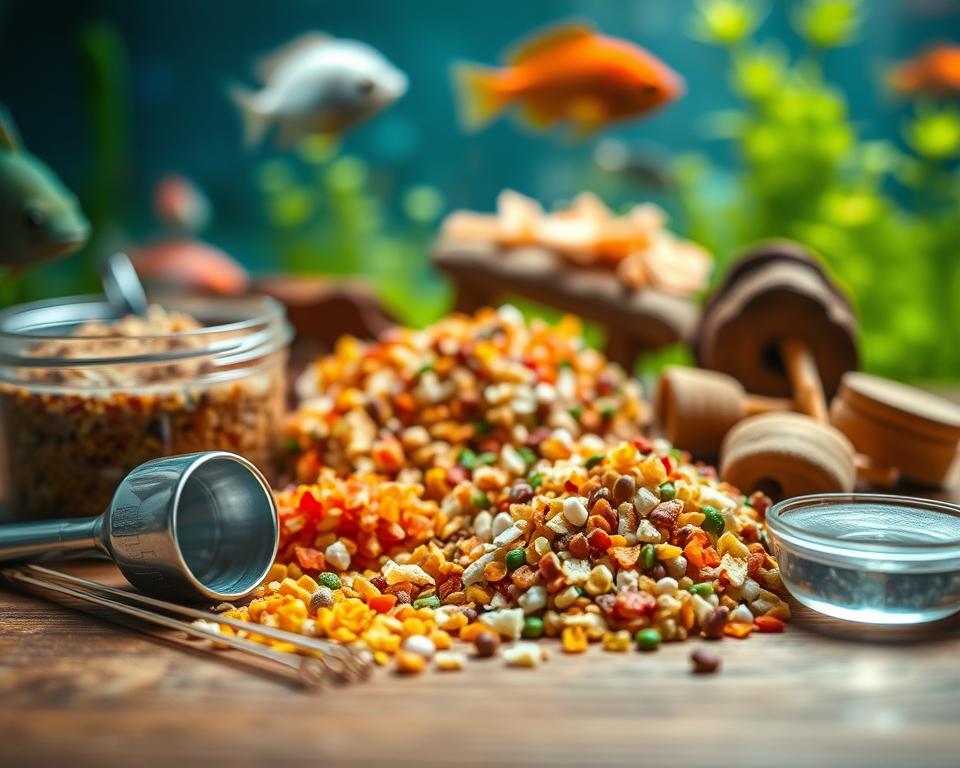
By picking the right food and using automated feeders, your fish will get what they need to stay healthy, even when you’re not there.
Maintenance Tools for Simplified Care
For a stress-free aquarium experience, the right maintenance tools are key. Regular care keeps your tank clean and your fish healthy. With the right gear, caring for your aquarium becomes easier and more enjoyable.
Algae Scrapers and Brushes
Algae growth is normal in aquariums, but too much can harm. Algae scrapers and brushes help remove it from your tank’s glass walls. This keeps your tank clear and your fish visible.
When picking an algae scraper, think about your tank’s glass type. This avoids scratches. Magnetic scrapers are great because they work without you getting wet.
Vacuum Cleaners for Aquarium Cleanings
Vacuuming your substrate is vital for aquarium health. Vacuum cleaners made for aquariums pull out debris and waste. This boosts water quality and lowers disease risks.
When choosing a vacuum, match it to your tank size. Also, look for adjustable suction to protect your fish and plants.
Using these tools regularly keeps your aquarium clean and healthy. It makes caring for your aquarium easy and stress-free.
Stocking Your Tank with the Right Fish
For a happy and healthy aquarium, picking the right fish is key. When starting a beginner fish tank setup, choosing the right fish is very important.
Think about the needs and personalities of different fish when stocking your tank. Low-maintenance fish are great for beginners or those who want an easy experience.
Low-Maintenance Fish Species to Consider
Some top low-maintenance fish include Guppies, Neon Tetras, and Goldfish. These fish are easy to care for and add color and life to your tank.
| Fish Species | Temperature Range | Care Level |
|---|---|---|
| Guppies | 72-82°F | Easy |
| Neon Tetras | 68-78°F | Easy |
| Goldfish | 65-75°F | Easy |
For more info on setting up and keeping your aquarium, check out Aqueon’s Ultimate Fishkeeping Guide.
Tips for Introducing New Fish
Adding new fish to your tank can be stressful for everyone. To reduce stress, acclimate the fish slowly to their new home.
“The key to a successful aquarium is not just about the fish you choose, but also how you care for them.” – Aquarium Expert
Here are some tips for introducing new fish:
- Floating the unopened bag in your tank to equalize the temperature.
- Gradually adding tank water to the bag to acclimate the fish to the water chemistry.
- Releasing the fish slowly into the tank.
Monitoring and Managing Fish Health
A healthy aquarium starts with knowing the signs of illness in your fish. As an aquarium owner, it’s vital to watch your fish’s health closely. This helps prevent diseases. Regular checks and good management keep your aquarium thriving.
Signs of Health Problems in Fish
Spotting health issues early is key. Some common signs include:
- Changes in appetite or feeding behavior
- Visible injuries or infections
- Lethargy or unusual swimming patterns
- Discoloration or unusual growths
Regular observation helps catch these problems early. Knowing these signs lets you act fast to fix health issues.
Basic Treatments for Common Issues
When you spot a health issue, act quickly. Here are some basic treatments for common problems:
| Health Issue | Basic Treatment |
|---|---|
| Fin rot | Improve water quality, administer antibiotics |
| Ich | Raise water temperature, use ich medication |
| Swimming bladder disorder | Adjust feeding habits, improve water quality |
For serious or ongoing issues, consult with a fish health expert or a vet. They can guide you on the best treatment.
Being proactive and knowing about fish health is key. Regular checks and the right treatments are vital for effective fish health management.
Conclusion: Enjoying Your Low-Maintenance Aquarium
With the right gear, your aquarium can be a source of joy and peace. Remember, a little care can make a big difference. It keeps your fish healthy and happy.
Longevity and Happiness Tips
Regular water changes and checking water quality are key. A good filter and the right lighting also help. These simple steps will keep your aquarium thriving for years.
Choosing the right equipment and caring for your fish makes fishkeeping rewarding. A low-maintenance aquarium lets you relax and enjoy the beauty of your underwater world.