



Did you know a dirty tank can harm your fish’s health? Ignoring tank upkeep can cause harmful bacteria and algae buildup, risking your fish’s safety.
Keeping your tank clean is key as a tank owner. I’ll share important tank maintenance tips to help you keep your tank in top shape. This ensures your aquatic life stays healthy.
By using these expert tips for tank cleaning, you’ll master tank care. Your fish will thrive in a clean, healthy environment.
Key Takeaways
- Regular tank maintenance is vital for your aquatic life’s health.
- Ignoring tank cleaning can lead to harmful bacteria and algae buildup.
- Expert tank cleaning tips can help you maintain your tank like a pro.
- A clean tank is essential for your fish’s well-being.
- Proper tank maintenance can prevent common problems.
Understanding the Importance of Tank Cleaning
Tank cleaning is vital for your fish’s health. It’s not just a routine task. It’s essential for keeping your fish tank healthy.
Benefits of Regular Cleaning
Regular cleaning prevents harmful algae and bacteria. This keeps your water quality high. It also lowers disease risks and helps your fish thrive.
Some key benefits include:
- Improved water clarity and quality
- Reduced risk of disease and parasites
- Enhanced aquatic life health and well-being
- Increased visibility and enjoyment of your aquarium
Common Contaminants to Look Out For
Common contaminants are leftover food, fish waste, and dead plants. These can harm your water quality and fish health if not cleaned up fast.
To clean your tank well, you must find and remove these contaminants. Signs of contamination include:
- Cloudy or murky water
- Unpleasant odors or algae growth
- Visible debris or waste
Knowing the importance of tank cleaning and spotting contaminants helps keep your aquarium healthy and lively.
Knowing When to Clean Your Tank
To keep your tank in top shape, knowing when to clean it is key. Regular upkeep is essential. Spotting cleaning needs early can avoid big problems later.

Signs Your Tank Needs a Thorough Cleaning
Several signs show your tank needs a deep clean. These include:
- Cloudy or murky water that lasts even after changing the water.
- Too much algae covering decorations, glass, or other parts.
- A bad smell coming from the tank.
- Debris or sediment at the tank’s bottom.
Spotting these signs early lets you act fast. This keeps your fish and other sea creatures healthy.
Recommended Cleaning Schedule
While signs show when to clean, a regular schedule is also vital. Cleaning frequency depends on tank size, inhabitants, and filtration system.
Change about 25% of the water every 2-4 weeks. Also, do a full tank clean every 2-3 months, or more if needed.
Regular cleaning keeps your aquarium looking great. It also ensures a healthy home for your fish and other sea creatures.
Essential Tools and Supplies for Tank Cleaning
Cleaning your tank right is key for your fish’s health. The right tools make cleaning easier and keep your tank looking good.
Must-Have Tools for Effective Cleaning
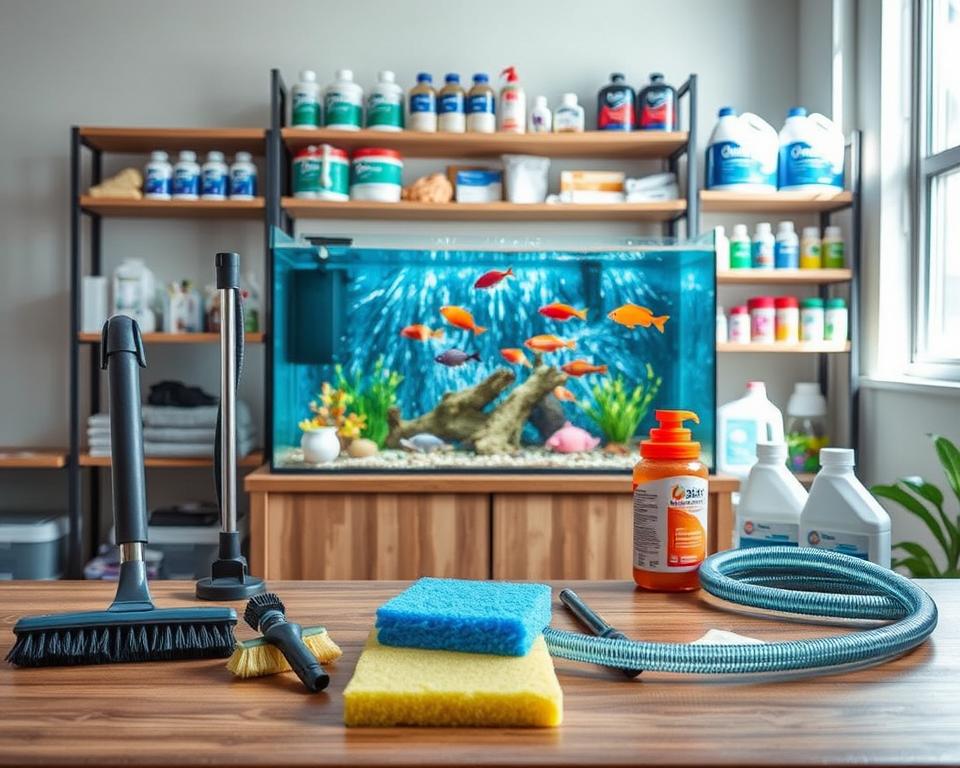
You’ll need some basic tools to clean your tank well. A gravel vacuum is essential for getting rid of debris. An algae scraper helps keep algae off the glass. Also, a water test kit is important for checking the water’s health.
For more tips on cleaning your tank, check out expert tips for tank cleaning. They offer detailed advice on keeping your tank clean and healthy.
Recommended Cleaning Solutions
Choosing the right cleaning solutions is important to protect your fish. Use non-toxic cleaning products to keep them safe. Also, algae-control products help manage algae growth.
| Tool/Supply | Purpose | Benefits |
|---|---|---|
| Gravel Vacuum | Removes debris and waste | Maintains clean substrate, improves water quality |
| Algae Scraper | Removes algae from glass | Keeps tank walls clean, improves visibility |
| Water Test Kit | Monitors water parameters | Ensures safe water conditions for aquatic life |
“Regular tank cleaning is not just about aesthetics; it’s vital for your fish’s health.”
With the right tools and supplies, and by following best practices for tank cleaning, you can keep your tank a great home for your fish.
Step-by-Step Guide to Cleaning Your Tank
In this section, I’ll show you how to clean your tank like a pro. This ensures a healthy home for your fish. Cleaning your tank is more than just removing debris. It’s about making a safe space for your fish to thrive.
Preparing Your Tank for Cleaning
Before you start, prepare your tank. First, turn off all equipment like filters and heaters. This prevents damage or electrical shock. Then, take out decorations, plants, and accessories to clean them separately.
- Unplug all electrical equipment.
- Remove decorations and accessories.
- Siphon out debris from the substrate.
Tip: Use a gravel vacuum to remove waste and debris from the substrate. This makes cleaning more efficient and keeps your tank clean.
Detailed Cleaning Process
Now, your tank is ready for cleaning. Start by cleaning the glass walls with a magnetic algae scraper. Be gentle to avoid scratching the glass.
Next, clean the substrate and equipment. Use a gravel vacuum to remove debris. Then, replace the water with fresh, dechlorinated water. Don’t forget to clean the filter as the manufacturer suggests.
- Clean the glass walls with a magnetic algae scraper.
- Siphon out debris from the substrate.
- Replace the water with fresh, dechlorinated water.
- Clean the filter according to the manufacturer’s instructions.
By using these tank cleaning techniques and tank maintenance tips, you’ll keep your tank clean. Regular cleaning is essential for a healthy aquatic environment.
Addressing Different Tank Types
Keeping your tank clean depends on knowing what your tank needs. Each tank type has its own special care. It’s important to understand these needs to keep your aquatic life healthy.
Freshwater Tank Cleaning Tips
Freshwater tanks are simpler to care for than saltwater ones. But, they need regular cleaning too. Start by changing 25% of the water every two weeks.
Use a gravel vacuum to clean the bottom. Clean the glass walls with a magnetic algae scraper. Don’t forget to check and replace your filter media when needed.
Watch your water’s pH, ammonia, and nitrite levels closely. These changes mean you might need to adjust your cleaning schedule. Also, clean decorations and ornaments often to keep your tank healthy.
Saltwater Tank Cleaning Tips
Saltwater tanks are more challenging because of their complex ecosystem. When cleaning, be gentle to avoid stressing your marine life. Start with a 10-15% water change every week, using a good salt mix.
Use a protein skimmer to remove waste. Clean the skimmer and other gear regularly for best performance. When cleaning the tank, avoid harsh chemicals or rough materials. Instead, use gentle cleaners made for saltwater aquariums.
Specialized Care for Reef Tanks
Reef tanks need extra care because of their delicate ecosystem. Regular water changes and equipment checks are key. Also, clean the coral and rock structures carefully.
Use a soft-bristled brush to remove algae from corals without harming them. Keep an eye out for algae or coral stress. Adjust your cleaning and care routine as needed. Stable water parameters are vital for a reef tank’s health. Invest in a good water testing kit and monitor your tank’s conditions closely.
Preventative Measures to Keep Your Tank Clean
Keeping your tank clean is key to a healthy aquarium. By following a few simple steps, you can avoid frequent cleanings. This creates a better home for your fish.
Best Practices to Prevent Algae Growth
Algae can be a big problem in aquariums. But, you can stop it with the right steps. Here are some best practices to keep algae away:
- Control light exposure: Limiting light can stop algae. Use a timer to keep lights on for 10 hours or less.
- Maintain proper nutrient levels: Test your water for nutrients like nitrogen and phosphorus. Change the water as needed to keep levels right.
- Avoid overfeeding: Too much food adds nutrients that algae love. Feed your fish just what they can eat in a few minutes.
Importance of Proper Filtration
Good filtration is key to a clean tank. It removes waste, excess food, and debris. This keeps your water clear and your fish healthy.
When picking a filter, think about your tank’s size and the fish in it. Here are important things to consider:
| Filtration Type | Benefits | Best For |
|---|---|---|
| Mechanical Filtration | Removes particulate matter and debris | Tanks with high fish loads |
| Biological Filtration | Breaks down waste products | All tanks, including those with sensitive fish |
| Chemical Filtration | Removes dissolved waste and impurities | Tanks with specific water quality issues |
By taking these steps, you can keep your tank clean and your fish happy. This makes aquarium care easier and more fun.
Common Mistakes to Avoid During Tank Cleaning
Keeping your aquarium healthy means regular cleaning. But, there are mistakes to avoid. As someone who loves aquariums, I’ve learned that some errors can harm your fish and plants.
Over-Cleaning Your Tank
One big mistake is cleaning too much. It might seem like a good idea, but it can upset your tank’s balance. Beneficial bacteria are vital for a healthy tank. If you clean too much, you can lose them, causing water quality problems.
To avoid this, find a balance. Do partial water changes and clean decorations and gravel gently. I always leave some areas untouched to keep the good bacteria.
Using the Wrong Products
Another mistake is using the wrong cleaning products. Many products have harsh chemicals that can harm fish and other aquatic life. Always read the labels and choose products made for aquariums.
Stay away from products with strong detergents or abrasive materials. Instead, use gentle, aquarium-safe cleaners. For example, a magnetic algae scraper is safe and effective for cleaning the glass walls of your tank without harming your fish.
By being careful and avoiding these mistakes, you can keep your tank clean and your aquatic life healthy. Remember, the secret to successful tank care is balance and caution.
Tips for Cleaning Tough Stains
Stubborn stains can be tough to get rid of. But, with the right techniques, you can keep your tank looking great. These stains not only ruin your tank’s look but can also harbor harmful bacteria. Here, I’ll share effective methods and natural solutions to tackle these tough marks.
Effective Methods for Stain Removal
To remove tough stains, use specialized cleaning products made for aquariums. These products are safe for your fish and break down stains well. A magnetic algae scraper for glass tanks is a good tool for this.
For stains that don’t go away, try a gentle scrubber or a product with enzymes. Enzymes help break down organic matter.
Natural Solutions for Stubborn Marks
If you prefer natural solutions, vinegar works well for stains. Mix equal parts water and white vinegar in a spray bottle. Spray it on the stain, wait a few minutes, then rinse.
Another natural option is baking soda. Make a paste with baking soda and water, apply it to the stain, and scrub gently. Then, rinse well.
How to Clean Tank Decorations and Substrate
To keep your tank looking its best, cleaning decorations and substrate is key. A clean tank not only looks better but also keeps your fish healthy.
Cleaning Options for Tank Decor
Cleaning tank decorations is easy with the right methods. First, take out the decorations and rinse them in a separate container with tank water. This avoids harmful air or tap water.
For decorations with tough algae or debris, a soft-bristled brush works well. For deeper cleaning, mix water with white vinegar. But always rinse well to remove any leftover vinegar.
- Remove decorations from the tank.
- Rinse in tank water.
- Use a soft-bristled brush for scrubbing.
- Optional: Use a diluted white vinegar solution for tough grime.
Substrate Maintenance Techniques
Keeping the substrate clean is vital for your tank’s health. Vacuuming gravel or sand during water changes removes debris. For gravel, a gravel vacuum is best. For sand, gentle siphoning works well.
| Substrate Type | Recommended Cleaning Method | Frequency |
|---|---|---|
| Gravel | Gravel vacuum during water changes | Weekly |
| Sand | Gentle siphoning | Bi-Weekly |
For tanks with lots of debris, adding beneficial bacteria can help. Regular care and checks prevent harmful buildup.
By using these expert tips for tank cleaning, you can keep decorations clean and substrate healthy. This helps create a thriving aquatic home.
When to Seek Professional Help
Even with your best cleaning efforts, your tank might need expert help. Regular cleaning is key, but sometimes, you need professionals for tough issues or ongoing problems.
Signs You Might Need Expert Assistance
Look out for these signs to know when to call in the pros:
- Persistent algae growth that doesn’t respond to regular cleaning
- Complex tank issues that you’re unsure how to address
- Significant contamination or staining that’s difficult to remove
- Equipment failure or malfunction that’s affecting tank health
Benefits of Professional Cleaning Services
Professional cleaning services bring many advantages, including:
- Expertise: They have the skills to handle tough cleaning jobs.
- Specialized Equipment: They use tools that can get rid of hard stains and contaminants.
- Time-Saving: Hiring them saves you time, so you can focus on other tasks.
Knowing when to get professional help ensures your tank stays healthy and works well. Following important tank cleaning steps and knowing when to call experts is key. Regular upkeep and professional help when needed will keep your tank in top shape.
Eco-Friendly Cleaning Practices
Being a responsible tank owner means using eco-friendly cleaning methods. These practices are good for your tank and the planet. By picking the right cleaning products and methods, you can keep your tank clean and safe for your fish.
Safe Products to Use
It’s important to use safe products for cleaning your tank. Look for eco-friendly solutions without harsh chemicals. Brands like Seachem and API have safe and effective products for cleaning your tank.
To keep your tank in great shape, follow tank cleaning tips and use the right products. Regular water changes, proper filtration, and avoiding over-cleaning are key. These tank maintenance tips help create a healthy home for your fish.