


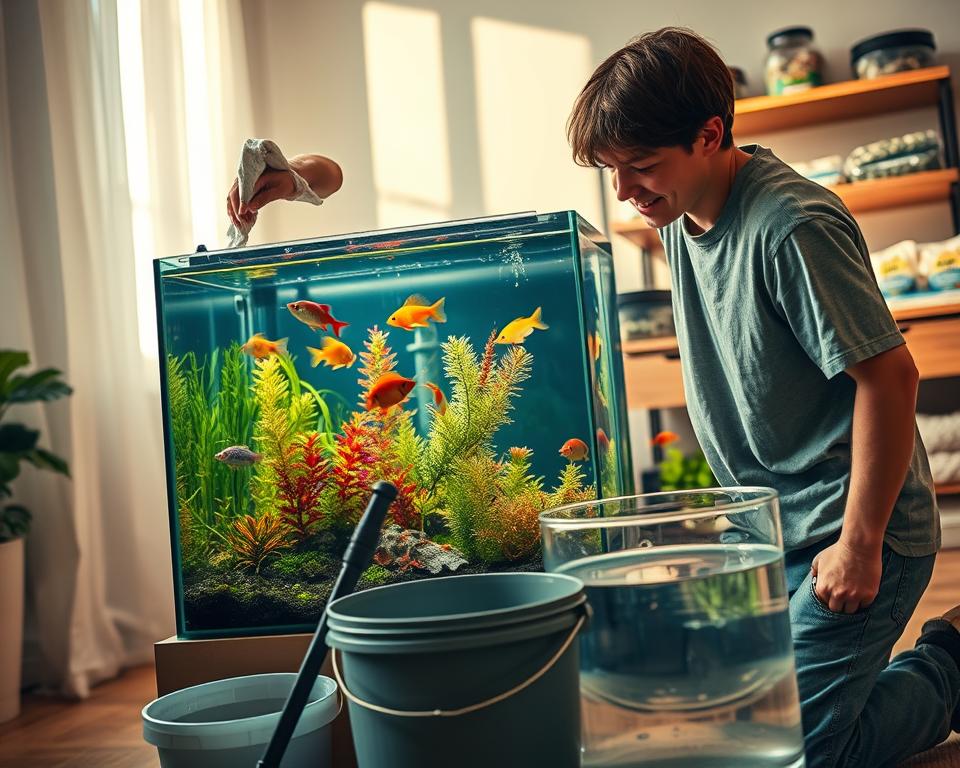
Did you know a well-kept aquarium can be calming and fascinating at home? But, ignoring fish tank maintenance can harm your aquatic pets.
As a responsible aquarium owner, knowing the basics of aquarium care is key. Regular tasks like water changes and cleaning are vital for a balanced ecosystem.
By doing Simple Tank Chores, you can avoid common issues and keep your aquarium healthy. In this article, we’ll cover the essential maintenance tips to keep your aquarium in great shape.
Key Takeaways
- Regular water changes are key for a healthy aquarium.
- Cleaning the tank and its parts is important to avoid debris buildup.
- Checking water quality is vital for your fish’s health.
- A balanced ecosystem is essential for a thriving aquarium.
- Simple maintenance tasks can prevent common problems.
Understanding the Importance of Tank Maintenance
Tank maintenance is key to keeping your fish healthy. It ensures your tank stays balanced and thriving. It’s not just a good idea; it’s essential for your fish’s well-being.
Why Regular Maintenance Matters
Regular tank maintenance is vital for several reasons. It keeps the water quality optimal, which is essential for your fish’s health. Bad water quality can stress, disease, and even kill your fish.
It also prevents algae overgrowth. Algae can deplete oxygen and look bad. Plus, it keeps your equipment working right, avoiding failures that could harm your fish.
The benefits of regular maintenance are clear:
- Improved Water Quality: Regular water changes and monitoring keep the water stable.
- Reduced Algae Growth: Proper lighting and nutrient control cut down algae.
- Healthy Fish: A clean, stable environment reduces stress and disease in fish.
- Equipment Longevity: Regular checks and maintenance make your tank equipment last longer.
Common Issues from Neglect
Neglecting tank maintenance leads to many problems. Poor water quality can cause diseases in fish. Unchecked algae growth looks bad and can harm fish by lowering oxygen levels.
Ignoring equipment maintenance can cause sudden failures. These failures can be very harmful.
Some common issues from neglect include:
- Disease Outbreaks: Bad water quality can lead to bacterial and fungal infections.
- Algae Overgrowth: Too many nutrients and light can cause algae to grow too much.
- Equipment Failure: Not maintaining equipment can cause filters, heaters, and other parts to fail.
- Stress on Fish: Unstable water conditions can stress fish, making them more likely to get sick.
Essential Tools for Tank Maintenance
The key to easy tank cleaning and routine tank tasks is using the right tools. Having the essential equipment makes maintenance simpler. It also keeps your aquatic life healthy.

Must-Have Supplies for Every Tank Owner
Every tank owner needs a few basic supplies. A water test kit is key for checking water health. A gravel vacuum removes debris and waste from the bottom.
An algae scraper keeps the glass clean. This improves visibility and stops algae from growing. You also need a fish net for handling fish and a water conditioner to make tap water safe.
Recommended Brands for Quality Tools
Choosing the right brand for your tank tools is important. API and Tetra offer great water test kits. They are accurate and easy to use.
For gravel vacuums and algae scrapers, Eheim and Hagen are top choices. They are durable and work well. Even though quality tools cost more, they save time and effort in the long run.
Daily Tank Maintenance Routines
To keep your aquarium thriving, daily maintenance is key. Daily routines help spot problems early. This keeps your fish healthy.
Quick Tasks to Keep Your Tank Healthy
Simple daily tasks can greatly improve your aquarium’s health. First, check your tank’s equipment. Make sure filters, heaters, and lights are working right. Feeding your fish is also a daily task. But, be careful not to overfeed, as it can harm water quality.
Watching your fish during meals can tell you a lot about their health. Look for signs of stress or illness, like hard swimming or spots. Regular observation lets you catch problems early, so you can act fast.
Observing Your Tank’s Ecosystem
Watching your tank’s ecosystem daily is important. Check the water’s clarity and color. If it’s cloudy or off-color, it might mean water quality or algae issues. Monitoring water parameters daily, like pH and ammonia, keeps things stable.
Also, pay attention to any changes in your fish’s behavior or looks. Early detection of stress or disease can help a lot. By doing these daily tasks, you’ll keep your aquarium thriving.
Weekly Maintenance Your Tank Needs
To keep your fish tank thriving, weekly maintenance is key. It involves tasks that keep water quality high and your fish’s home clean.
Water Testing: Key Parameters to Monitor
Regular water testing is vital for your aquarium’s health. You should check pH levels, ammonia, and nitrite levels. These tests help spot issues early.
For more on water testing, check out The Spruce Pets. They have great advice on aquarium care.
Testing these parameters weekly helps you keep your tank balanced. It’s also smart to log your test results. This way, you can see any changes over time.
Cleaning Your Tank: The Right Techniques
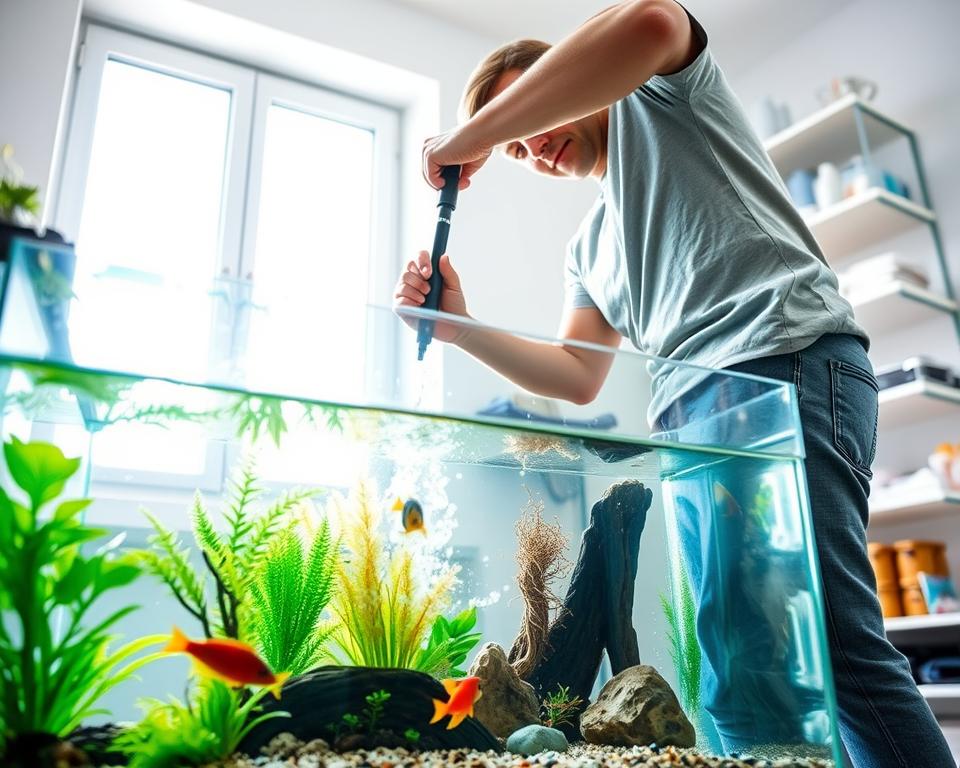
Cleaning your tank is a must every week. You’ll need to gravel vacuum to get rid of debris and waste. Also, glass cleaning is important to remove algae and grime.
When vacuuming gravel, be gentle. You don’t want to harm the good bacteria that keep your tank healthy.
For glass cleaning, use a magnetic algae scraper. It’s easy and keeps your tank looking great. Regular cleaning also keeps your fish’s home healthy.
Monthly Maintenance Tips
To keep your tank running smoothly, do certain tasks every month. This includes checking and maintaining key equipment. It helps prevent failures and keeps your tank’s ecosystem healthy.
Filter Maintenance: When and How to Clean
Filter maintenance is key for hassle-free tank maintenance. Cleaning the filter media regularly keeps water quality high. Check your filter media at least once a month.
Depending on the filter type, you might need to replace or clean the media. For example, mechanical filter media can be rinsed and reused. Chemical media might need to be replaced.
“Regular filter maintenance is key to a healthy aquarium,” experts say. Neglecting this can harm your fish. To clean your filter, turn it off, unplug it, and remove the media. Rinse the media in old tank water and then put everything back together.
Inspecting Equipment for Wear and Tear
Inspecting your tank equipment monthly is vital for minimal effort tank care. Over time, equipment can wear out or lose efficiency. Look for signs of wear on your pumps, heaters, and other devices.
A worn-out pump might not circulate water well, causing dead spots. A faulty heater can stress your fish with temperature changes. Catching these issues early can prevent bigger problems.
- Check for any signs of physical damage or corrosion on equipment.
- Verify that all equipment is functioning as expected.
- Replace any worn-out or malfunctioning parts promptly.
By doing these monthly maintenance tasks, you can have a thriving tank. Basic tank duties become routine. Regular maintenance keeps your fish healthy and makes tank care enjoyable.
Seasonal Maintenance Tasks for Your Tank
To keep your aquarium thriving, it’s essential to understand how seasonal variations affect your tank’s conditions. As the seasons change, so do the needs of your aquatic ecosystem.
Preparing Your Tank for Seasonal Changes
Preparing your tank for seasonal changes involves several key tasks. First, you need to monitor the temperature and adjust it according to the season. For instance, some fish require a slight drop in temperature during winter to simulate their natural habitat.
Key Tasks for Seasonal Preparation:
- Monitor and adjust water temperature.
- Adjust lighting to simulate natural daylight hours.
- Check for equipment that may need seasonal adjustments.
Adjusting Temperature and Lighting
Adjusting the temperature and lighting in your tank is key. It helps in simulating natural environmental changes. This reduces stress among fish and promotes a healthy environment.
| Season | Temperature Adjustment | Lighting Adjustment |
|---|---|---|
| Summer | Maintain or slightly lower temperature | Longer daylight hours |
| Winter | Lower temperature for some species | Shorter daylight hours |
| Spring | Gradually increase temperature | Increase lighting duration |
| Autumn | Gradually decrease temperature | Decrease lighting duration |
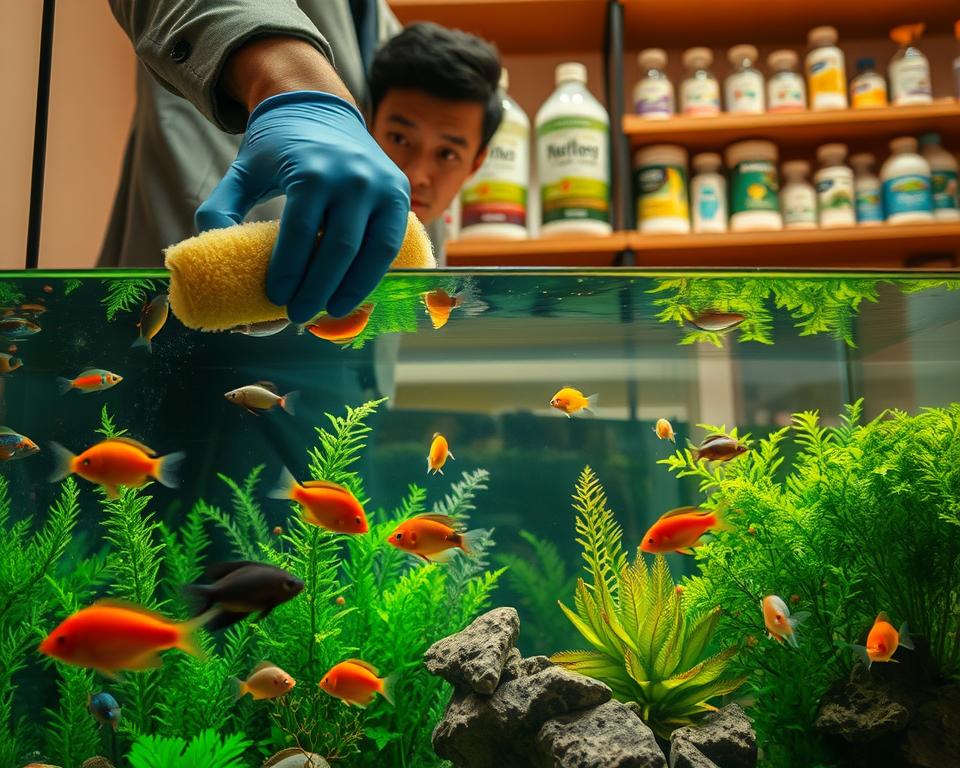
By following these seasonal maintenance tasks, you can ensure your aquarium stays thriving. Regular adjustments and monitoring keep the ecosystem balanced.
Troubleshooting Common Tank Problems
Tank problems can happen even with regular care. Knowing how to fix them is important. It helps keep your fish healthy and happy.
Identifying Signs of Stress in Fish
Fish stress can come from many things. This includes bad water, too small tanks, and wrong water temperature. Watching your fish closely helps spot stress early. Look for signs like acting tired or not eating well, and physical signs like hard breathing or injuries.
It’s vital to check the water often. Testing the water helps find problems before they get worse. For example, sudden pH or ammonia changes can harm your fish.
| Signs of Stress | Possible Causes | Corrective Actions |
|---|---|---|
| Lethargy, loss of appetite | Poor water quality, incorrect temperature | Perform water change, adjust heater |
| Labored breathing, rapid gill movement | Low oxygen levels, high ammonia/nitrite | Increase aeration, check water parameters |
Remedies for Algae Growth
Algae is a big problem in tanks. It’s caused by too many nutrients and light. Controlling light and cutting down nutrients helps stop algae. Cleaning the tank and its parts often is also key.
If algae keeps coming back, think about getting algae-eating fish or using special products. But, it’s important to find and fix the real cause, not just treat the symptoms.
Being ready and knowing about common tank problems helps a lot. Regular care and knowing how to fix issues are essential for keeping your fish happy.
Tips for Every New Tank Owner
Starting your aquarium journey can be thrilling and a bit scary. But, with the right help, it’s easy. You’re diving into a hobby that needs focus and a desire to learn.
Starting with the Right Setup
Getting your tank set up right is key for a healthy home for your fish. You need to pick the right equipment. This includes a good filter, heater, and lights that match your tank and fish needs.
- Choose a tank big enough for your fish.
- Use a top-notch filter for clean water.
- Get a reliable heater for steady water temperature.
It’s also important to pick fish that go well together. Learn about different fish to make sure they get along. Start with easy-to-care-for fish to make things easier and more fun.
Resources for Ongoing Learning
Learning about aquarium care is a lifelong journey. To keep your tank easy to care for and your fish happy, keep up with the latest tips.
- Join online forums and aquarium groups to meet experts.
- Read books and online guides for deep aquarium knowledge.
- Go to workshops or join local aquarium clubs for hands-on learning.
By spending a bit of time learning and sticking to simple care routines, you can have a thriving aquarium. It will bring happiness and calm to your home.
Frequently Asked Questions on Tank Maintenance
As a tank owner, you might wonder about the best ways to care for your aquarium. I’ll answer some common questions to help you keep your tank healthy and vibrant.
Maintenance Frequency
Regular Simple Tank Chores are key for fish tank upkeep. Check your tank’s water weekly and clean the gravel and decorations every two weeks. To clean easily, turn off the equipment, remove debris, and change 10-20% of the tank water.
Best Practices for Tank Care
For the best aquarium care, watch your tank’s water temperature, pH, and ammonia levels. Also, check your equipment often and replace it when needed. Following these tips will help you create a healthy space for your fish and enjoy a thriving aquarium.
By adding these Simple Tank Chores to your routine, you’ll be on the path to a beautiful and healthy aquarium. Regular maintenance is essential for your fish’s well-being.