


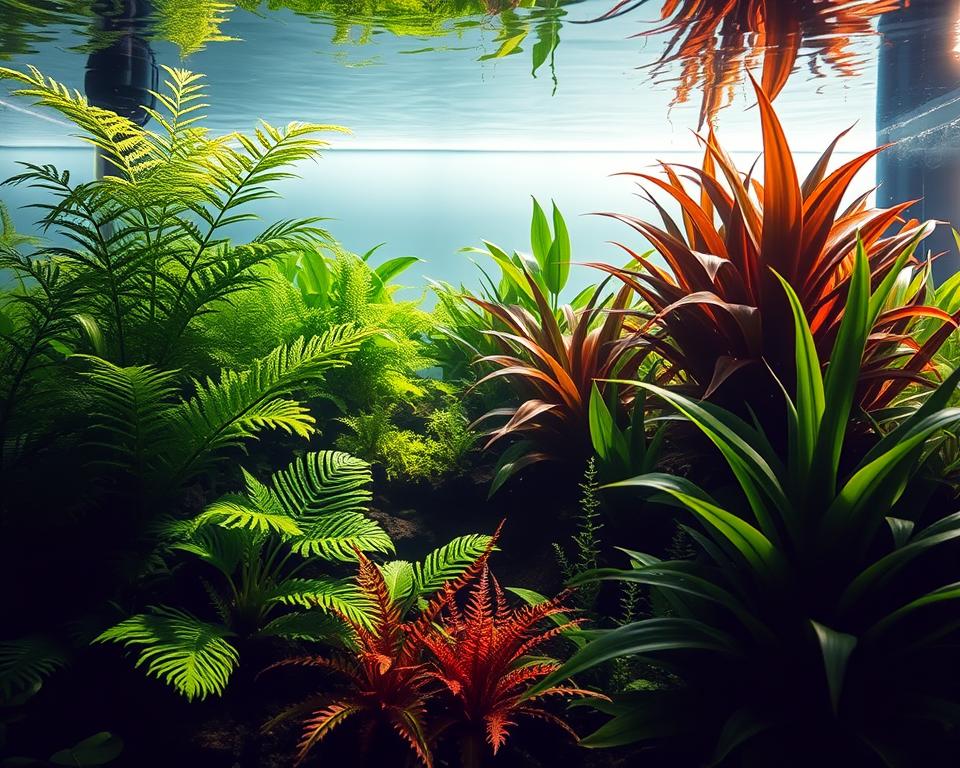
Did you know that adding low maintenance aquarium plants can make your tank healthier and more beautiful? As someone who loves aquariums, I’ve found that No-CO2 aquatic plants are amazing. They’re not just pretty; they also help keep your fish’s home balanced.
Choosing the right No-CO2 aquatic plants lets you have a lively, green aquarium without the hassle of CO2. In this article, I’ll give you tips on picking and taking care of these plants. This will help you make your aquarium look amazing.
Key Takeaways
- Discover the benefits of using No-CO2 aquatic plants in your aquarium.
- Learn how to choose the right plants for your tank.
- Understand the basics of caring for low maintenance aquarium plants.
- Explore tips for creating a balanced aquatic environment.
- Find out how to enjoy a thriving aquarium with minimal complexity.
What Are No-CO2 Aquatic Plants?
No-CO2 aquatic plants are great for a thriving aquarium. They grow well in low CO2 levels. This makes them perfect for beginners or those who want an easy aquarium.
Introduction to No-CO2 Plants
No-CO2 plants can grow without extra CO2. This makes them easy care aquatic plants. They’re great for new aquarium keepers or those who like simple maintenance.
These plants thrive in different aquatic settings. They use what’s available well. This makes them a good choice for a balanced aquarium ecosystem.
Benefits of Choosing No-CO2 Options
Choosing No-CO2 plants has many benefits. They make aquarium care simpler, as you don’t need CO2 equipment. This is perfect for those who want to enjoy plants without the hassle.
Also, No-CO2 plants save money over time. They don’t need CO2 systems. This is good for those on a budget or who want to reduce their aquarium’s environmental impact.
- Easy to care for
- Cost-effective
- Environmentally friendly
Common Types of No-CO2 Aquatic Plants
No-CO2 aquatic plants come in many varieties, perfect for making your aquarium lively. They not only make your tank look good but also help keep it healthy for your fish and other sea creatures.

Ferns: Low-Maintenance Favorites
Ferns are a hit among aquarium fans because they’re easy to care for. Java Fern stands out, growing well in different light and needing little attention. It’s great for both new and seasoned aquarists.
Mosses: Perfect for Aquascaping
Mosses, like Java Moss, are perfect for making detailed underwater scenes. They offer a cozy home for small fish and bugs, adding layers to your tank. Mosses also cover rocks and driftwood, making your aquarium look lush and green.
Floating Plants: Natural Water Filters
Floating plants, such as Water Wisteria, are not just pretty. They also clean the water by soaking up extra nutrients. These plants are simple to look after and can do well in many settings, making them a smart choice for any tank.
Adding these No-CO2 plants to your aquarium can make it more beautiful and balanced. Whether you’re starting out or have been keeping fish for years, there’s a No-CO2 plant that’s perfect for you.
Benefits of No-CO2 Aquatic Plants in Your Aquarium
Adding No-CO2 aquatic plants to your aquarium can change the game. These plants bring many benefits that improve your tank’s health and look.
Cost-Effective Solutions
No-CO2 aquatic plants are a cost-effective choice for aquarium lovers. They don’t need CO2, saving you money on gear and upkeep. Plus, many are cheap and easy to find, helping you fill your tank without spending a lot.
I’ve seen how No-CO2 plants cut down my aquarium costs. This lets me spend more on other tank features.
Eco-Friendly Choices
Choosing No-CO2 aquatic plants is an eco-friendly move. They help keep your tank’s water clean by soaking up extra nutrients and waste. This means you don’t have to change the water as often. Plus, they offer homes and food for fish and other creatures.
Easy Maintenance and Growth
No-CO2 aquatic plants are easy to care for and can grow well in many settings. They need little attention and can handle different light levels. This makes them perfect for all aquarium hobbyists.
I’ve seen how No-CO2 plants can grow with just a little care. This lets me enjoy a stunning and healthy aquarium with hardly any effort.
How to Choose the Right No-CO2 Plants
To have a balanced and healthy aquarium, picking the right No-CO2 plants is key. You need to look at several factors. This ensures the plants will do well and add beauty to your tank.
Assessing Your Aquarium Environment
The first step is to check your aquarium’s environment. Look at the tank’s size, water quality, and the types of fish or other sea creatures it has.
Think about your tank’s size and water quality. Different plants need different things. Knowing what your tank can offer helps you pick the best plants.
Lighting Requirements
No-CO2 plants need different amounts of light. Some grow well in dim light, while others need bright light.
Lighting Requirements: It’s important to pick plants that fit your tank’s light. For example, Java Moss does well in low light. But Anubias can handle a variety of light levels.
Compatibility with Aquatic Life
It’s also important to make sure your plants get along with your fish and other sea creatures. A happy aquarium is one where everything works together well.
Think about the fish and sea creatures in your tank when choosing plants. Some plants are better for tanks with calm fish. Others can handle more active species.
| Plant Type | Lighting Requirement | Compatibility |
|---|---|---|
| Java Moss | Low | Most community fish |
| Anubias | Low to Medium | Peaceful and semi-aggressive fish |
| Floating Plants | Medium to High | Most fish, provides shade |
By carefully looking at your tank’s environment, considering light needs, and making sure plants fit with your fish, you can pick the best No-CO2 plants. This will make your aquarium a thriving and beautiful place.
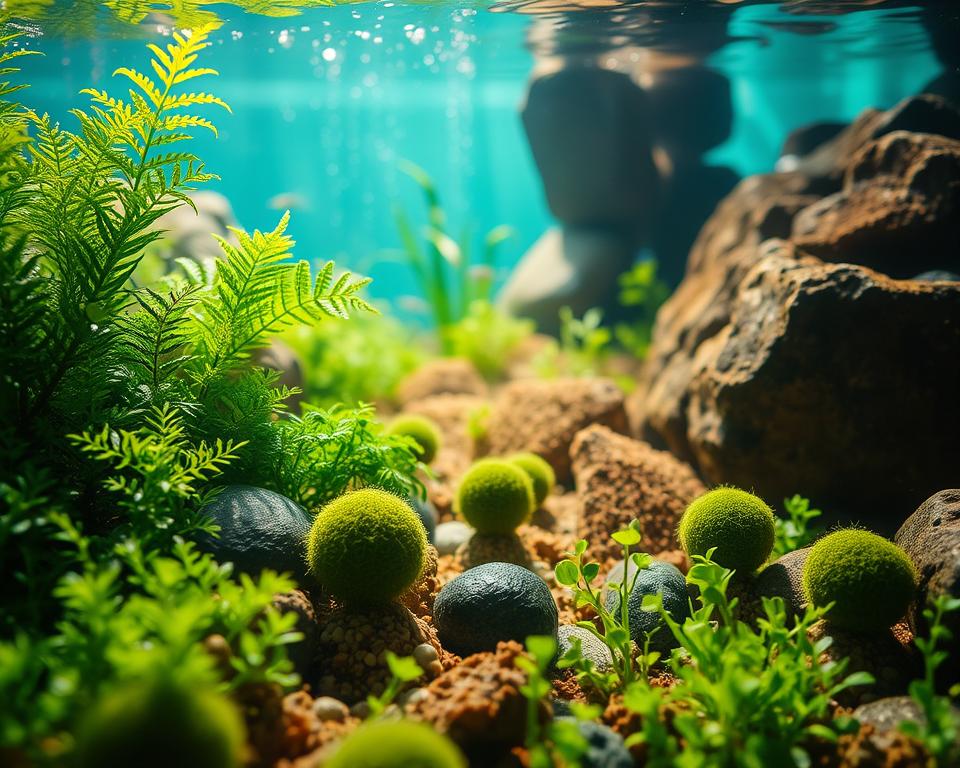
Planting Techniques for No-CO2 Aquatic Plants
To keep your No CO2 Needed Aquatic Plants healthy, you need to plant them right. You must know what substrate to use, how deep to plant, and how to arrange them. This ensures they thrive in your aquarium.
Substrate Selection
The right substrate is key for your plants’ health. Some plants love nutrient-rich soil, while others prefer it leaner. For No-CO2 plants, a balanced substrate is best.
Think about what your plants need. For instance, Anubias and Java Fern do well in many substrates. But others need specific conditions.
Proper Planting Depth
Planting depth is very important. Too deep can cause root rot, while too shallow can be unstable. The crown of the plant should be at the substrate surface.
For plants with rhizomes, like Anubias, don’t bury the rhizome. Instead, attach the plant to a rock or driftwood. This lets the roots grow into the substrate.
Spacing and Arrangement Tips
How you space and arrange your plants affects their growth and your aquarium’s look. Proper spacing ensures each plant gets enough light and nutrients.
Arrange plants in layers and zones. Place taller plants in the back and shorter ones in the front. This looks good. Also, leave space for plants to grow and prevent overcrowding.
Learning these planting techniques will help you create a great environment for your No-CO2 aquatic plants. This will make your aquarium more beautiful and healthy.
Maintaining Your No-CO2 Aquatic Plants
Keeping your No-CO2 aquatic plants healthy is key to a great aquarium. These plants are low maintenance, but they need care to grow well.
Nutrient Requirements
No-CO2 plants need nutrients to grow. They can live without CO2, but proper fertilization helps. Use a balanced aquarium fertilizer with all the needed micronutrients.
- Macro-nutrients like Nitrogen, Phosphorus, and Potassium are vital.
- Micro-nutrients such as Iron, Zinc, and Boron are important for plant health.
Pruning and Trimming Best Practices
Pruning and trimming are key for your plants’ growth. Here’s how to do it right:
- Trim or prune plants often to keep them in shape and encourage new growth.
- Take out dead or dying leaves to stop decay and keep water quality good.
For more tips on pruning, check out this resource.
Water Quality Considerations
Good water quality is essential for your plants and fish. Regular water changes and checking water levels are important.
- Test for pH, Ammonia, Nitrite, and Nitrate levels often.
- Do partial water changes weekly to keep water stable.
Common Issues with No-CO2 Aquatic Plants
No-CO2 aquatic plants have many benefits but also face common problems. Knowing these issues helps keep your aquarium healthy and thriving.
Algae Growth: Causes and Solutions
Algae growth is a common issue in aquariums with No-CO2 plants. It can be caused by too much light, nutrient imbalance, or poor water flow. To solve this, adjust your lighting or intensity. Make sure your aquarium has good water flow.
Adding algae-eating fish or invertebrates can also help. Regular water changes and monitoring nutrients are key. Using algae-controlling products or plants that compete with algae can also help.
Nutrient Deficiency Symptoms
Nutrient deficiencies can show up as discoloration, slow growth, or weak roots. Check your plants and research their nutrient needs. Common deficiencies include nitrogen, phosphorus, or potassium.
To fix nutrient deficiencies, adjust your fertilization schedule or add specific nutrients. Regular water changes help keep nutrient levels right. Watch how your plants react to changes and adjust as needed.
Pests and Diseases to Watch For
No-CO2 aquatic plants can get pests and diseases like any living thing. Common pests include snails, shrimp, or insects. Regularly check your plants for pests and consider natural predators or organic pest control.
Diseases like bacterial or fungal infections can also happen. Good water quality, enough light, nutrients, and air circulation help prevent disease. If you see disease signs, isolate the plants and treat them quickly to stop it from spreading.
Creating a Balanced Ecosystem with No-CO2 Plants
To have a vibrant and healthy aquarium, it’s important to know how No-CO2 plants fit into the ecosystem. A balanced aquarium is more than just plants. It’s about making a space where everything works well together.
Importance of Biodiversity
Biodiversity is key for a strong aquarium ecosystem. Adding a variety of Oxygenating Aquarium Plants boosts your aquarium’s health and stability. Plants offer different benefits, like oxygen and food for fish.
Having many plants helps keep the water clean by fighting algae for nutrients. This variety is essential for a self-sustaining ecosystem.
Choosing Compatible Fish and Invertebrates
Picking the right fish and invertebrates is critical for balance. It’s important to choose species that get along and need similar things.
| Fish/Invertebrate | Compatibility | Benefits |
|---|---|---|
| Neon Tetras | Peaceful, Schooling | Adds movement and color |
| Amano Shrimp | Peaceful, Hardy | Helps with algae control |
| Corydoras Catfish | Peaceful, Social | Good for cleaning the substrate |
Natural Filtration Systems
Adding natural filtration systems can really help balance your aquarium. Low Maintenance Aquarium Plants like floating plants soak up extra nutrients, making the water better.
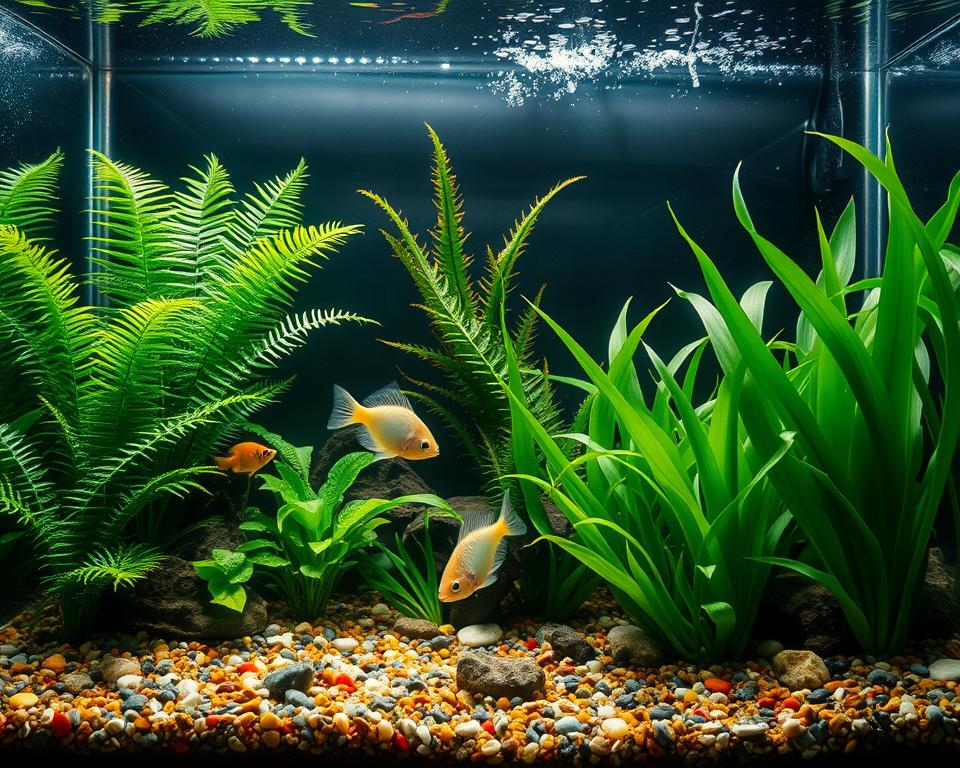
Understanding how plants, fish, and filters work together is key to a thriving ecosystem. The image below shows how all parts of a balanced aquarium work together.
Building a balanced ecosystem takes time, patience, and sometimes changes. Focus on diversity, compatibility, and natural filtration for a healthy, lively aquarium.
Showcasing No-CO2 Aquatic Plants in Your Tank Design
With the right No-CO2 aquatic plants, you can turn your aquarium into a stunning underwater world. These plants thrive without extra CO2 and offer many creative options for aquascaping.
Design Ideas and Inspiration
Designing your aquarium is limitless. You can make a lush forest with plants like Java Fern or Anubias. Or, you can have open swimming areas with plants like Microsorum or Vallisneria. The goal is to look good and support your aquatic life.
Think about where your plants come from for inspiration. For example, riverbeds and rocky terrains can be recreated with the right substrates and decorations. This creates a natural home for your Easy Care Aquatic Plants.
Utilizing Aquascaping Techniques
Aquascaping is an art of arranging plants, rocks, and decorations for a beautiful aquarium. Using different techniques can add depth and interest. For example, a striking rock or plant arrangement can be a focal point.
Using negative space is another technique. Leaving some areas open can make your No CO2 Needed Aquatic Plants stand out.
Creating Zones and Layers
Creating zones and layers adds complexity and interest. Use plants of different heights and textures. For example, tall plants like Vallisneria or Sagittaria go in the back. Short plants like Dwarf Hairgrass or Glossostigma go in the front.
Planning your aquascape carefully can create a thriving ecosystem. It’s beautiful and good for your aquatic life. Whether you’re new or experienced, using Easy Care Aquatic Plants can make your aquarium stunning and sustainable.
Conclusion: Embracing No-CO2 Aquatic Plants for a Healthy Aquarium
In the world of aquariums, adding No-CO2 aquatic plants can be a big change. These plants are easy to care for and help keep the aquarium balanced.
Key Advantages
No-CO2 plants are great for beginners. They are easy to care for and can grow well in different conditions. This makes them perfect for all aquarists.
Tips for a Flourishing Aquarium
To make your No-CO2 plants thrive, plant them correctly. Keep the water quality good and light them well. Also, trim them often and check the nutrients.
Starting Your Journey
Whether you’re new or experienced, try No-CO2 plants. They’re easy to care for and make your aquarium better. Adding these plants will help you create a healthy aquarium.