


Did you know millions of people worldwide lack clean water? This shows we need sustainable water treatment fast. Looking into eco-friendly filtration, it’s clear we need good water purification methods for a healthy planet.
Using natural filtration can lessen the harm of old water treatment ways. It saves resources and makes sure we have clean water.
Key Takeaways
- Efficient water purification is key for a sustainable future.
- Natural filtration is a green choice compared to old methods.
- Choosing sustainable water treatment cuts down on harm to the environment.
- Eco-friendly filtration helps save resources.
- Good water management is essential for clean water worldwide.
Understanding Natural Filtration and Its Benefits
The search for cleaner water has led to natural filtration systems. These systems use biological processes to purify water. They offer a green alternative to traditional water treatment methods.
What is Natural Filtration?
Natural filtration uses natural elements and biological processes to clean water. It relies on nature’s power to purify water. This makes it a sustainable and eco-friendly choice.
How Does it Work?
Natural filtration uses biological processes to clean water. Plants and microorganisms can absorb or break down pollutants. This makes the water clean.
This method works by creating a natural environment. It’s like a mini-ecosystem that purifies water. By understanding these natural processes, we can create effective and green water treatment solutions.
Key Advantages of Natural Filtration
Natural filtration has many benefits. It’s cost-effective, environmentally friendly, and can handle different water flows. Here are the main advantages:
| Advantages | Description |
|---|---|
| Cost-Effective | Reduces operational costs compared to traditional treatment methods |
| Environmentally Friendly | Utilizes natural processes, minimizing environmental impact |
| Flexibility | Can be designed to handle varying water flow rates and qualities |
By using natural filtration, communities can adopt sustainable water management. This improves both environmental health and public well-being.
The Science Behind Natural Filtration Systems
It’s important to know how natural filtration systems work. They use natural processes to clean water, making it safe for use. This is key for sustainable water management.
The Role of Soil in Filtration
Soil is a key player in natural filtration. It acts as a filter, catching particles and contaminants. The soil’s texture and organic matter affect how well it filters.
Soil’s filtration abilities come from its physical and biological traits. Its pores let water through but block bigger particles. Microorganisms in the soil also help break down pollutants.
Biological Processes Involved
Biological processes are vital in natural filtration. Microorganisms like bacteria and fungi break down organic matter. This makes the water cleaner.
The role of microorganisms in pollutant breakdown is huge. They turn complex organic compounds into simpler substances.
| Biological Process | Description | Impact on Water Quality |
|---|---|---|
| Microbial Degradation | Breakdown of organic pollutants by microorganisms | Reduces organic contaminants |
| Nitrification | Conversion of ammonia into nitrates by nitrifying bacteria | Reduces nitrogenous compounds |
| Denitrification | Conversion of nitrates into nitrogen gas by denitrifying bacteria | Further reduces nitrogenous compounds |
Physical Mechanisms of Filtration
Physical mechanisms are also key in natural filtration. Sedimentation, filtration, and adsorption remove particles and contaminants. These work with biological processes to improve water quality.
The physical structure of these systems affects their performance. For example, layered filter media can better trap particles.
Understanding natural filtration systems is essential. It shows their role in sustainable water management. This includes the roles of soil, biological processes, and physical mechanisms.
Types of Natural Filtration Methods
There are many natural ways to clean water. These methods use nature’s power to remove bad stuff from water. They help communities all over the world.
Constructed Wetlands
Constructed wetlands are man-made systems that act like natural wetlands. They use plants, tiny living things, and soil to clean water. They are great at removing nutrients, sediments, and germs from water.
These wetlands have shallow pools of water with plants. As water moves through, plants and tiny living things break down pollutants. This makes the water cleaner.
Sand Filters
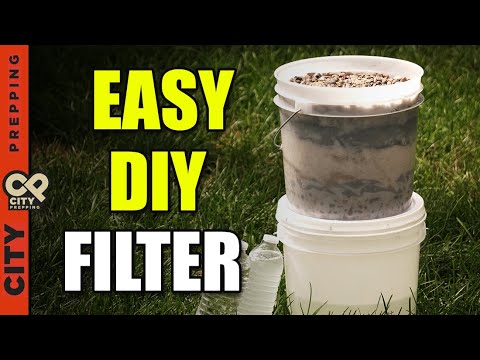
Sand filters use sand and gravel to clean water. This simple method traps bad stuff in the sand, letting clean water through. They work best when used with other cleaning methods.
The sand’s size and how fast water flows affect how well it works. Keeping the filters clean is important.
Biofiltration Systems
Biofiltration systems use tiny living things to break down organic pollutants. They can be small or big, for homes or big places. They are good at getting rid of organic stuff and lowering BOD.
These systems have a special medium, like soil or sand, for the tiny living things. As water goes through, these tiny things eat away at pollutants. This makes the water cleaner.
| Filtration Method | Key Features | Applications |
|---|---|---|
| Constructed Wetlands | Uses plants, microorganisms, and soil to treat wastewater | Wastewater treatment, nutrient removal |
| Sand Filters | Employs layers of sand and gravel to remove impurities | Drinking water treatment, industrial water treatment |
| Biofiltration Systems | Utilizes microorganisms to degrade organic pollutants | Industrial wastewater treatment, residential water treatment |
In conclusion, natural ways to clean water are very effective. Knowing about these methods helps communities choose the best one for them.
The Environmental Impact of Natural Filtration
Natural filtration is key in finding sustainable ways to clean water. It not only makes water safe but also helps our ecosystems stay healthy.
Reducing Water Pollution
Natural filtration is vital in cutting down water pollution. It uses nature’s ways to clean water. This keeps water bodies and the life in them safe.
Key mechanisms include:
- Physical filtration through soil and plant roots
- Biological degradation of pollutants by microorganisms
- Chemical reactions that neutralize harmful substances
Supporting Biodiversity
Natural filtration systems help many species by creating homes and food. They include things like wetlands and biofilters. These places are great for wildlife.
Mitigating Climate Change Effects
Natural filtration also fights climate change. It uses less energy than other methods. Plus, it helps keep carbon out of the air and manages water cycles.
| Environmental Benefit | Description | Impact |
|---|---|---|
| Reducing Water Pollution | Removes contaminants through natural processes | Improved water quality |
| Supporting Biodiversity | Creates habitats for various species | Enhanced ecosystem health |
| Mitigating Climate Change | Reduces energy consumption and sequesters carbon | Contributes to climate resilience |
In summary, natural filtration is a big win for the environment. It tackles pollution, supports life, and fights climate change. By using these methods, we can make our planet a healthier place.
Natural Filtration vs. Traditional Water Treatment
Exploring water treatment, I see big differences between natural and traditional methods. Natural filtration uses living things and physical processes to clean water. Traditional methods often use chemicals and machines.
Cost Comparison
Cost is a big factor in choosing water treatment methods. Natural filtration can save money over time. It needs less upkeep and energy than traditional plants.
Let’s look at the costs of natural filtration versus traditional methods:
| Aspect | Natural Filtration | Traditional Water Treatment |
|---|---|---|
| Initial Investment | Lower to Moderate | High |
| Maintenance Costs | Low | Moderate to High |
| Energy Consumption | Low | High |
Efficiency and Effectiveness
Natural and traditional water treatments have their good and bad points. Natural systems are great at removing solids and living pollutants.
Key advantages of natural filtration include:
- Effective removal of suspended solids and biological contaminants
- Low energy requirements
- Potential for habitat creation and biodiversity support
But, natural filtration might not get rid of dissolved chemicals or some inorganic pollutants as well.
Environmental Considerations
Natural filtration is better for the environment. It uses less energy and chemicals. It also helps local ecosystems and biodiversity.
Looking at environmental impact, natural filtration is more sustainable. It has a lower carbon footprint and can be designed to fit into the landscape, reducing visual impact.
Implementing Natural Filtration in Communities
Natural filtration is a cost-effective and eco-friendly way to manage water. It’s great for communities. This approach is sustainable and beneficial.
Steps to Create a Natural Filtration System
To create a natural filtration system, several steps are needed. First, assess the community’s water needs and pollution sources. Then, pick the right natural filtration method, like constructed wetlands or sand filters.
- Conduct a thorough analysis of the community’s water usage and pollution sources.
- Choose a suitable natural filtration method based on the community’s needs.
- Design and implement the chosen filtration system, ensuring it is scalable and maintainable.
Communities have successfully worked together to design and maintain these systems. This fosters a sense of ownership and responsibility.
Case Studies of Successful Projects
Many communities have seen great results from natural filtration systems. For example, a rural town used constructed wetlands to cut down nutrient pollution in their water.
| Project Location | Filtration Method | Outcome |
|---|---|---|
| Rural Town | Constructed Wetlands | Reduced nutrient pollution by 70% |
| Urban Area | Biofiltration Systems | Improved water quality, supporting local biodiversity |
These examples show how natural filtration works well in different places. They show its wide adoption is possible.
“Natural filtration systems not only improve water quality but also provide habitats for wildlife, enriching local ecosystems.”
Community Engagement Strategies
Getting the community involved is key to natural filtration success. Educate them on its benefits. Involve local stakeholders in planning. Offer training for upkeep.
Setting up a green team or committee helps. It ensures the system is maintained and the community stays involved.
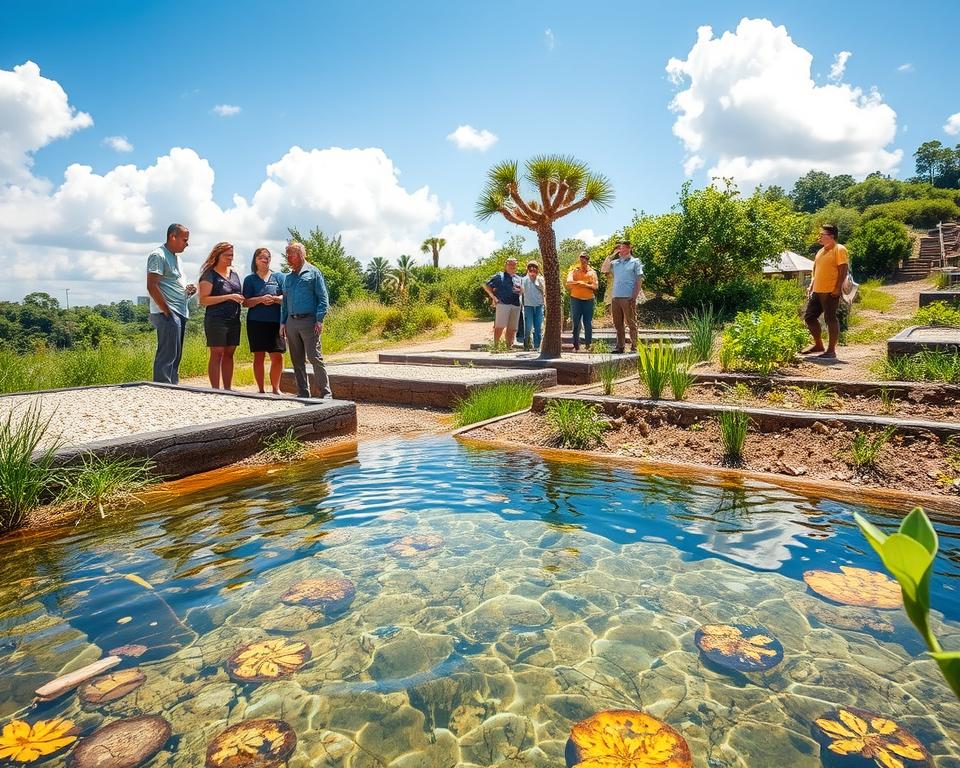
Together, communities can use natural filtration to make water management more sustainable and eco-friendly.
Challenges in Natural Filtration
Natural filtration has many benefits, but it also faces challenges. These hurdles can affect its success and use.
Maintenance and Upkeep
Maintaining natural filtration systems is a big challenge. They need more land and specific conditions. This makes upkeep more complex than traditional systems.
- Regular monitoring of water quality is essential.
- Maintenance tasks can be labor-intensive.
- Ensuring the system’s biological processes are not disrupted is critical.
Mark Twain once said, “The dogmas of the quiet past are inadequate to the stormy present. The occasion is piled high with difficulty, and we must rise with the occasion. As our case is new, so we must think anew and act anew.” This quote highlights the need for new and flexible maintenance strategies in natural filtration.
| Maintenance Task | Frequency | Importance Level |
|---|---|---|
| Water Quality Monitoring | Daily/Weekly | High |
| System Inspection | Monthly | Medium |
| Biological Process Check | Quarterly | High |
Public Awareness and Education
Public awareness and education are key to natural filtration’s success. Communities need to understand its benefits and challenges.
Educational programs are vital. They help raise awareness about natural filtration’s importance and how it works. This includes workshops, community outreach, and educational materials.
“Education is the most powerful weapon which you can use to change the world.” – Nelson Mandela
Scaling Solutions for Larger Areas
Scaling natural filtration for bigger areas is a big challenge. It needs careful planning, more land, and complex engineering.
To overcome these challenges, we must develop scalable designs and technologies. These should fit different sizes and types of communities.
- Investing in research and development to improve natural filtration technologies.
- Collaborating with communities and stakeholders to understand their needs.
- Developing flexible and scalable system designs.
Regulations and Standards for Natural Filtration
To make sure natural filtration works well and is safe, there are strict rules. These rules help us know how to use natural filtration systems right.
Overview of Relevant Environmental Regulations
Natural filtration systems must follow many environmental rules. These rules help keep our water clean and safe. For example, the Treatment Standards for Municipal Drinking Water guide how to treat water.
Key regulations include:
- Clean Water Act
- Safe Drinking Water Act
- Environmental Protection Agency (EPA) guidelines
Certification Programs
Certification programs are key to making sure natural filtration systems work as they should. These programs test and check if the systems are safe and effective.
Some notable certification programs include:
- NSF International Certification
- Water Quality Association (WQA) Gold Seal Certification
Best Practices for Compliance
To follow the rules, it’s important to use the best ways to design, set up, and care for natural filtration systems. This means checking them often, following set steps, and keeping an eye on the water quality.
Best practices involve:
- Regular inspection and maintenance of the filtration system
- Adherence to established treatment protocols
- Continuous monitoring of water quality
Innovations in Natural Filtration Technology
Natural filtration technology is on the verge of a big change. This is thanks to new research and ideas. We need eco-friendly filtration methods more than ever to solve water treatment problems.
New materials and technologies are making natural filtration systems better. For example, scientists are looking into advanced biofiltration media. This media can remove more contaminants from water.
Emerging Research and Developments
Studies are now focusing on making biological processes in natural filtration better. They aim to create more effective microbial communities. These communities can break down pollutants more efficiently.
One area getting a lot of attention is biological water filtration. These systems use living organisms to clean water. They offer a green alternative to old methods.
Integration with Smart Technology
The future of natural filtration is with smart technology. Sensors and IoT devices can monitor and control systems remotely. This makes them work better in real-time.
This smart integration leads to sustainable water treatment solutions. For instance, smart systems can predict when they need maintenance. This reduces downtime and makes systems more reliable.
Future Trends in Water Filtration
We’re expecting big changes in natural filtration technology soon. Trends include more compact and modular systems. We’ll also see more artificial intelligence to improve filtration.
| Trend | Description | Benefit |
|---|---|---|
| Modular Filtration Systems | Compact systems that can be easily scaled | Flexibility and ease of expansion |
| AI Optimization | Use of artificial intelligence to enhance filtration efficiency | Improved performance and reduced maintenance |
| Bio-based Filtration Media | Use of biological materials for filtration | Enhanced contaminant removal and sustainability |
As these new ideas come along, natural filtration’s role in sustainable water treatment will grow. By adopting these advancements, we can make clean water available to everyone. We can do this while keeping our environmental impact low.
Personalizing Natural Filtration for My Home
As a homeowner, I’m always searching for ways to make my home greener. Natural filtration is a key area to focus on. By using organic water filtration, I can improve my water quality and help the environment.
Designing a Home Filtration System
Creating a home filtration system means understanding my household’s needs. I must think about water use, space, and the contaminants I want to remove. Environmentally friendly filtration systems can be customized to meet these needs, ensuring clean water.
First, I’ll check my water source and look for contaminants like heavy metals or bacteria. Knowing this, I can pick the best natural treatment systems for my home.
DIY Projects for Natural Filtration
Setting up natural filtration can be easy and affordable. Homeowners can try DIY projects like building a sand filter or a mini-wetland. These projects are fun and rewarding.
- Create a rain garden to capture and filter rainwater
- Build a biofilter using plants and microorganisms
- Use a ceramic filter as a pre-treatment step
Resources and Tools for Homeowners
For those new to natural filtration, many resources are available. Online guides, workshops, and local experts offer helpful tips. There are also tools and kits made for homeowners to set up natural filtration systems.
With these resources, I can make smart choices and set up a natural filtration system. This will improve my home’s sustainability.
The Role of Natural Filtration in Sustainable Living
In my quest for a greener lifestyle, I’ve learned how vital natural filtration is. It’s not just a way to clean water; it’s a key part of living in sync with nature.
Aligning with Eco-Friendly Practices
Natural filtration fits right into eco-friendly living. It uses nature’s own methods to clean water, cutting down on chemical use and energy needs. This not only helps the planet but also supports local wildlife.
Some eco-friendly benefits of natural filtration include:
- Using natural materials like sand, gravel, and plants.
- Less chemical use.
- It’s energy-efficient.
- It helps local ecosystems thrive.
How Natural Filtration Fits into My Lifestyle
Adding natural filtration to my daily routine has been fulfilling. I’ve set up a rainwater harvesting system and built a small wetland in my yard. These changes have made my life better and helped the planet.
| Aspect | Traditional Filtration | Natural Filtration |
|---|---|---|
| Energy Consumption | High | Low |
| Chemical Usage | High | Low |
| Environmental Impact | Significant | Minimal |
Influencing Others to Adopt Natural Solutions
I’m excited to share the perks of natural filtration with others. By teaching friends, family, and the community, I aim to encourage more to adopt green practices.
Effective ways to spread the word include:
- Telling my story of using natural filtration.
- Hosting workshops or seminars.
- Working with local green groups.
By choosing natural filtration, we can all work towards a greener future. This will make our world better and our lives richer.
Call to Action: Embrace Natural Filtration Today
Thinking about Natural Filtration makes me want to act. I want to encourage everyone to join me. Together, we can protect our planet by using sustainable water treatment.
Embracing a Sustainable Water Future
Natural Filtration is a great way to clean water. It’s good for the planet and keeps us healthy. Let’s learn more and help out in our communities.
Getting Involved in Your Community
Supporting groups that use Natural Filtration helps a lot. You can volunteer or donate. Every little bit helps make our water cleaner and safer.
Spreading Awareness
Telling others about Natural Filtration can inspire them. Together, we can make a big difference. Let’s work together for a better future.