


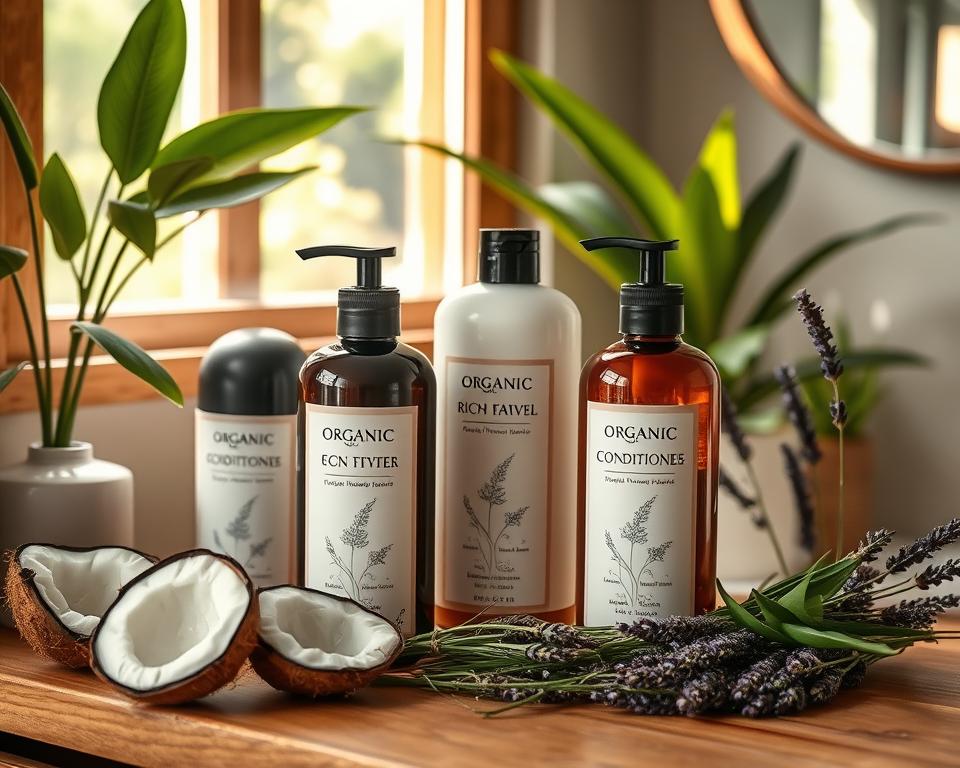
Did you know many hair care products have harsh chemicals? These can take away your hair’s natural moisture and cause damage. I’ve found that using organic hair care products is a game-changer. Let me share how you can nourish your hair naturally.
Switching to natural conditioners can change your hair’s life. You’ll say goodbye to dry, damaged hair and hello to a healthy, vibrant mane. In this article, we’ll dive into the world of natural conditioners and how they can transform your hair.
Key Takeaways
- Discover the benefits of using natural conditioners for your hair.
- Learn how to choose the best organic hair care products.
- Understand the importance of nourishing your hair naturally.
- Explore the world of natural hair care and its advantages.
- Get tips on how to keep your hair healthy and vibrant.
What Are Natural Conditioners?
I’ve tried many hair care products, and natural conditioners stand out. They’re made from natural ingredients, without harsh chemicals or artificial fragrances. They help nourish and moisturize your hair, making it soft, silky, and easy to manage.
Definition and Benefits
Natural conditioners are often sulfate-free conditioners. This makes them perfect for those who want to avoid harsh chemicals. Using them can improve your hair’s health, reduce frizz, and make it shine.
They are among the best hair conditioning treatments because they deeply hydrate and nourish your hair.
Some key benefits of natural conditioners include:
- Improved hair elasticity
- Reduced breakage
- Enhanced color retention
- Increased moisture levels
Common Ingredients
Natural conditioners often include coconut oil, argan oil, and aloe vera
Using these natural ingredients is good for your hair and the environment. They offer many benefits, such as:
- Coconut oil: Hydrates and nourishes the hair
- Argan oil: Rich in antioxidants and essential fatty acids
- Aloe vera: Soothes and calms the scalp
Why Choose Natural Conditioners?
Choosing natural conditioners is good for your hair and the planet. They offer many benefits over traditional hair care products.
Advantages Over Traditional Products
Natural conditioners use plant-based ingredients that are gentle. They don’t have harsh chemicals found in many traditional conditioners. These chemicals can dry out your hair and cause damage.
Natural conditioners, on the other hand, nourish your hair. They use ingredients like coconut oil, argan oil, and aloe vera. These help your hair grow healthy and shiny.
A study showed natural conditioners reduce hair breakage and improve texture. For more on natural shampoos and conditioners, click here.
“The clean beauty movement is not just a trend; it’s a shift towards a more conscious way of living.” – Expert in Sustainable Beauty
Environmental Impact
Natural conditioners are better for the environment. Traditional hair care products often have non-biodegradable packaging and harmful ingredients. Natural conditioners, by contrast, have recyclable or biodegradable packaging and safe ingredients.
Here’s a comparison of traditional versus natural conditioners:
| Aspect | Traditional Conditioners | Natural Conditioners |
|---|---|---|
| Packaging | Often non-biodegradable | Recyclable or biodegradable |
| Ingredients | May contain harmful chemicals | Plant-based, environmentally safe |
| Cruelty-Free | Not always cruelty-free | Often cruelty-free and vegan-friendly |
Switching to plant-based hair conditioners is a step towards sustainability. You get healthier hair and help reduce beauty industry waste.
Key Ingredients in Natural Conditioners
Natural conditioners work well because of their key ingredients. These ingredients nourish your hair deeply. They provide intense hydration and nourishment.

Some top ingredients include coconut oil, argan oil, and aloe vera. Each one has special benefits for your hair.
Coconut Oil
Coconut oil is full of antioxidants and fatty acids. It’s great for dry and damaged hair. It helps restore your hair’s natural shine and softness.
“Coconut oil is rich in nutrients and has antimicrobial properties, making it ideal for nourishing and protecting your hair.” – Hair Care Expert
Argan Oil
Argan oil is rich in vitamin E and essential fatty acids. It hydrates and protects your hair from damage. It’s perfect for dry and frizzy hair, making it smooth and easy to manage.
Aloe Vera
Aloe vera soothes and moisturizes your hair and scalp. It’s great for calming irritated scalps and hydrating dry hair. It’s also gentle for all hair types, including sensitive scalps.
Knowing the benefits of these ingredients helps you choose the right natural conditioners. Whether you’re looking for vegan hair conditioners or herbal hair conditioners, understanding what to look for is key to a good hair care routine.
How to Choose the Right Natural Conditioner
Finding the right natural conditioner is the first step to healthy hair. With many choices, it can be hard to pick the best one. But, by looking at a few important factors, you can find the perfect conditioner for your hair.
Hair Type Considerations
Knowing your hair type is key to picking a conditioner. If your hair is dry or damaged, choose a conditioner with coconut oil and shea butter. For oily hair, a light conditioner is best. Curly hair benefits from a conditioner that makes curls bouncy and frizz-free.
Here’s a simple guide to help you choose based on your hair type:
| Hair Type | Ideal Conditioner Characteristics |
|---|---|
| Dry/Damaged | Moisturizing, nourishing ingredients |
| Oily | Lightweight, non-greasy formula |
| Curly | Enhances definition, reduces frizz |
Ingredient Transparency
When picking a natural conditioner, check the ingredients. Choose brands that use natural ingredients and avoid harsh chemicals. Look for cruelty-free and eco-friendly labels to support ethical practices.
By considering your hair type and looking for transparent ingredients, you can make a smart choice. This choice not only helps your hair but also supports the beauty industry’s ethics and sustainability.
DIY Natural Conditioners at Home
With just a few simple ingredients, you can make effective natural conditioners that nourish your hair. Making your own organic hair care products at home avoids harsh chemicals found in many commercial conditioners. You can tailor the ingredients to your specific hair needs.
Creating your own conditioners lets you customize them for your hair type. Whether you have dry, damaged hair or oily locks, you can choose the right ingredients. For dry hair, use moisturizing ingredients like coconut oil and shea butter.
Simple Recipes
Here are a couple of simple recipes to get you started. First, mix coconut oil with honey and olive oil for a nourishing conditioner. Combine equal parts coconut oil and honey, add a tablespoon of olive oil, and mix well. Apply it to your hair, leave it on for 30 minutes, and then rinse thoroughly.
Another recipe blends aloe vera with argan oil and vitamin E oil. Aloe vera soothes, while argan oil hydrates. Mix two tablespoons of aloe vera gel with one tablespoon of argan oil and a few drops of vitamin E oil. Apply it to your hair, focusing on the ends, and leave it on for at least 20 minutes before rinsing.
Essential Tools and Ingredients
To make these best hair conditioning treatments, you’ll need basic tools and ingredients. Start with a bowl and a spoon for mixing. You’ll also need oils (coconut, olive, argan), herbs (like chamomile or rosemary), and essential oils (like lavender or tea tree oil) for their nourishing and fragrant properties.
Having the right tools and ingredients makes creating your own natural conditioners easy and fun. Try different combinations to find what works best for your hair. Enjoy the benefits of healthier, more nourished locks.
The Science Behind Natural Conditioning
Natural conditioners like coconut oil and argan oil can change your hair. They work by interacting with your hair’s natural structure. This makes them very effective.
Natural ingredients are not just a trend; they are backed by science. For example, coconut oil penetrates the hair shaft, giving it deep hydration and nourishment. Argan oil is full of antioxidants that fix and protect your hair from harm.
How Natural Ingredients Work
Natural ingredients nourish and protect your hair using their unique properties. Coconut oil’s fatty acids moisturize and strengthen your hair. Argan oil’s antioxidants fight off free radicals that damage your hair.
| Ingredient | Benefits |
|---|---|
| Coconut Oil | Moisturizes, strengthens, and penetrates the hair shaft |
| Argan Oil | Rich in antioxidants, repairs, and protects hair |
| Aloe Vera | Soothes, hydrates, and promotes healthy hair growth |
Hair Structure and Conditioning
Knowing your hair’s structure is key to picking the right natural conditioner. Hair has three layers: the medulla, cortex, and cuticle. The cuticle is the outermost layer and greatly affects your hair’s health and look.
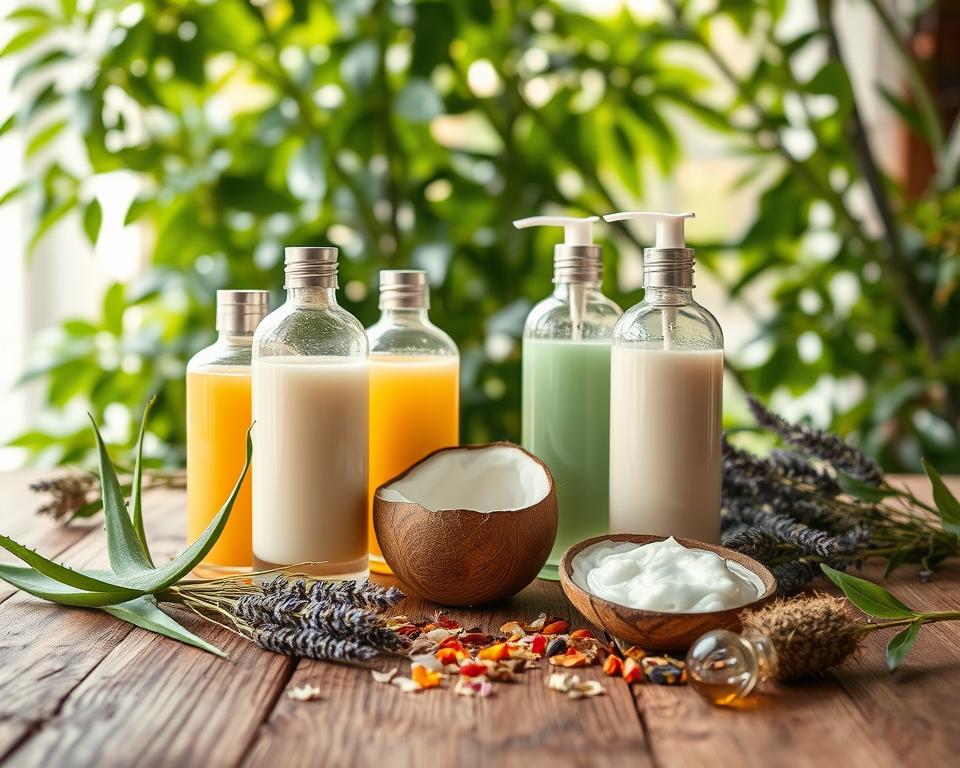
Natural conditioners target the cuticle and cortex, giving your hair the nourishment and hydration it needs. This improves your hair’s texture and manageability. By picking a natural conditioner that fits your hair type, you can get healthier, more vibrant hair.
In conclusion, the science behind natural conditioning is fascinating. It shows how natural ingredients can change your hair care routine. By understanding how these ingredients work and choosing the right products, you can enjoy the benefits of eco-friendly haircare.
Popular Natural Conditioner Brands
In the world of natural hair care, some brands really stand out. They focus on being green and using natural stuff. But, with so many choices, picking the right one can feel tough.
Overview of Top Brands
Top brands are known for their commitment to organic and natural ingredients. Briogeo and Moroccanoil are leaders in vegan hair care. They offer top-notch conditioners.
These brands have products for all hair types. They have everything from conditioners for dry hair to ones for oily hair. They also make sure their products are cruelty-free, which is great for those who care about animals and the planet.
Product Lines and Specialties
Each brand has its own special focus in natural hair care. Some use coconut oil and argan oil for their moisturizing benefits.
| Brand | Specialty | Key Ingredients |
|---|---|---|
| Briogeo | Vegan and cruelty-free products | Coconut oil, argan oil |
| Moroccanoil | Moisturizing and nourishing products | Argan oil, keratin |
| Aveda | Sustainable and eco-friendly products | Plant extracts, essential oils |
When you’re looking for a natural conditioner, think about what’s important to you. Do you want vegan, cruelty-free, or natural ingredients? There’s a brand out there that’s just right for you.
User Reviews and Testimonials
User reviews and testimonials offer valuable insights into natural conditioners. They share personal experiences, helping others choose the right hair care.
Real Experiences from Users
Many users have seen big improvements in their hair’s health and look. They’ve noticed less frizz, more shine, and easier manageability.
“I was skeptical at first, but after using a natural conditioner for a month, my hair felt softer and looked healthier than ever before.” – Emily, a satisfied user.
These stories show natural conditioners can nourish and protect hair. They do this without harsh chemicals.
Success Stories with Natural Conditioners
Success stories with natural conditioners are varied and inspiring. People have overcome dryness and damage, and achieved beautiful hair.
| Benefit | User Experience |
|---|---|
| Improved Hair Health | Users report stronger, healthier hair |
| Reduced Frizz | Smoother hair with less frizz |
| Enhanced Shine | Users notice a significant increase in hair shine |
The table shows natural conditioners offer many benefits. They improve hair health in many ways.
In conclusion, user reviews and testimonials are strong proof of natural conditioners’ effectiveness. They help people make better hair care choices.
Natural Conditioners for Problematic Hair
Finding the right natural conditioner can change your hair game. It helps with dryness, damage, oiliness, or limpness. Natural conditioners are made for your specific hair needs.
Moisturizing Solutions for Dry and Damaged Hair
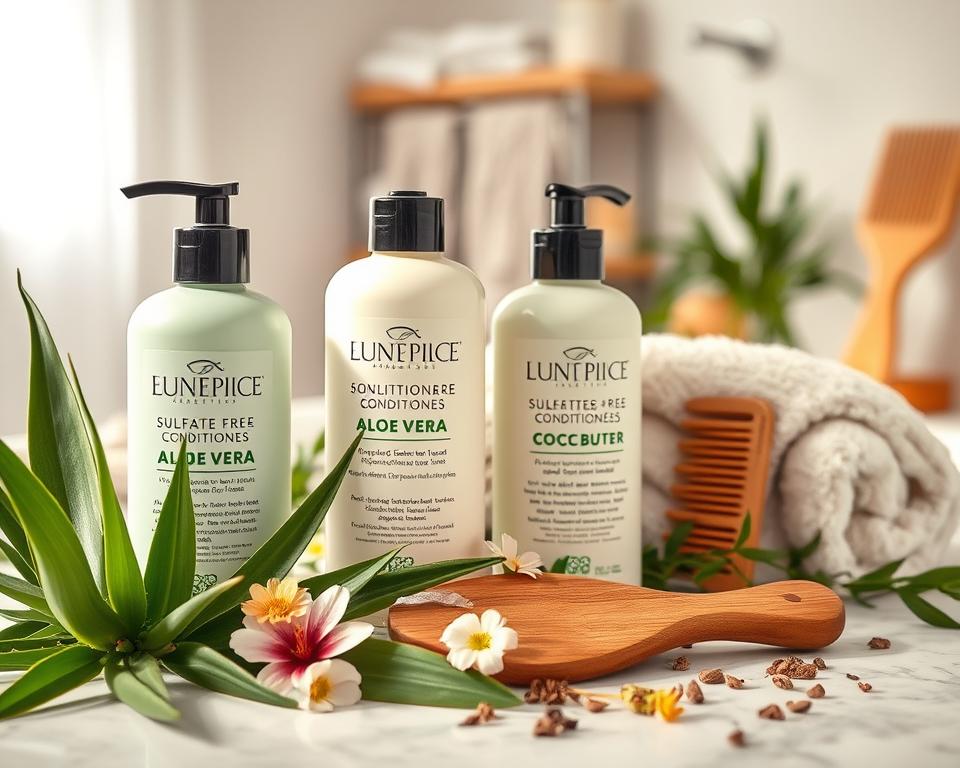
For dry and damaged hair, you need a moisturizing conditioner. Coconut oil and argan oil are great for hydrating. They help repair and restore your hair’s health.
Top natural conditioners for dry hair include:
- Sulfate-free formulas for gentle cleaning.
- Moisturizing ingredients like shea butter and olive oil.
- Protein-rich ingredients for repairing hair.
Lightweight Options for Oily Hair and Limp Strands
For oily hair and limp strands, a lightweight conditioner is best. It prevents hair from getting weighed down. Look for conditioners that balance oil without drying out your hair.
| Hair Type | Recommended Ingredients | Benefits |
|---|---|---|
| Dry and Damaged | Coconut Oil, Argan Oil, Shea Butter | Hydrates, Repairs, and Protects |
| Oily and Limp | Green Tea, Lemon Extract, Aloe Vera | Balances Oil, Refreshes, and Adds Volume |
Choosing the right natural conditioner can make your hair healthier and more vibrant. Whether you’re looking for the best hair conditioning treatments or natural hair care, there’s a conditioner for you.
Transitioning to Natural Conditioners
Thinking about switching to eco-friendly haircare? Moving to natural conditioners is a big step. It can greatly improve your hair’s health and help the planet. Natural conditioners use plant-based ingredients, which are gentler than regular products.
What to Expect
Using natural conditioners for the first time might make your hair go through a detox period. This is normal as your hair gets used to the new ingredients. You might see changes in texture or oiliness, but these are usually short-term.
Be patient and let your hair adjust. The detox period can last a few weeks. It depends on your hair type and what you used before.
Tips for a Seamless Switch
Here are some tips to make switching to natural conditioners easy:
- Start by using natural conditioners every other wash.
- Choose products that match your hair type.
- Look for products with clear ingredient lists.
By following these tips, you can smoothly switch to plant-based hair conditioners. You’ll enjoy healthier, more vibrant hair.
Frequently Asked Questions About Natural Conditioners
Many of us wonder about natural conditioners. We ask about their benefits and how to pick the right one. As natural conditioners grow in popularity, knowing their advantages and how they work is key.
Common Queries
One big question is about the difference between natural and traditional conditioners. Natural conditioners come from nature, like coconut oil and aloe vera. They’re perfect for those seeking vegan hair conditioners or cruelty-free hair conditioning products.
People also ask if natural conditioners work for all hair types. Yes, they do. Whether your hair is dry, damaged, oily, or normal, there’s a natural conditioner for you. For dry hair, look for ones with shea butter or olive oil.
Expert Recommendations
Experts say to pick natural conditioners without harsh chemicals. Always check the ingredient list. Choose products that are cruelty-free and vegan if that matters to you.
It’s wise to do a patch test before using a new conditioner. This ensures you don’t have any sensitivity or allergic reactions to the ingredients.
If you’re into DIY natural conditioners, there are easy recipes online. But, make sure to follow good hygiene when making your own to avoid contamination.
Conclusion: Embrace Natural Hair Care
Thinking about Natural Conditioners reminds me of their great benefits. They help our hair and the planet. Choosing organic hair care products nourishes our hair and supports a greener future.
Benefits for Hair and Planet
Natural Conditioners do a lot for our hair and the environment. They moisturize and protect our hair. They also help us choose eco-friendly options. With the right product, you can have healthier, more vibrant hair and support green brands.
Making the Switch
Switching to Natural Conditioners takes time and patience. You need to find the right one for your hair. This step leads to a greener hair care routine, better hair, and a sustainable lifestyle.