


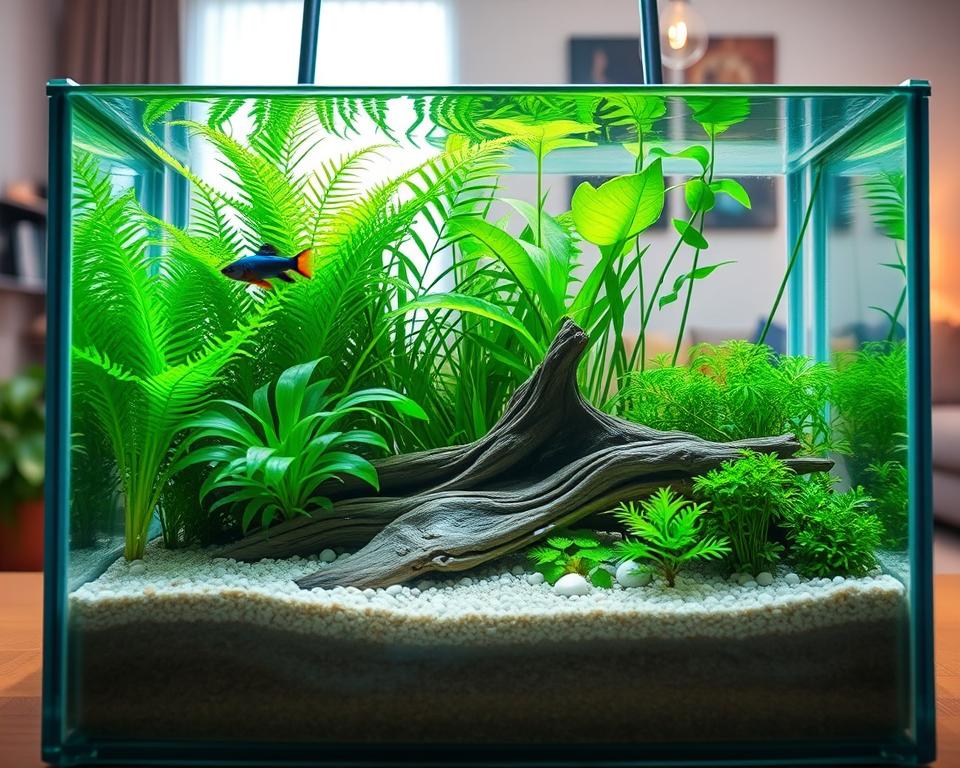
Keeping an aquarium can be easy, not hard. Many people now choose no-filter tanks for their simplicity. They enjoy a peaceful underwater world without the stress of filter upkeep.
I’ve found joy in no-filter tanks myself. I’m eager to share what I’ve learned with you. No-filter tanks help you create a balanced and healthy environment for your fish. You won’t have to worry about cleaning filters all the time.
In this guide, I’ll show you the world of no-filter tanks. I’ll give you the tips and insights you need for easy aquarium care.
Key Takeaways
- Discover the benefits of no-filter tanks for a low-maintenance aquarium experience
- Learn how to create a balanced ecosystem in your tank
- Understand the importance of proper tank maintenance for healthy fish
- Explore tips and tricks for hassle-free aquarium care
- Get started with setting up your own no-filter tank with confidence
What Are No-Filter Tanks?
No-filter tanks are a simple way to keep aquariums. They are different from traditional tanks that use filters. This modern setup is easy to care for and has many advantages.
Definition and Concept
No-filter tanks don’t use mechanical filters. They depend on nature to keep the water clean and clear. This method is like a natural ecosystem, where plants and microorganisms work together.
This setup creates a self-sustaining environment. It means you don’t have to change the water as often. And you won’t have to do as much maintenance as with traditional tanks.
How They Work
No-filter tanks use the natural balance of the aquarium. Plants and algae are key, as they take in nutrients and make oxygen. Beneficial bacteria in the substrate and decorations help break down waste.
This balance keeps the water quality good. It’s a fine balance that needs careful watching to keep the fish healthy.
Knowing how no-filter tanks work helps you see their no-fuss maintenance and no-filter tank benefits. This knowledge is essential for a thriving no-filter aquarium.
Benefits of No-Filter Tanks
No-filter tanks offer unique benefits that make them appealing to aquarium fans. They simplify care and create a natural home for fish.
Low Maintenance
No-filter tanks are easy to care for. They don’t need filter cleaning, making aquarium upkeep simpler. This is great for those with busy lives.
Let’s compare maintenance tasks for no-filter tanks and traditional ones:
| Task | No-Filter Tank | Traditional Tank |
|---|---|---|
| Filter Cleaning | Not Required | Weekly |
| Water Changes | Regular | Regular |
| Algae Control | Occasional | Frequent |
Natural Ecosystem
No-filter tanks foster a natural ecosystem. They let beneficial bacteria grow, keeping water clean for fish.
They mimic nature, creating a stable home for aquatic life. This stability is vital for their health.
Cost-Effective
No-filter tanks are also cost-effective. They save money by not needing filters. This makes them an all-in-one tank solution that’s both efficient and affordable.
Here’s a cost comparison between no-filter tanks and traditional ones:
- No-Filter Tank: Initial setup costs $100-$200, with little extra costs.
- Traditional Tank: Initial setup costs $200-$500, with ongoing filter and maintenance costs.
In summary, no-filter tanks are a great choice for aquarium lovers. They offer low maintenance, a natural environment, and cost savings. They’re perfect for both new and experienced hobbyists.
Choosing the Right No-Filter Tank
A well-chosen no-filter tank is key to a low-maintenance aquarium. When setting up your tank, several factors are important. They help ensure a thriving environment for your fish.
The size of your no-filter tank is very important. A bigger tank is more stable, less likely to have sudden water changes. But, it needs more space and can cost more to set up. A smaller tank is harder to keep up with because of its small water volume. This can cause bigger changes in water parameters.
Size Considerations
When picking the size of your no-filter tank, think about your home’s space and the fish you want. For beginners, a tank of 20 to 30 gallons is a good choice. It balances stability and ease of care well.

Compatible Fish Species
Not all fish are right for no-filter tanks. Some can handle the unique conditions better than others. It’s important to pick fish that fit well in these tanks. For example, betta fish and some gouramis do well in well-planted no-filter tanks.
Equipment Needs
No-filter tanks don’t need a traditional filter but do need other important things. A heater keeps the water at a stable temperature, which is key for tropical fish. Good lighting is also important, for seeing your fish and helping plants grow. Plus, a thermometer is essential for keeping an eye on the water temperature.
By thinking about these things, you can make a hassle-free aquarium maintenance routine. This lets your no-filter tank thrive.
Setting Up My No-Filter Tank
Setting up a no-filter tank is more than just filling it with water. It’s about making a balanced ecosystem that works well without mechanical filters. The first steps are very important for a successful no-filter tank.
Selecting the Substrate
The substrate is the base of your tank’s ecosystem. Choose a substrate that’s full of nutrients and helps plants grow. Soil-based substrates and plant-specific gravel are good choices. Think about the plants you want and what your fish need.
Adding Plants and Decorations
Plants are key in a no-filter tank. They clean the water by taking in nutrients and providing shade to stop algae. Pick a variety of foreground, midground, and background plants for a nice look. Decorations like rocks, driftwood, and ornaments make the tank look better and give fish places to hide.
- Choose plants that fit your tank’s size and light.
- Decorations add interest and places for fish to hide.
- Place plants and decorations to help water move around.
Cycling the Tank
Cycling the tank is a must. It lets beneficial bacteria grow, which are key for breaking down waste. Start by adding something that makes ammonia, like fish food or raw shrimp. Watch your tank’s levels closely during this time, which can take weeks.
For more info on no-filter aquariums, check out aquariumsource.com.
Maintaining Water Quality in No-Filter Tanks
Keeping the water quality right is key for fish health in no-filter tanks. Unlike regular aquariums, these tanks don’t use filters. Instead, they rely on a balanced ecosystem and regular upkeep to stay healthy.
Monitoring Parameters
It’s important to check key water parameters often. These include pH levels, ammonia, nitrite, and nitrate. By watching these closely, you can spot problems early. This keeps your no-filter tank a hassle-free aquarium.
Water testing kits are great for this job. They help you understand the water’s state. If you see high ammonia or nitrite, you can act fast to protect your fish.
Regular Water Changes
Changing the water regularly is a top way to keep no-filter tanks clean. You replace some tank water with fresh, dechlorinated water. This keeps waste down, prevents algae, and keeps your tank looking good. It makes for an easy to clean tanks environment.
Changing 10-20% of the tank water weekly is a good rule. But, the right time may vary based on tank size, fish number, and biological load. Regular water changes lead to a no-maintenance fish tank that’s both stunning and healthy.
Feeding in a No-Filter Tank
To keep your fish healthy in a no-filter tank, it’s key to have a good feeding plan. This plan helps keep the tank balanced. Feeding your fish right is important for their health and the tank’s overall well-being.
Best Practices
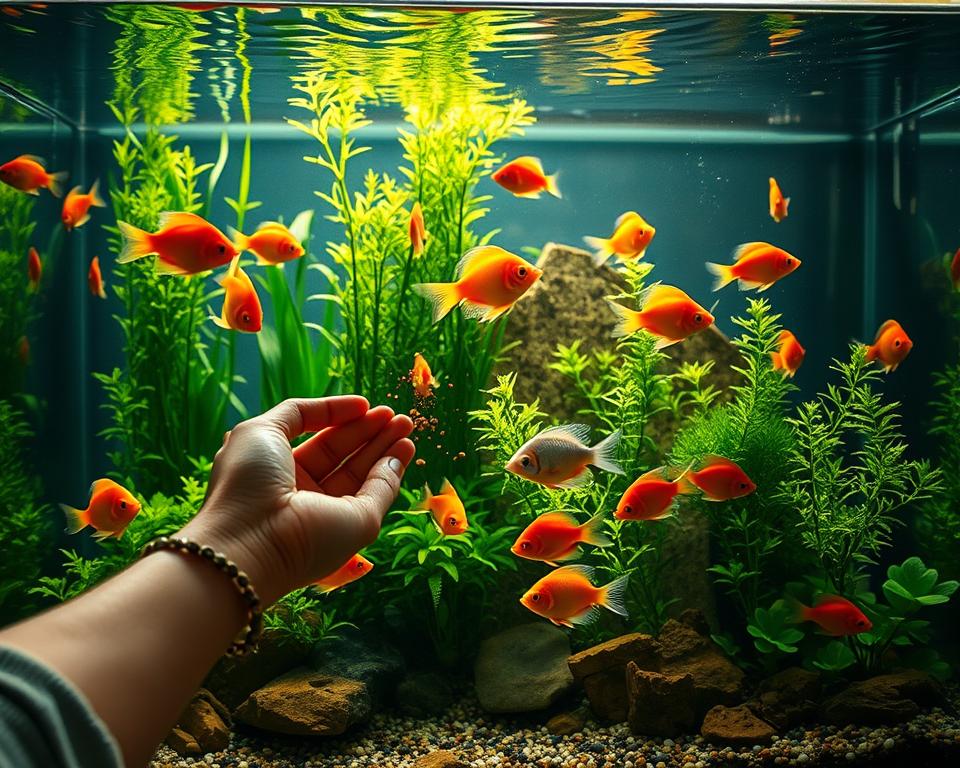
Feeding fish in a no-filter tank needs some best practices. First, avoid overfeeding to prevent water quality problems and stress on fish. Here are some tips to feed your fish well:
- Feed your fish small amounts several times a day, not one big meal.
- Choose a high-quality flake or pellet food that fits your fish species.
- Take out any uneaten food after a few minutes to stop it from breaking down and harming water quality.
Following these tips can really help your fish’s health and happiness. A well-fed fish is more likely to do well in a no-filter tank. They’ll enjoy the no-filter tank benefits like a more natural setting.
Choosing the Right Food
Picking the right food for your fish is very important in a no-filter tank. The right food can make low maintenance aquarium tanks even better. It reduces the need for frequent water changes and cuts down on waste.
Here are some things to think about when picking the right food:
| Fish Type | Recommended Food | Feeding Frequency |
|---|---|---|
| Herbivores | Vegetable-based flakes or pellets | 2-3 times a day |
| Carnivores | High-protein foods like brine shrimp or bloodworms | 1-2 times a day |
By picking the right food and following best practices, you can have a thriving aquarium with no-fuss maintenance. This is good for your fish and makes your aquarium experience better.
Troubleshooting Common Issues
Working with all-in-one tank solutions, I’ve learned it’s key to tackle common problems. Even without filters, issues like algae and fish health can pop up.
Algae Overgrowth
Algae can grow too much in no-filter tanks, often due to too much light or too many nutrients. It’s important to keep an eye on your tank’s light and adjust it if needed. Adding plants that fight algae for nutrients is also helpful.
Tips to Control Algae:
- Reduce lighting duration or intensity
- Add algae-eating fish or plants
- Perform regular water changes
Fish Health Concerns
Keeping your fish healthy is a top priority. Look out for signs of sickness or stress, like hard breathing, being very tired, or visible injuries. Good water quality and a balanced diet can help avoid many health problems.
| Symptom | Possible Cause | Action |
|---|---|---|
| Labored Breathing | Poor Water Quality | Perform Water Change |
| Lethargy | Insufficient Nutrition | Adjust Diet |
| Visible Injuries | Aggressive Tankmates | Separate Aggressive Fish |
By staying ahead and fixing these problems quickly, you can keep your no-filter tank healthy and easy to care for.
Best Practices for No-Filter Tank Care
As a no-filter tank owner, I’ve learned some key practices. These practices help keep your aquarium healthy. They also make it easy to care for your fish.
Regular Observations
Watching your tank every day is important. It helps you spot problems early. Look at the water level, how your fish act, and for algae.
Keeping a tank journal is a good idea. It helps you track changes and note any issues. This way, you can make the right adjustments.
Adjusting Light and Temperature
Light and temperature are key for your tank’s health. Changing these can help your fish thrive. For example, if algae grows too much, you might need to change the light or its schedule.
Keep the light and temperature the same. This helps your beneficial bacteria grow well. It also keeps your fish from getting stressed by sudden changes.
| Parameter | Recommended Range | Impact on Tank |
|---|---|---|
| Lighting Schedule | 10-12 hours/day | Regulates algae growth and fish behavior |
| Temperature | 72-82°F (22-28°C) | Affects fish health and beneficial bacteria growth |
By following these tips and adjusting as needed, you can have a thriving no-filter tank. It will be beautiful and easy to care for.
Enhancing Aesthetics in My No-Filter Tank
My no-filter tank is more than a home for my fish. It’s a living art piece that makes my home look better. As I work on my modern aquarium setup, I’ve learned how important it is to mix looks and function.
Choosing the right plants is key to a beautiful no-filter tank. I pick plants that do well without filters and add color and texture.
Plant Selection for Beauty
Good plants can make your tank look amazing. For a stunning tank, think about using Java Moss, Anubias, or Water Wisteria. These plants are tough, fit well in a no-filter tank, and look natural.
| Plant Species | Benefits | Care Level |
|---|---|---|
| Java Moss | Low light tolerance, easy to care for | Easy |
| Anubias | Robust, slow-growing, great for decor | Moderate |
| Water Wisteria | Fast-growing, can be trimmed, versatile | Moderate to Hard |
Arranging Decor Thoughtfully
Decor is vital for a tank’s look. I mix rocks, driftwood, and ornaments for a natural feel. When placing decor, think about hiding spots and barriers for your fish. This can help them feel safer and make the tank more fun to watch.
To get a all-in-one tank solution that looks and works well, balance plants and decor. Start simple and add more as you see how they fit into the tank’s world.
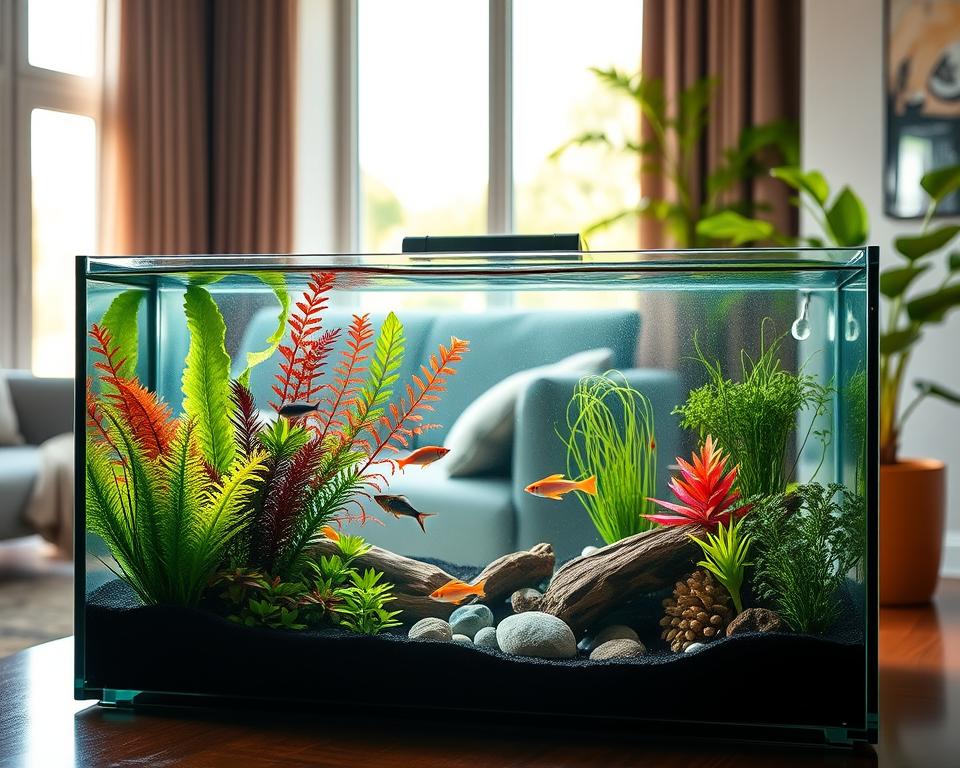
By focusing on your no-filter tank’s looks, you can make a unique and eye-catching display. This hobby can bring joy and peace to your home, whether you’re new or experienced.
Community vs. Single Species Tanks
Choosing between a community and a single species tank affects your aquarium’s success. Both have pros and cons, which I’ll discuss to guide your decision.
Pros and Cons of Each
Community tanks are lively and diverse, housing many species. They look great and mimic nature. But, you must plan carefully to match species’ needs and behaviors.
Single species tanks focus on one type, allowing for specific care. This is good for species with unique needs. For more on community versus single species tanks, check this resource.
How to Create a Balanced Community
To balance a community tank, pick species that get along and need similar water. Research each species’ needs and behaviors. Some fish need groups, while others prefer to be alone.
For a peaceful tank, consider these tips:
- Choose species that need similar water conditions.
- Pick fish that are not too aggressive or competitive.
- Avoid too many fish to prevent water quality problems and stress.
- Include a variety of species for a diverse ecosystem.
With careful planning, your community tank can thrive. Remember, understanding your fish’s needs is key to a hassle-free aquarium maintenance experience.
How to Transition from a Filtered Tank
Switching to a no-filter tank can cut down on maintenance and create a more natural environment. If you’re thinking about making this change, it’s key to know the steps and what to consider first.
Step-by-Step Guide
The first step is to slowly lower the filter’s power over weeks. This lets the good bacteria in your tank get used to the new setup. Start by turning down the filter’s strength or cleaning it less often.
Then, you’ll need to add more plants to your tank. Plants are vital in a no-filter tank for keeping water clean and feeding your fish. Pick plants that fit your tank’s size and your fish’s needs.
After adjusting the filter and adding plants, keep a close eye on your tank’s water. Regular water changes are key to avoid toxins.
Factors to Consider Before Transitioning
Before switching to a no-filter tank, think about the type of fish you have. Some fish do better in no-filter tanks than others. Fish that need well-oxygenated water might need changes to their home.
Also, think about the size of your tank. Bigger tanks are often more stable and better for no-filter setups. Smaller tanks can be harder to keep without a filter.
Lastly, consider your level of experience with aquarium care. No-filter tanks need you to understand how the tank works and be able to adjust it as needed.
My Personal Experiences with No-Filter Tanks
I’ve found that No-Filter Tanks make aquarium care easy. They help me keep my underwater world thriving with little effort.
The Hurdles I Overcame
Setting up a balanced environment was tough at first. I had to deal with too much algae. But, by tweaking the lighting and adding more plants, I found balance. This taught me patience and the value of watching my tank closely.
Key Takeaways
My journey taught me that easy maintenance is about more than just the tank. It’s about knowing what your fish need. By keeping an eye on water quality and making small changes, I keep my fish healthy. No-Filter Tanks have made aquarium care both fun and simple for me.