
Did you know that using nature-inspired designs in your home can lower stress? Minimalist aquascaping is a way to add this calming touch. It focuses on simplicity and elegance in aquarium design.
With a simple aquascape design, you can make your aquarium a peaceful underwater retreat. It’s not just pleasing to look at but also easy to care for. This style uses clean lines, minimal decor, and a few colors. It makes your aquarium a beautiful sight to see.
Key Takeaways
- Create a serene underwater oasis with minimalist design principles.
- Simplify your aquarium maintenance with a limited decor approach.
- Enhance your home’s ambiance with a nature-inspired aquarium.
- Achieve a visually stunning aquarium with clean lines and minimal decor.
- Enjoy the therapeutic benefits of a well-designed aquarium.
What is Minimalist Aquascaping?
Creating a minimalist aquascape means removing the extra to show off the beauty of water life. This approach focuses on simplicity. It highlights the key elements that bring harmony and balance to the underwater world.
The Definition of Minimalism in Aquascaping
Minimalism in aquascaping uses few plants, simple materials, and negative space wisely. It aims for a clean aquarium layout that looks good and is easy to care for. I believe, “The beauty of minimalist aquascaping is in its simplicity and the calm it brings.”
Key Principles of Minimalist Design
The core of minimalist aquascaping is balance, proportion, and harmony. Balance comes from arranging elements in a stable way. Proportion means the size and scale of elements fit well together. Harmony creates a unified look that’s pleasing.
To follow these principles, choose modern aquascape ideas that fit the minimalist style. This might mean picking a few plants, using simple materials like rocks, and placing decorations carefully to highlight areas in the aquarium.
“The minimalist aquascape is not just an aquarium; it’s a reflection of the beauty of nature, distilled into its purest form.”
By sticking to these principles and ideas, aquarists can make stunning underwater spaces. These spaces are not only beautiful but also peaceful and calming.
My Journey into Minimalist Aquascaping
Starting my journey into minimalist aquascaping opened a new world for me. It wasn’t just about setting up an aquarium. It was about making a peaceful space that I could enjoy every day.
Discovering a Passion for Aquatic Art
I fell in love with minimalist fish tank decor after finding an online aquascaping community. The simple yet elegant designs amazed me. I was drawn to the idea of negative space, where nothing is there, yet it feels calm and balanced.
Minimalist aquascaping is more than just looks. It’s about creating a healthy home for fish and plants. This made me want to learn more about aquatic design principles and how to use them.
My First Minimalist Setup
Setting up my first minimalist aquarium was both thrilling and nerve-wracking. I picked a sleek, modern tank as the base for my sleek aquatic design. A rectangular tank was perfect, as it’s clean and simple.
Choosing the right equipment and plants was the next step. I chose easy-to-care-for plants like Anubias and Java Moss. For tips on picking plants and gear, check out this resource. It helps understand the differences between minimalist and complex aquascaping.
Patience and watching closely are essential. Minimalist aquascaping is about creating beauty and understanding the balance between water life and its environment.
Choosing the Right Aquarium
Starting your journey to a stunning underwater landscape begins with picking the right aquarium. It’s not just a container; it’s a canvas for your creativity.
Factors to Consider Before Buying
Before you buy, think about a few key things. Tank size is very important. A bigger tank is stable but needs more space and care. A smaller tank is harder to keep up with because it has less water.
The material of the tank matters too. Glass tanks are classic and clear, but acrylic tanks are lighter and safer. Choose based on what you need and like.
Equipment compatibility is also key. Make sure your tank fits your filtration, lighting, and heating systems well.
Recommended Tank Sizes for Minimalism
For a minimalist look, some tank sizes are better than others. Small tanks (less than 20 gallons) are great for tiny spaces. They can be very eye-catching with the right design.
Medium tanks (20-50 gallons) are flexible and popular. They have enough room for interesting layouts and can hold various fish and plants.
Large tanks (more than 50 gallons) are for those with lots of space and resources. They can be truly stunning and offer endless creative possibilities.
The best tank size depends on your space, budget, and how much care you’re ready for. By thinking about these, you can pick an aquarium that will help you create a beautiful contemporary aquascape style.
Essential Equipment for a Minimalist Setup
Starting a minimalist aquascape requires the right equipment. It’s important to choose simple yet functional items. The right gear not only looks good but also keeps your fish healthy.
Must-Have Tools and Gadgets
You’ll need a few key tools for a minimalist tank. These include a good filter, a heater, and a gravel vacuum. A magnetic algae scraper and a water test kit are also essential.
Look for tools that are both functional and simple. For example, a hang-on-back filter is efficient and saves space. Choose gadgets that are easy to use and maintain for a stress-free tank.
Lighting: The Heart of Your Aquascape
Lighting is key in any aquascape, and it’s even more important in a minimalist setup. The right light can make your plants and fish look amazing.
Think about the plants you’re growing when picking lighting. Some need more light than others. LED lights are popular because they’re energy-efficient and flexible. A good lighting system not only lights up the tank but also makes it look great, inspired by minimalist planted tank inspiration.
| Lighting Type | Energy Efficiency | Cost | Plant Growth |
|---|---|---|---|
| LED | High | Moderate to High | Excellent |
| T5 | Moderate | Low to Moderate | Good |
| Halogen | Low | Low | Poor |
Selecting Plants for Minimalist Aquascaping
Minimalist aquascaping focuses on picking the right plants for a clean, serene look. The chosen plants not only make the aquarium look good but also help keep it healthy.
Best Low-Maintenance Plants
For a minimalist setup, pick plants that are easy to care for. They should not need a lot of pruning or special care. Java Moss, Anubias, and Java Fern are great choices. They are tough and add elegance to your aquarium.
| Plant Name | Lighting Requirements | Care Level |
|---|---|---|
| Java Moss | Low to Medium | Easy |
| Anubias | Low | Easy |
| Java Fern | Low to Medium | Easy |
How to Create Depth with Foliage
To add depth, place plants of different heights and textures. Mix foreground, mid-ground, and background plants for a layered look. For example, foreground plants like Dwarf Hairgrass can make a lush carpet. Taller plants like Amazon Swords can go in the back for depth.
By choosing and arranging plants wisely, you can make a beautiful, simple aquascape. The secret to success is to keep it simple and clean. This lets the natural beauty of the plants and other elements stand out.
Scaping Techniques That Work for Me
Creating a stunning minimalist aquascape needs careful planning. I’ll share my experience with you. The key is to follow minimalist principles for a calm and beautiful underwater space.
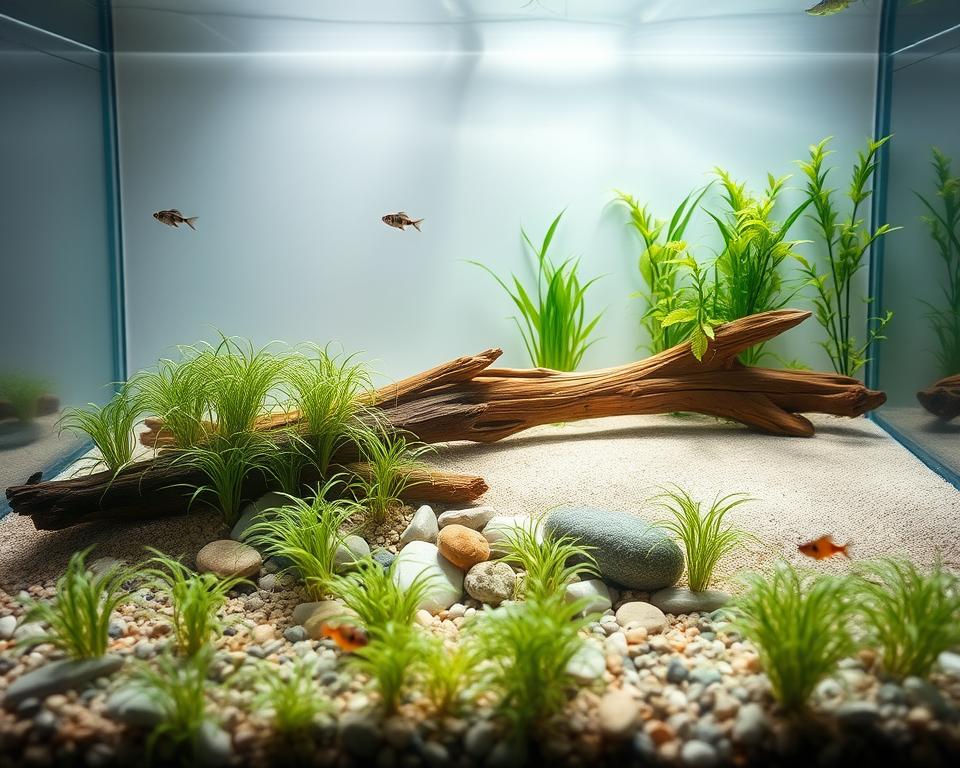
Utilizing Negative Space
Using negative space is a powerful technique in minimalist aquascaping. It creates calm by leaving some areas empty. This doesn’t mean the space must be blank; it’s about finding balance.
Tips for Effective Negative Space:
- Leave some areas between plants and hardscape elements.
- Consider the visual weight of elements and balance them.
- Use lighting to draw attention to specific areas, creating focal points.
Creating Balance with Focal Points
Focal points are key in guiding the viewer’s eye. They highlight the most interesting or beautiful part of the design. This can be done with plants, rocks, or other decorative elements.
| Focal Point Elements | Purpose | Tips for Use |
|---|---|---|
| Colorful Plants | Add visual interest and depth | Use sparingly to avoid overwhelming the space |
| Rocks and Driftwood | Create structure and texture | Balance large pieces with smaller elements |
| Lighting | Highlight focal points and create ambiance | Adjust intensity and color to enhance the aquascape |
By using these scaping techniques, you’ll create a modern aquascape that’s both beautiful and peaceful.
Choosing Hardscape Elements
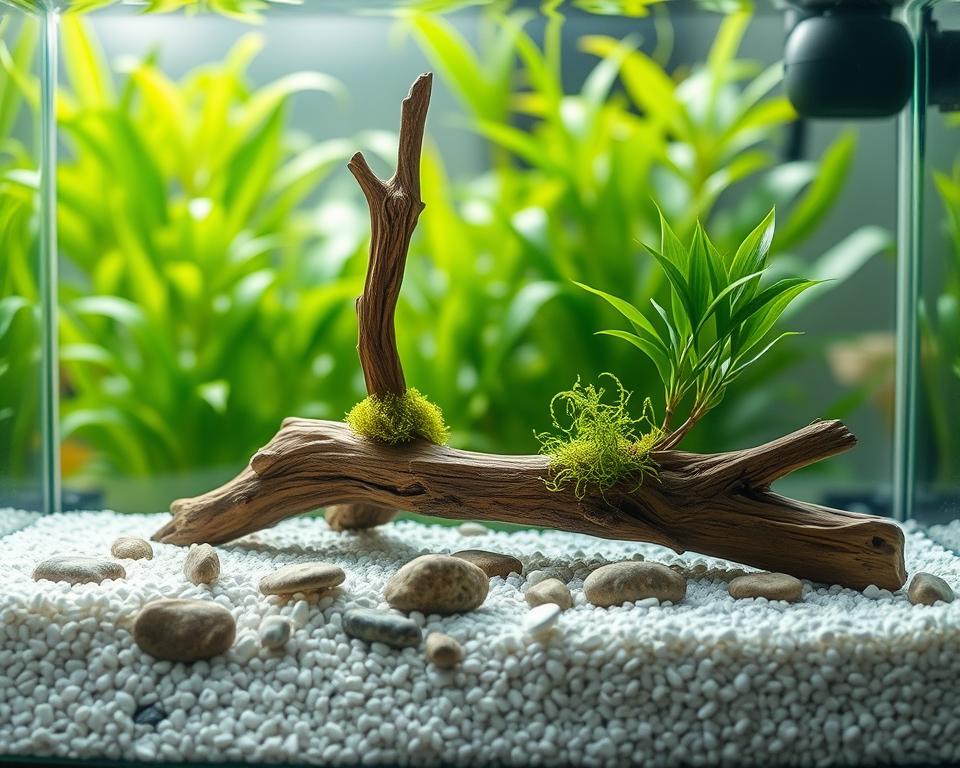
In minimalist aquascaping, picking the right hardscape elements is key. Rocks and wood are not just for looks; they are the base of your underwater world.
Types of Materials for Minimalism
When picking hardscape materials, choose items that fit the minimalist look. Natural stones like seiryu and ohko are great. They have unique textures and add depth.
Driftwood is also a great choice. It can be used to draw attention or give fish places to hide.
| Material | Description | Aesthetic Appeal |
|---|---|---|
| Seiryu Stone | A type of dragon stone with a unique texture | Creates depth and visual interest |
| Ohko Stone | A limestone rock that adds a natural look | Provides a clean, minimalist appearance |
| Driftwood | Weathered wood that adds character | Creates focal points and hiding places |
Tips for Arranging Rocks and Wood
Arranging hardscape elements well is important for a sleek look. Here are some tips:
- Start with the biggest elements to set the base.
- Use smaller rocks and wood to fill gaps and look natural.
- Try out different setups before you decide.
By picking and arranging hardscape elements wisely, you can make a beautiful, minimalistic underwater scene.
Water Quality and Maintenance
Keeping the water quality right is key for a healthy aquascape. As I explore modern aquascape styles, I see that clean water is essential. It’s the base for a thriving aquarium.
Aquascaping is more than just placing plants and rocks. It’s about creating a balanced ecosystem. Water parameters are critical for this balance. You need to check pH, ammonia, nitrite, and nitrate levels often. This ensures they’re safe for your fish and plants.
Importance of Water Parameters
Knowing about water parameters is vital for a healthy aquarium. Here are some important ones to watch:
- pH levels: Keep them stable and right for your fish and plants.
- Ammonia and nitrite levels: These should be zero, as they’re harmful to fish and plants.
- Nitrate levels: While not as toxic, high levels can cause problems. Regular water changes help manage them.
Testing water regularly helps spot problems early. This way, you can fix them quickly.
My Routine for Keeping Water Pristine
To keep my aquascape healthy, I have a strict maintenance plan. Here’s what I do weekly:
- Check water parameters with a reliable test kit.
- Do a 10-20% water change to remove nitrates and waste.
- Clean the glass and decorations to stop algae.
- Make sure filters and heaters work well.
By following this routine, my aquascape stays healthy and looks great.
In summary, keeping water quality up is a continuous effort. It needs careful attention and regular upkeep. By understanding water parameters and sticking to a routine, you can have a beautiful and thriving aquascape.
Fish and Invertebrates for a Minimalist Tank
To get a clean, minimalist look in your tank, pick your fish and invertebrates carefully. The right aquatic life can make your tank look better while sticking to minimalist design.
Best Species for a Clean Look
For a minimalist tank, choose fish and invertebrates that look good and are easy to care for. Here are some top picks:
- Neon Tetras: These small, schooling fish add color without taking over the tank.
- Amano Shrimp: They’re great for controlling algae, making them perfect for a simple tank.
- Corydoras Catfish: These small catfish help clean up food from the bottom, keeping the tank tidy.
How to Keep Stocking Simple
Keeping your tank simple is key for a minimalist look. Here’s how:
- Don’t overcrowd the tank by limiting species.
- Pick species that get along in terms of size, behavior, and water needs.
- Stay away from brightly colored or fancy fish that might mess up the minimalist vibe.
By following these tips, you can make a stunning, minimalist tank. The goal is to find a balance between beauty and the health of your fish and invertebrates.
Challenges I’ve Faced in Minimalist Aquascaping
Creating a simple aquascape design isn’t easy; I’ve faced many challenges. These have taught me a lot.
One big challenge is avoiding mistakes that can harm the aquarium. Let’s look at some common mistakes and how to avoid them.
Common Mistakes and How to Avoid Them
Many beginners, like me when I started, overstock their tanks. This can cause water quality problems and stress the fish.
- Overstocking: Start with a few hardy species and add more slowly as the ecosystem stabilizes.
- Insufficient Lighting: Make sure your lighting is right for the plants you’ve chosen.
- Poor Water Circulation: Get a good quality pump to keep water moving.
Knowing these common mistakes helps you avoid them. This keeps your aquarium healthy and thriving.
Dealing with Algae Issues
Algae can ruin the clean look you want in minimalist aquascaping. Here are some tips to fight algae:
| Cause | Solution |
|---|---|
| Excess Nutrients | Regular water changes, monitor nutrient levels |
| Insufficient Lighting | Adjust lighting duration and intensity |
| Poor Water Circulation | Improve water circulation with a better pump |
Understanding algae causes and taking action can keep your aquarium clean and healthy.
In conclusion, while minimalist aquascaping has its challenges, knowing common mistakes and algae solutions can help. This way, you can create a beautiful underwater oasis.
Inspiration and Resources for Minimalist Aquascaping
Exploring minimalist aquascaping has shown me many inspiring sources. I find it essential to stay inspired and informed for a beautiful aquascape.
I’ve gathered a list of resources for your minimalist aquascaping journey. These include educational materials and communities passionate about aquascaping.
Books and Websites to Explore
For a deeper dive into minimalist aquascaping, check out books and websites. Key books cover minimalist design and aquascaping art. Websites dedicated to aquascaping offer tutorials, forums, and galleries.
Online platforms are full of modern aquascape ideas. They inspire and give practical tips for a clean aquarium. These resources help you balance beauty with your aquatic life’s health.
Aquascaping Communities and Forums
Joining aquascaping communities and forums is rewarding. They let you connect with others, share knowledge, and learn from their experiences. Whether you’re new or experienced, these communities offer valuable insights and motivation.
Online, you’ll find active and helpful communities. Members share their aquascapes, offer advice, and discuss trends. Being part of these communities keeps you updated on maintaining a clean and thriving aquarium.
By using these resources and connecting with others, you can improve your minimalist aquascaping skills. Whether through books, websites, or forums, there’s plenty of information to inspire and guide you.
Final Thoughts on Creating Your Aquascape
Reflecting on my journey into minimalist aquascaping, I see it as a never-ending process. It’s about finding beauty in simplicity and elegance in design. By choosing minimalist decor, you can make a stunning underwater world that shows the calm of aquatic life.
Nurturing Growth and Imperfection
One key lesson I’ve learned is to accept imperfection and growth. A minimalist aquascape is always changing, growing over time. By being patient and watching closely, you can help your aquascape thrive.
Future Aquascaping Projects
Looking ahead, I’m eager to try new ideas in minimalist aquascaping. I’m inspired by the chance to make unique underwater scenes. Whether you’re new or experienced, keep trying new things with minimalist decor.