
Starting an aquarium can seem tough, but it’s worth it. It can even lower stress by up to 12%.
I’ve learned that a minimalistic approach makes your aquarium look great and easy to care for. This guide will show you how to set up a low-maintenance tank. You’ll enjoy the beauty of an underwater world without the hassle.
Key Takeaways
- Understand the basics of a minimalistic aquarium setup
- Learn how to choose the right equipment for your tank
- Discover the importance of proper water maintenance
- Find out how to select the right fish for your aquarium
- Get tips on creating a beautiful and sustainable underwater environment
What is a Low-Tech Aquarium?
Low-Tech Aquariums are simple and easy to care for. They’re perfect for beginners or anyone who wants a hassle-free hobby. These aquariums don’t need fancy equipment or high costs.
Defining Low-Tech Aquariums
A Low-Tech Aquarium uses little advanced tech. It focuses on creating a natural space for plants and fish to grow. The main features are:
- Minimal lighting, often using natural or low-intensity LED lighting
- Simple filtration systems, such as sponge filters or basic hang-on-back filters
- A focus on hardy, easy-to-care-for plants and fish
- Regular, but not excessive, water changes and maintenance
This method makes the hobby more welcoming. It helps people connect with nature. By understanding the ecosystem, aquarists can create a vibrant underwater world.
Benefits of Going Low-Tech
Choosing a Low-Tech Aquarium has many benefits. It’s a great choice for many reasons. Some key advantages are:
- Cost-effectiveness: Less need for expensive gear and tech
- Ease of maintenance: Simple care is perfect for busy people or newbies
- Promoting a natural environment: It helps grow good bacteria and balance the ecosystem
- Flexibility: It lets you be creative with your setup and fish choices
Going Low-Tech means a hobby that’s good for your wallet and the planet. It’s a way to enjoy a peaceful underwater world.
For those starting or switching to a Low-Tech Aquarium, budget-friendly aquarium tips are very helpful. Tips include picking the right plants, choosing the right fish, and learning about upkeep.
Essential Components for Low-Tech Aquariums
Starting a low-tech aquarium means knowing its key parts. When setting up, you need to think about a few important things. These help keep your tank healthy and your fish and plants happy.
Choosing the Right Tank Size
Finding the right tank size is key for water stability and space for your fish and plants. A bigger tank is usually easier to keep up with than a smaller one. Beginners often do well with tanks between 20 to 55 gallons. This size offers a good mix of space and ease of care.
Think about your home’s space and the fish you want to keep. Some fish need lots of room to swim, while others are happy in smaller spaces. A natural fish tank design with lots of room and hiding spots can help your fish feel less stressed.
Lighting Solutions
Lighting is very important for your aquarium. It affects your fish’s health and your plants’ growth. For a low-tech tank, simple lighting solutions like LED or T5 lights work well. They’re energy-saving and give plants the light they need without getting too hot.
When picking lights, think about the plants you want. Some plants need bright light, while others do well in dimmer conditions. A simple aquatic plant setup might include plants like Java Moss or Anubias. These are great for beginners.
Filtration Options
Filtration is vital for clean water in your tank. For low-tech tanks, a sustainable fish tank decor with live plants helps with natural filtering. You can also use mechanical filters like sponge filters or hang-on-back filters to keep the water clear.
Think about your tank’s biological load when picking a filter. A good filter should handle at least as much water as your tank. Regularly cleaning or replacing your filter is key to a healthy tank.
Aquascaping Basics for Low-Tech Aquariums
Aquascaping turns your Low-Tech Aquarium into a beautiful underwater world. Choose the right plants and design your aquascape well. This way, you create a thriving space for your aquatic life.
Popular Plants for Beginners
Choosing plants for your Low-Tech Aquarium is key. Pick ones that are easy to care for and thrive in low-tech settings. Java Moss, Anubias, and Cryptocorynes are great options. They’re hardy and add a natural look to your aquascape.
For more info on low-tech planted tanks, check out Buce Plant’s guide on the topic.
Designing Your Aquascape
Designing your aquascape means creating a layout that looks good and supports your aquatic life. Pick a theme or style that excites you, like a natural landscape or minimalist design. Think about your plants’ mature size and arrange them to add depth and interest.
Maintaining Your Aquascape
Keeping your aquascape healthy and looking good is vital. Tasks include trimming plants, removing debris, and checking water conditions. Doing these regularly keeps your aquascape vibrant and healthy.
| Task | Frequency | Importance |
|---|---|---|
| Trimming Plants | Weekly | High |
| Removing Debris | Daily | Medium |
| Monitoring Water Conditions | Weekly | High |
By following these basics, you can make a stunning Low-Tech Aquarium that’s easy to care for. Remember, success in aquascaping comes from patience and paying attention to details.
Water Conditions for Low-Tech Aquariums
A low-tech aquarium needs the right water conditions to thrive. It’s important to know about water quality, the best water parameters for freshwater, and to test the water often.
Importance of Water Quality
Good water quality is key for a healthy aquarium. Bad water can stress fish and make them sick. Keeping an eye on water conditions is vital for your fish and plants.
Key factors affecting water quality include:
- pH levels
- Ammonia and nitrite levels
- Nitrate levels
- Water hardness
Ideal Parameters for Freshwater
For a low-tech aquarium, keeping water parameters right is essential. Here are some good ranges to aim for:
| Parameter | Ideal Range |
|---|---|
| pH | 6.5-8.5 |
| Ammonia | 0 ppm |
| Nitrite | 0 ppm |
| Nitrate | < 20 ppm |
Testing Your Water Regularly
Testing your water often is critical for a healthy aquarium. I suggest testing it at least once a week. Do it more often if you see any signs of stress in your fish or plants.
Some essential tools for water testing include:
- pH test kits
- Ammonia test kits
- Nitrite test kits
- Nitrate test kits
By keeping water conditions right and testing it regularly, you can have a low maintenance fish tank that does well with little effort. This is good for your fish and plants. It also makes your natural fish tank design and sustainable fish tank decor look better.
Choosing Fish for Your Low-Tech Aquarium
Choosing the right fish for your low-tech aquarium is key for a healthy underwater world. As a beginner, pick fish that are tough and simple to care for. This ensures a peaceful community in your tank.
Think about your tank’s size and the environment you’ve set up. A balanced low-tech aquarium can host many fish species that fit its conditions.
Best Fish for Low-Tech Environments
For a low-tech aquarium, pick fish that handle different water conditions well. They should also not need fancy equipment. Some top picks include:
- Guppies
- Neon Tetras
- Corydoras Catfish
- Zebra Danios
- Harlequin Rasboras
These fish are not just pretty but also easy to care for. They’re great for beginners.
Community Fish Options
Building a community aquarium is fun and rewarding. When picking community fish, think about their compatibility and what they need.
| Fish Species | Temperament | Preferred Water Conditions |
|---|---|---|
| Guppies | Peaceful | 72-82°F, pH 6.8-8.5 |
| Neon Tetras | Schooling, peaceful | 68-78°F, pH 6.0-7.0 |
| Corydoras Catfish | Peaceful, social | 72-78°F, pH 6.5-7.5 |
As an aquarium expert,
“The key to a successful community aquarium is choosing fish that are compatible and suited to the tank’s conditions.”
Understanding Fish Compatibility
Knowing fish compatibility is vital for a peaceful aquarium community. Learn about the needs and personalities of different fish. This helps you make smart choices.
By picking the right fish for your low-tech aquarium and knowing their needs, you’ll create a thriving underwater world. It will be both stunning and simple to keep up.
Feeding Your Aquarium Inhabitants
To keep your Low-Tech Aquarium inhabitants healthy, it’s essential to understand their dietary needs. Feeding your fish might seem straightforward, but it requires careful consideration. This ensures they’re getting the nutrients they need to thrive.
Choosing the right food for your fish is key. The type of food your fish need depends on their species, size, and dietary requirements. Understanding these needs is key to selecting the appropriate food.
Choosing the Right Fish Food
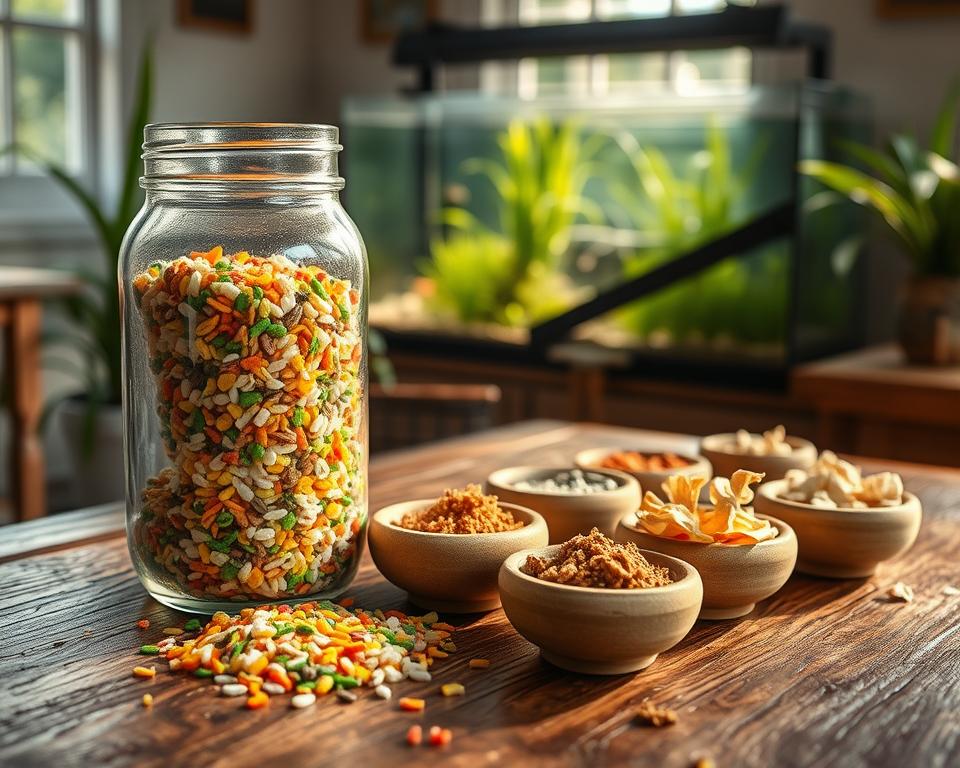
There are several options for fish food, including flakes, pellets, and live or frozen foods. Flakes are popular because they’re easy to use and widely available. But pellets can be better for some fish, as they sink to the bottom, reducing waste. Live or frozen foods, like brine shrimp or bloodworms, provide essential nutrients and variety.
“Variety is the spice of life” when it comes to feeding your fish. A balanced diet with different food types can help keep your fish healthy and thriving. As one expert notes,
“A varied diet is vital for the overall health and well-being of aquarium fish.”
Feeding Schedules and Portion Control
Establishing a regular feeding schedule is vital for a healthy Low-Tech Aquarium. Overfeeding can lead to water quality issues and negatively impact your fish’s health. It’s recommended to feed your fish 2-3 times a day, only providing as much food as they can consume within a few minutes.
To avoid overfeeding, consider the following tips:
- Feed your fish at the same times each day to establish a routine.
- Only provide as much food as your fish can consume within 2-3 minutes.
- Remove any uneaten food after feeding to prevent water quality issues.
By following these guidelines and understanding your fish’s dietary needs, you can create a thriving Low-Tech Aquarium. It will be both budget-friendly and enjoyable.
Maintaining a Low-Tech Aquarium
Keeping a low-tech aquarium in top shape is rewarding. Regular care is key. By sticking to simple routines, your aquarium will flourish. You’ll love watching your underwater world.
Routine Care and Maintenance
Regular upkeep is vital for your aquarium’s health. Tasks include water changes, gravel cleaning, and checking water levels. Regular water changes are essential to remove waste and keep water quality high.
For a clean tank, do partial water changes weekly. Aim to change 25% of the water each week. Use a gravel vacuum to clean the substrate. Replace the water with fresh, dechlorinated water that’s the same temperature as your tank.
Don’t forget to clean the glass walls of your aquarium. Use a magnetic algae scraper to remove algae. Also, clean your filter as the manufacturer suggests.
Common Issues and Troubleshooting
Even with regular care, problems can pop up. Algae overgrowth is a common issue. It’s often caused by too much light or too many nutrients. To fight algae, try reducing light time, adding more plants, or introducing algae-eating fish.
Water parameter swings are another issue. Use a water test kit to check for imbalances. If you find any, do a water change or adjust your filter.
| Issue | Cause | Solution |
|---|---|---|
| Algae Overgrowth | Excessive Lighting, Nutrient Imbalance | Reduce Lighting, Increase Plants, Add Algae-Eating Fish |
| Water Parameter Fluctuations | Ammonia, Nitrite, or Nitrate Imbalance | Perform Water Change, Adjust Filtration |
| Fish Stress or Disease | Poor Water Quality, Incompatible Tankmates | Improve Water Quality, Separate Aggressive Fish |
By focusing on routine care and being ready to solve common problems, your low-tech aquarium will thrive. With practice and patience, you’ll master maintaining your minimalistic aquarium guide. You’ll enjoy the beauty of your natural fish tank design and sustainable fish tank decor.
Balancing Your Low-Tech Aquarium Eco-system
A balanced ecosystem is key to a thriving Low-Tech Aquarium. It makes your underwater world beautiful and healthy. It’s great for your fish and plants to grow well.
The Role of Beneficial Bacteria
Beneficial bacteria are vital for your aquarium’s balance. They break down waste like ammonia and nitrite into nitrate. Plants use this nitrate, or it gets removed through water changes.
To help beneficial bacteria grow, you need the right environment. Use a substrate like sand or gravel for them to colonize. Avoid too much cleaning or water changes to keep their colonies stable.
How to Create a Balanced Environment
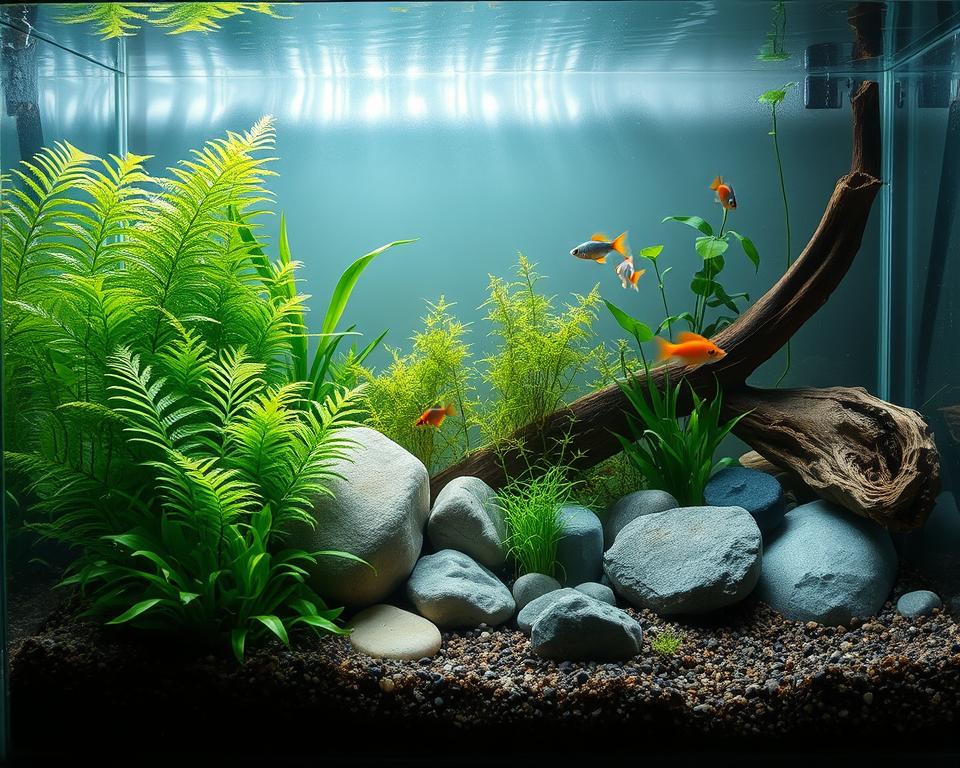
To create a balanced Low-Tech Aquarium, follow a few steps. First, pick plants and fish that go well together and fit your tank’s conditions.
Here are some tips for a balanced ecosystem:
- Choose plants that do well in low-tech setups. They need little light and care.
- Don’t put too many fish in your tank. This can harm water quality.
- Check your water often. Make sure it’s safe for your fish and plants.
| Parameter | Ideal Range | Impact on Ecosystem |
|---|---|---|
| pH | 6.5-8.5 | Affects fish health and beneficial bacteria activity |
| Ammonia | 0 ppm | Toxic to fish; indicates inadequate beneficial bacteria |
| Nitrate | <20 ppm | Excessive levels can lead to algae growth and stress on fish |
Understanding beneficial bacteria’s role and following these tips will help. You’ll have a balanced, thriving Low-Tech Aquarium. This makes your underwater world beautiful and keeps your fish and plants healthy.
DIY Solutions for Low-Tech Aquariums
Low-tech aquariums are great for DIY projects. They let you make your tank unique without spending a lot. You can customize your aquarium to match your style while keeping costs down.
Simple Repurposed Materials
One of the best things about low-tech aquariums is using everyday items. You can turn old terracotta pots or decorative stones into hiding spots for fish. Repurposing materials not only cuts down on waste but also adds a personal touch.
- Old plastic bottles can become CO2 diffusers or decorations.
- Unused wooden crates or driftwood can create natural-looking scenes.
- Unused pipes or tubes can be used for DIY filters or decorations.
“The art of aquascaping is not just about arranging plants and decorations; it’s about creating a natural environment that thrives with minimal equipment.”
Affordable Equipment Modifications
Changing your equipment can also save money. For example, you can improve your filter by adding DIY media or adjusting the flow. This makes your tank better without spending a lot.
- Customize your filter by adding beneficial bacteria colonies to improve water quality.
- Adjust your lighting to optimize plant growth without increasing energy costs.
- Use a timer to automate your lighting schedule, ensuring consistency for your aquatic life.
With these DIY solutions, you can have a thriving low-tech aquarium that’s both affordable and beautiful. The secret to success is keeping it simple and creative.
Learning from Experience: My Low-Tech Journey
Reflecting on my Low-Tech Aquarium journey, I’ve learned a lot. Setting up and caring for a Low-Tech Aquarium has been rewarding. It’s a path filled with growth and discovery.
Tips from My Own Setup
Starting small is a key tip I can share. I initially wanted a big aquarium. But, a smaller tank is easier to manage and keeps water stable.
Patience is key when setting up a Low-Tech Aquarium. Rushing can cause mistakes like bad cycling or too many fish. I learned to wait for a stable ecosystem before adding fish.
“The greatest glory in living lies not in never falling, but in rising every time we fall.” – Nelson Mandela
This quote is meaningful to me. It shows the value of perseverance. In aquariums, it means facing challenges and learning from them.
Mistakes I Made and Lessons Learned
One mistake was overfeeding my fish. This caused water quality problems and stressed the fish. I learned that less is often more when feeding. Watching fish behavior and adjusting feeding times is key.
Another lesson was the need for regular water testing. I wasn’t testing often, missing changes in water parameters. Now, I test water regularly to keep my fish healthy.
- Start with hardy fish species suitable for Low-Tech environments.
- Be patient and allow your tank to cycle properly.
- Monitor and adjust water parameters regularly.
Sharing my experiences, I hope to help others in Low-Tech Aquariums. With the right mindset and knowledge, creating a thriving aquarium is rewarding.
Resources for Further Learning
As I explore Low-Tech Aquariums, staying updated is key. I connect with the aquarium community to grow my knowledge. This helps me improve my simple aquatic plant setup.
Recommended Reading and Online Communities
I’ve found great books and online forums about Low-Tech Aquariums. These resources are full of DIY ideas and expert tips. They help me get better at aquascaping and solve problems.
Local Aquarium Clubs and Workshops
Being part of local aquarium clubs and workshops is rewarding. I learn from experts and share my own stories. These events are great for hands-on learning and meeting others who love Low-Tech Aquariums.