

Did you know that nearly 30% of the energy used by electronic devices is wasted? This is because of inefficient filtering. It shows how vital energy-efficient filters are for today’s electronics.
In my journey through the world of electronics, I’ve learned that Low Power Filters are key. They help devices work better and use less energy. These filters aim to cut down energy loss while keeping the signal clear.
Learning about Low Power Filters can greatly boost your electronics. In this article, we’ll look at what they are, their types, uses, and advantages.
Key Takeaways
- Understanding the role of Low Power Filters in electronics.
- The benefits of using energy-efficient filters.
- Applications of Low Power Filters in various devices.
- How Low Power Filters enhance device performance.
- The importance of minimizing energy loss in electronics.
What Are Low Power Filters?
Low power filters help electronic systems work better by removing unwanted signals and cutting down power use. They are key to making electronic devices more efficient and perform better.
Definition and Purpose
These filters, also known as low-energy filtration systems or power-saving filters, let certain frequencies through while blocking others. Their main job is to reduce energy loss and improve the signal-to-noise ratio in circuits.
A leading expert says, “The secret to good filter design is knowing what the application needs and picking the right parts.” This shows how important it is to think carefully about designing and using low power filters.
“The key to effective filter design lies in understanding the specific requirements of the application and selecting components that meet those needs.”
Importance in Electronics
Low power filters are very important in electronics. They help devices run smoothly, efficiently, and with less interference. They are essential in all sorts of devices, from gadgets we use every day to medical equipment.
| Application | Benefit of Low Power Filters |
|---|---|
| Consumer Electronics | Improved audio quality and reduced power consumption |
| Communication Devices | Enhanced signal clarity and reduced interference |
| Medical Equipment | Increased precision and reliability in critical applications |
In summary, low power filters are essential for modern electronics. They help devices work better and use less energy. As technology keeps getting better, these filters will become even more important.
Types of Low Power Filters
It’s important to know the different types of Low Power Filters for your electronic needs. With technology improving, we need cost-effective filtration solutions more than ever. Let’s look at the various options available.
Low Power Filters fall into three main categories: Passive Filters, Active Filters, and Digital Filters. Each has its own strengths and uses, making them perfect for different tasks.
Passive Filters
Passive Filters use simple components like resistors, capacitors, and inductors. They are cost-effective and great for simple applications. But, they can’t boost signal strength.
Active Filters
Active Filters, by contrast, use active parts like operational amplifiers. They can enhance signals and filter better than Passive Filters. Active Filters are perfect for precise tasks and are often seen as eco-friendly due to their efficiency.
Digital Filters
Digital Filters use digital methods to process signals. They are flexible and can be changed easily with software updates. This makes them ideal for today’s electronics, where flexibility is key.
In summary, picking the right Low Power Filter depends on your application’s needs. Consider cost, performance, and environmental impact. Knowing the different types helps make choices that fit your needs for cost-effective filtration solutions and eco-friendly filter technology.
How Low Power Filters Work
Low power filters are great at processing signals and saving energy. They work by letting certain frequencies pass through and blocking others. This is thanks to their design and components.
Basic Operating Principles
These filters let some frequencies through while blocking others. They use passive or active parts to do this. Reduced power consumption filters help save energy, making systems more efficient.
They have resistors, capacitors, and inductors for passive filters. Active filters use operational amplifiers. The choice of these parts affects the filter’s performance.
Signal Processing Mechanisms
Low power filters clean up signals by removing unwanted parts. Sustainable filter options also aim to reduce environmental impact. They do this by using less power.
Let’s look at how different filters process signals:
| Filter Type | Signal Processing Mechanism | Advantages |
|---|---|---|
| Passive Filters | Use of resistors, capacitors, and inductors to filter signals | Simple design, low cost, and no power consumption |
| Active Filters | Utilize operational amplifiers to enhance filtering capabilities | Improved signal quality, flexibility in design |
| Digital Filters | Employ algorithms to process digital signals | High precision, flexibility, and programmability |
Knowing how these filters work helps designers make better ones. This leads to more efficient and green electronic systems.
Applications of Low Power Filters
Low Power Filters are versatile and used in many areas. They improve performance, cut down power use, and boost efficiency in devices. This makes them perfect for a wide range of applications.
Consumer Electronics
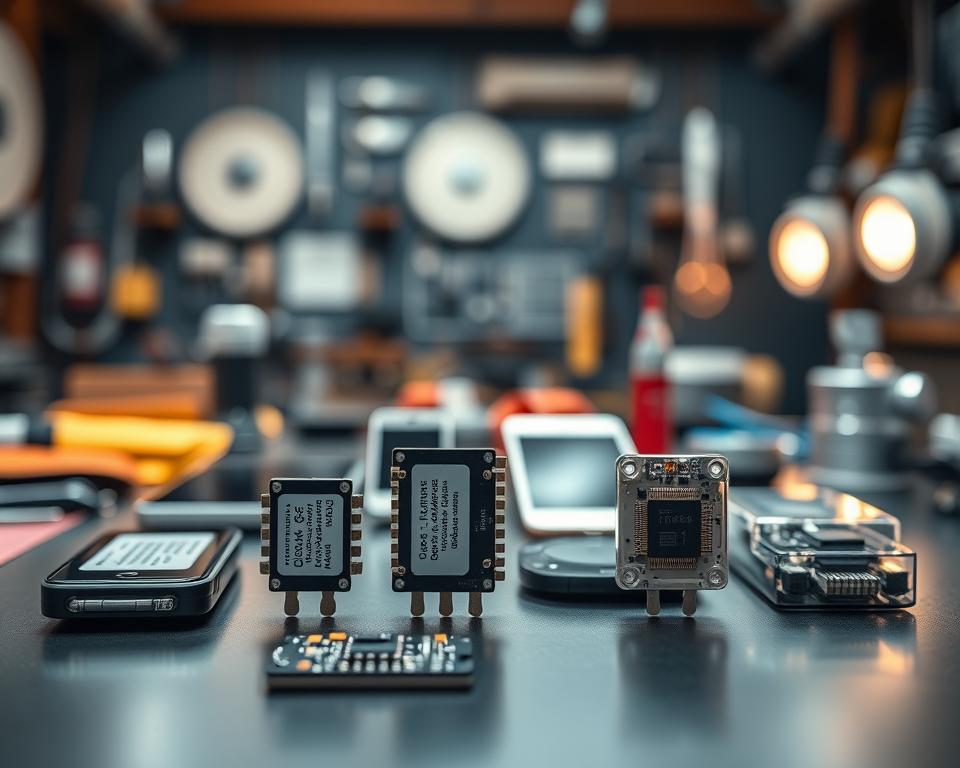
In consumer electronics, Low Power Filters are key. They make devices like smartphones, laptops, and TVs work better. They also help in reducing noise and improving signal quality.
For example, in smartphones, these filters enhance audio quality and save battery life. In laptops, they reduce electromagnetic interference, making them run smoother.
Communication Devices
Communication devices, like radios and transceivers, depend on Low Power Filters. These filters clear out unwanted frequencies and noise, ensuring signals are strong and clear.
Using Low Power Filters in these devices is vital. It keeps signals strong and prevents interference. This is key for reliable communication.
Medical Equipment
In medical gear, Low Power Filters are essential. They help ensure that diagnostic and therapeutic devices work accurately. This includes ECG machines, ultrasound devices, and more.
The precision of Low Power Filters in medical equipment is critical. It helps in making accurate diagnoses and effective treatments. This is important for patient safety and better healthcare outcomes.
| Application Area | Device Examples | Benefits of Low Power Filters |
|---|---|---|
| Consumer Electronics | Smartphones, Laptops, TVs | Improved signal quality, reduced power consumption |
| Communication Devices | Radios, Transceivers, Telecommunication Equipment | Clear signal transmission, reduced interference |
| Medical Equipment | ECG Machines, Ultrasound Devices, Medical Imaging Equipment | Accuracy, reliability, patient safety |
Benefits of Using Low Power Filters
Low Power Filters greatly improve the performance and efficiency of electronic systems. They are made to use less power while keeping devices working well.
Energy Efficiency
Low Power Filters are great at cutting down energy use. They remove unwanted signals and noise, making devices use power better. This is key for devices that run on batteries, as it means they last longer.
Energy Efficiency Comparison: Here’s how Low Power Filters can save energy:
| Device Type | Power Consumption without Low Power Filter | Power Consumption with Low Power Filter |
|---|---|---|
| Smartphone | 500 mW | 350 mW |
| Laptop | 20 W | 15 W |
| Wearable Device | 100 mW | 70 mW |
Performance Improvement
Low Power Filters also boost how well devices work. They keep the signal quality high by filtering out noise and interference. This leads to better performance overall.
For instance, in communication devices, Low Power Filters cut down on interference. This means clearer and more reliable communication.
Size and Design Flexibility
Low Power Filters are also small and can be designed in many ways. They fit into various devices, from small wearables to big industrial equipment.
Because of their design flexibility, manufacturers can easily add Low Power Filters to their products. This makes them a valuable part of modern electronics.
Designing Low Power Filters
Creating low power filters is a complex task. It needs a deep understanding of the application and the parts used. We must balance performance, energy use, and cost.
Key Considerations
When making low power filters, several important factors must be considered. These include the filter’s frequency response, how well it blocks unwanted signals, and its power handling. For example, in power supply filter design, the right components and design can greatly affect system performance.
Choosing the right components is key to a cost-effective filtration solution without losing performance. We must look at things like tolerance, how stable they are with temperature, and any unwanted effects.
Component Selection
Choosing the right components is a critical step in making low power filters. We need to pick parts that meet electrical needs and fit the system’s physical and thermal limits. For instance, we must select capacitors and inductors with the right values and tolerances for the desired filter performance.
| Component | Characteristics to Consider | Impact on Filter Performance |
|---|---|---|
| Capacitors | Capacitance value, tolerance, ESR | Affects frequency response and stability |
| Inductors | Inductance value, tolerance, DCR | Influences filter’s attenuation and power handling |
| Resistors | Resistance value, tolerance, power rating | Impacts filter’s gain and noise performance |
Simulation Tools
Simulation tools are essential in designing and improving low power filters. They let engineers model the filter’s behavior, predict its performance, and make changes before building a prototype. This saves time and reduces the chance of expensive redesigns.

By using simulation tools and carefully picking components, designers can make efficient and effective low power filters. This method helps create cost-effective filtration solutions for today’s electronic systems.
Challenges in Implementing Low Power Filters
As we aim for more energy-efficient electronics, we face challenges with low power filters. They offer many benefits but also technical and manufacturing hurdles. These need to be overcome for their effective use.
Trade-offs in Performance
One big challenge is balancing performance and power use. For example, getting high selectivity and low insertion loss might need complex designs. This can raise power use.
Recent insights show that tackling RF filtering issues is key for today’s tech. Low power filters are vital in this effort.
Designers must find the right balance. They need to pick filter designs and parts that meet performance needs but use less power. This means looking at component tolerances, temperature stability, and signal processing algorithms carefully.
Manufacturing Constraints
Manufacturing also poses challenges for low power filters. Using eco-friendly filter technology and sustainable materials can be hard. It can limit component availability and raise production costs.
Ensuring consistent quality is also key. Small changes in component values or assembly can affect filter performance a lot.
To tackle these issues, makers are using new fabrication methods. They’re also researching new materials and processes. This aims to improve filter performance and sustainability.
Trends in Low Power Filter Technology
The world of Low Power Filter technology is changing fast. It’s all about making signal processing more efficient and effective. New materials and integration with IoT devices are key to this change.
Advancements in Materials
New materials are being created for Low Power Filters. They have better Q factors, lower losses, and are more stable at different temperatures. For example, advanced ceramics and nanomaterials are making filters work better while using less power.
These new materials bring many benefits. They improve how well filters can pick out specific signals. They also reduce the loss of signal strength and stay stable even when it gets hot.
- Improved filter selectivity
- Reduced insertion losses
- Enhanced thermal stability
| Material | Q Factor | Losses |
|---|---|---|
| Advanced Ceramics | 1000 | 0.5 dB |
| Nanomaterials | 1500 | 0.2 dB |
| Traditional Materials | 500 | 1.0 dB |
Integration with IoT Devices
Low Power Filters are now being used with IoT devices. This is making smart systems even smarter. These filters help make IoT technology work better.
Using Low Power Filters with IoT devices has many benefits. It makes devices work better, use less power, and connect more easily.
- Improved device performance
- Reduced power consumption
- Enhanced connectivity
As Low Power Filter technology keeps getting better, we’ll see new uses in IoT and other areas. Using reduced power consumption filters is key for making devices more energy-efficient.
Selecting the Right Low Power Filter
Choosing the right low power filter is key for optimal performance. Several important factors need to be considered when selecting a filter.
First, understanding the application’s needs is essential. This includes looking at the frequency range, signal strength, and noise levels. This helps narrow down the best filter options for the device or system.
Factors to Consider
Several key factors are important when evaluating low power filters. These include:
- Frequency Response: Ensuring the filter works well in the desired frequency range.
- Signal Attenuation: Reducing signal loss while increasing noise reduction.
- Sustainable Filter Options: Choosing eco-friendly materials and designs to reduce environmental impact.
- Power Consumption: Opting for low power usage to improve energy efficiency.
By carefully considering these factors, I can find a low power filter that meets performance and sustainability goals.
Cost vs. Performance
Choosing a low power filter involves balancing cost and performance. High-performance filters may offer better signal processing but cost more. Less expensive options might not perform as well.
To make a good choice, I compare the importance of performance to my budget. I think about the long-term benefits of a high-performance filter, like less maintenance and a longer life, against the upfront cost savings of a basic model.
In the end, the best low power filter is one that balances cost and performance well. It should meet the application’s needs while being sustainable and efficient.
Future of Low Power Filters
The future of Low Power Filters looks bright, thanks to new technologies. These advancements will make them more efficient and useful in many areas. As we all want to save energy, Low Power Filters are becoming key in various fields.
Emerging Technologies
New materials and technologies are driving innovation in Low Power Filters. For example, nanotechnology is helping create filters that work better and use less power.
Another big trend is combining Low Power Filters with Internet of Things (IoT) devices. This opens up new uses for them in smart homes and industrial settings.
Potential Market Growth
The market for Low Power Filters is set to grow a lot in the next few years. This growth comes from more people wanting energy-saving solutions and new uses for these filters.
Several factors are pushing this growth. These include the rise of renewable energy sources, more electronics in everyday items, and new tech that needs Low Power Filters.
- Increased demand for energy-efficient consumer electronics
- Growing use of Low Power Filters in industrial applications
- Advancements in filter technology enabling new applications
Conclusion: Embracing Low Power Filters
Low Power Filters have changed the electronics world. They make devices work better while using less energy. This is true for everything from gadgets we use every day to medical tools.
Key Takeaways
Low-energy filters bring many benefits. They make devices more energy-efficient, work better, and are easier to design. Knowing how these filters work helps developers make even better electronics.
Exploring Further
The need for Low Power Filters will only grow as technology advances. I suggest readers learn more about these systems. This way, we can make our devices better and help the planet.