


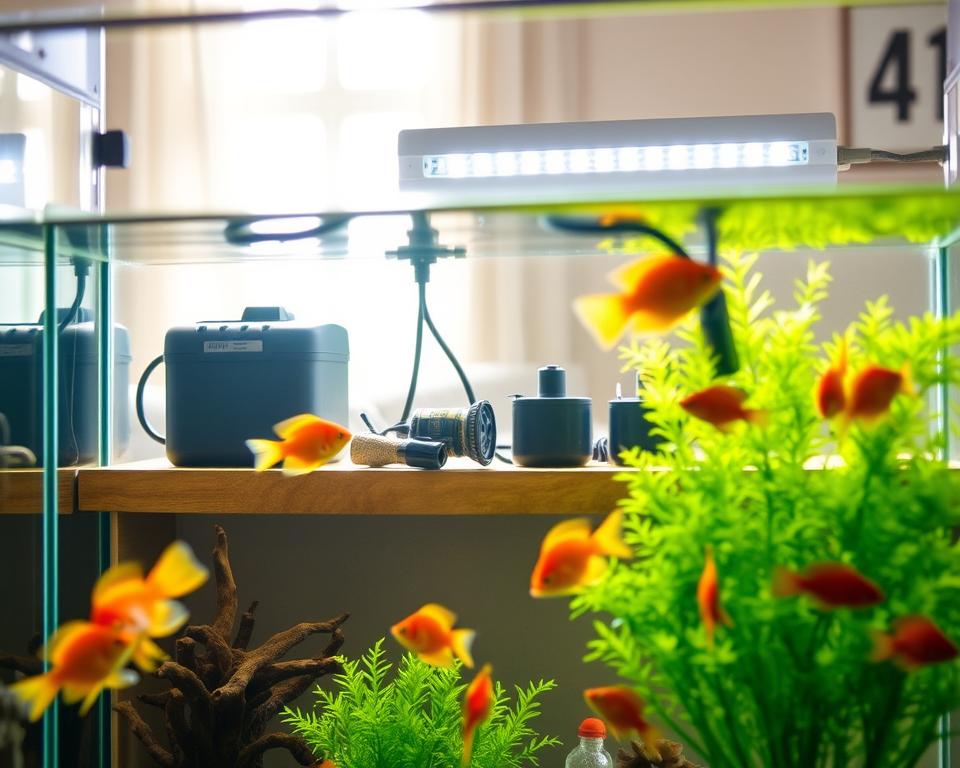
Did you know setting up a fish tank can be easy with the right pre-owned aquarium gear? Many people are now starting their fishkeeping journey with used equipment. This makes it more affordable and accessible.
As someone who’s been in the hobby for a while, I’ve learned that low-maintenance fishkeeping is about making smart choices. Using pre-owned equipment saves money and is better for the environment. It’s a more sustainable option.
In this article, I’ll share my insights on starting with used equipment. I want to make sure your fishkeeping experience is both fun and easy to maintain.
Key Takeaways
- Benefits of using pre-owned aquarium gear
- Tips for setting up a low-maintenance fish tank
- How to find reliable used equipment
- Cost-effective ways to start fishkeeping
- Sustainable practices in aquarium hobby
Understanding Low-Maintenance Fishkeeping
Low-maintenance fishkeeping lets you enjoy aquariums without a lot of work. It’s great for people who are busy or new to the hobby. It makes caring for your aquarium easier and more rewarding.
What Is Low-Maintenance Fishkeeping?
It’s about creating a space where fish can do well with little help. You pick the right gear, like good filters and lights. And you choose fish that can handle small changes in their water.
Using second-hand gear for aquariums helps keep things simple and affordable. This makes caring for your aquarium less complicated and cheaper.
Benefits of Keeping Fish Easily
Low-maintenance fishkeeping has many advantages. It makes the hobby easier for more people. It also lowers the stress of caring for a tank.
- Easier to manage for busy individuals
- Less expensive in the long run due to reduced equipment replacement and energy consumption
- More forgiving for beginners who are learning aquarium maintenance
Following practical advice for fish tank upkeep helps you enjoy your hobby. You won’t feel overwhelmed by the upkeep.
Why Choose Used Equipment?
Used equipment is a smart way to start a beautiful aquarium without spending a lot. It’s perfect for those who want to enjoy their hobby without breaking the bank.
Cost-Effectiveness
Used equipment is much cheaper than new stuff. This means you can spend more on fish or decorations. It’s a great way to save money.
- Reduced initial investment
- Ability to purchase more or better-quality items within the same budget
- Potential for upgrading or expanding the aquarium setup without a substantial financial burden
Environmental Considerations
Choosing used equipment is good for your wallet and the planet. It reduces the need for new stuff, which is better for the environment.
Key environmental benefits include:
- Reducing waste by giving old equipment a new life
- Lowering the carbon footprint associated with manufacturing new equipment
- Conserving resources by minimizing the need for raw materials in new production
Reliability of Quality Brands
Many top aquarium brands make equipment that lasts. Even used, it often works well. This is thanks to their quality.
Some reliable brands to consider include:
- Tetra
- Fluval
- Eheim
In summary, used equipment is a wise choice for fishkeepers. It’s affordable, eco-friendly, and reliable when you pick quality brands.
Types of Used Equipment to Consider
Setting up a fish tank can be easy if you know what used equipment to look for. You have many options when upgrading or starting your aquarium. Each has its own benefits and things to think about.
Aquariums
First, you need to find a used aquarium. Look for any damage or wear. Check for scratches, cracks, or leaks. These can cause big problems later.
Make sure the aquarium is sealed well. Also, check if it comes with the lid and lighting.
Key considerations for used aquariums:
- Size and capacity
- Material (glass or acrylic)
- Condition of the seal
- Inclusion of necessary accessories
Filters and Pumps
Filters and pumps keep your tank’s water clean and moving. Look for well-known brands when buying used. Make sure all parts are there and it works.
Tips for selecting used filters and pumps:
- Research the brand’s reputation
- Inspect for signs of wear or damage
- Test the equipment if possible
- Consider the type of filtration (mechanical, biological, chemical)
Lighting Systems
Lighting is important for your tank’s look and your fish’s health. Used lighting can save money. But, make sure it fits your tank’s needs. Think about the type and how bright it is.
Heaters
Heaters keep your tank’s temperature stable, which is key for tropical fish. When choosing a used heater, check how it works and if it fits your tank and fish.
Here’s a comparison of key used equipment types:
| Equipment Type | Key Considerations | Benefits |
|---|---|---|
| Aquariums | Size, material, seal condition | Cost-effective, immediate availability |
| Filters and Pumps | Brand reputation, condition, type | Reliable water quality, energy efficiency |
| Lighting Systems | Type, intensity, compatibility | Aesthetic appeal, promotes healthy growth |
| Heaters | Condition, functionality, suitability | Stable temperature, supports tropical fish |
Choosing the right used equipment can make your aquarium thrive. Always do your research, check the equipment, and test it before buying. This way, you’ll have a great fishkeeping experience.
Inspecting Used Equipment Before Purchase
When you buy used aquarium gear, it’s key to check it well. This ensures you’re getting a good deal. A good check can prevent future problems.
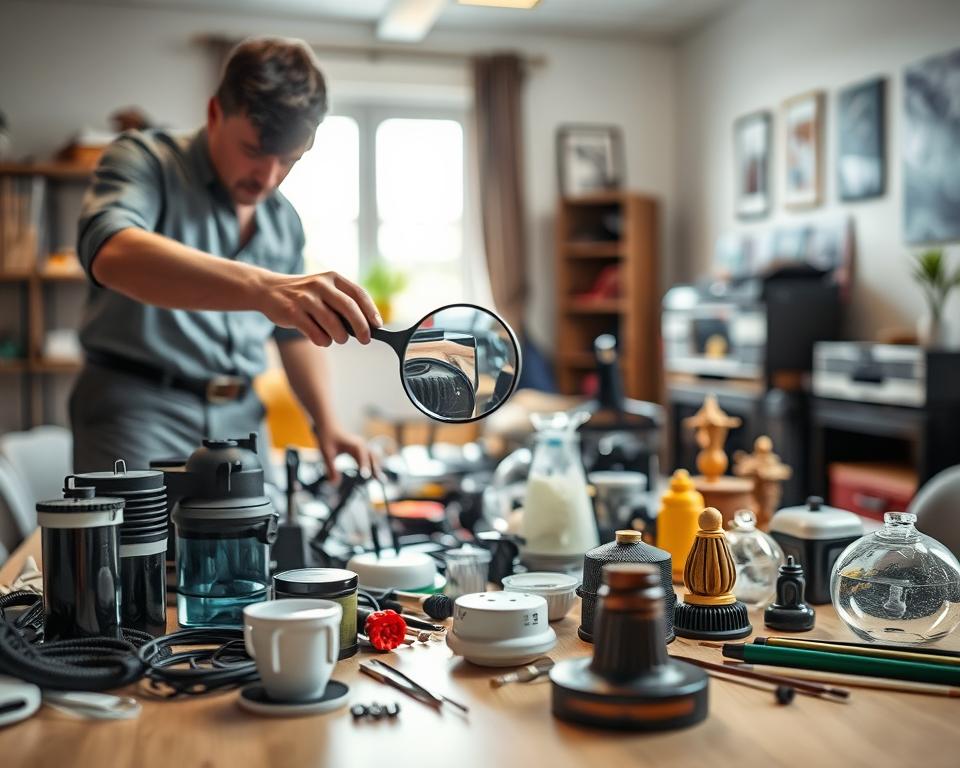
Check for Damage or Wear
First, look for any damage or wear. Check for cracks, dents, or rust. For example, inspect a used tank for cracks or leaks.
For filters and pumps, examine the impeller and moving parts. This helps you see if they’re in good shape.
Test Functionality
After spotting damage, test the equipment. Make sure it works right. Ask the seller to show that a used filter works.
For heaters, test the thermostat. This ensures it keeps the right temperature.
Verify Brand Reputation
It’s also important to check the brand’s reputation. Some brands are known for quality. For example, Eheim and Fluval are well-liked in the aquarium world.
Look up online reviews and forums. See what other aquarists say about the brand.
Here’s a table to help you decide when checking used aquarium gear:
| Equipment Type | Check for Damage | Test Functionality | Brand Reputation |
|---|---|---|---|
| Aquariums | Cracks, Leaks | Water Holding Capacity | Durability |
| Filters & Pumps | Rust, Clogged Impellers | Flow Rate, Noise Level | Reliability, Maintenance Needs |
| Lighting Systems | Damaged LEDs, Fading | Brightness, Color Spectrum | Energy Efficiency, Lifespan |
| Heaters | Cracks, Corrosion | Temperature Control, Heating Speed | Accuracy, Safety Features |
For more info on buying used aquariums, check out this resource. It helps you make a smart choice.
Where to Find Used Aquarium Equipment
Looking for used aquarium equipment? You have several options, each with its own benefits and drawbacks. As an aquarium lover, it’s key to check out these places to find great deals on quality gear.
Local Classifieds and Marketplaces
Start by checking local classifieds and marketplaces. Sites like Craigslist or local groups on social media can connect you with people selling used aquariums and accessories. Be careful when buying from individuals, make sure to check the equipment well before you buy.
Local classifieds have some perks:
- You can see the equipment in person before buying
- You might be able to negotiate prices with the seller
- You won’t have to worry about shipping costs or damage
Online Auction Sites
Online auction sites like eBay are also good for finding used aquarium gear. These sites let you look at many listings from different sellers, often at good prices because of the auction style. Make sure to check the seller’s ratings and reviews to buy from a trustworthy source.
When using online auction sites, keep these things in mind:
- Read the item description and look at the photos carefully
- Know the return and refund policies
- Think about any extra costs like shipping
Aquarium Clubs and Forums
Aquarium clubs and online forums are great for finding used equipment. Members often sell or trade their used gear, and you can get advice from experts. Building relationships in these groups can help you find better deals and more reliable purchases.
Using aquarium clubs and forums has its benefits:
- You get to connect with a community of aquarium lovers
- You can negotiate trades or purchases with other hobbyists
- You might find rare or hard-to-find equipment
Cleaning and Maintenance of Used Equipment
Cleaning and maintaining used aquarium equipment is key for low-maintenance fishkeeping. It keeps your aquarium healthy for your fish.
Proper Cleaning Techniques
First, turn off and unplug all devices. Then, remove any debris or waste. Soak the parts in 1 part white vinegar to 10 parts water for 30 minutes.
After soaking, gently scrub with a soft-bristled brush. Rinse with dechlorinated water before reassembling and starting the equipment.
Filters need regular cleaning of their mechanical media. Rinse in old tank water to keep beneficial bacteria. Avoid harsh chemicals in biological filters.
Seasonal Maintenance Tips
Seasonal maintenance keeps your equipment in great shape. Here are some tips:
- Spring: Check and replace worn-out parts. Adjust water circulation as needed.
- Summer: Watch water temperatures closely. Make sure cooling systems work well.
- Autumn: Clean your aquarium and equipment thoroughly. Check for algae and replace lighting if needed.
- Winter: Be careful with water changes. Use a water heater if it’s cold.
Long-term Care for Longevity
Regular maintenance extends your equipment’s life. Here’s a comparison of maintenance tasks and their frequency:
| Task | Frequency |
|---|---|
| Clean filters | Monthly |
| Check for worn-out parts | Quarterly |
| Inspect water circulation | Bi-annually |
By following these guidelines, your used aquarium equipment will stay in good shape. This ensures a healthy environment for your fish.
Setting Up Your Aquarium with Used Gear
Setting up an aquarium with used equipment can be rewarding. It saves money and gives old gear a new life. This approach is great for those looking to save and reuse.
Planning Your Layout
Planning your aquarium’s layout is key. Think about the space you have and the fish you want. A good layout makes your aquarium look good and work well.
- Choose a spot for your aquarium that’s away from sunlight and drafts.
- Pick a tank size that fits your space and the fish you plan to keep.
- Think about the substrate, decorations, and plants that will do well in your aquarium.
Best Practices for Adding Fish
Adding fish to your aquarium needs patience and planning. It’s important not to overstock and to pick fish that get along.
- Start with easy-to-care-for fish species.
- Slowly get your fish used to the aquarium water to avoid shock.
- Keep an eye on the water and adjust it as needed to keep your fish healthy.
Cycling Your Aquarium
Cycling your aquarium is a must for a healthy environment. It takes a few weeks and is essential for your fish’s health.
| Day | Action | Expected Outcome |
|---|---|---|
| 1-7 | Setup aquarium, add water conditioner | Water parameters stabilize |
| 7-14 | Monitor ammonia and nitrite levels | Beneficial bacteria start to colonize |
| 14-28 | Continue monitoring, perform water changes | Aquarium cycles, ready for fish |
By following these steps and being patient, you can create a thriving aquarium. Remember, success comes from careful planning, patience, and regular care.
Budgeting for Used Equipment Purchases
Setting up a cost-effective fishkeeping environment means budgeting for used equipment. It’s key to watch your spending when buying second-hand aquarium gear. This helps avoid spending too much.
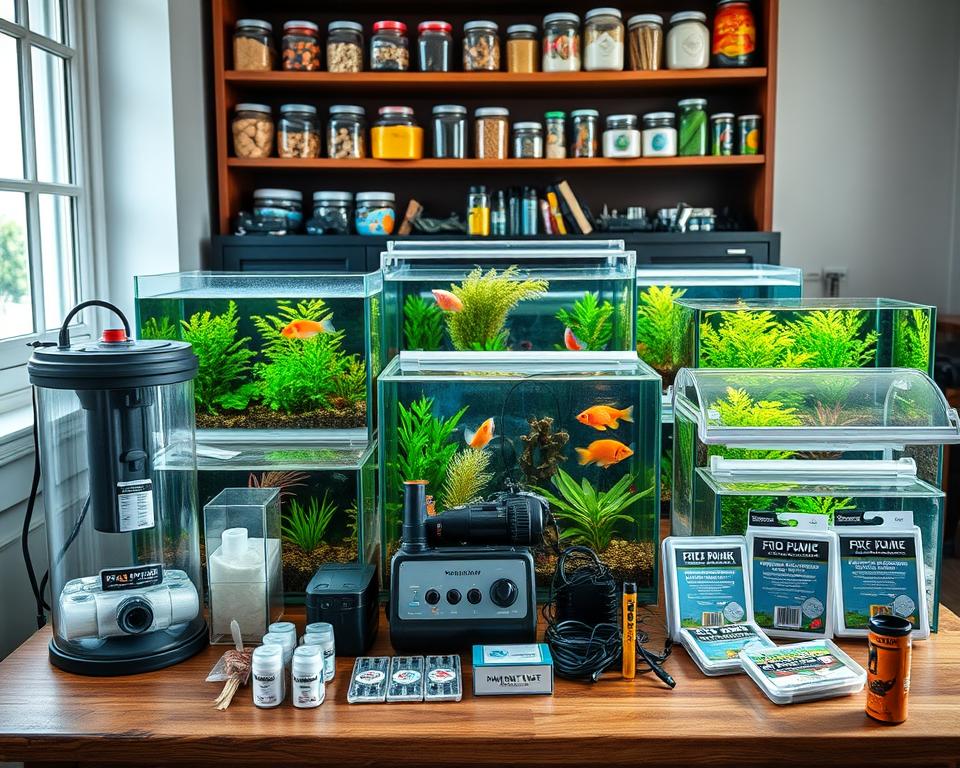
Establish a Budget
Start by establishing a realistic budget before buying anything. Think about the total cost for your aquarium. This includes the fish, food, and accessories. A good budget helps you make smart choices and avoids financial worries.
- Research the average cost of used equipment to find a fair price range.
- Set a specific budget for each piece of equipment you need.
- Save a little extra for any unexpected costs.
Prioritize Essential Items
Not all aquarium gear is the same. With a tight budget, focus on the essential items first. These are things like a good filter and a heater.
- Figure out the must-have equipment for your aquarium.
- Think about what your fish need.
- Be okay with missing out on non-essential features.
Seek Out Bundle Deals
Looking for bundle deals can save you money. Many sellers give discounts when you buy multiple items together. Keep an eye out for these deals to get what you need cheaper.
| Bundle Deal | Individual Cost | Bundle Cost | Savings |
|---|---|---|---|
| Filter + Heater | $50 + $30 | $70 | $10 |
| Aquarium + Stand | $100 + $50 | $140 | $10 |
By budgeting, focusing on the essentials, and looking for bundle deals, you can have a great aquarium without breaking the bank. Remember, cost-effective fishkeeping equipment is about making smart choices that balance price and quality.
Common Mistakes to Avoid with Used Equipment
Starting your fishkeeping journey with used gear needs you to know some common mistakes. When looking at second-hand fishkeeping equipment, watch out for issues that could harm your aquarium and fish.
Overestimating Equipment Lifespan
One big mistake is thinking used gear lasts forever. It’s tempting to save money on older models, but older gear might not work as well or last as long as newer stuff. Always check how old and in what condition the gear is before buying. Think if it will really work for your aquarium long-term.
Neglecting Maintenance Needs
Another mistake is ignoring the need for upkeep. Used gear needs regular care to keep working right. Regular cleaning and inspections can really help your gear last longer. For tips, look at resources that show how to keep your used fish tank equipment in top shape, like avoiding common fish tank issues and how to steer clear of them.
“The key to successful fishkeeping is not just about the equipment you use, but how well you maintain it.”
Buying Without Research
Buying without doing your homework is a big mistake. It can lead to getting gear that’s not reliable or fits with your setup. It’s key to research the market value and make sure the gear fits with what you already have. Check out reviews, get advice from seasoned fishkeepers, and make sure it’s compatible with your current setup.
Knowing these common mistakes and how to avoid them can help you have a healthy aquarium with second-hand gear. The secret to successful fishkeeping is careful planning, regular care, and smart buying choices.
Success Stories: Low-Maintenance Fishkeeping with Used Equipment
Many aquarium fans have found success with low-maintenance fishkeeping using second-hand gear. They follow tips for easy upkeep of used aquarium equipment. This helps them create great homes for their fish.
Real-Life Examples
Keepers have shared their experiences with setting up aquariums from used items. They show how it can save money and give old gear a new purpose. Some even turned old aquariums into terrariums or paludariums, giving them a fresh start.
Inspiring Results
These stories prove that with creativity and basic knowledge, anyone can enjoy low-maintenance fishkeeping. By picking the right used equipment and following simple care tips, you can make a stunning aquarium. It will bring joy and calm to your life.