


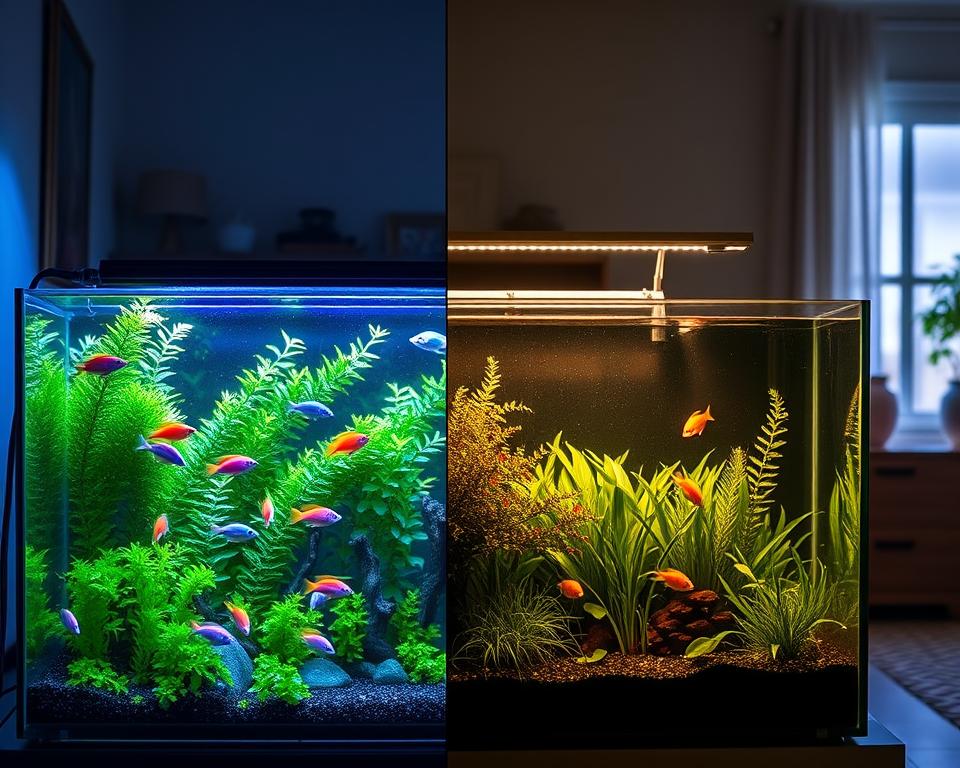
As a fishkeeping enthusiast, I know how key the right lighting is for your aquarium. With so many options, picking between LED and T5 lighting for low-light tanks can be tough. Did you know the right light can greatly affect your fish’s health and your tank’s look?
For those who value energy efficiency and ease of care, choosing the right light is essential. In this article, I’ll compare LED and T5 lighting to help you decide. For more detailed advice on aquarium lighting, check out this guide.
Key Takeaways
- LED lighting is energy-efficient and offers adjustable intensity and spectrum.
- T5 lighting is an older technology that consumes more energy and has a shorter lifespan.
- For low-light community tanks, LED lights with a color temperature of 6500–8000K are suitable.
- Proper lighting can prevent algae growth and promote healthy plant development.
- Using a timer can help maintain a consistent photoperiod, benefiting your aquarium’s ecosystem.
Understanding Low Light Aquariums
Low-light aquariums are perfect for those who love a calm underwater world. They are easy to care for and great for beginners or those who don’t want a lot of work.
These aquariums do well in dim light, making them great for spaces with little natural light. They also create a peaceful atmosphere.
What Constitutes a Low Light Aquarium?
A low-light aquarium has less light than others. This is achieved with low-wattage bulbs or special light bulbs. Some key features include:
- Low-wattage lighting: Using bulbs with lower wattage helps keep the light soft.
- Specific lighting types: LEDs or T5 fluorescents are good for low-light setups.
- Plant selection: Picking plants that like low light is key for a healthy aquarium.
Benefits of Keeping Low Light Species
Keeping low-light species has many advantages, including:
- Reduced maintenance: These aquariums need less care because they don’t grow algae as much.
- Increased flexibility: You can pick from a wider range of fish and plants that fit these conditions.
- Energy efficiency: Using less power can save you money in the long run.
Understanding low-light aquariums helps you create a stunning and healthy underwater world. It fits well with your lifestyle and preferences.
Overview of LED Lighting
LED lights are becoming popular in aquariums because they are energy efficient and can be customized. Many aquarium fans choose them for their modern and efficient lighting.
Advantages of LED Lights
LED lights have many benefits for aquariums. Some key advantages include:
- Customizable Spectrum: LEDs can be set to emit specific wavelengths. This helps plants grow and makes your aquarium look better.
- Low Heat Output: LEDs don’t get hot, which means your aquarium stays cool. This is good for your fish.
- Design Flexibility: LED lights can fit many aquarium setups. This makes them easy to install and arrange.
Energy Efficiency of LEDs
LED lighting is very energy efficient. They use much less power than old lighting methods. This saves money on your energy bills and is better for the environment.
Longevity and Durability
LEDs last a long time and are very durable. They can last up to 50,000 hours or more. This means you won’t have to replace them often, saving you money and time.
In short, LED lighting is great because it’s energy efficient, customizable, and lasts a long time. It’s a top choice for aquarium lovers who want a beautiful and healthy underwater world.
Exploring T5 Lighting
The world of aquarium lighting is vast, but T5 fluorescent lights are a standout. They are known for their excellent color rendering and cost-effectiveness. These lights offer a unique mix of benefits that appeal to aquarium enthusiasts.
Benefits of T5 Fluorescent Lights
T5 fluorescent lights provide high-quality lighting that makes fish and plants look great. Their wide spectrum promotes healthy plant growth and brings out vibrant colors in your aquarium.
These lights are also easy to install and maintain. They are perfect for those who want low-maintenance aquarium lights. Plus, they come in various lengths and wattages to fit different aquarium sizes.

Color Rendering and Spectrum
The color rendering index (CRI) of T5 lights is very high. This means that the colors of your fish and decorations will look natural and vivid. This is key for a beautiful aquarium.
The spectrum of T5 lights also supports photosynthesis in plants. This helps create a balanced ecosystem in your aquarium.
Cost-Effectiveness of T5s
When looking at easy-care fish tank lighting, cost is important. T5 fluorescent lights are more affordable upfront than LED lights. They are a good choice for those on a budget.
While their long-term costs and energy efficiency may vary, T5 lights are a cost-effective option for many. They offer quality, versatility, and affordability, making them a great choice for aquarium lighting.
Comparing Brightness: LED vs T5
To find the best lighting for a low-maintenance aquarium, we must compare LED and T5 brightness. Brightness is key to your aquarium’s health and look.
Measuring Lumens
Lumens measure light output. When looking at LED and T5 lighting, lumens help us see their brightness. But, lumens don’t tell the whole story of aquarium lighting needs.
LED lights are often more energy-efficient because of their high lumen-per-watt ratio. T5 lights, though, offer a wide spectrum of light, good for some aquatic plants.
“The right lighting can make all the difference in the health and vibrancy of your aquarium. LEDs and T5s each have their strengths when it comes to brightness and spectrum.”
Understanding PAR Values
PAR (Photosynthetic Active Radiation) values show how much light plants can use for growth. Knowing PAR values helps pick the right lighting for your aquarium.
LEDs can be set to specific PAR values, fitting various aquarium setups. T5 lights work well but need careful choice to match your plants’ needs.
When choosing between LED and T5 lighting, think about your aquarium’s needs. Look at lumens and PAR values to decide. This choice will help your aquarium thrive.
Heat Emission: LED vs T5
Choosing between LED and T5 lighting is important for aquarium owners. The temperature of your aquarium affects the health of your fish and plants.
How Much Heat Do They Produce?
LED lights are energy-efficient and produce less heat than traditional lights. They emit very little heat, mostly through the driver or heatsink. T5 fluorescent lights, on the other hand, produce more heat because they generate light through gas excitation.
LEDs typically produce less heat because they emit light in a specific direction. This reduces wasted energy. T5 lights emit light in all directions, leading to more heat generation.
“The heat generated by aquarium lights can be a significant factor in the overall temperature of the tank, even in smaller ones.”
Impact on Aquarium Temperature
The heat from your aquarium lights can affect the water temperature. LED lights have a minimal impact due to their low heat output. But T5 lights can raise the water temperature, more so in smaller tanks or with longer use.
To manage heat well, consider these tips:
- Use LED lights, which produce less heat.
- Keep your aquarium lights on for only the necessary duration.
- Ensure good water circulation to distribute heat evenly.
- Monitor your aquarium temperature regularly.
Understanding your aquarium lighting’s heat emission helps maintain a stable, healthy environment for your aquatic life.
Plant Growth with LED and T5
For a low-maintenance fishkeeping experience, it’s key to know how LED and T5 lighting affect plant growth. The right lighting is essential for a thriving aquarium. It makes a big difference in plant growth.
Best Plant Species for Each Lighting Type
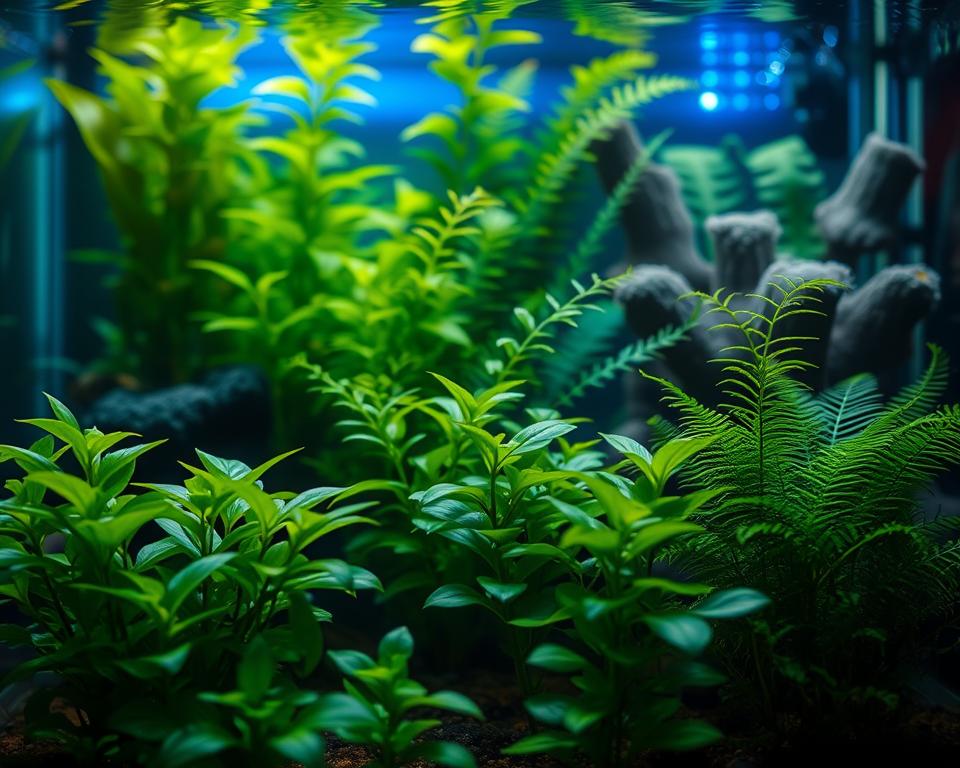
Different lighting types support different plant species. For LED lighting, plants like Anubias and Java Moss thrive. They can tolerate low light and benefit from LEDs’ specific spectrum.
T5 lighting, with its broader spectrum, supports a wider variety of plants. Plants such as Cryptocorynes and Amazon Swords do well under T5 lighting. They benefit from its color rendering and intensity.
Growth Rates: LED vs. T5
When comparing plant growth rates under LED and T5 lighting, T5 lighting often promotes faster growth. This is because it has a broader spectrum. But, LED lighting can be tailored to specific spectra that enhance growth for certain plants.
A study found that while T5 lighting supports a wider range of plant growth, LED lighting offers more controlled and efficient growth for specific plants. This means the choice between LED and T5 should be based on your aquarium plants’ specific needs.
In conclusion, both LED and T5 lighting have their advantages for plant growth in a low-light aquarium. By choosing the right lighting for your plants, you can create a thriving underwater garden.
Maintenance Needs of LEDs
LED lights are known for their durability but need some care to work best in your fish tank. Keeping them in good shape not only makes them last longer. It also keeps your aquarium healthy for your fish.
Cleaning and Upkeep
It’s important to clean your LED lights regularly. Dust and debris can build up and lower their brightness. This can also cause hotspots that harm your fish.
To clean your LED lights:
- Gently wipe the LED fixtures with a soft, dry cloth to remove any surface dust.
- Avoid using harsh chemicals or abrasive materials that could damage the LEDs or their housing.
- For more thorough cleaning, slightly dampen the cloth with distilled water, but ensure the electrical components remain dry.
Regular inspection is also vital. Check your LED lights for any signs of wear, such as dimming or color shifts. These can mean you need to replace or adjust them.
Lifespan Factors
Several factors can affect how long your LED aquarium lights last. These include:
- Quality of the LEDs: High-quality LEDs tend to last longer and perform more consistently.
- Operating Conditions: LEDs operating within their recommended temperature range tend to last longer.
- Usage Patterns: LEDs that are used for longer periods each day may have a shorter lifespan unless they are designed for extended use.
It’s also worth noting that while LEDs are known for their long lifespan, they are not immune to degradation. Over time, their brightness can diminish, and their color spectrum may shift.
By understanding and addressing these factors, you can make your LED lighting last longer. This ensures your aquarium stays vibrant and healthy for your fish.
Maintenance Needs of T5
To keep your T5 lighting working well, regular maintenance is key. T5 lighting systems are efficient and help keep your aquarium healthy. But, they need upkeep to stay in top shape.
Bulb Replacement Schedule
Replacing T5 bulbs is a major maintenance task. T5 bulbs don’t last forever and need to be swapped out. You should replace them every 6 to 12 months, based on how often you use them and the maker’s advice.
Regular bulb replacement keeps your aquarium bright and your plants healthy. It also keeps your tank looking good. Remember, T5 bulbs get less bright over time, so check them often.
Cleaning Fixtures
Cleaning your T5 fixtures is also important. Dust and dirt can cut down on their light output. Use a soft cloth to clean them gently. Clean every 1 to 3 months, depending on your tank’s surroundings.
Proper cleaning boosts your lighting’s efficiency. It also keeps your tank healthy by stopping debris buildup. This can prevent harmful bacteria or algae.
As aquarium lovers, we know good lighting is vital for our fish. Keeping up with T5 lighting maintenance ensures your tank stays a lively, healthy place.
“The quality of lighting in an aquarium directly impacts the health and vitality of the aquatic ecosystem. Regular maintenance of lighting systems is not just a recommendation, it’s a necessity.”
By sticking to these maintenance tips, you’ll have a lively, healthy aquarium. Your T5 lighting system will keep it efficient and effective.
Energy Consumption: A Cost Analysis
Choosing between LED and T5 lighting for your aquarium can impact your energy costs. If you’re into low-maintenance fishkeeping, knowing your lighting’s energy use is key to keeping costs down.
Initial Investment vs. Long-Term Savings
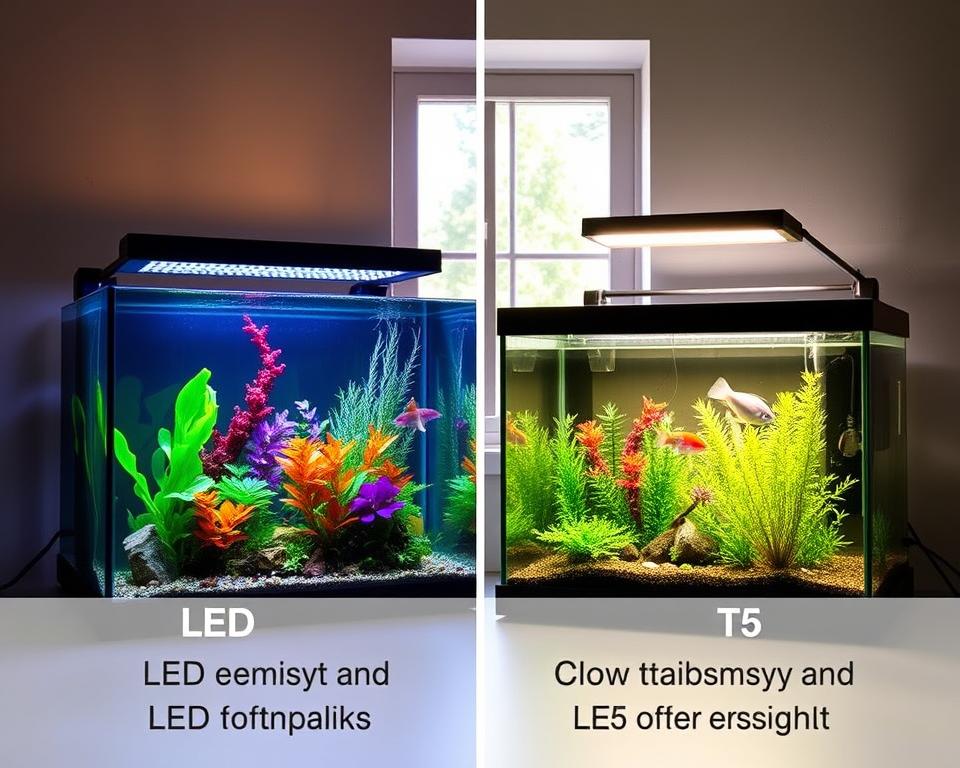
When looking at LED and T5 lighting, think about the cost now versus later. LEDs cost more upfront but use less energy and last longer. This can save you money in the long run.
T5 lights are cheaper at first but use more energy and need replacing more often. Here’s a quick comparison:
- LED lighting: Higher initial cost, lower energy consumption, longer lifespan.
- T5 lighting: Lower initial cost, higher energy consumption, shorter lifespan.
Choosing LEDs can help you save on energy bills and cut down on replacement costs. This makes up for the higher initial price.
Understanding Wattage
Wattage is key in figuring out your aquarium lighting’s energy use. It shows how much power the lights use. LEDs use less power than T5 lights but often give better light.
To choose wisely, know your lighting’s wattage and how it affects energy use. Here are some important points:
- Check the wattage of your LED or T5 lighting.
- Figure out your energy use based on wattage and hours used.
- Compare different lighting options to find the best value.
Understanding wattage and its effect on energy use helps you pick the right lighting for your fishkeeping needs.
User Experience and Preferences
Community feedback is key in choosing the right lighting for low-maintenance fish tanks. People share their experiences with different lights, showing what works best for low-light aquariums.
Community Feedback on LEDs
LED lighting is widely praised for its energy efficiency and longevity. Users love how LEDs can be customized to match their tank’s look. One aquarist said, “LEDs have changed my aquarium-keeping; they save energy and make my tank look alive.”
LED fans often talk about not needing to replace lights as often. But, they mention the high upfront cost of LEDs.
Common Feedback on T5s
T5 fluorescent lights have their fans too. People say T5s are cost-effective and provide a wide light spectrum, good for plants.
“T5 lights are great for planted tanks; they provide a good spectrum for plants and are relatively inexpensive to replace,”
an experienced aquarist shared.
But, T5 users say these lights need to be replaced more often, which can add up in cost. They also produce more heat than LEDs, which can affect tank temperatures.
In summary, both LEDs and T5s have their supporters in the aquarium world. Knowing what others think can help new aquarists choose the right lighting for their tanks.
Making the Right Choice for Your Tank
Choosing the right lighting for your low-light aquarium is important. You have to decide between LED and T5 lighting. This depends on your setup, preferences, and what you value most.
Think about what your aquarium needs. Consider the fish and plants you have, your tank’s size, and its layout.
Key Considerations for Your Setup
First, think about what your plants and fish need in terms of light. Some need bright light, while others do well in dimmer conditions. Also, consider your tank’s size and how the light will spread.
- Assess the lighting requirements of your aquatic life.
- Consider the energy efficiency of your chosen lighting option.
- Think about the maintenance needs of your lighting system.
Budget and Aesthetic Considerations
Your budget and what you want your tank to look like are also key. Energy-efficient fish tank lights like LEDs can save money over time. T5 lights offer other benefits.
When looking at fish tank lighting options, think about the color and spectrum. The right light can make your fish and plants look amazing, creating a beautiful display.
By considering these factors and what’s most important to you, you can choose the best lighting for your tank.
Conclusion: Which Is Right for You?
Choosing between LED and T5 lighting for your aquarium depends on several things. These include your needs, budget, and what you like. Both options have their good and bad sides.
Key Takeaways
LED lighting is very energy-efficient and lasts a long time. It’s perfect for those who want easy-to-care-for aquarium lights. T5 lighting, on the other hand, gives great color and spectrum. This makes your tank look even better.
Making an Informed Decision
Think about what your aquarium needs and what you prefer. If you want something easy to care for, LED might be best. But if you want your tank to look amazing with lots of colors, T5 is a good choice.
In the end, pick what makes your aquarium healthy and easy to take care of. Choosing sustainable options lets you enjoy your hobby without harming the environment.