

As an aquarium enthusiast, I’ve found that Java Fern is great for any tank. It’s easy to care for and fun to propagate. This lets you share it with others or make your tank even more beautiful.
With the right steps, you can grow more Java Fern and make your aquarium lush. In this article, I’ll show you how to Java Fern Propagation. You’ll learn to grow and share this amazing aquatic plant.
Key Takeaways
- Learn the simple steps to propagate Java Fern in your aquarium.
- Discover the best methods for multiplying Java Fern.
- Understand the benefits of Java Fern propagation for a healthier aquarium.
- Find out how to share your propagated Java Fern with other aquarium enthusiasts.
- Enhance your aquarium’s beauty with a thriving Java Fern.
What is Java Fern?
Java Fern is a popular aquatic plant among aquarium fans. It’s known for its unique look and easy care. It’s a great pick for any aquarium, adding beauty and a natural home for fish and plants.
Description and Characteristics
Java Fern has big, dark green leaves that grow up to 10 inches. These leaves are lance-shaped and perfect for the background or mid-ground of your tank. It’s special because it can grow on rocks or driftwood, making it easy to arrange in your aquarium.
Growing Conditions
Java Fern can grow in different light levels, but it loves moderate to low light. It needs clean, moving water and does best in slightly acidic to neutral pH. It can grow in many substrates but looks best when attached to decorations.
Popular Varieties
There are many Java Fern varieties, each with its own look. Here are a few favorites:
- Narrow Leaf Java Fern: Has narrower leaves than the standard Java Fern.
- Trident Java Fern: Its leaves have three points, making it stand out.
- Java Fern ‘Blue’: This Java Fern has a bluish tint, not a different species.
| Variety | Description | Notable Features |
|---|---|---|
| Narrow Leaf Java Fern | A variant with narrower leaves | More delicate appearance |
| Trident Java Fern | Leaves have three distinct points | Unique, trident-shaped leaves |
| Java Fern ‘Blue’ | Not a separate species, but a conditioned Java Fern | Bluish tint to the leaves |
Knowing about Java Fern’s traits, growing needs, and varieties helps aquarists appreciate it more. Whether you’re new to aquariums or experienced, Java Fern is a wonderful choice to enhance your tank’s beauty.
Why Propagate Java Fern?
Propagating Java Fern is a rewarding experience for aquarium enthusiasts. It allows you to multiply this beautiful plant. This way, you can create a more natural and vibrant environment for your fish.
Benefits for Aquarists
Java Fern propagation lets you share plants with friends and fellow hobbyists. It fosters a sense of community. Plus, it helps you fill your aquarium with lush greenery. This provides shelter and food for your aquatic life.
- Enhances the aesthetic appeal of your aquarium
- Provides shelter and food for fish
- Allows for sharing with other aquarists
Enhancing Aquarium Aesthetics
By propagating Java Fern, you can make your aquarium more diverse and visually appealing. The lush foliage of Java Fern creates a natural-looking environment. You can use plants of varying sizes and textures to enhance the look.
Cost-Effective Gardening
Propagating Java Fern is a cost-effective way to garden. It eliminates the need to buy new plants. By multiplying your existing plants, you can save money. This way, you enjoy a more lush and vibrant aquarium.
| Benefits | Description | Cost Savings |
|---|---|---|
| Aesthetic Appeal | Enhances the visual appeal of your aquarium | Reduced need for decorative elements |
| Fish Health | Provides shelter and food for fish | Reduced need for supplementary feeding |
| Community Building | Allows for sharing with other aquarists | Reduced need for purchasing new plants |
Methods of Java Fern Propagation
To multiply your Java Fern, you have three main methods to choose from. Each method has its own benefits. Whether you’re new to aquariums or experienced, knowing these methods will help you grow your Java Fern.
Through Plantlets
Plantlets are a common way to propagate Java Fern. These small plants grow on the mother plant’s leaves or rhizome. Wait until they have their own roots and leaves, then carefully remove them.
For more details on planting Java Fern, check out wikiHow.
Benefits of using plantlets: They are easy to handle, and the success rate is high if done right.
By Division
Division is another effective method. It involves dividing the rhizome of a mature Java Fern into sections. Each section should have at least one leaf and some roots. Make clean cuts to avoid damaging the plant.
Tips for successful division: Use a sharp, sterile tool to prevent infection. Ensure each section has enough roots to survive.
Using Rhizomes
Using rhizomes is a more advanced method. It requires precision. Cut sections of the rhizome and plant them in a suitable substrate. Keep the rhizome moist and provide enough light.
| Method | Success Rate | Difficulty Level |
|---|---|---|
| Through Plantlets | High | Easy |
| By Division | Medium | Moderate |
| Using Rhizomes | Low-Medium | Challenging |
Experts say, “The key to successful Java Fern propagation is understanding the plant’s natural growth habits and mimicking those conditions in your aquarium.” (
This insight highlights the importance of replicating the natural environment for Java Fern propagation.
By understanding and applying these methods, you can successfully propagate Java Fern and enhance your aquarium’s beauty.
Preparing for Propagation
Before starting Java Fern propagation, get your aquarium and tools ready. A well-prepared aquarium is key to successful plant growth. This ensures your Java Ferns will thrive and multiply well.
Tools and Supplies Needed
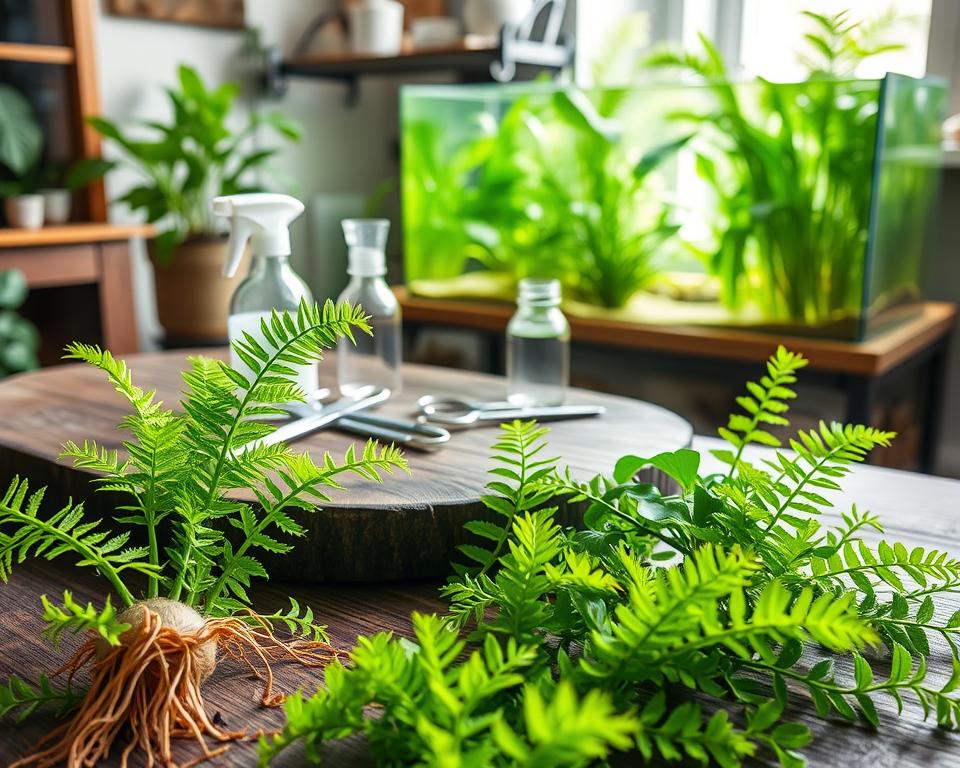
To begin Java Fern propagation, you need some basic tools and supplies. You’ll need sharp scissors or pruning shears, a clean water container, and a good substrate for Java Ferns. Don’t forget a water conditioner to keep the water quality right.
- Sharp scissors or pruning shears
- Clean container for water
- Suitable substrate
- Water conditioner
Maintaining Water Quality
Keeping the water quality good is essential for your Java Fern’s health and the aquarium’s ecosystem. Regular water changes, checking water parameters, and not overfeeding are key. Clean water is vital for any aquarium.
Regular water changes remove waste and keep nutrient levels right. Change about 25% of the tank water each week.
Choosing the Right Environment
Java Fern needs specific conditions to thrive. It likes low to moderate light and temperatures between 72°F to 82°F (22°C to 28°C). Choosing the right environment helps with healthy growth and propagation.
With the right tools, good water quality, and the right environment, you’re set for successful Java Fern propagation. Remember, “Patience and attention to detail are key to thriving aquatic plants.”
Step-by-Step Guide to Propagation
Now that you have the tools and knowledge, let’s start the Java Fern propagation process. This guide will show you how to use different methods for a thriving aquarium.
Propagating via Plantlets
One common way to propagate Java Fern is through plantlets. These small plants grow on the mother plant’s leaves. They can be removed once they have their own roots.
To propagate via plantlets, gently remove the plantlet from the mother leaf. Make sure not to damage the roots. Then, attach the plantlet to a suitable substrate or rock, letting it establish itself.
Dividing Java Fern
Dividing Java Fern is another effective method. It involves separating the rhizome to create new plants.
To divide Java Fern, find a section of the rhizome with leaves and roots. Carefully cut this section away from the mother plant. Make sure each division has at least one growing point.
Handling Rhizome Cuttings
Rhizome cuttings are a reliable way to propagate Java Fern. The key is to make clean cuts and provide the right conditions for growth.
When handling rhizome cuttings, cut just in front of a leaf node. This increases the chances of successful propagation. After cutting, place the rhizome in a suitable environment. Make sure it gets enough light and nutrients.
By following these steps and choosing the right method, you can successfully propagate your Java Fern. This will help you enjoy a lush, thriving aquarium.
Timing Your Propagation
To successfully propagate Java Fern, timing is everything. Knowing when to do it can greatly improve your results. Java Fern, like many aquatic plants, has the best times for propagation.
Best Seasons for Java Fern Propagation
Java Fern can be propagated any time of year. But spring and early summer are best. These months have the right mix of warmth and light for new growth.
Spring Propagation: Spring is perfect because of longer days and warmer weather. It’s when the plant grows best.
How to Identify Strong Plants
Before you start, find healthy Java Fern plants. Look for green leaves and a strong rhizome. Stay away from plants that are sick or damaged.
- Check for healthy leaves and roots.
- Ensure the rhizome is firm and not rotting.
- Avoid plants with algae overgrowth or pest infestations.
Signs of Growth and Readiness
Knowing when a plant is ready is key. Healthy Java Ferns grow new leaves and plantlets. These are signs it’s time to propagate.
| Signs | Description |
|---|---|
| New Leaves | Emergence of new leaves indicates healthy growth. |
| Plantlets on Rhizome | Presence of small plantlets on the rhizome signifies readiness for propagation. |
| Robust Rhizome | A firm, healthy rhizome is essential for successful propagation. |
By watching for these signs and timing right, you can boost your Java Fern propagation success. Remember, patience and careful observation are essential.
Common Mistakes to Avoid
When you start to propagate Java Fern, knowing the common mistakes is key. Propagating Java Fern can be rewarding but needs careful attention. This avoids common pitfalls.
Overcrowding the Aquarium
One big mistake is overcrowding the aquarium. Too many plants fight for light, nutrients, and space. This can stunt growth, harm health, and even kill your Java Fern.
To prevent overcrowding, give plants enough room. Think about the Java Fern’s mature size when planning your layout. Regular pruning keeps your ecosystem balanced.
Incorrect Cutting Techniques
Another mistake is using the wrong cutting techniques. Java Fern is usually propagated by division or cutting the rhizome. But, a bad cut can harm the plant and cause infection or decay.
To successfully propagate Java Fern, make clean cuts just above a node with a sharp, sterile tool. This reduces damage and promotes healthy growth. As aquatic plant expert, Jeff Kurtz, once said, “The key to successful propagation is making clean, precise cuts that minimize damage to the plant.”
“The key to successful propagation is making clean, precise cuts that minimize damage to the plant.” – Jeff Kurtz
Neglecting Water Parameters
Ignoring water parameters is another common mistake that can harm Java Fern propagation. Java Fern needs specific water conditions like pH, temperature, and nutrients to thrive.
- Regularly test your water parameters to ensure they are within the suitable range for Java Fern.
- Make adjustments as necessary to maintain optimal conditions.
- Monitor your plants closely for signs of stress or nutrient deficiencies.
By avoiding these common mistakes, you can ensure successful Java Fern propagation. Remember, patience and attention to detail are key to successful propagation.
Aftercare for New Plantlets
Proper aftercare is key for your Java Fern to grow strong and healthy. After successful propagation, it’s important to give your new plantlets the right conditions. This will help them thrive.
Nutrient Requirements
Java Fern plantlets need a balanced diet of nutrients to grow. Macro and micronutrients are essential for their development. Make sure your aquarium water has nitrogen, phosphorus, and potassium. You can also use liquid fertilizers made for aquarium plants.
| Nutrient | Function | Recommended Level |
|---|---|---|
| Nitrogen | Promotes leaf growth | 5-10 ppm |
| Phosphorus | Encourages root development | 0.5-1.5 ppm |
| Potassium | Supports overall health | 5-15 ppm |
Light Conditions
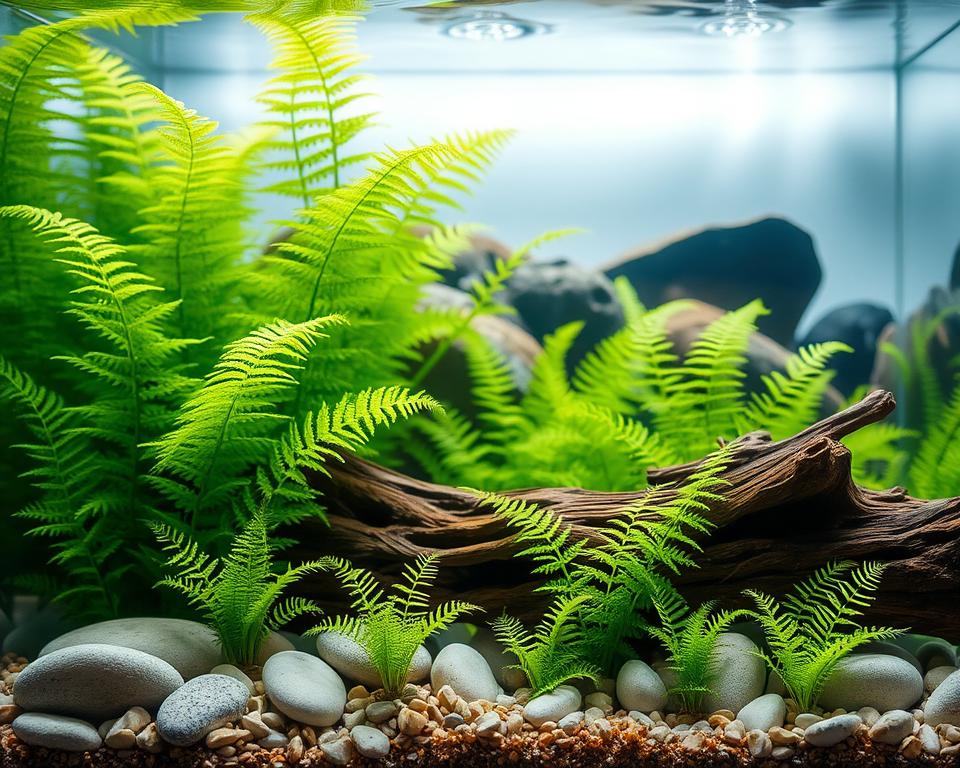
Java Fern plantlets are sensitive to light, so they need low to moderate lighting in the early stages. Avoid direct intense light to prevent algae growth on the leaves.
Monitoring Growth Progress
It’s important to regularly check your Java Fern plantlets’ growth. Look for signs of healthy growth like new leaves and roots. Watch out for any signs of stress or disease and adjust their care if needed.
By following these aftercare tips, your Java Fern plantlets will grow into healthy, thriving plants. They will add beauty to your aquarium.
Troubleshooting Java Fern Issues
Java Fern plants can face problems like pests, diseases, and nutrient deficiencies. Knowing these issues is key for successful Java Fern aquarium propagation.
Pests and Diseases
Common pests include snails, algae, and insects. Regular checks and clean water can prevent these. Quarantining new plants before introducing them to your main aquarium helps stop disease spread.
A famous aquarist once said:
‘The key to a healthy aquarium is not just in the initial setup but in the ongoing care and attention to detail.’
Nutrient Deficiencies
Nutrient deficiencies harm Java Fern health and growth. Giving your plants a balanced diet is essential. Iron and potassium are critical, as lacking them can cause yellow leaves or slow growth.
- Watch how your plants react to fertilizers.
- Change your fertilizing schedule as needed.
- Use a balanced fertilizer made for aquatic plants.
Environmental Stresses
Stresses like sudden water or light changes can shock Java Fern. Keeping stable water parameters and proper lighting helps avoid these issues.
| Environmental Factor | Recommended Range |
|---|---|
| Water Temperature | 72-82°F (22-28°C) |
| Lighting | Low to Moderate |
Understanding and tackling these common problems can boost your Java Fern propagation success. Patience and careful attention are vital for thriving aquatic plants.
Tips for Successful Propagation
As an aquarist, I’ve learned that propagating Java Fern requires attention to detail and a consistent care routine. To achieve success, it’s essential to understand the key factors that influence the propagation process.
Consistency in Care
Maintaining a consistent care routine is vital for Java Fern propagation. This includes providing the right water conditions, adequate lighting, and proper nutrient supply. By doing so, you’ll create an environment that fosters healthy growth and development.
Calendar for Regular Maintenance
Creating a calendar for regular maintenance can help you stay on track with your Java Fern care. This includes tasks such as water changes, pruning, and monitoring water parameters. By following a schedule, you’ll be able to identify and fix issues before they become major problems.
- Weekly water changes
- Bi-weekly pruning
- Monthly water parameter checks
Learning from Failed Attempts
Not every propagation attempt will be successful, but that doesn’t mean you should give up. Instead, use failed attempts as an opportunity to learn and improve your techniques. Analyze what went wrong and adjust your approach.
By following these tips and maintaining a consistent care routine, you’ll be well on your way to successfully propagating Java Fern and enjoying a thriving aquarium.
Additional Resources
Learning about Java Fern propagation has sparked your interest in aquatic gardening. You might want to dive deeper into Java Fern aquarium propagation and growing Java Fern in water. Here’s a list of valuable resources to help you.
Books and Guides
There are many guides that focus on Java Fern propagation and care. These guides offer detailed information on creating a lush aquatic environment.
Online Communities
Online forums and communities for aquatic plants are great resources. They let you connect with experts, ask questions, and share your Java Fern propagation experiences.
Recommended Products
Choosing the right equipment is key for successful Java Fern aquarium propagation. Look for products from trusted brands that specialize in aquatic plant care. They offer the tools needed for healthy plant growth.