


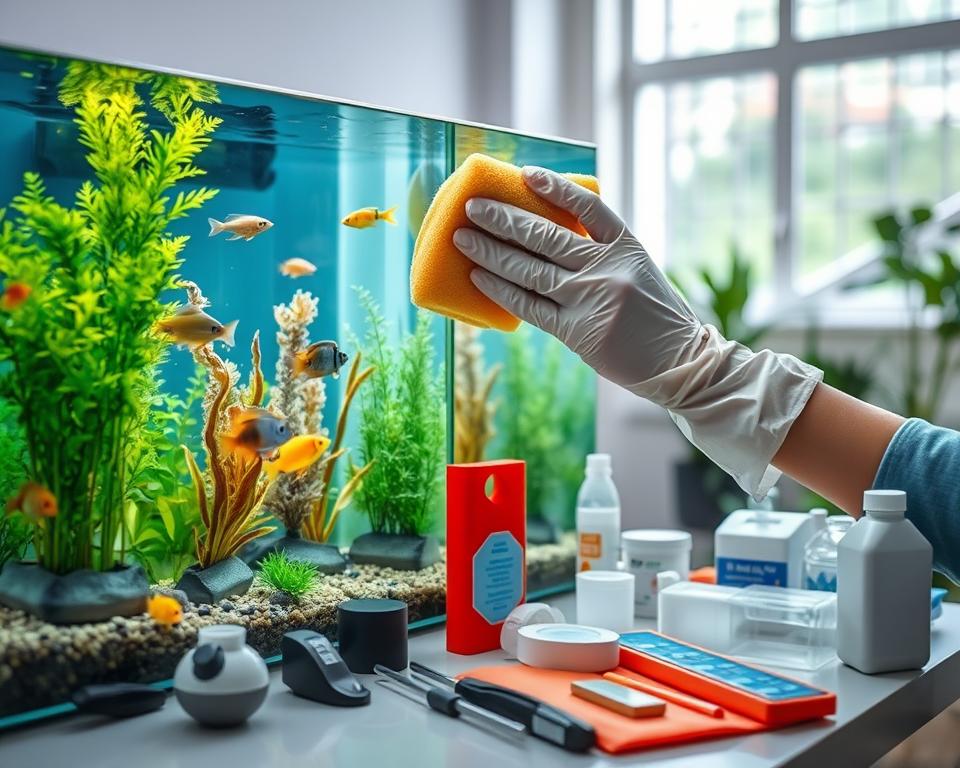
Maintaining an aquarium can be a rewarding hobby, but frequent water changes can be time-consuming and stressful for your fish. Did you know that a well-maintained aquarium can reduce the need for frequent water changes by up to 50%?
As an aquarium enthusiast, I’ve learned that a few simple techniques can help. These methods can minimize water changes and create a healthier environment for your aquatic life. By understanding the importance of a balanced ecosystem and applying effective maintenance strategies, you can enjoy a thriving aquarium with less hassle.
Key Takeaways
- Understand the importance of minimizing water changes in aquariums.
- Learn simple techniques to maintain a balanced aquarium ecosystem.
- Discover effective strategies for reducing the frequency of water changes.
- Create a healthier environment for your aquatic life.
- Enjoy a thriving aquarium with less maintenance hassle.
Understanding the Importance of Water Quality
Keeping the water quality right is key for a happy aquarium. The health of your fish and plants depends a lot on the water they swim in.
Water quality is more than just clean water. It’s about creating a stable home for your fish and plants. Bad water quality can stress out fish, making them sick.
Why Water Quality Matters
Water quality is vital because it affects your fish’s health. Poor water quality can cause many issues, like algae and fish deaths. Keeping the water quality good means you don’t have to change it as often.
Water quality also impacts the biological balance in your tank. For example, good bacteria that clean up waste are sensitive to water changes.
Key Parameters to Monitor
To keep the water quality up, you need to watch a few important things. These include:
- pH levels: The water’s acidity or alkalinity, which affects your fish’s health.
- Ammonia and nitrite levels: These are toxic to fish and show bad water quality.
- Nitrate levels: While not as toxic, high nitrates can cause problems and mean it’s time for a water change.
Testing these parameters regularly helps you see how your aquarium water is doing. This lets you make smart choices about when to change the water and other upkeep tasks.
By knowing how important water quality is and keeping an eye on these key parameters, you can keep your aquarium healthy. This might even mean you don’t have to change the water as often.
Effective Filtration Systems
To keep your aquarium water clean, you need a good filtration system. A top-notch filter works hard to keep the water clear and healthy. It’s the heart of a thriving aquarium.

Choosing the Right Filter
Finding the right filter for your tank can be tough. There are many choices out there. Mechanical filters catch big particles, while biological filters house good bacteria that clean waste. Chemical filters tackle specific pollutants and smells.
Think about your tank’s size, the fish you have, and how often you clean. These factors help pick the best filter for you.
Maintenance Tips for Filters
Keeping your filter in good shape is vital. Check the filter media often and swap it out when it’s dirty. For biological filters, avoid sudden changes to keep the good bacteria happy.
Cleaning your filter as the maker suggests keeps it working well. This helps you minimize water changes. It saves time and keeps your fish healthy and happy.
Beneficial Bacteria and Biofiltration
Beneficial bacteria are key to a healthy aquarium. They help keep the water clean by breaking down harmful waste. This makes the water safe for fish.
Biofiltration is how these bacteria work. They settle on surfaces in the tank, turning bad stuff into something safer. This keeps the water balanced.
What is Biofiltration?
Biofiltration is vital for a healthy tank. It’s when beneficial bacteria grow on surfaces like filters and gravel. They break down waste, keeping the nitrogen cycle in check.
Many things affect how well biofiltration works. The type of filter media, water temperature, and oxygen levels are important. A good environment helps beneficial bacteria thrive, keeping the water perfect for fish.
How to Promote Beneficial Bacteria
It’s important to help beneficial bacteria grow. Here are some ways to do that:
- Use beneficial bacteria supplements to introduce a diverse range of bacteria into your aquarium.
- Provide adequate filter media to support the colonization of beneficial bacteria.
- Maintain optimal water parameters, including temperature, pH, and oxygen levels.
- Avoid over-cleaning the aquarium, as this can disrupt the balance of beneficial bacteria.
| Method | Description | Benefits |
|---|---|---|
| Beneficial Bacteria Supplements | Introduces diverse bacteria into the aquarium | Enhances biofiltration, reduces stress on fish |
| Adequate Filter Media | Provides surface area for bacteria colonization | Improves water quality, supports beneficial bacteria growth |
| Optimal Water Parameters | Maintains suitable conditions for beneficial bacteria | Promotes healthy bacteria growth, reduces disease risk |
Understanding beneficial bacteria and biofiltration is key. It helps create a healthy home for your fish. By supporting these bacteria, you keep your tank water perfect for a long time.
Live Plants and Their Benefits
Adding live plants to your aquarium is a smart move for keeping water quality high. These plants are not just pretty; they’re key to a healthy aquarium.
Live plants help fight algae growth by competing for nutrients. They also make the environment better by adding oxygen and giving fish places to hide.
Natural Filtration Solutions
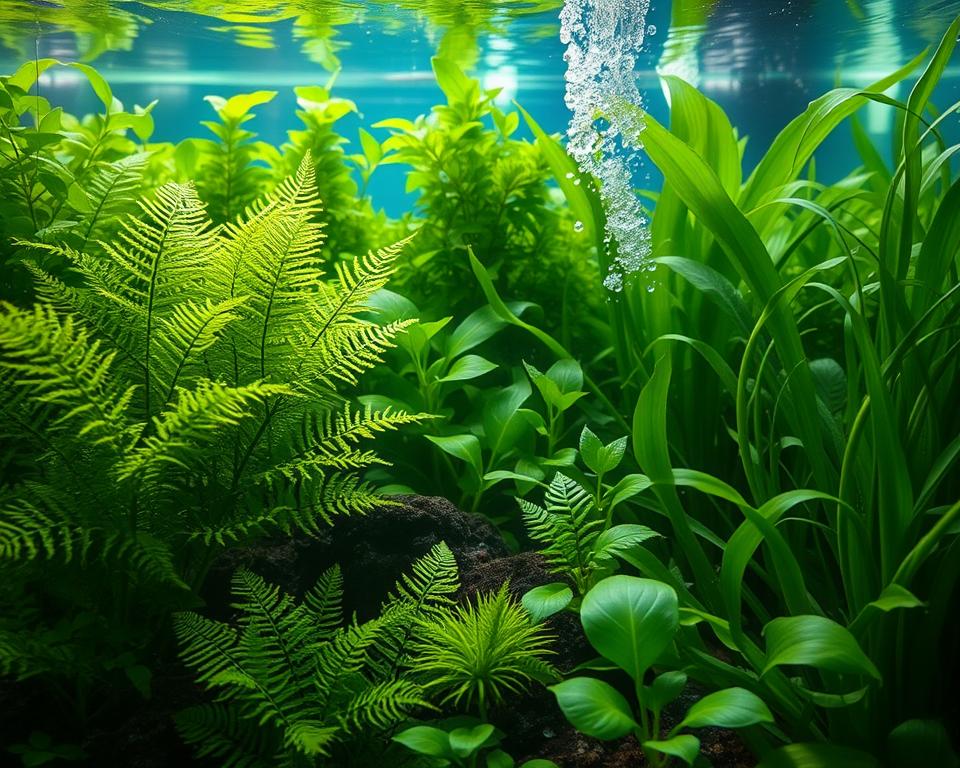
Live plants act as natural filters, pulling out bad stuff like ammonia and nitrates. This makes the water cleaner and healthier, cutting down on the need for water changes.
“Live plants are a vital component of a well-functioning aquarium, serving as a natural filtration system.” Mixing different plants creates a strong biofiltration system. This works well with your mechanical filters.
Plant Selection Tips
Picking the right plants is important. Think about lighting, water temperature, and your fish’s needs. Start with easy plants like Java Moss or Anacharis for beginners.
Also, consider how plants will grow and live with your fish. A good mix keeps your aquarium healthy and looking great.
“A well-planted aquarium is not only visually stunning but also a sign of a healthy, thriving ecosystem.”
By choosing the right plants and adding them to your care routine, you’ll have a cleaner, healthier aquarium. This makes your fish happier and supports a greener hobby.
Monitoring Fish Stock Levels
Monitoring your fish stock levels is key to reducing water changes. Too many fish can cause water quality issues and stress. Keeping the right number of fish helps lower the need for water changes.
The Balance of Bio-load
The bio-load is the waste fish produce, affecting water quality. High bio-load means more ammonia and nitrite. It’s important to know your aquarium’s bio-load capacity.
Calculating Bio-load: A common guideline is 1 inch of fish per gallon. But size and type of fish matter. Larger fish create more waste, so consider this when stocking.
| Fish Size (inches) | Recommended Stocking Density (inches/gallon) |
|---|---|
| 1-2 | 1 |
| 2-3 | 0.75 |
| 3+ | 0.5 |
Signs of Overcrowding
Knowing the signs of overcrowding is critical. Look out for:
- Fish showing stress, like rapid breathing or lethargy
- Algae growing too much due to extra nutrients
- Water quality dropping, with more ammonia or nitrite
Being alert to these signs helps avoid overcrowding. This keeps your fish healthy and reduces water change needs. It makes caring for your aquarium easier.
Using Dechlorinators
Tap water has chlorine and chloramines that harm aquatic life. A dechlorinator is key for keeping aquariums healthy. Chlorine is used to kill bacteria, but it’s bad for fish and other sea creatures. Chloramines, a mix of chlorine and ammonia, are also harmful.
Why Use a Dechlorinator?
A dechlorinator removes chlorine and chloramines from tap water. This makes the water safe for your aquarium. It protects fish from damage, reduces stress, and keeps them healthy.
Using a dechlorinator has many benefits:
- Protection against chlorine and chloramine damage: Dechlorinators neutralize these harmful chemicals, safeguarding your aquatic pets.
- Reduced stress on fish: By removing harmful chemicals, dechlorinators help minimize stress on fish, promoting a healthier environment.
- Ease of use: Most dechlorinators are simple to use, requiring just a few drops per gallon of water.
Best Products on the Market
When picking a dechlorinator, look for products that are well-liked by aquarium fans. Here are some top picks:
- API Tap Water Conditioner: This product removes chlorine and chloramines and detoxifies heavy metals.
- Seachem Prime: It’s great at removing chlorine and chloramines and also helps reduce fish stress.
- Tetra AquaSafe: This dechlorinator takes out chlorine, chloramines, and heavy metals, making tap water safe for aquariums.
Adding a dechlorinator to your aquarium care routine can greatly improve your pets’ health and happiness.
Water Stabilizers and Conditioners
To keep your aquarium water clean and safe, it’s key to know about water stabilizers and conditioners. These products remove harmful chemicals and toxins. This makes a healthy space for your fish.
The Role of Water Conditioners
Water conditioners are vital for aquarium maintenance. They remove chlorine and chloramines from tap water, which harm fish. Some also help beneficial bacteria grow, which is good for the ecosystem. It’s important to pick a conditioner that fits your aquarium’s needs.
If your tap water has chloramines, you need a conditioner that can remove them. Always check the product label or the manufacturer’s website for details. Brands like Seachem offer conditioners for various aquarium needs.
Top Brands to Consider
Many top brands offer quality water conditioners. Some of the most popular are:
- Seachem
- API
- Tetra
These brands have products for different aquarium needs. Think about your tank size, fish type, and water goals when choosing a conditioner.
Using a good water stabilizer and conditioner in your maintenance schedule boosts your fish’s health. Regular use keeps water quality high. This reduces the need for frequent water changes and keeps your aquarium stable.
Routine Maintenance Practices
Regular maintenance is key to a healthy aquarium. By doing routine tasks, you can reduce algae growth and keep water quality high. This means you won’t need to change the water as often.
Cleaning is a big part of this. It helps get rid of debris and waste that can harm water quality. Make sure to clean the gravel and decorations often to stop detritus buildup.
Cleaning Techniques
Good cleaning is more than just glass wiping. It’s important to:
- Use a gravel vacuum to remove debris from the substrate.
- Clean the filter as the maker says.
- Wipe down the glass walls with a magnetic algae scraper.
Equipment Care Essentials
Looking after your equipment is vital for a healthy aquarium. This includes:
| Equipment | Maintenance Task | Frequency |
|---|---|---|
| Filters | Clean or replace media | Monthly |
| Pumps | Check for blockages and clean | Weekly |
| Heaters | Verify temperature settings | Daily |
By sticking to these maintenance steps, you can make a stable home for your fish. This reduces stress and promotes health. Regular care also lets you keep an eye on your aquarium’s health, making changes as needed.
The Role of Water Test Kits
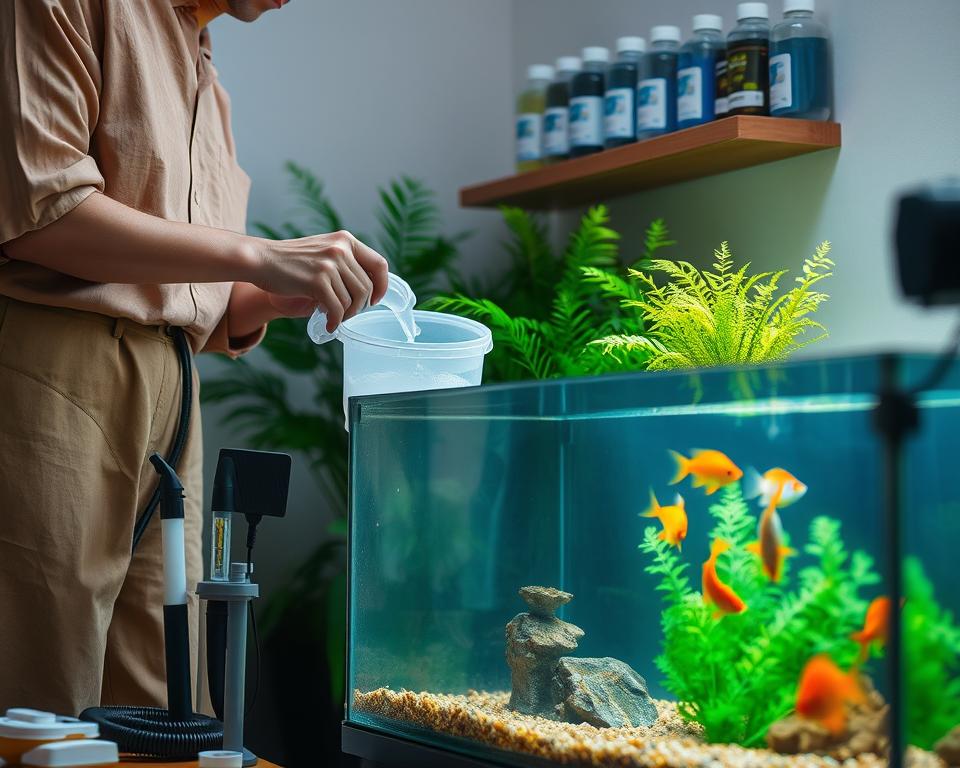
Water test kits are key for any aquarium owner. They help keep water quality right. This means spotting problems early and knowing how to care for your tank.
Selecting the Appropriate Test Kit
Choosing the right water test kit is important. You can pick between liquid or strip test kits. Liquid kits are more precise and test a lot, but strip kits are fast and easy.
Think about these things when picking:
- The size of your aquarium
- The type of fish and other organisms you’re keeping
- The level of accuracy you require
- Your budget
Understanding Your Test Results
After testing your water, it’s vital to understand the results. Most kits come with a color chart. For example, a pH test shows if your water is too acidic or too alkaline. Knowing this helps keep your tank healthy.
Here’s a table to help you understand your test results:
| Parameter | Ideal Range | Your Reading | Status |
|---|---|---|---|
| pH | 6.5-8.5 | 7.8 | Optimal |
| Ammonia (ppm) | 0 | 0.5 | Toxic |
| Nitrite (ppm) | 0 | 0 | Safe |
By testing your aquarium water often, you can keep it healthy. This ensures a great home for your fish and other sea creatures.
Setting Up a Sump System
To keep your aquarium healthy, setting up a sump system is a smart move. A sump system adds extra filtration. This helps keep the water quality top-notch.
Advantages of a Sump
A sump system brings many benefits. It offers enhanced filtration and more water volume. This leads to more stable water conditions. It also creates a quiet and hidden spot for your equipment. This reduces noise and clutter in your main tank.
- Increased water volume for more stable parameters
- Additional filtration capacity
- Reduced clutter and noise from equipment
Installation Tips
When setting up a sump system, picking the right gear and plumbing is key. Begin by choosing a sump that fits your tank size well. Make sure the plumbing doesn’t cause water flow restrictions or prevent back-siphoning.
Good installation means planning for enough space and making the system easy to care for. Regular upkeep is essential for the sump system’s success and longevity.
Establishing a Consistent Routine
Keeping a healthy aquarium needs a steady routine. A regular schedule helps keep water quality stable. This means you won’t have to change the water as often.
Creating a Schedule that Works
To set up a good water change schedule, start by watching your aquarium’s water. Use a test kit to check water quality. If ammonia levels go up, you might need to change the water more often.
Adjusting for Optimal Results
Keep watching your aquarium’s water quality and adjust your schedule as needed. Reducing water changes helps your fish stay healthy. With regular care and a smart schedule, your aquarium will thrive.
Stick to these tips and your routine. You’ll have a happy, healthy aquarium with fewer water changes.