


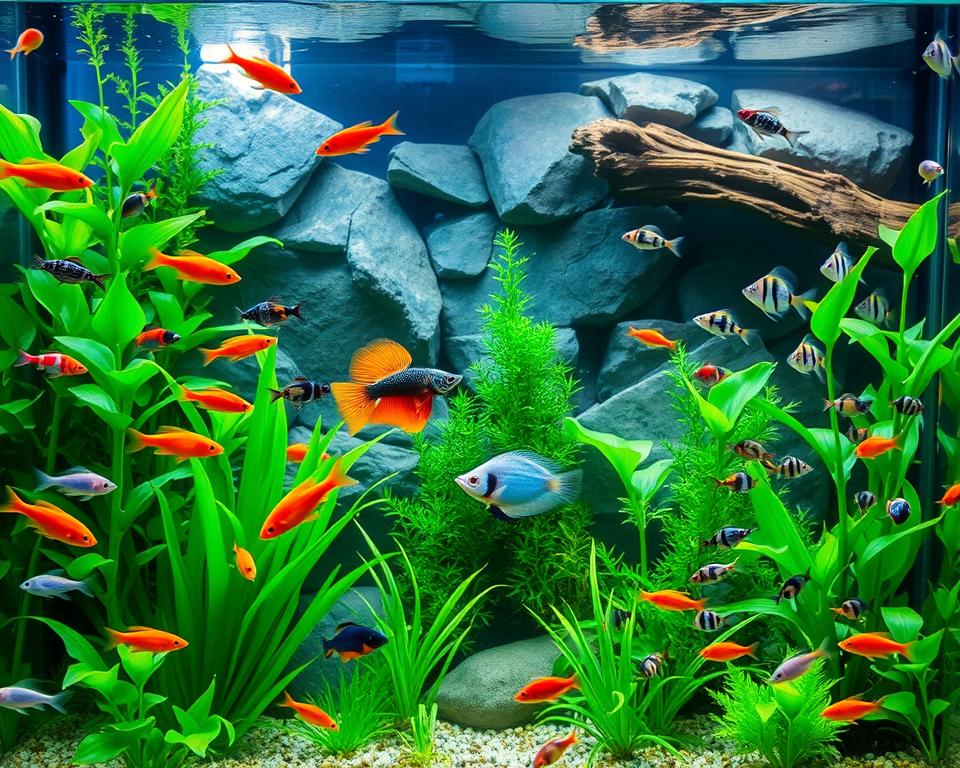
As an aquarium enthusiast, I’m excited to share with you the most resilient aquatic companions. They thrive in low-maintenance environments. With over 1 million households in the United States keeping aquariums, it’s clear many are drawn to the calming world of aquatic life.
Creating a stunning aquarium doesn’t have to be complicated. By choosing the right hardy aquatic species, beginners can enjoy a thriving aquatic environment. This is without the hassle of complex care routines.
I’ll guide you through the top low-maintenance fish species that are perfect for beginners. I’ll also share essential care tips to get you started.
Key Takeaways
- Discover the top hardy aquatic species for low-maintenance aquariums
- Learn essential care tips for a thriving aquatic environment
- Explore innovative technologies for aquarium maintenance
- Understand the benefits of choosing low-maintenance fish species
- Get started with creating a stunning aquarium for beginners
Understanding Hardy Freshwater Fish
For beginners in aquarium keeping, choosing hardy freshwater fish is key. These fish are bred to live well in many water conditions. They’re great for aquariums that need little care.
So, what makes a fish hardy? Hardy fish can handle changes in water temperature, pH levels, and more. They also get sick less often, which is perfect for newbies. For more tips, check out this guide on Modern Aquarium’s Guide to the Best Freshwater Fish for Beginners.
What Makes Fish Hardy?
Several factors make a fish hardy. These include:
- Genetic adaptability: Some fish are bred to be more resilient to different water conditions.
- Dietary flexibility: Hardy fish can thrive on a variety of diets, making feeding less complicated.
- Disease resistance: These fish have a natural resistance to common aquarium diseases.
Benefits of Low-Maintenance Aquariums
Low-maintenance aquariums have many benefits. These include:
- Less time spent on maintenance: With hardy fish, you spend less time worrying about water conditions and more time enjoying your aquarium.
- Reduced stress: Knowing that your fish are thriving in a stable environment reduces stress for both you and your fish.
- Cost-effective: Hardy fish are often less expensive to care for, as they require less specialized equipment and food.
By understanding what makes fish hardy and the benefits of low-maintenance aquariums, you can create a thriving aquatic environment. This environment will bring joy and relaxation to your home.
Top Hardy Fish Species for Beginners
For beginners, picking hardy fish species is key to a healthy tank. These fish are forgiving and add color and life to your aquarium.
Betta Fish: The Vibrant Fighter
Betta fish are known for their bright colors and fancy fins. They’re easy to care for and fit well in small tanks. They can even survive in less-than-perfect water conditions, but clean water is important.

Goldfish: A Classic Choice
Goldfish are a timeless choice for beginners. They’re hardy and easy to care for. But, they need a big tank to grow. Regular water changes and a good diet are key to their health.
Zebra Danios: Hardy and Social
Zebra Danios are small, lively fish that are very hardy. They like to be in groups and are great for community tanks. Their stripes make any tank more interesting.
| Fish Species | Tank Size Requirement | Social Behavior |
|---|---|---|
| Betta Fish | 5 gallons minimum | Solitary |
| Goldfish | 20 gallons minimum | Can be kept in small schools |
| Zebra Danios | 10 gallons minimum | Schooling fish |
Choosing the right fish for your tank is fun and rewarding. With hardy fish like Betta Fish, Goldfish, and Zebra Danios, you’ll have a beautiful aquarium that brings joy for years.
Essential Care Tips for Hardy Fish
To keep your resilient freshwater fish thriving, it’s key to know the basics of their care. Hardy fish are more forgiving, but they need proper care to thrive.
Water Quality Management
Managing water quality is vital for your hardy fish’s health. Poor water quality can stress and disease them, even for the most resilient species. Here are some key tips to maintain optimal water conditions:
- Regularly test the water for ammonia, nitrite, and nitrate levels.
- Perform partial water changes (about 25% every week) to keep the water fresh.
- Avoid overfeeding, as this can lead to a decline in water quality.
- Use a high-quality water conditioner to remove chlorine and chloramines.
Feeding Best Practices
Feeding your hardy fish properly is essential for their health and well-being. Overfeeding can lead to water quality issues, while underfeeding can result in malnutrition. Here are some best practices to follow:
- Provide a varied diet that includes high-quality commercial flakes or pellets, as well as live or frozen foods.
- Feed your fish 2-3 times a day, only as much as they can consume within a few minutes.
- Consider fasting your fish one day a week to help maintain water quality.
By following these essential care tips, you can create a healthy and thriving environment for your durable freshwater fish.
Aquarium Setup for Low-Maintenance Fish
To keep your sturdy freshwater fish happy and healthy, setting up your aquarium is key. A well-designed aquarium looks great and keeps your fish thriving.
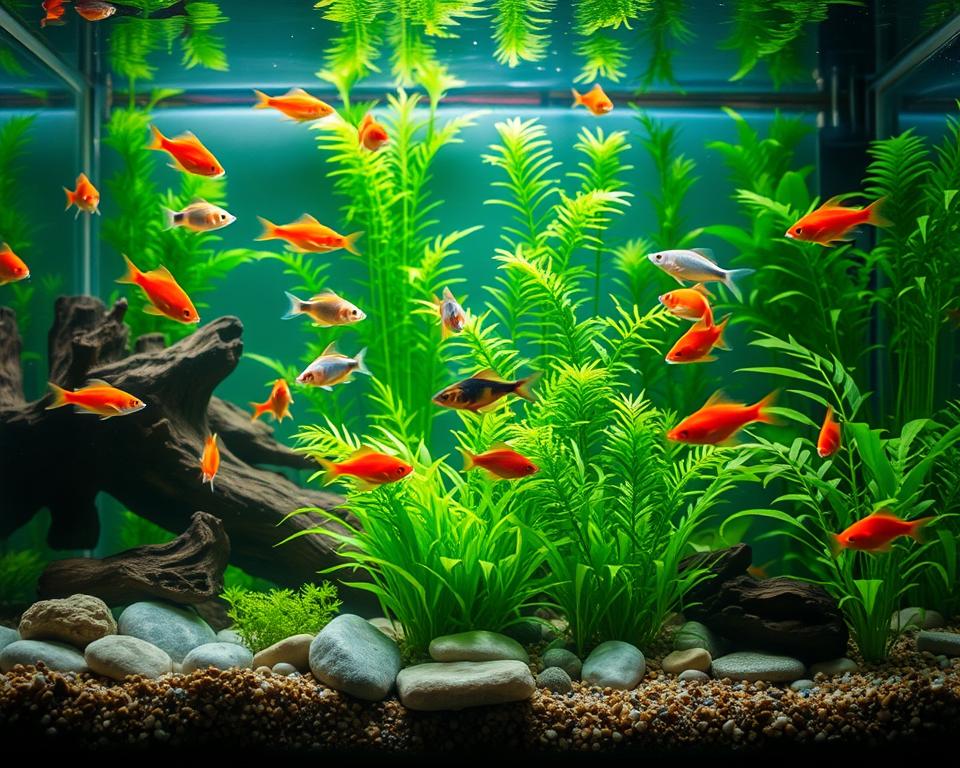
Choosing the Right Tank Size
Choosing the right tank size is very important. A bigger tank is more stable and less likely to have sudden water changes. For hardy freshwater fish, start with a 20-gallon tank if you’re new to this.
- A larger tank lets you keep more fish and try different types.
- It’s easier to keep the water stable, which is good for your fish’s health.
- Big tanks are more forgiving if you make small mistakes with the water.
Substrate and Decorations
The substrate and decorations you pick are very important. For low-maintenance fish, simple gravel or sand works best. Decorations like plants, rocks, and driftwood make your tank look good and give fish places to hide.
When picking decorations, remember:
- Make sure they’re safe for your fish and won’t hurt them.
- They should match your tank’s water conditions.
- Set them up to make paths for swimming and places for fish to hide.
With the right setup, you can make a great home for your hardy freshwater fish. Fish keeping can then be a fun and rewarding hobby.
Common Problems with Hardy Fish
Hardy fish are tough but can face common aquarium issues. These problems can affect their health. As a beginner, knowing about these issues is key to a healthy aquarium.
Recognizing Illness and Stress
Spotting illness and stress in hardy fish is the first step. Look for labored breathing, lethargy, and loss of appetite. Watching your fish closely helps catch problems early.
- Monitor water quality regularly
- Look for visible signs of disease or injury
- Maintain a consistent environment
Being alert can help you catch issues before they get worse. For example, if fish stay near the surface or seem slow, it might mean bad water or not enough oxygen.
Effective Solutions for Common Issues
When you spot a problem, knowing how to fix it is important. For instance, if fish seem stressed from bad water, a partial water change can help.
- Adjust water parameters as necessary
- Provide a balanced diet to boost immunity
- Avoid overcrowding the tank
For Low Maintenance Freshwater Fish like Betta Fish or Goldfish, keeping the tank right is critical. Regular care and a good setup can lower the chance of problems.
In summary, even though hardy fish are great for beginners, knowing about common issues is vital. By following these tips, you can have a happy and healthy aquarium with your Best Freshwater Fish for Beginners.
Compatibility in Community Tanks
Choosing the right tank mates is key to a thriving aquarium. It’s important to pick fish that get along well. Consider their temperament, size, and how they swim to keep the peace.
Best Tank Mates for Hardy Fish
Look for peaceful, non-competitive fish that like the same water conditions. For example, Zebra Danios and White Cloud Mountain Minnows make a great pair. They’re active and calm, creating a lively yet peaceful community.
| Fish Species | Temperament | Preferred Swimming Level |
|---|---|---|
| Zebra Danios | Active, Peaceful | Mid-water |
| White Cloud Mountain Minnows | Peaceful, Schooling | Mid-water |
| Corydoras Catfish | Peaceful, Social | Bottom |
Dr. James Findley, an aquarium expert, once said,
“A well-balanced community tank is not just about the fish; it’s about creating an ecosystem where all inhabitants thrive.”
Avoiding Aggression
To prevent fights, keep your tank from getting too crowded. Make sure there are plenty of hiding spots and visual barriers. Pick fish that are calm and avoid aggressive ones.
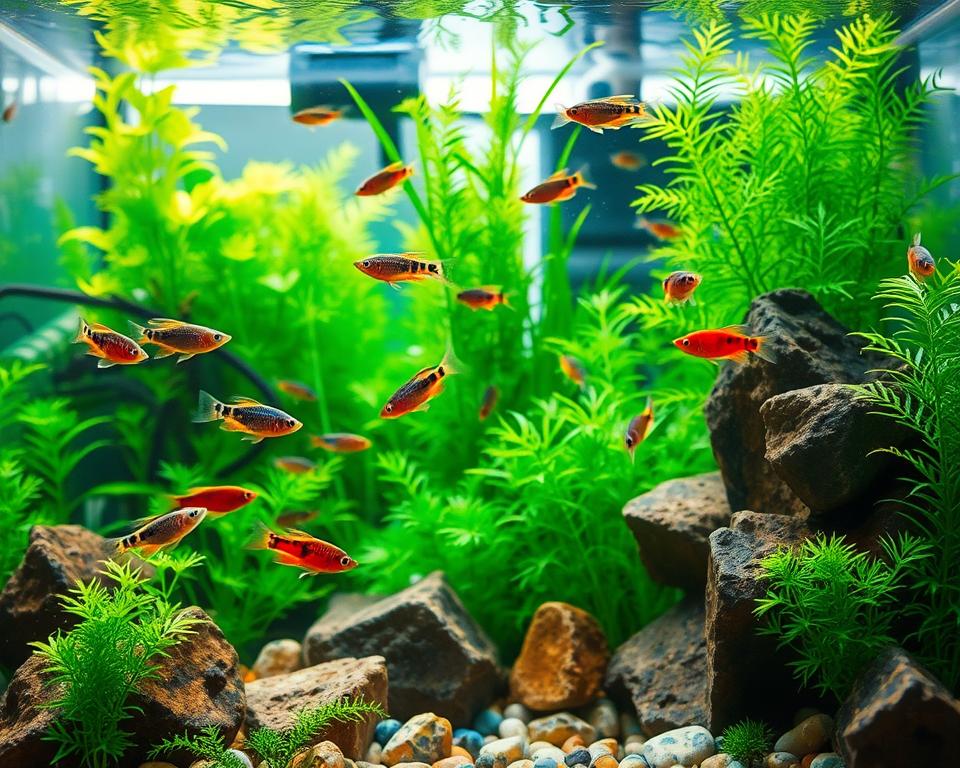
By picking the right tank mates and keeping your aquarium balanced, you can have a lively and healthy tank.
Ideal Water Conditions for Hardy Fish
To keep your robust freshwater fish healthy, it’s important to have the right water conditions. Hardy fish can handle different water conditions, but the best conditions are key for their health.
The best water conditions for hardy fish include temperature, pH levels, and water hardness. Knowing these elements helps create a great environment for them.
Optimal Temperature Ranges
Most resilient freshwater fish do well in temperatures between 76°F and 82°F (24°C to 28°C). But, some fish need slightly different temperatures. For instance, goldfish like cooler water, between 65°F and 75°F (18°C to 24°C).
| Fish Species | Optimal Temperature Range (°F) | Optimal Temperature Range (°C) |
|---|---|---|
| Goldfish | 65-75 | 18-24 |
| Betta Fish | 76-82 | 24-28 |
| Zebra Danios | 65-77 | 18-25 |
pH Levels and Hardness
The pH level of your aquarium water is very important. Most hardy fish like a pH between 6.5 and 7.5. Water hardness, or the amount of minerals, also matters. Some fish do well in soft water, while others prefer harder water.
By knowing and keeping the ideal water conditions, you can make a healthy home for your robust freshwater fish. Regular checks and adjustments will keep your fish happy and healthy.
Seasonal Considerations for Your Aquarium
It’s important to know how seasons affect your aquarium. This knowledge helps keep your sturdy freshwater fish healthy. As seasons change, so do the conditions in your tank.
Adjusting Care in Different Seasons
Seasons bring different challenges for aquarium owners. In winter, cold weather can lower your tank’s water temperature. Summer can raise it, leading to algae growth.
To adjust care:
- Keep an eye on the water temperature and adjust heating or cooling as needed.
- Watch for changes in fish behavior and appetite, signs of stress.
- Change feeding schedules to match your fish’s activity and metabolism changes with the seasons.
Protecting Fish from Temperature Fluctuations
Temperature changes can stress durable freshwater fish, leading to illness or death. To protect them:
- Use a reliable heater or chiller to keep the water temperature stable.
- Keep your aquarium away from drafts and direct sunlight.
- Check the tank’s temperature often and adjust it to keep it in the best range for your fish.
By being aware of these seasonal changes and taking action, you can keep your sturdy freshwater fish healthy and thriving.
Innovations in Fish Care Technology
The aquarium hobby has seen big changes in recent years. These changes make it easier to care for hardy freshwater fish. They help keep the fish healthy and happy.
Technology has improved how we automate routine tasks. This means fish can get the best care, even when we’re not around.
Automated Feeding Systems
Automated feeding systems are a big help for aquarium fans. They let you set up feeding times in advance. This ensures your fish get a balanced diet, no matter your schedule.
Some feeders can even give different foods at different times. This meets the varied needs of your fish.
Water Quality Monitors
Keeping water quality right is key for your fish’s health. Water quality monitors show you important levels like pH and ammonia. This helps you make the right changes to keep your fish safe.
These monitors can send alerts to your phone or email. They tell you when the water isn’t safe. This helps prevent stress and disease in your fish.
Using automated feeders and water quality monitors together makes a great aquarium. These tools make caring for your fish easier. They also help your fish stay healthy and live longer.
Final Thoughts on Hardy Freshwater Fish
Creating a thriving aquarium with low maintenance freshwater fish is rewarding. Understanding hardy fish traits and following care tips in this article is key. You’ll enjoy a beautiful and healthy aquatic environment.
Selecting the Right Fish
When picking top hardy freshwater fish, think about your lifestyle and care level. Beginners should consider Betta Fish, Goldfish, and Zebra Danios. They are hardy and easy to care for.
Fostering a Healthy Environment
To keep your fish healthy, ensure good water quality and a balanced diet. Also, keep your tank well-maintained. Regularly check your aquarium’s conditions and adjust as needed. This will help your fish thrive in a stable environment.
By following these guidelines and choosing the right fish, you’ll enjoy the benefits of fish keeping. You’ll find relaxation and joy in watching these fascinating creatures.