


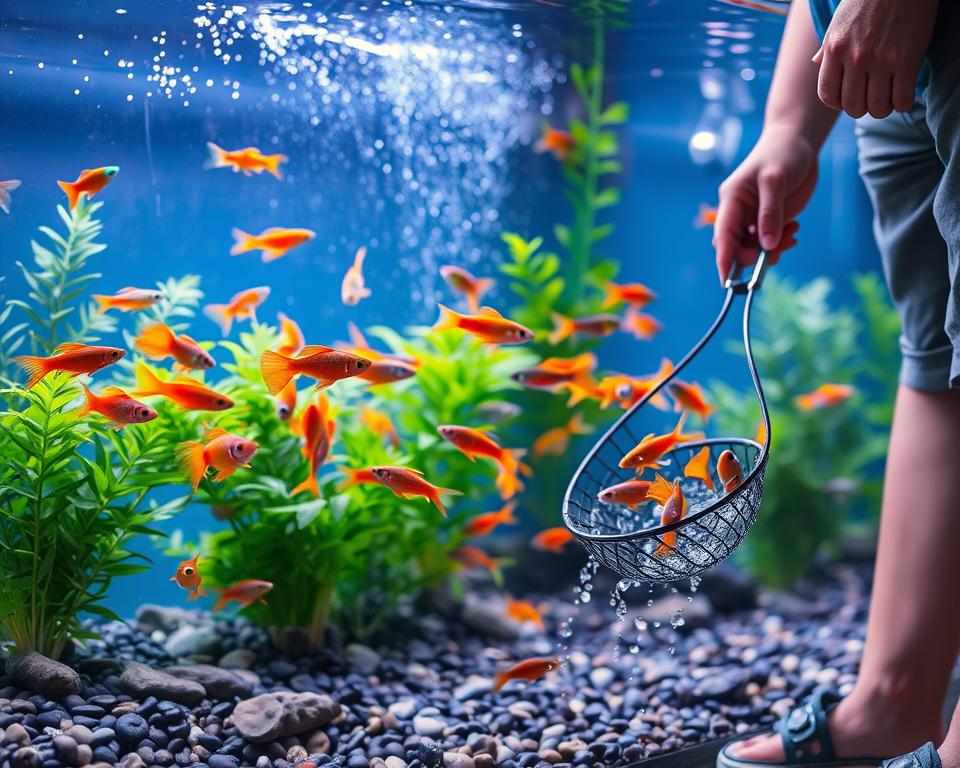
Over 1 million households in the United States have guppies as pets. They are one of the most popular freshwater aquarium fish. Their vibrant colors and lively personalities make them beloved by many. But, to keep your guppies happy and healthy, you need to give them the best care possible.
As a guppy owner, you want your pets to be happy and healthy. In this ultimate guide, I’ll share valuable insights. You’ll learn how to create a perfect environment for your guppies. This includes setting up the ideal aquarium and understanding their behavior.
Key Takeaways
- Understand the basics of guppy care
- Learn how to set up the perfect aquarium
- Discover the importance of water quality
- Recognize common guppy behaviors
- Implement best practices for guppy care
Understanding Guppy Fish Behavior
Knowing how guppies behave is key for their happiness and health. Guppies love being around others. Their actions tell us a lot about their well-being.
Social Structure of Guppies
Guppies have a hierarchy in their groups. In a community tank, some guppies lead, while others follow. This order helps keep peace and reduces stress.
- Dominant guppies often claim the best territories.
- Submissive guppies may hide or avoid confrontations.
- A balanced social structure promotes a peaceful aquarium environment.
Common Behavioral Traits
Guppies show many behaviors that show their health and happiness. Some common traits include:
- Active swimming: Guppies are naturally active swimmers and should be seen darting around the tank.
- Foraging behavior: They often forage for food at the bottom or surface of the water.
- Social interaction: Guppies interact with each other, often swimming together or playing.
Signs of Stress in Guppies
It’s important to know the signs of stress in guppies. Some indicators include:
- Rapid breathing or hiding.
- Loss of appetite or lethargy.
- Fading color or visible injuries.
By understanding these behaviors and recognizing stress signs, guppy owners can ensure their pets stay healthy. Regular observation and a well-maintained aquarium are essential for caring for guppies well.
Setting Up the Perfect Aquarium
Creating the perfect aquarium is key for your guppies’ health and happiness. A well-designed tank offers a healthy space and adds beauty. It makes watching your guppies a joy.
Recommended Tank Size
The tank size is vital for guppy care. A 10-gallon tank is the minimum for a small group. This size ensures a stable environment and space for decorations and plants.
Ideal Water Conditions
Guppies love warm, clean water. The best temperature is between 72°F to 82°F (22°C to 28°C). Keeping the pH level between 6.8 and 8.5 is also important. Regular water changes and a good filter help keep these conditions.
Substrate and Decorations
The substrate and decorations are key for a natural environment. Choose a soft, fine-grained substrate to protect your guppies’ fins. Plants, rocks, and driftwood provide hiding spots and help keep the water clean.
| Element | Recommendation | Benefits |
|---|---|---|
| Tank Size | Minimum 10 gallons | Stable environment, space for decorations |
| Water Temperature | 72°F to 82°F (22°C to 28°C) | Optimal for guppy health and activity |
| pH Level | 6.8 to 8.5 | Reduces stress, promotes health |
| Substrate | Soft, fine-grained | Gentle on guppies’ fins, natural look |
| Decorations | Plants, rocks, driftwood | Hiding places, water quality improvement |
By focusing on these key elements, you can create a thriving aquarium. It will showcase your guppies’ beauty while ensuring their health and happiness.
Choosing the Right Tank Mates
Creating a diverse and thriving aquarium requires careful consideration of tank mates for your guppies. Guppies are generally peaceful, but some fish species can be aggressive or competitive. In this section, we’ll explore the key factors to consider when selecting tank mates.
Compatible Fish Species
When it comes to guppy tank setup, choosing compatible fish species is key. Good tank mates for guppies include neon tetras, harlequin rasboras, and corydoras catfish. These fish are peaceful, easy to care for, and thrive in similar water conditions.
I recommend avoiding fin-nippers and aggressive species that may harass your guppies. By selecting the right companions, you can create a harmonious and engaging aquarium.
Avoiding Aggressive Fish
Aggressive fish can disrupt the peace in your aquarium and stress your guppies. Avoid fish like tiger barbs, fin-nipping serpae tetras, and aggressive cichlids. When introducing new fish, it’s essential to research their behavior and ensure they are compatible with your guppies.
Factors to Consider
When selecting tank mates, several factors come into play. First, consider the size of the tank and the adult size of the fish. Overcrowding can lead to stress and disease. Second, think about the water conditions required by different species. Guppies prefer warm, slightly alkaline water, so choose fish with similar preferences.
Lastly, consider the temperament of the fish. Peaceful, community fish are best for a harmonious aquarium. By carefully selecting tank mates, you can create a thriving community that showcases the best of caring for guppies and best guppy care practices.
Feeding Your Guppies
To keep your guppies healthy, it’s key to know what and how often to feed them. Guppies are omnivores, needing a mix of veggies and proteins in their diet.
Nutritional Requirements
Guppies need a varied diet. This includes high-quality flakes, live or frozen foods, and veggies. Flake food should be the main part of their diet, giving them the nutrients they need.
Recommended Foods:
- High-quality commercial flake food
- Live or frozen foods like brine shrimp or bloodworms
- Vegetables such as zucchini or spinach
Feeding Schedule
Feed your guppies 2-3 times a day. But, don’t overfeed them. Guppies have small stomachs, and too much food can harm their health.
| Food Type | Feeding Frequency | Benefits |
|---|---|---|
| Commercial Flakes | Daily | Provides essential nutrients |
| Live/Frozen Foods | 2-3 times a week | Rich in protein, promotes growth |
| Vegetables | 2-3 times a week | Provides fiber, supports digestion |
Treats and Supplements
Occasionally, treats can add variety to their diet. But, make sure they’re nutritious and safe for your guppies.

By following these tips, you can give your guppies a balanced diet. This will help keep them healthy and happy.
Maintaining Water Quality
To keep your guppies happy and healthy, it’s key to focus on water quality. Good water conditions are vital for their well-being. We’ll look at the important steps to keep the water just right.
Filtration: The First Line of Defense
A good filter is essential for keeping the water clean. It removes waste and extra food. Choose a filter that fits your tank size and guppy number. Don’t forget to clean or replace the filter media as needed.
For more tips on setting up your aquarium, check out our guide on guppy care and aquarium essentials.
Regular Water Changes
Changing the water regularly is vital for guppy tank maintenance. Replacing 25% of the water each week keeps it fresh. This also helps keep the water stable, which is good for your guppies’ health.
Testing Water Parameters
Checking water parameters is key to your guppies’ health. Regular tests help you adjust the water as needed. Test for pH, ammonia, nitrite, and nitrate levels. Keeping these in check prevents health problems and helps your guppies thrive.
For more on keeping water parameters right and guppy health tips, consider these:
- Use a reliable water test kit to monitor water conditions.
- Keep a log of your test results to track changes over time.
- Adjust your maintenance routine based on the results of your water tests.
By following these steps and staying proactive about water quality, you can ensure a healthy home for your guppies.
Breeding Guppies Successfully
Understanding guppy behavior and creating the right environment is key to successful breeding. As an aquarium enthusiast, I’ve learned that breeding guppies can be very rewarding.
Identifying Males and Females
To start breeding guppies, you need to know how to tell males from females. Males are more colorful and have a special fin for reproduction. Females are bigger, less colorful, and have a special spot near their anal fin. Knowing how to tell them apart is very important.
Breeding Conditions
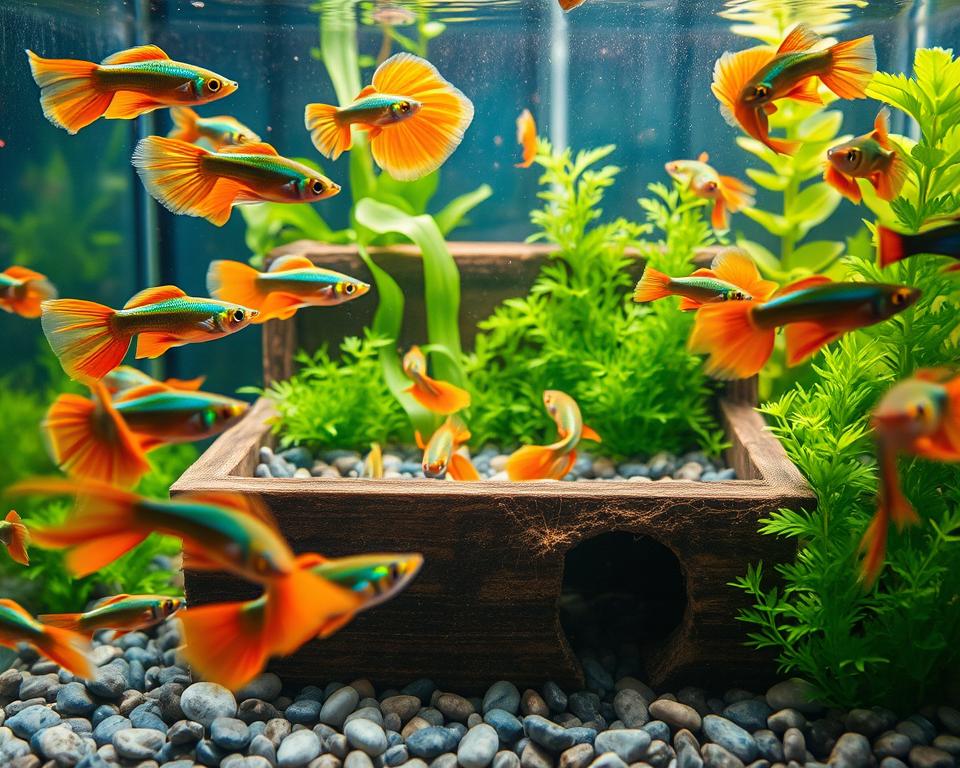
Creating the right breeding conditions is essential. Guppies need clean, well-oxygenated water between 72-82°F (22-28°C). They also need a separate tank with hiding places for the female and fry. “A well-planted tank with gentle water circulation mimics the natural habitat of guppies, encouraging them to breed,” say aquarium experts.
Caring for Fry
After the fry are born, they need special care. Feed them infusoria or fry food several times a day. Regular water changes and keeping the water conditions right are also important. Watching the fry grow and adjusting their diet is key to raising healthy guppies.
By following these tips and best practices, you can enjoy breeding and raising guppies. Caring for guppies requires attention to detail, but the joy of raising them is worth it.
Preventing Common Health Issues
To keep your guppies healthy, you need to pay close attention and act early. Knowing about common health problems in guppies is key. This way, you can prevent them from happening.
Recognizing Symptoms of Illness
Spotting illness in guppies is the first step to keeping them healthy. Look out for signs like labored breathing, being very tired, not wanting to eat, and visible infections. Regular observation helps catch these problems early.
Experts say, “Early detection of disease is key to effective treatment.”
“Guppies are generally hardy fish, but they can be susceptible to various diseases if their environment is not properly maintained.”
Preventative Measures
To prevent health issues in guppies, keep their tank clean and stable. This means doing regular water changes, using good filters, and not overcrowding the tank. A clean tank helps keep your guppies healthy.
- Regularly test water parameters to ensure they are within the ideal range for guppies.
- Provide a balanced diet that includes a variety of nutrient-rich foods.
- Avoid overfeeding, as this can lead to water quality issues and stress on the fish.
| Preventative Measure | Benefit |
|---|---|
| Regular Water Changes | Removes toxins and waste products |
| Proper Filtration | Maintains clean and clear water |
| Balanced Diet | Provides essential nutrients for health and color |
Treatment Options
If your guppy gets sick, you need to act fast and right. Treatment depends on the disease, but common methods include medicated baths, changing water conditions, and using medicines against parasites or bacteria.
Consulting with a knowledgeable aquarium professional or doing thorough research helps find the best treatment for your guppies.
By being proactive and knowing about guppy health, you can lower the risk of disease. This ensures your guppies stay healthy and happy in their home.
Understanding Guppy Genetics
Guppy genetics is fascinating, showing how their colors and traits come to be. It’s a complex field that looks at heredity and how it affects guppies. This knowledge helps us understand their colors, traits, and health.
Color Patterns and Variations
Guppies are known for their bright colors and patterns. These come from genetic variations. Understanding these genetic principles helps breeders predict and achieve specific colors in their guppies.
The main colors in guppies come from genes controlling pigments. For example, certain genes can create red, yellow, or blue colors. How these genes work together affects the color pattern and intensity.
Breeding for Specific Traits
Breeding guppies for specific traits needs a good grasp of genetics. Breeders can enhance or introduce new traits by selectively breeding. They look for guppies with the traits they want and breed them to pass on those traits.
Breeders focus on traits like color intensity, fin shape, and size. By using genetic knowledge, they can make choices to get the desired results. For instance, to get vibrant colors, they choose parents with the right color intensity and pattern.
| Trait | Genetic Influence | Breeding Considerations |
|---|---|---|
| Color Intensity | Multiple genes controlling pigment production | Select parents with desired color intensity |
| Fin Shape | Genes influencing fin morphology | Choose guppies with desired fin characteristics |
| Size | Genetic factors affecting growth rate and size | Breed guppies with optimal size characteristics |
Genetic Health Considerations
When breeding for specific traits, it’s important to think about genetic health. Inbreeding or selective breeding can lead to health issues. Maintaining genetic diversity is key to keeping guppies healthy and resilient.
To avoid health risks, breeders should outcross with unrelated guppies and watch their breeding stock’s health. This balance ensures a healthy and thriving guppy population.
Guppy Tank Maintenance Routine
To keep your guppies happy, you need a regular tank cleaning schedule. Cleaning your tank regularly keeps it clean and healthy for your guppies.
Cleaning the Tank
Cleaning your tank is very important. Start by removing any debris or waste from the substrate or decorations. Use a gravel vacuum to clean the substrate, and change about 25% of the tank water with fresh, dechlorinated water. Clean the glass walls with a magnetic algae scraper to remove algae.
Regular water changes are key for good water quality. Changing some tank water regularly helps prevent toxins and keeps your guppies healthy. Always treat new water with a conditioner to remove chlorine and chloramines before adding it to the tank.
Monitoring Equipment
Checking your tank equipment is also very important. Make sure your filter is working right and clean or replace the media as needed. Also, keep an eye on the temperature and adjust the heater if needed. Guppies like a temperature between 76-82°F (24-28°C).
Regular checks on your equipment can prevent problems. For example, a bad heater can cause sudden temperature changes, stressing your fish.
Scheduling Maintenance Tasks
Make a schedule for your tank maintenance. Set reminders for weekly water changes, filter cleaning, and other tasks. Sticking to your schedule helps keep your tank clean and healthy for your guppies.
- Weekly: Perform 25% water change and clean the tank glass.
- Bi-Weekly: Check and clean the filter.
- Monthly: Replace filter media and check equipment.
By following this routine, you’ll give your guppies the best care and keep them healthy. A well-maintained tank is essential for happy, healthy guppies.
Engaging with the Guppy Community
As I care for my guppies, connecting with others has been key. Sharing and learning from others boosts our understanding of guppy behavior. It also helps us improve our care techniques.
Online Forums and Groups
Online forums and social media groups are great for staying updated on guppy care. You can ask questions, share your experiences, and learn from others. This way, you can overcome challenges together.
Local Fish Shows
Local fish shows are also a great way to connect with the guppy community. You can see different guppy breeds, learn from breeders, and share your knowledge. It’s a fun way to learn and grow together.
Sharing Your Experience
Sharing your guppy care experiences helps newcomers. Whether online or at fish shows, your insights are valuable. They help build a stronger, more supportive community for all.