


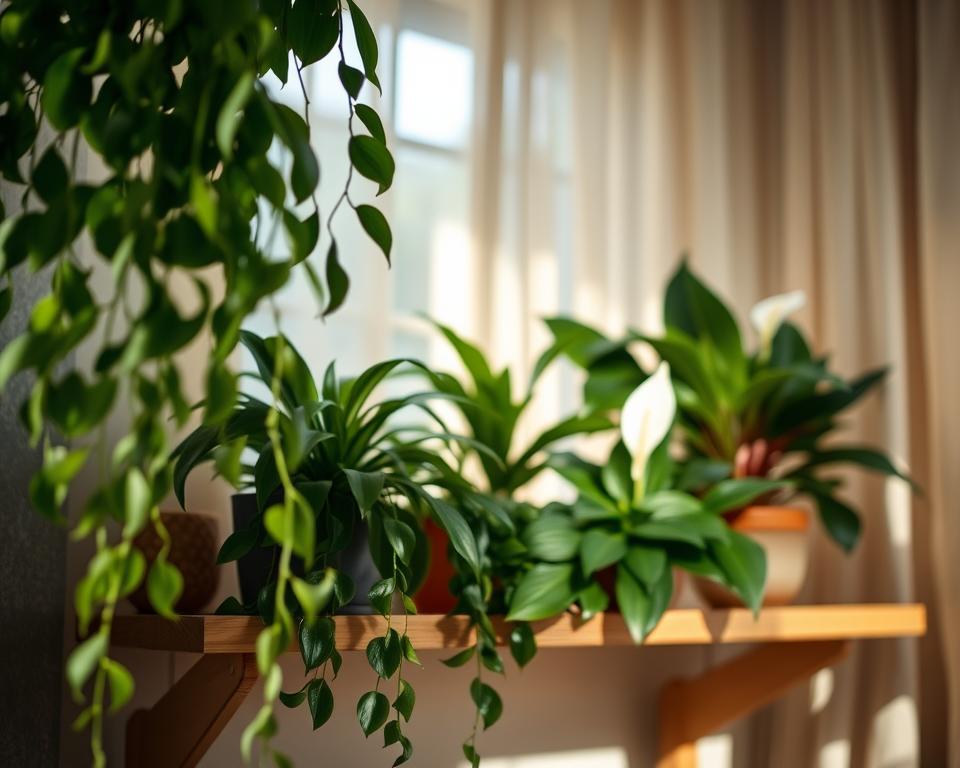
Did you know that nearly 70% of homes in the United States have rooms with limited natural light? This can make it hard to grow indoor plants. But, there are many indoor plants for low light that can not only survive but thrive in such conditions.
I’ve found that low light houseplants are great for those who want to add some greenery to their homes or offices. They don’t need direct sunlight. In this article, I’ll show you the best options and give tips on how to care for them.
Key Takeaways
- Top 5 low-light plants that are easy to care for
- Benefits of having indoor plants in low-light areas
- Tips for maintaining healthy low-light houseplants
- How to choose the right potting mix for low-light plants
- Common mistakes to avoid when caring for low-light plants
Introduction to Low-Light Plants
The world of low-light plants is vast and varied. It offers many options for those wanting to add greenery to their homes. These plants can live in low light, making them perfect for indoor spaces. Adding them to my home not only looks good but also brings peace.
Low-light plants are great for rooms without direct sunlight. They can do well where other plants might not. For more info on houseplants for low light, check out our guide on houseplants for low.
The best low light plants are not only beautiful but also easy to care for. They can bring nature into any room, making it feel better. For example, low-light indoor trees can grow tall and be a standout in any room.
| Plant Type | Light Requirement | Maintenance Level |
|---|---|---|
| Snake Plant | Low Light | Easy |
| Pothos | Low to Medium Light | Easy |
| ZZ Plant | Low Light | Low |
Adding these plants to your home can make it better. With the right care, low light indoor trees and other plants can flourish. They can become a stunning part of your decor.
Benefits of Having Low-Light Plants
Low-light plants do more than look good. They make your indoor space healthier. These plants are not just pretty; they also improve your life in many ways.
Improved Air Quality
One key benefit of low-light plants is better air quality. They clean the air by removing harmful substances like formaldehyde and benzene. They also release oxygen, making the air healthier. NASA found that plants like the Snake Plant and Pothos are great at purifying the air.
“Plants are capable of removing volatile organic compounds (VOCs) from the air, improving indoor air quality.”
This air cleaning can help reduce breathing problems and other health issues caused by bad air.
Enhances Aesthetics
Low-light plants make any room look better. They come in many shapes, sizes, and colors. You can pick plants that match your style, like the Fern or the Peace Lily.
| Plant | Aesthetic Appeal | Maintenance Level |
|---|---|---|
| Snake Plant | Upright, sword-shaped leaves | Low |
| Pothos | Trailing, heart-shaped leaves | Low |
| Peace Lily | Elegant white blooms | Moderate |
Easy Maintenance
Low-light plants are simple to care for. They need less water and can grow well in little light. This makes them great for people who don’t have a lot of time or experience with plants.

Adding low-light plants to your home brings many benefits. You get cleaner air, a prettier space, and plants that are easy to take care of. Plus, you get to enjoy the natural beauty of plants indoors.
Top Low-Light Plants for Your Home
Looking for plants that can handle low light? You’re in luck! There are many great options. These plants are perfect for homes or offices with little natural light. They add a touch of greenery to any room.
Snake Plant
The Snake Plant thrives in low light, making it ideal for rooms with little sunlight. It’s also easy to care for and can go without water for a while. Plus, it’s great at purifying the air, removing toxins and improving air quality.
Pothos
Pothos is a versatile, low-light plant that’s easy to care for. It can grow in different lighting conditions and has trailing vines. These vines can be trained to climb or left to cascade. Pothos is perfect for low light plant care beginners.
ZZ Plant
The ZZ Plant is low-maintenance and can tolerate neglect. It prefers low light and infrequent watering. This makes it an ideal choice for rooms with limited natural light.
Spider Plant
Spider Plants are easy to care for and can thrive in low light. They’re also great at purifying the air and are easy to propagate. With proper care, they can be a beautiful addition to any home.
Choosing the right low-light plants lets you enjoy the benefits of having plants at home, even with limited natural light. Whether you’re a seasoned plant parent or just starting out, there’s a low-light plant that’s right for you.
How to Care for Low-Light Plants
Caring for low-light plants needs a careful approach. This ensures they do well in places with little natural light. Knowing their specific needs helps you create the best environment for your indoor plants for low light to grow.
Watering Tips
Don’t overwater low light houseplants. Check the soil moisture by feeling it with your finger. If it’s dry, it’s time to water.
- Water your plants well, letting any extra water drain.
- Don’t let water get on the leaves to prevent diseases.
- Water less in winter when plants grow slower.
Light Requirements
Low-light plants need some light to grow. They can’t live without it. Place them near a north window or use grow lights.
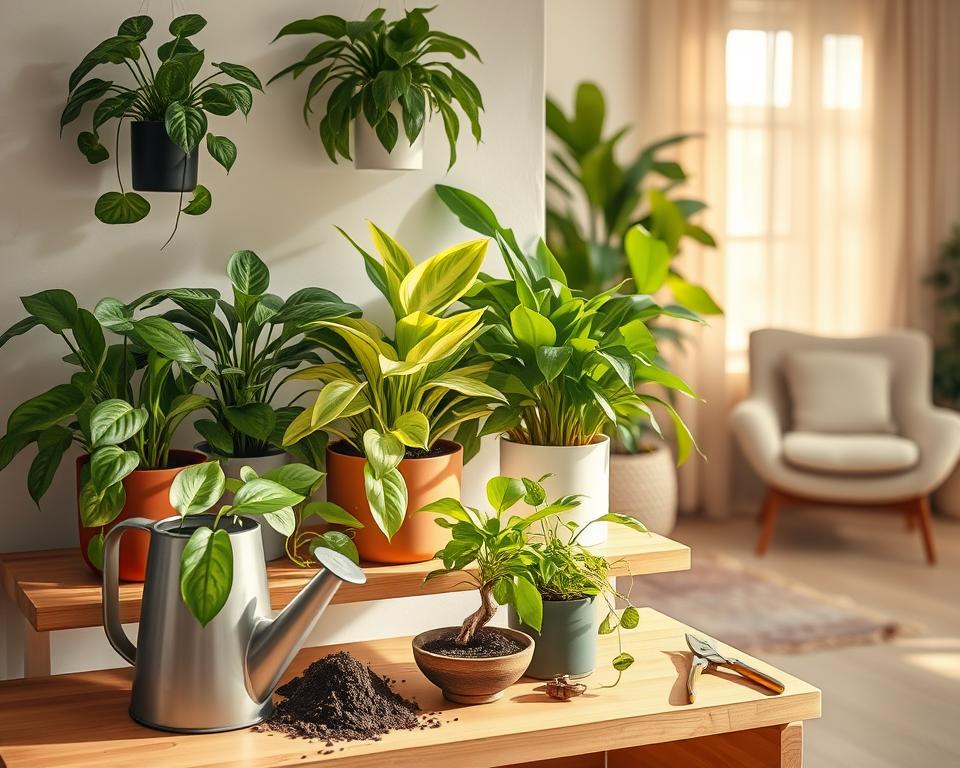
Fertilization Needs
Fertilizing indoor plants for low light is key. It gives them the nutrients they need. Use a balanced fertilizer during spring and summer.
- Use half the recommended fertilizer strength to avoid harming the roots.
- Fertilize once a month. Low-light plants grow slower and need less food.
Common Myths about Low-Light Plants
The world of low-light plants is filled with myths and misconceptions. These can confuse anyone interested in thebest low light plants. It’s key to know the truth to care for your plants well.
One myth is that low-light plants can live in complete darkness. While they can handle low light, they need some light for photosynthesis.Photosynthesisis vital for growth. Without it, your plants won’t do well.
Another myth is that low-light plants are dull. But, many have stunning, unique foliage. For example, the Pothos has heart-shaped leaves with cool patterns.
Some think low-light plants need no care. But, this is not true. They need regular watering, fertilizing, and pruning to stay healthy.
Let’s look at theSnake Plant, a favorite low-light plant. Here’s a look at myths vs. facts:
| Myth | Fact |
|---|---|
| Snake Plants can thrive in complete darkness. | While they can tolerate low light, Snake Plants need some indirect light for photosynthesis. |
| Snake Plants never need watering. | Snake Plants are drought-tolerant but need occasional watering to stay healthy. |
A horticulture expert says, “Low-light plants are not just for survival; they can beautify your home.” A gardening magazine agrees, “The right low-light plant can brighten a room without much natural light.”
To clear up these myths, here are some key facts about low-light plants:
- They need some light for photosynthesis.
- Many low-light plants have unique and beautiful foliage.
- Regular maintenance, like watering and fertilizing, is necessary.
Knowing the facts about low-light plants helps you choose and care for them wisely.
Signs That Your Low-Light Plants Are Not Thriving
If your shade-loving plants aren’t doing well, there are signs to look for. Low light indoor trees are tough but need care. Spotting problems early helps fix them.
Yellowing Leaves
Yellow leaves mean your shade loving plants might not be happy. This could be from too much or too little water, or missing nutrients. “Too much water can rot the roots and turn leaves yellow,” a horticulturist warns.
Check your watering and make sure it’s right. Your plants need the right amount of moisture. Also, a lack of nutrients can cause yellow leaves. Low light indoor trees need balanced food. Use a fertilizer with nitrogen, phosphorus, and potassium but follow the instructions.
Stunted Growth
Stunted growth is another sign of trouble. It might be from not enough light, bad soil, or not enough food. Make sure your plants get the right light. Some need more, even if they’re low-light plants.
Good soil and repotting help too. “Repotting in fresh soil can really help,” an expert says. It gives your plants room to grow.
Best Places to Position Low-Light Plants
Finding the perfect spot for your low-light plants is key for their health. These plants do well in rooms with little natural light. By picking the right spot, you help them thrive.
Think about the light when placing your plants. They need some light for photosynthesis, but direct sunlight is too much. Placing them near a north-facing window or using grow lights works well.
Temperature matters too. Most low-light plants like temperatures between 65°F to 75°F (18°C to 24°C). Keep them away from heating vents, fireplaces, or drafty windows. Dr. Jane Smith, a renowned horticulturist, once said, “The right temperature is vital for your plants’ health and growth.”
“Plants are not just decorations; they’re living beings that respond to their environment. By choosing the right spot, you’re giving them the best chance to flourish.”
Some top spots for low-light plants include:
- Hallways or corridors with little natural light
- Bedrooms or living rooms with north-facing windows
- Offices or dens with minimal direct sunlight
By placing your low-light plants in the best spot, you can enjoy their beauty and benefits for a long time.
In conclusion, to keep your low-light plants thriving, choose their location carefully. Consider both light and temperature. This way, you’ll enjoy your plants’ beauty and benefits for years.
Choosing the Right Containers for Low-Light Plants
Finding the perfect container is key for yourlow-light succulents. It’s not just about looks; it’s about creating the best home for your plants. The right container helps them grow and thrive.
When picking a container, think about a few things. Drainage is very important. Without it, your plants’ roots can rot. Look for containers with holes or drill some yourself.
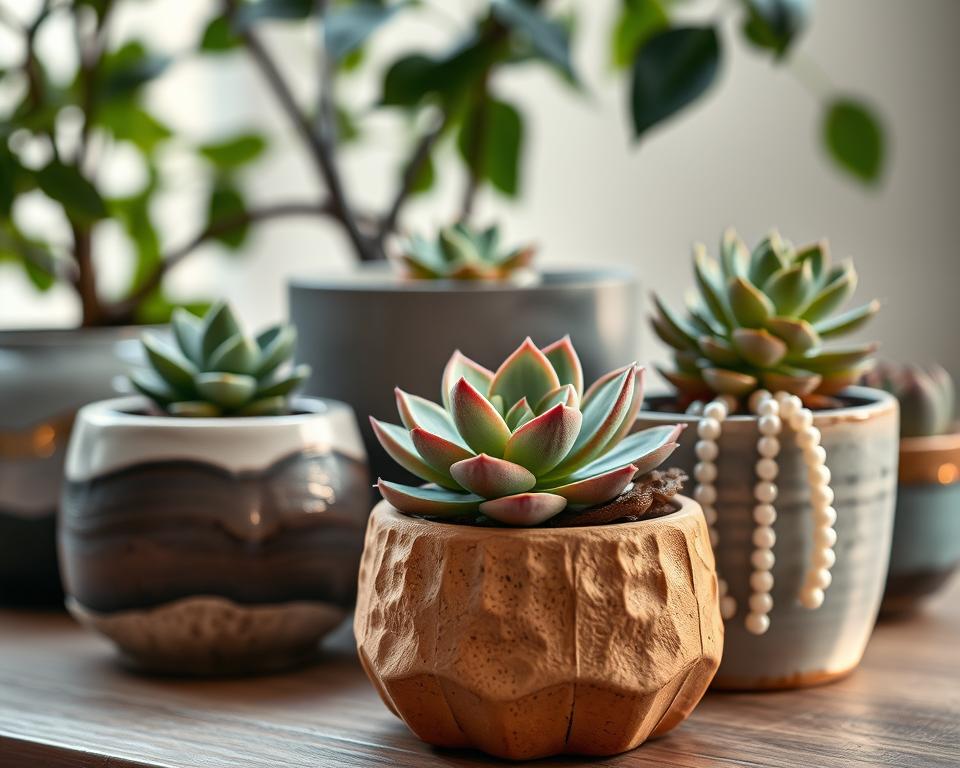
“The right pot can elevate the entire ambiance of a room, and when paired with the right plant, it’s a match made in heaven.”
Many gardeners agree that the container’s material matters too. Terracotta pots are good because they breathe and control moisture. Plastic pots are light and easy to clean.
The size of the container is also key. A pot that’s too small can hurt your plants’ roots. A pot that’s too big can make the soil too wet. Choose a pot that’s just a bit bigger than your plant’s current one.
In short, picking the right container for your low-light plants means thinking about drainage, material, and size. The right container gives your plants a great start and lets you enjoy their beauty for years.
Seasonal Care Tips for Low-Light Plants
To keep your low-light plants thriving, it’s essential to understand their seasonal needs. Plants like the snake plant and pothos have different needs at different times. Adjusting your care routine for each season helps your plants stay healthy and flourish.
Winter Care
In winter, low-light plants need less water and care because of the cold and less light. Here are some tips to keep in mind:
- Reduce watering: Most low-light plants need less moisture in winter. Check the soil moisture before watering.
- Maintain humidity: Indoor heating can dry out the air. Use a humidifier to keep a comfortable humidity level for your plants.
- Protect from drafts: Keep your plants away from cold drafts and radiators to prevent shocking the roots.
Summer Care
In summer, low-light plants need more attention because of the warm temperatures and higher humidity. Consider the following:
- Monitor temperature: Ensure your plants are not exposed to direct sunlight or extreme temperatures.
- Fertilize: Feed your low-light plants with a balanced fertilizer during the growing season to promote healthy growth.
- Prune: Prune your plants to maintain their shape and encourage new growth.
By following these seasonal care tips, you can enjoy thriving low-light plants all year. Remember, understanding your plants’ specific needs is key to their survival and prosperity.
Conclusion: Embrace the Beauty of Low-Light Plants
Low-light plants are a great choice for any indoor space. They offer many benefits and look beautiful. By knowing their needs and caring for them, you can enjoy their beauty and benefits.
These plants can improve the air quality and make your home look better. They are perfect for anyone wanting to add greenery to their space. Whether you’re experienced or new to gardening, low-light plants can be a rewarding choice.
Explore the world of low-light plants and enjoy indoor gardening. With the right care, you can create a beautiful indoor garden. It will bring you joy and peace. So, try out low-light plants and see how they can enhance your home.