

Did you know shrimp is super quick to cook? It’s perfect for weeknight dinners. Many shrimp recipes are ready in just 10-30 minutes. This makes them great for beginners.
Shrimp is not only fast to prepare. It’s also very versatile. This means you can try many different flavors and cuisines.
For beginners, finding easy shrimp recipes is a big help. These recipes need only a few ingredients and are easy to clean up. Plus, shrimp is full of vitamins and cooks faster than steak or chicken.
Key Takeaways
- Cooking shrimp is quick and easy, perfect for weeknight meals.
- Shrimp dishes can be ready in as little as 10 minutes.
- One-pan meals simplify cooking and cleanup.
- Shrimp is rich in vitamins and a great option for beginners.
- Look for pre-peeled and deveined shrimp to save time.
What Makes Shrimp a Great Choice for Beginners?
Shrimp is perfect for beginners because it’s easy to prepare and healthy. It’s a great choice for those starting out in cooking. It’s both simple to work with and good for you.
Nutritional Benefits of Shrimp
Shrimp is not just tasty, but also full of nutrients. It’s high in protein, low in calories, and rich in vitamins and minerals. Adding shrimp to your meals can improve your health.
| Nutrient | Amount per 3 oz serving | % Daily Value |
|---|---|---|
| Protein | 19 grams | 38% |
| Calories | 84 | 3% |
| Selenium | 47.6 mcg | 68% |
Versatility in Cooking
Shrimp is versatile in cooking. You can grill, sauté, boil, or bake it. This makes it easy to try different recipes and cooking methods. You can find a way to cook it that you like.
Quick Cooking Time
Shrimp cooks fast, usually in 2-4 minutes per side. This is great for busy days or when you’re in a hurry. With shrimp, you can quickly make a healthy and tasty meal.
Learning about shrimp’s benefits will help you make tasty and healthy dishes. Whether you need a quick dinner or a meal prep option, shrimp is a great choice.
Essential Tools for Cooking Shrimp
Before you start cooking shrimp, make sure your kitchen is ready. The right tools, gadgets, and utensils can greatly improve your cooking. This is true, even for simple shrimp recipes.
Must-Have Kitchen Gadgets
A good kitchen starts with the basics. For shrimp cooking, a digital kitchen scale is key for accurate measurements. A timer is also vital to cook shrimp just right.
A garlic press is another handy gadget. It’s great for dishes with garlic, saving you time and effort.
Recommended Cookware
For cookware, a non-stick skillet is best for shrimp. It prevents sticking and makes cleaning up easier.
You’ll also need a large pot for boiling shrimp. Choose one big enough to hold the shrimp in a single layer for even cooking.
Helpful Utensils
Utensils are important in shrimp cooking. A slotted spoon is great for draining boiled shrimp. A pair of tongs is useful for grilling or sautéing.
Having a cutting board just for seafood helps prevent contamination. It also makes prep work more efficient.
Selecting the Best Shrimp for Your Recipe
For beginners, picking the right shrimp is key to a great dish. The type of shrimp affects the flavor, texture, and quality of your meal.
Fresh vs. Frozen Shrimp
Choosing between fresh and frozen shrimp is your first decision. Fresh shrimp is often preferred, but frozen can be just as good. Flash-freezing preserves freshness, making frozen shrimp a great choice for quick shrimp meals.
- Fresh shrimp is best for dishes where shrimp is the main focus.
- Frozen shrimp is great for most recipes and is often cheaper.
Sustainable Shrimp Sourcing
Consider the environmental impact of your shrimp choice. Sustainable shrimp sourcing means the shrimp is caught or farmed without harming the ocean. Look for the Marine Stewardship Council (MSC) label for responsible seafood.
“Sustainable seafood is not just good for the planet; it’s also often better quality and more delicious.” – Seafood Expert
Size Matters: A Quick Guide
The shrimp size affects cooking time and dish presentation. Shrimp sizes are counted by the number per pound. For example, “16-20 count” means 16 to 20 shrimp per pound.
- Large shrimp (16-20 count) are perfect for grilling or as a main ingredient.
- Medium shrimp (21-30 count) are versatile and work well in most recipes.
- Small shrimp (41-50 count) are great for soups, stews, or pasta dishes.
By considering these factors, you can select the best shrimp for your recipe. This ensures a delicious and satisfying meal. Whether it’s a simple garlic butter shrimp or a complex seafood paella, the right shrimp makes a big difference.
Popular Shrimp Cooking Methods
There are many ways to cook shrimp that taste great. As a beginner, knowing these methods is key to making easy shrimp dishes that wow. We’ll look at boiling, grilling, and sauteing shrimp.
Boiling Shrimp for Freshness
Boiling is a simple way to cook shrimp and keep them fresh. Just boil salted water, add the shrimp, and cook until they turn pink and are done.
Tips for Boiling Shrimp:
- Use a large pot to prevent overcrowding.
- Add aromatics like lemon and garlic for extra flavor.
- Don’t overcook; shrimp cook quickly.
Grilling Shrimp to Perfection
Grilling shrimp gives them a smoky taste and a nice char. Preheat your grill to medium-high, thread shrimp on skewers if you like, and grill for 2-3 minutes on each side until they’re pink and slightly charred.
Grilling Tips:
- Marinate the shrimp before grilling for extra flavor.
- Use a grill mat to prevent shrimp from falling through the grates.
- Don’t press down on the shrimp with your spatula.
Sauteing Shrimp in One Pan
Sauteing is a quick and easy way to cook shrimp. Heat a pan with oil or butter, add the shrimp, and cook until they’re pink and done. This method is perfect for making beginner-friendly shrimp dishes with little cleanup.
Sauteing Tips:
- Pat the shrimp dry before sauteing to prevent steaming.
- Add garlic or shallots for extra flavor.
- Don’t overcrowd the pan.
| Cooking Method | Key Benefits | Tips |
|---|---|---|
| Boiling | Preserves freshness, easy | Use a large pot, don’t overcook |
| Grilling | Adds smoky flavor, nice char | Marinate, use a grill mat |
| Sauteing | Quick, versatile, minimal cleanup | Pat dry, add aromatics, don’t overcrowd |
Easy Shrimp Recipes to Get You Started
If you’re new to cooking shrimp, don’t worry; I’ve got you covered. Shrimp is easy to cook and can be made in many ways. Here, I’ll show you three simple shrimp recipes that are sure to impress.
Simple Garlic Butter Shrimp
Garlic butter shrimp is a simple dish. You’ll need shrimp, garlic, butter, lemon juice, and parsley. Melt butter in a pan, add garlic, and sauté the shrimp until they’re pink. Finish with lemon juice and parsley.
Tips for Making Garlic Butter Shrimp:
- Use fresh garlic for the best flavor.
- Don’t overcook the shrimp; they should be pink and tender.
- Serve with crusty bread to soak up the garlic butter sauce.
Creamy Shrimp Pasta Dish
Creamy shrimp pasta is easy and satisfying. Cook pasta, sauté shrimp with garlic, and mix with a creamy sauce. This dish is ready in under 30 minutes, perfect for a quick dinner.
The key to a great creamy shrimp pasta is in the sauce. Use high-quality parmesan cheese and don’t be shy with the garlic.
| Ingredient | Quantity | Notes |
|---|---|---|
| Shrimp | 1 pound | Fresh or frozen, thawed |
| Pasta | 8 ounces | Fettuccine or linguine work well |
| Heavy Cream | 1 cup | For a rich and creamy sauce |
Shrimp Tacos with Fresh Ingredients
Shrimp tacos are fun and flavorful. Marinate shrimp in lime juice, chili powder, and cumin, then grill or sauté. Serve in tacos with avocado, sour cream, and salsa.
- Marinate the shrimp for at least 30 minutes to enhance the flavor.
- Use fresh and vibrant toppings to add texture and flavor.
- Consider adding a slaw made from red cabbage and cilantro for extra crunch.
These easy shrimp recipes are just the start. They’ll help you build confidence in the kitchen. Happy cooking!
Flavor Enhancements for Shrimp Dishes
The secret to unforgettable shrimp dishes is in the flavors. As a beginner, trying new flavors can seem hard. But, it’s easy once you know the basics.
Flavoring shrimp is more than just salt and pepper. It’s about finding the right mix that makes the shrimp taste great. You can use marinades, seasonings, herbs, and veggies to do this.
Marinades and Seasonings
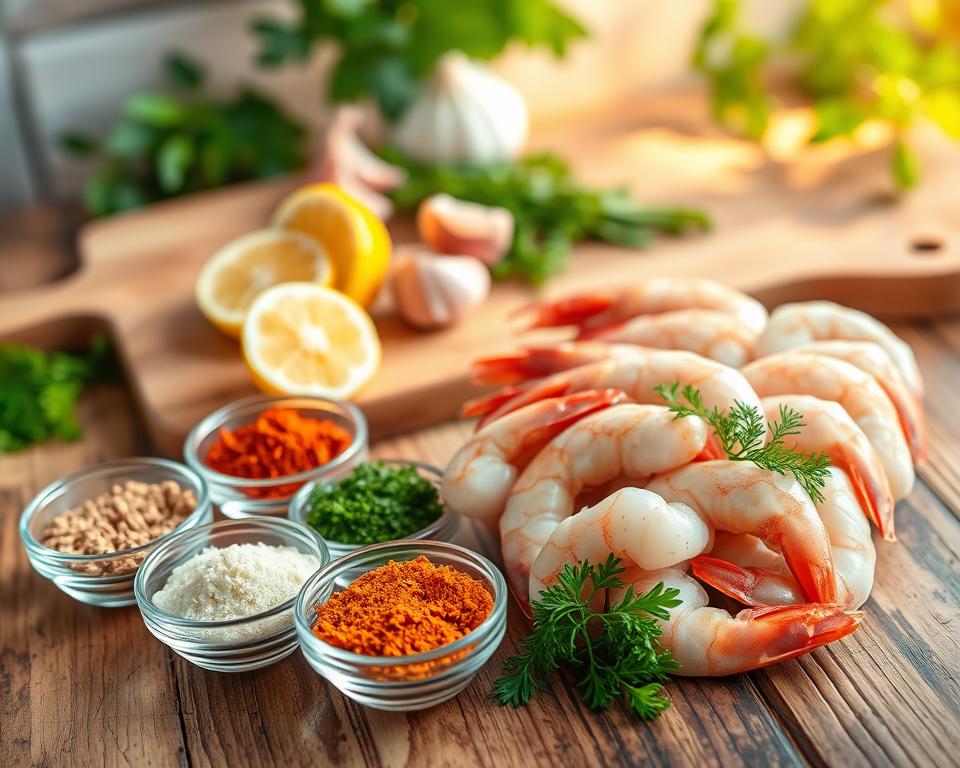
Marinades are a great way to add flavor to shrimp. A simple mix of olive oil, garlic, and lemon juice works well. For a spicy twist, add red pepper flakes.
- Mix olive oil, minced garlic, and lemon juice for a basic marinade.
- Add herbs like parsley or dill for freshness.
- Incorporate spices like paprika or cumin for depth.
Fresh Herbs to Brighten Up
Fresh herbs can really change how your shrimp dishes taste. Herbs like parsley, basil, and cilantro are tasty and colorful.
Here are some ways to use fresh herbs:
- Chop them finely and mix into your marinade.
- Use them as a garnish to add freshness just before serving.
- Combine them with butter or olive oil for a flavorful sauce.
Adding Vegetables for Variety
Adding veggies to your shrimp dishes makes them more interesting. Veggies like bell peppers, onions, and mushrooms go well with shrimp.
| Vegetable | Flavor Profile | Cooking Method |
|---|---|---|
| Bell Peppers | Sweet and slightly crunchy | Saute or grill |
| Onions | Caramelized sweetness | Saute or caramelize |
| Mushrooms | Earthy and rich | Saute or grill |
By adding these flavor enhancements to your shrimp dishes, you can make meals that taste great, look good, and are healthy.
Meal Prep Ideas with Shrimp
Shrimp is great for meal prep because it cooks fast and is healthy. Adding shrimp to your meal plan makes cooking easier. You’ll have tasty, nutritious meals ready all week.
Batch Cooking Shrimp for the Week
Batch cooking shrimp saves time. Cook a big batch by boiling or sautéing. Then, divide it into containers for easy reheating. This method is perfect for quick shrimp meals with various sauces or sides.
Make batch cooking even quicker by preparing marinades or seasonings ahead. This way, you can add flavor to your shrimp meals easily.
Freezing Tips for Raw and Cooked Shrimp
Freezing shrimp keeps it fresh longer. For raw shrimp, freeze them quickly after buying. Use an airtight container or freezer bag, removing air before sealing. Cooked shrimp can also be frozen, but divide it into portions first for easier reheating.
To thaw frozen shrimp, refrigerate it overnight or thaw quickly in cold water. Always check for spoilage before eating, even if it’s within the safe storage time.
Quick Meal Combos with Shrimp
Shrimp pairs well with many ingredients for best shrimp recipes for starters. Try it with pasta, veggies, and a simple sauce. Or, use it in salads, wraps, or on rice bowls.
Other quick meal ideas include shrimp tacos with slaw, shrimp skewers with quinoa, or a shrimp stir-fry with rice or noodles. Keep ingredients simple and prep quick for a healthy meal any day.
Safety Tips When Cooking Shrimp
As a beginner, it’s key to know how to cook shrimp safely. This way, you can avoid getting sick from food. Cooking shrimp can be fun and rewarding, but you must pay close attention to safety.
Proper Thawing Techniques
First, thawing shrimp safely is important. You can thaw them in the fridge, under cold water, or in the microwave. Never thaw shrimp at room temperature because bacteria grow fast there.
To thaw in the fridge, give it several hours or overnight. If you’re in a rush, thaw under cold water. Change the water every 30 minutes to stay safe.
Cooking Temperatures for Safety
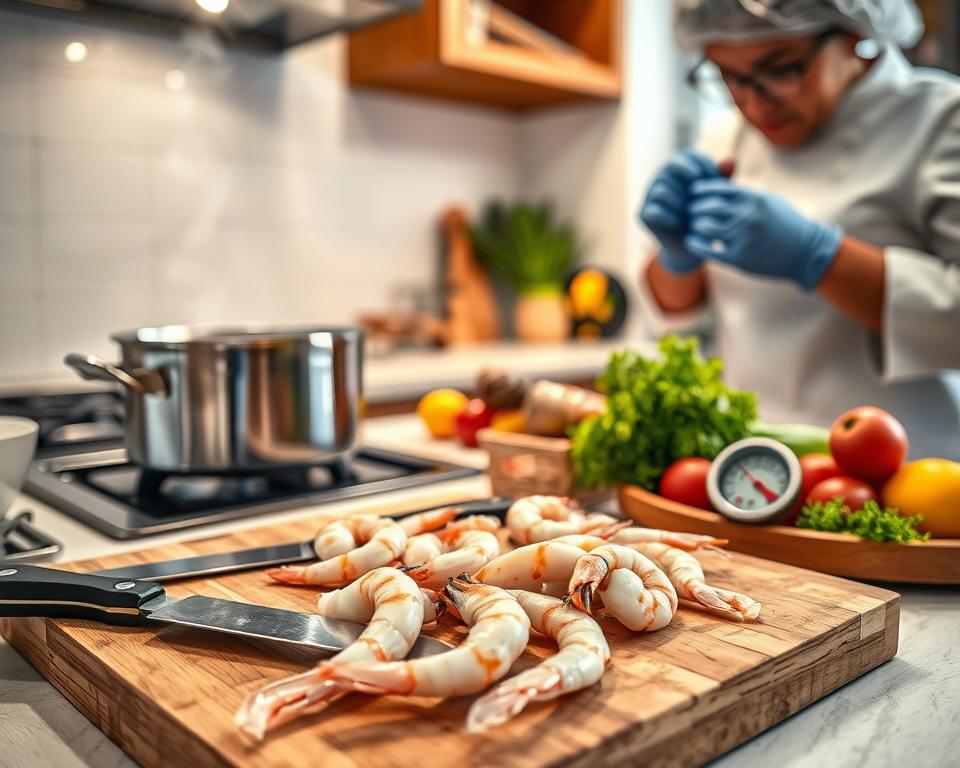
Cooking shrimp to the right temperature is key for safety. Shrimp is done when it hits 145°F inside. Use a food thermometer to check the thickest part of the shrimp.
If you don’t have a thermometer, look for opaque flesh and firm texture. But don’t overcook, as it makes shrimp tough.
Storing Leftover Shrimp
After cooking, store leftover shrimp right to stop bacteria. Cool it down to room temperature in two hours, then refrigerate or freeze it fast.
Keep it in a covered, shallow container in the fridge at 40°F or below. Use it within three to four days. For longer, freeze it at 0°F or below for months.
By following these tips, you can enjoy shrimp dishes safely. You’ll know you’ve handled and cooked them right.
Conclusion: Your Shrimp Cooking Journey Begins
Now you know the basics of cooking shrimp and some easy dishes. It’s time to start your cooking adventure. Try the beginner shrimp recipes from this article and explore new tastes and ingredients.
Practicing Makes Perfect
As you keep cooking, you’ll get better and create your own shrimp dishes. Don’t hesitate to try new recipes and mix different flavors. It’s all about having fun.
Learning Resources
There are many online resources to help you improve your cooking. Look for cooking blogs, YouTube channels, and social media groups focused on shrimp recipes and cooking tips.
Join the Community
Joining online shrimp recipe communities is a great way to meet other cooks. You can share ideas and learn from others. Find these groups on Instagram, Facebook, and Pinterest for new shrimp dish ideas and inspiration.