


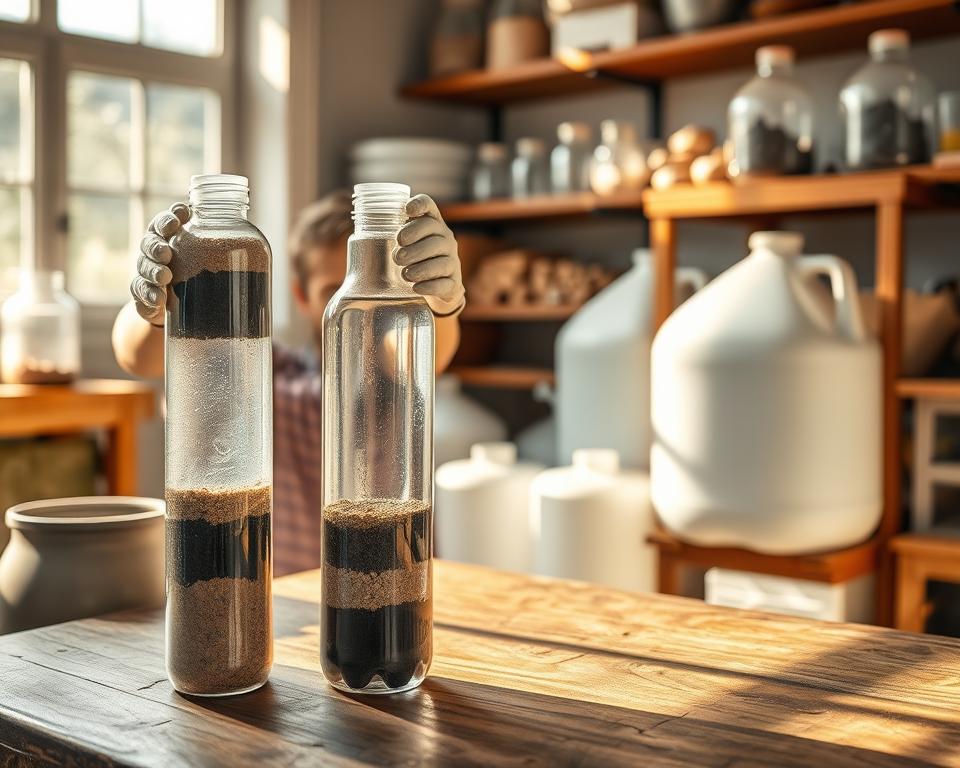
Did you know over 2 billion people worldwide lack access to safe drinking water? This is a huge problem. I think every home needs a simple way to have clean drinking water.
DIY Low Tech Filters are an easy and affordable way to get clean water. They are simple to set up and can change your life. With easy DIY filters, you can cut down on bottled water and feel good about your water’s quality.
Key Takeaways
- Access to clean drinking water is a significant global issue.
- DIY Low Tech Filters provide a simple solution.
- These filters are cost-effective and easy to implement.
- Using DIY filters can reduce reliance on bottled water.
- Clean drinking water is essential for household health.
Understanding Low Tech Filters
Low tech filters are key for those looking into DIY water purification. They are simple, effective, and easy to keep up, making them popular.
What Are Low Tech Filters?
Low tech filters are homemade water filters made from common materials. They remove contaminants from water using basic methods like sedimentation and filtration. They don’t need electricity or complex tech, unlike other filters.
Benefits of Using Low Tech Filters
Low tech filters have many benefits. They are cost-effective because they use materials found at home or cheaply. They are also easy to make and maintain, needing little technical skill.
They are great for low-cost filtration systems that can be customized. They work well for drinking water, irrigation, and more. Plus, making them yourself can be a fun, educational way to learn about sustainability.
Materials Needed for DIY Filters
To make your own low tech filter, you’ll need a few simple items. Most of these can be found at home or at a local hardware store.
Common Household Items
Many common household items can be used for DIY filtration projects. For example, old cotton cloth, a clean bucket, or garden gravel can help. These items can catch larger particles from the water.
Other useful household items include:
- Activated charcoal (if you have an aquarium or have purchased it for water purification)
- Old t-shirts or cloth napkins
- A plastic bottle or container
- Some string or rubber bands
Specialty Supplies for Best Results
While household items are a good start, some specialty supplies can make your filter better. For example, activated charcoal designed for water filtration can remove chemicals and improve taste.
Other specialty supplies to consider are:
| Material | Purpose | Benefits |
|---|---|---|
| Activated Charcoal | Removes chemicals and improves taste | Enhances water quality, reduces odors |
| Zeolite | Removes heavy metals | Improves safety, reduces toxicity |
| Ceramic Filter Elements | Removes bacteria and viruses | Provides microbiological safety |
When picking materials for your DIY filter, quality and source matter. Make sure gravel or sand is clean and free of contaminants.
By mixing common household items with specialty supplies, you can make a great low tech filter. Next, we’ll show you how to build different types of filters.
Sand and Gravel Filter
A sand and gravel filter is a simple way to get clean drinking water. It works by using layers of gravel and sand to catch particles and contaminants. This makes the water cleaner.

How to Build a Sand and Gravel Filter
To make a sand and gravel filter, you need a few things: a container, gravel, sand, and tools. Here’s how to do it:
- Drill a hole at the bottom of your container for the filtered water outlet.
- Add a layer of coarse gravel at the bottom.
- Follow with a layer of finer gravel.
- Add a layer of sand on top.
- Pour water into the filter, allowing it to pass through the layers.
By following these steps, you can make a DIY water treatment option that improves your drinking water.
Maintenance Tips for Optimal Performance
To keep your sand and gravel filter working well, you need to maintain it. Here are some tips:
- Regularly clean the filter layers to prevent clogging.
- Replace the sand and gravel periodically, depending on usage.
- Ensure the container is tightly sealed to prevent contamination.
Keeping your filter clean and well-maintained extends its life. It also keeps your drinking water safe and clean.
| Layer | Material | Purpose |
|---|---|---|
| 1 | Coarse Gravel | Initial Filtration |
| 2 | Finer Gravel | Further Filtration |
| 3 | Sand | Final Particle Removal |
Understanding each layer’s role in your filter helps you use it better. It makes the step-by-step filter guide more useful for keeping your filter in top shape.
Activated Charcoal Filter
Activated charcoal filters are a simple yet effective way to improve your drinking water. They are great at removing chemicals, heavy metals, and other impurities. This makes your water taste better and safer to drink.
Benefits of Activated Charcoal
Activated charcoal is known for its adsorption properties. It can attract and hold many contaminants. Here are some key benefits of using activated charcoal in your water filter:
- Improved Taste and Odor: Activated charcoal can remove chlorine and other chemicals that give water an unpleasant taste or smell.
- Removal of Chemicals and Heavy Metals: It can adsorb a variety of chemicals and heavy metals, making your water safer to drink.
- Cost-Effective: Activated charcoal filters are relatively inexpensive to build and maintain.
Step-by-Step Instructions
Building an activated charcoal filter is easy. You just need a few simple materials. Here’s how to do it:
- Start by gathering your materials, including a container, activated charcoal, sand, gravel, and a few basic tools.
- Layer the gravel, sand, and activated charcoal within the container, following a similar layering process as described in the Permies guide on building a charcoal water.
- Ensure that the layers are properly arranged to maximize the filter’s effectiveness.
- Once assembled, slowly pour the water you want to filter through the top of the container.
- Collect the filtered water and check its quality.
By following these steps, you can create an effective homemade water filter using activated charcoal. This will enhance your DIY low tech filters setup.
Using Ceramic Filters
Ceramic filters are a top choice for DIY water filtration. They have been around for decades and are known for their effectiveness and simplicity. This makes them a favorite for many.
What Are Ceramic Filters?
Ceramic filters use a special type of ceramic material. This material lets water through but keeps contaminants out. They often work with other filters to purify water fully.
The ceramic part is usually in a plastic or metal container. This makes it easy to use and maintain.
Advantages of Ceramic Filters
Ceramic filters have many key advantages. They can remove bacteria, viruses, and parasites from water. They are also easy to clean and can be used many times.
They are also cost-effective. This is great for places where it’s hard to find replacement parts.
Another big plus is their environmental sustainability. Ceramic filters don’t need to be replaced often. This means less waste, making them good for the planet.
In short, ceramic filters are a great DIY choice. They are effective, easy to care for, and good for the environment. This makes them a top pick for clean drinking water.
Biofilters for Clean Water
Biofilters are a new way to clean water using nature’s power. They use living things to remove bad stuff from water. This makes them a great choice for keeping water clean.
How Biofilters Work
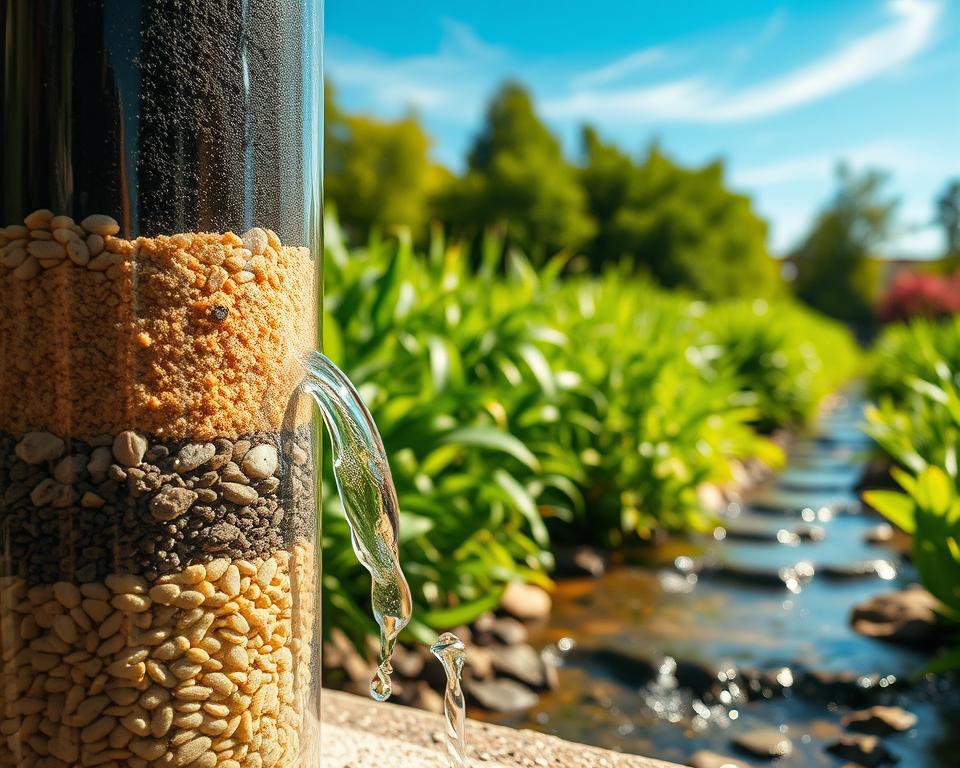
Biofilters use tiny living things to clean water. These tiny creatures, like bacteria or algae, eat up pollutants. They turn these pollutants into safe stuff.
They can get rid of many kinds of bad stuff in water. This makes them good for many uses in water cleaning.
Building Your Own Biofilter
Building a biofilter is easy with the right stuff. You need a container, like a plastic bucket or a wooden box.
- Choose a good filter media, like gravel, sand, or activated charcoal. It helps the tiny creatures grow.
- Add the tiny creatures to the filter media. You can find them in nature or buy them.
- Make sure the filter gets enough air and has the right conditions for the tiny creatures.
By following these steps and taking care of your biofilter, you can have clean drinking water. Biofilters are not just useful for cleaning water. They also teach us about the tiny living things that help us.
Simple Cloth and Cotton Filters
Cloth filters are a reliable and easy way to filter water. They are simple to make and use. This makes them a great choice for DIY water treatment.
Making a Basic Cloth Filter
To make a basic cloth filter, you need a piece of cloth and a container. The cloth should be made of cotton or another natural fiber. Pour the water through the cloth, and it will filter out larger particles and contaminants.
The steps are easy: fold the cloth into multiple layers to make it more effective. Then, slowly pour the water through it. This simple method can greatly improve your drinking water’s quality.
Advantages of Using Cloth Filters
Cloth filters have many benefits. They are low cost and easy to use. They are also environmentally friendly because they don’t need chemicals or electricity.
- Easy to make and use
- Low cost
- Environmentally friendly
Using a cloth filter is a simple yet effective way to improve your water quality. It’s perfect for survival situations or as a low-tech way to purify water.
DIY Water Distillation
Purifying water through distillation is simple and needs little equipment. If you’re into DIY low tech filters, distillation is a great choice. It’s easy and effective at removing contaminants from water.
How Distillation Removes Contaminants
Distillation boils water and collects the steam, which is clean. This method gets rid of heavy metals, bacteria, and viruses. It’s a solid way to purify water.
The science behind distillation is key. When water heats up, it turns into steam, leaving impurities behind. This steam cools down and turns back into liquid, making it clean water.
- Removes heavy metals and other inorganic compounds
- Effective against bacteria, viruses, and other microorganisms
- Simple to implement with basic equipment
Building a Simple Distillation Setup
To make a simple distillation setup, you need a pot, a heat source, a condenser, and a collection vessel. Here’s how to do it:
- Fill the pot with water and bring it to a boil.
- Direct the steam towards the condenser.
- Collect the condensed water in a separate vessel.
By following these steps, you can make an easy DIY filter system. This system will give you clean drinking water. The trick is to make sure the condenser is cool enough to condense the steam.
Understanding pH Levels in Water
PH levels in water are very important. They affect our health and how long appliances last. pH stands for the acidity or alkalinity of water.
Water that’s too acidic or too alkaline can be bad. Acidic water can damage pipes. Alkaline water can cause scale buildup.
Importance of pH in Water Quality
Keeping the pH level right is key for good water quality. The best pH for drinking water is between 6.5 and 8.5. Health groups agree on this.
“The pH of water is a critical parameter that affects its taste, safety, and overall quality.”
Homemade water filters can change water’s pH. Some filters remove bad stuff and also adjust pH to a neutral level.
How DIY Filters Affect pH
DIY filtration projects can change water’s pH in different ways. For example, activated charcoal filters can make acidic water less acidic.
| Filter Type | Effect on pH |
|---|---|
| Activated Charcoal | Tends to neutralize acidic water |
| Sand and Gravel | Minimal effect on pH |
| Ceramic Filters | Can maintain or slightly adjust pH |
It’s important to know how DIY filtration projects change water’s pH. The right filter can make your water clean and have the right pH.
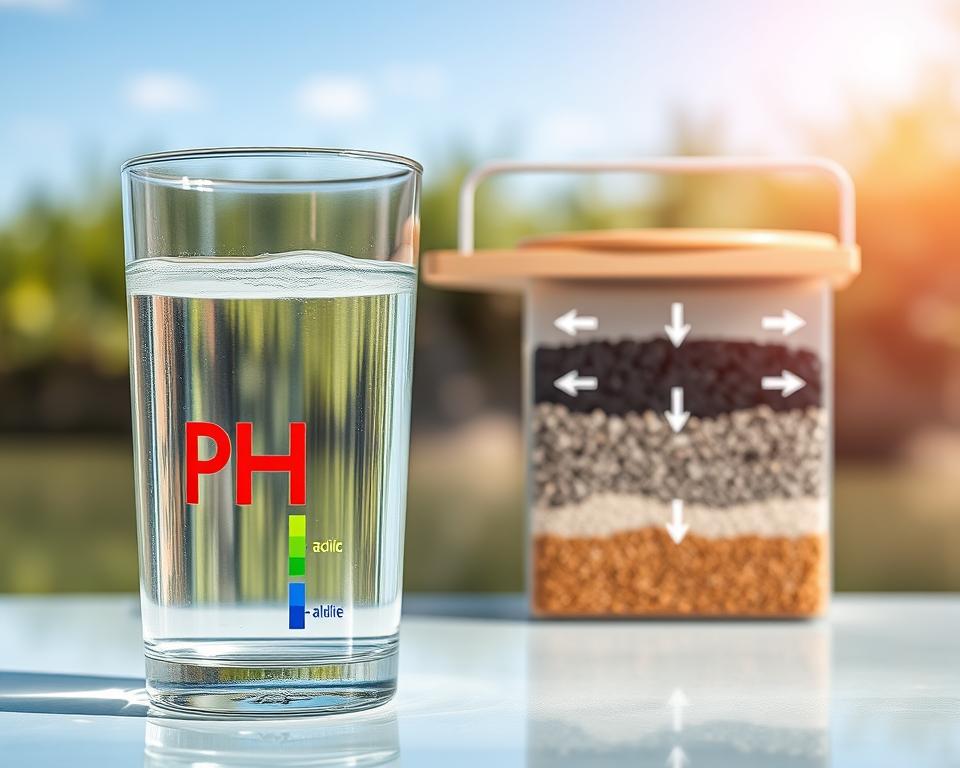
Knowing your water’s pH and using the right filters can make your drinking water cleaner and healthier.
Testing Your Filtered Water
Testing your filtered water is key to knowing it’s safe to drink. After working hard to make your own filter, it’s important to check if it works well.
To make sure your water is safe, you can try a few easy ways. Here are some methods:
Simple Methods for Testing Water Quality
One simple way is to use DIY water testing kits. These kits have test strips or a color scale to spot different pollutants.
- pH levels: Check if the water is too alkaline or acidic.
- Bacterial contaminants: Some kits look for harmful bacteria.
- Chemical contaminants: They test for heavy metals or other chemicals.
Another way is to look at the water’s appearance and smell. These signs can give you a first idea of its quality.
Understanding Water Test Results
After testing, it’s important to understand what the results mean. For example, if your water shows bacteria, it might mean your filter needs to be better or changed.
| Test Parameter | Acceptable Range | Action if Outside Range |
|---|---|---|
| pH Level | 6.5 – 8.5 | Adjust filter media or consider additional treatment |
| Bacterial Contaminants | None detected | Re-test; consider upgrading filter or additional disinfection |
| Chemical Contaminants | Below maximum allowable limits | Investigate source; consider activated carbon or other specialized filters |
By knowing your test results, you can make smart choices about your water filter. This ensures your water stays safe to drink.
Sustainability of DIY Filters
DIY filters are good for the planet and last a long time. They are a smart choice for clean water. It’s key to think about the big picture when choosing DIY solutions.
Environmental Impacts
DIY filters can cut down on waste. They use things we already have, like old plastic bottles. This helps save the planet.
But, we must think about the materials used. Making activated charcoal or ceramic can harm the environment. So, we need to look at the whole life cycle of DIY filters.
Long-Term Use and Craftsmanship
How long a DIY filter lasts depends on how well it’s made. A well-crafted filter can keep water clean for a long time. Plus, fixing or replacing parts can make it last even longer.
Building a DIY filter yourself means you always have clean water. It also teaches you about water treatment. This hands-on learning makes you appreciate water more.
In short, DIY filters are good for the planet and last a long time. They require careful thought and effort. By choosing DIY water solutions, we help make the future better.
Resources for Further Learning
If you’re interested in DIY Low Tech Filters, there’s a lot to learn. You can find many resources to help you grow your knowledge. These resources offer valuable insights and guidance.
Recommended Reading Materials
There are books and articles that dive deep into homemade water filters. They cover everything from the basics to advanced techniques. You can learn how to build your own filters.
Online Forums and Communities
Online forums and communities are great for connecting with others. You can ask questions, share your experiences, and learn from others. It’s a place to get advice and support.