

Did you know nearly 75% of U.S. households have hard water? This is a big challenge for aquarium lovers. If you’re facing this issue, finding the right fish that thrive in hard water conditions can be tough. But don’t worry, I’ve got the best picks for your tank.
Choosing the right fish is key, and hard water fish are great for a thriving tank without the need for soft water. In this article, I’ll show you the top species, their care, and how to create a perfect home for them.
Key Takeaways
- Top hard water fish species for your aquarium
- Care tips for maintaining a healthy hard water environment
- How to create an ideal tank for your hard water fish
- Benefits of choosing hard water fish for your aquarium
- Common mistakes to avoid when keeping hard water fish
Understanding Hard Water and Its Impact on Fish
Hard water has a lot of minerals, which is good for some fish. Knowing about hard water helps make a great home for your fish.
What Is Hard Water?
Hard water has lots of minerals like calcium and magnesium. These minerals change the water’s chemistry. This makes it better for some fish. We measure water hardness in degrees of hardness (dH) or parts per million (ppm).
Key characteristics of hard water include:
- High calcium and magnesium levels
- Increased pH buffering capacity
- Potential for reduced water clarity if not properly managed
How Hard Water Affects Fish Health
Hard water can really affect your fish’s health. Fish that like hard water may not do well in soft water. Hard water keeps the pH stable, which is good for fish. But, it can cause scaling if not managed right.
The impact of hard water on fish health includes:
- Reduced stress due to stable water parameters
- Potential for improved growth rates in species adapted to hard water
- Increased risk of mineral buildup if water changes are not regular
Ideal Parameters for Hard Water Aquariums
Keeping the right conditions is key for your hard water fish. The best water hardness varies by fish type. But, most hard water aquariums are kept between 7-12 dH.
| Parameter | Ideal Range |
|---|---|
| Water Hardness | 7-12 dH |
| pH Level | 7.5-8.5 |
| Temperature | 76-82°F (24-28°C) |
By keeping these conditions right, you can make a healthy home for your hard water fish.
Top Hard Water Fish Species for Beginners
For beginners, picking hardy fish is key. These fish can handle high levels of minerals like calcium and magnesium. It’s important to choose species that are both resilient and easy to care for.
Blue Gourami
The Blue Gourami is a favorite for beginners. It’s hardy and has vibrant colors. They are easy to care for and do well in a clean aquarium with the right water conditions. Here are some key traits:
- They are peaceful, great for community tanks
- They eat a variety of foods
- They can grow up to 6 inches long
Zebra Danio
The Zebra Danio is a great choice for beginners. They are active and add movement to the tank. Here are some important points:
- They can handle different water conditions, including hard water
- They are easy to feed with most commercial flake foods
- They like to swim in groups
Convict Cichlid
The Convict Cichlid is known for its robustness and adaptability. They can be territorial but are manageable for beginners. Here are some care tips:
- Provide plenty of hiding spots to reduce aggression
- Keep the water quality high for their health
- Feed them a balanced diet with veggies and protein
Choosing these hardy fish species can make for a thriving aquarium with little upkeep. Remember, a successful aquarium also depends on good water quality and proper care.
Popular Cichlids Known for Thriving in Hard Water
Cichlids are great for hard water aquariums. They have bright colors and are very hardy. This makes them a favorite among aquarium fans.
African Cichlids Overview
African Cichlids come from Africa’s lakes. They are known for their bright colors and interesting behaviors. These fish are tough and do well in hard water, perfect for aquariums with high hardness.
Recommended African Cichlid Species
Here are some top African Cichlid species for hard water tanks:
- Electric Blue Ahli: This fish has a bright blue color and is a beautiful addition to any tank.
- Red Zebra: Its vibrant red stripes make it a standout in the aquarium.
- Blue Peacock: The Blue Peacock’s shimmering scales are a favorite among cichlid lovers.
| Species | Water Hardness Tolerance | Temperament |
|---|---|---|
| Electric Blue Ahli | High | Mildly aggressive |
| Red Zebra | High | Aggressive |
| Blue Peacock | Medium to High | Mildly aggressive |
Care Tips for Cichlids in Hard Water
To keep your cichlids healthy, it’s key to keep the water right. Regular water changes and checking water levels are important. Also, feed them a mix of protein-rich foods and veggies.
Feeding them a varied diet will make their colors pop and keep them healthy.
By following these tips and picking the right species, you can enjoy the beauty and variety cichlids add to your hard water aquarium.
Colorful Livebearers for Hard Water Aquariums
Hard water aquariums can host many colorful livebearers. These fish are fun to watch and easy to care for. They make your tank more lively and interesting.
Guppies and Their Varieties
Guppies are a favorite among aquarium owners. They have beautiful colors and fancy tails. You can find many varieties, like the Endler Guppy and the Veiltail Guppy.
Guppies are small and fit well in smaller tanks. They are also easy to care for. This makes them perfect for beginners.
Platies: Fun and Hardy Fish
Platies are another great choice for hard water tanks. They are hardy and come in many colors, like red, blue, and yellow. You can find Mickey Mouse Platies and Wagtail Platies among others.
These fish add beauty and interest to your tank with their different patterns and colors.
Mollies: Easy to Care For
Mollies are also good for hard water tanks. They are easy to care for and come in species like the Sailfin Molly and the Black Molly. Mollies are peaceful and can be kept in schools.
Keeping livebearers right means giving them the right environment. This includes the right water, hiding spots, and food. With proper care, these Popular Hard Water Fish will make your aquarium vibrant and beautiful.
Community Fish That Enjoy Hard Water
Choosing the right hard water fish is key for a peaceful community aquarium. A community tank can be full of life and color. We’ll look at some fish that do well in hard water and make your tank lively.
Tetras That Adapt Well to Hard Water
Tetras are loved for their bright colors and schooling behavior. Some tetras, like Pristella Tetras and Black Skirt Tetras, love hard water. They’re perfect for a community tank.
Barbs and Their Vibrant Personalities
Barbs bring a lot of personality to a community tank. They’re hardy and love hard water. Tiger Barbs and Rosy Barbs are colorful and fun to watch.
Rasboras: Peaceful Tank Mates
Rasboras are calm and fit well in community tanks with hard water. They’re peaceful and add beauty to your tank. Harlequin Rasboras and Scissor-Tail Rasboras are favorites for their looks and gentle nature.
By picking the right fish for hard water, you can make a beautiful aquarium. Always check the needs of each fish to keep your tank happy and healthy.
Unique Fish for Hard Water Aquariums
Adding unusual fish to a hard water aquarium can make it more exciting. There are many interesting species that do well in hard water. These can make your tank stand out.
The Plecostomus: The Natural Cleaner
The Plecostomus, or suckermouth catfish, is great for cleaning your tank. It eats algae, keeping your aquarium clean. Make sure it has plenty of places to hide and a varied diet to stay healthy.
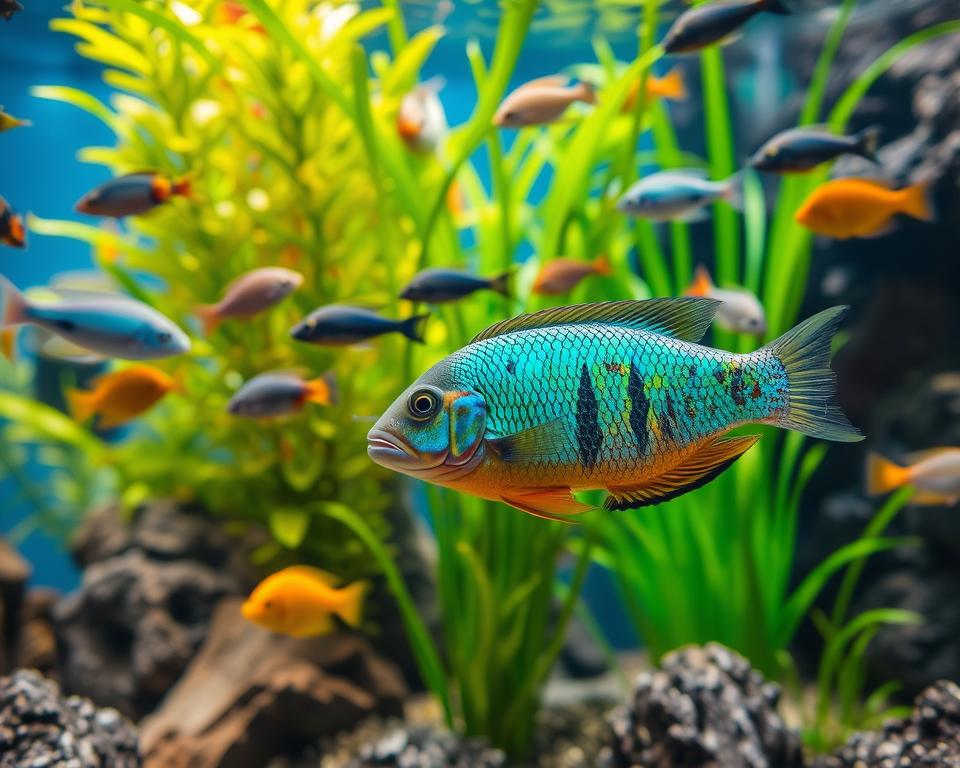
Rainbowfish: A Splash of Color
Rainbowfish are beautiful and easy to care for in hard water tanks. Their bright colors can brighten up your tank. Keep your tank well-oxygenated and at the right water hardness for them to thrive.
Kribensis: An Interesting Breeder
Kribensis cichlids are perfect for hard water aquariums. They have cool breeding behaviors. Give them lots of hiding spots and a balanced diet for healthy breeding.
Adding these unique fish to your hard water aquarium makes it more interesting. It shows off the beauty of hard water fish.
Maintaining Water Quality in Hard Water Tanks
Keeping your hard water tank’s water quality stable is key for your fish’s health. As someone who loves hard water aquariums, I know how important regular care is. It helps your Types of Hard Water Fish stay healthy and happy.
Testing Your Water Hardness
Testing your water’s hardness regularly is a must. Use a water hardness test kit to see if your tank’s water is right for your Hard Water Aquarium Fish.
Test your water at least once a week. If you see big changes, adjust your tank’s water as needed. Keeping a log of your test results helps you spot trends.
Tips for Water Changes and Maintenance
Regular water changes are a top way to keep your water quality up. I suggest changing 25% of your tank’s water every two weeks. This removes toxins and keeps your water balanced.
When changing water, clean your gravel and decorations carefully. Don’t use harsh chemicals that can hurt your fish. Use a gravel vacuum to get rid of debris and waste.
Using Conditioner to Adjust Hardness
If your water is too hard or soft, a water conditioner can help. There are products that can raise or lower water hardness. Always follow the instructions to avoid making things worse.
Watch your fish for any signs of stress or discomfort after changing your water. If you see any problems, be ready to make more changes as needed.
Feeding Tips for Hard Water Fish
Knowing what your hard water fish need to eat is vital for a healthy aquarium. A balanced diet keeps them healthy, vibrant, and active.
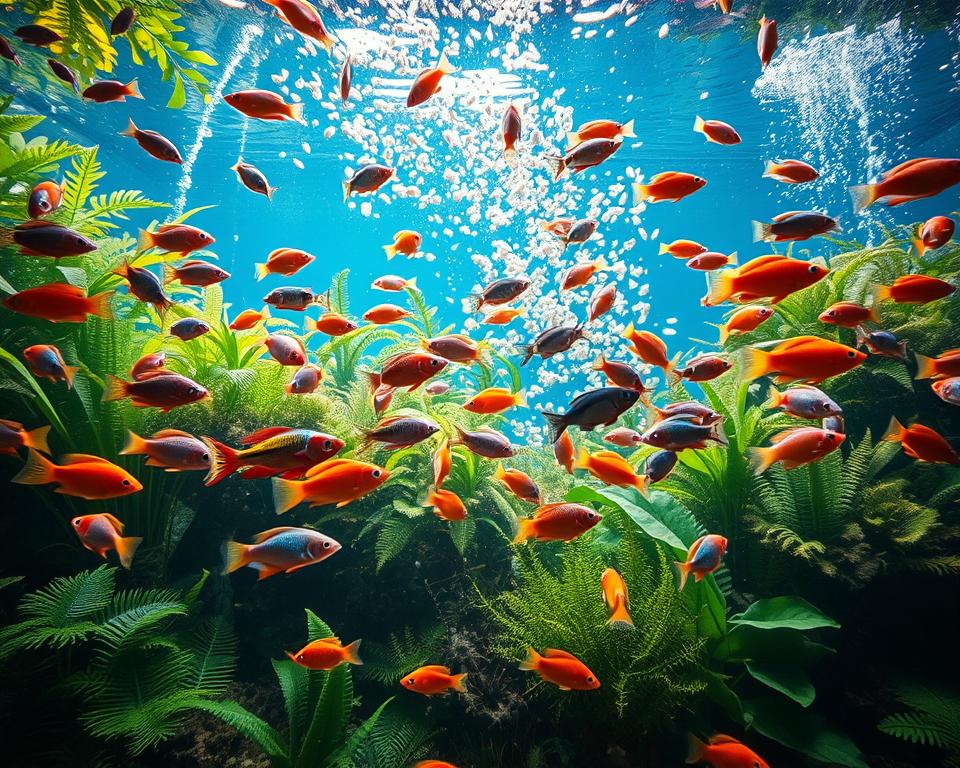
Choosing the Right Fish Food
Choosing the right food for your hard water fish is important. They need a mix of plants and animals in their diet. High-quality commercial flake or pellet food is a good base. Add live or frozen foods like brine shrimp or bloodworms for variety and nutrients.
Feeding Frequency and Portion Control
It’s key to feed your fish the right amount and not too often. Feed them 2-3 times a day, just enough for them to eat in a few minutes. Watching how they eat helps you adjust the amount and how often to feed them.
Special Dietary Needs for Different Species
Each hard water fish species has its own food needs. Some, like cichlids, need more protein, while others, like catfish, need more veggies. It’s important to learn what your fish needs. Talking to experienced aquarists or vets can help you understand their nutritional needs better.
Customizing Your Hard Water Aquarium Setup
Setting up your aquarium for hard water fish needs careful thought. A well-designed tank looks great and keeps your fish healthy and happy.
Best Substrates for Hard Water Fish
The substrate is key in your aquarium. It affects water chemistry and fish health. For hard water, use crushed coral or aragonite sand. They keep water hardness stable, which is good for your fish.
Some substrates can change water parameters a lot. For example, high buffering substrates can stabilize pH levels. This is great for hard water fish that are sensitive to pH changes.
Choosing the Right Plants for Your Tank
Picking the right plants for your hard water tank is important. Choose species that do well in hard water. Anubias and Java Fern are good because they adapt to different water conditions.
Some plants can also improve water quality by taking in excess nutrients. But, make sure the plants you pick fit your hard water fish’s needs.
“The right plants can transform your aquarium into a vibrant, thriving ecosystem.” – Aquarist Expert
Tank Mates to Avoid in Hard Water
Not all fish do well in hard water. Some, like many tetra species, prefer soft, acidic water. They might not survive or do well in hard water.
When picking tank mates, choose fish that like hard water and have similar temperaments and size to your main fish. Don’t mix aggressive fish with peaceful ones to avoid stress and fights.
- Research the specific needs and temperaments of your tank mates.
- Avoid mixing fish from different water hardness conditions.
- Consider the adult size of the fish to ensure they have enough space.
By customizing your hard water aquarium, you can make a beautiful and healthy home for your fish.
Resources for Further Research on Hard Water Fish
As an aquarium enthusiast, I know how key it is to keep up with the latest in caring for hard water fish. I’ve put together a list of great resources to help you give your hard water aquarium fish the best care.
Online Resources and Communities
If you’re eager to learn more about hard water fish, check out online forums and communities. Sites like Aquarist forums are full of useful info. They also let you connect with seasoned aquarists who can share their knowledge and stories.
Publications and Research Studies
For those looking for detailed research, studies from trusted sources like the USDA’s Agricultural Research Service (ARS) are a goldmine. For instance, a study on fish in hard water shows they’re more likely to get sick. This underlines the need to understand water quality.