

Did you know heating costs can be nearly half of your home’s energy use? I’m excited to share the top energy-efficient heating options that can cut your energy bills.
Choosing the right heater can be tough with so many choices. In this article, we’ll look at different energy-efficient heaters and the best brands. This will help you pick the right heater for your home.
Key Takeaways
- Top energy-efficient heater brands that offer quality and performance
- Types of energy-efficient heaters suitable for different home sizes and needs
- Benefits of using energy-efficient heaters, including cost savings and reduced environmental impact
- Factors to consider when choosing the best energy-efficient heater for your home
- Tips for maximizing the efficiency of your chosen heater
What Are Energy Efficient Heaters?
Let’s dive into the world of heating solutions. It’s key to know what makes a heater energy efficient. These heaters use less energy but keep you just as warm. They’re great for saving money and being kind to the planet.
Definition of Energy Efficiency
Energy efficiency means a heater turns energy into heat well, losing less. For heaters, it’s about warming your space with less energy than old models. They use new tech like better insulation and smart thermostats.
For example, electric resistance heating has gotten better. It now uses less energy without losing warmth.
Importance of Energy Efficient Heating
Energy efficient heating is very important. It cuts down on fossil fuel use and emissions. Plus, it saves a lot on your bills.
Choosing an energy efficient heater makes your home warmer and more comfy. It also helps the planet. As we look for eco-friendly heating solutions and sustainable heating choices, knowing about these heaters is vital.
Types of Energy Efficient Heaters
There are many types of energy efficient heaters, each with its own benefits. It’s important to know the different options to choose the right one for you.
Electric Heaters
Electric heaters are popular for their ease and efficiency. They turn electrical energy into heat, giving a steady warmth. Some top electric heaters include:
- Portable electric heaters for spot heating
- Wall-mounted electric heaters for saving space
- Infrared electric heaters for radiant heating
These heaters often have features like thermostats and timers. This lets you control the heat precisely.
Gas Heaters
Gas heaters are efficient, great for big spaces or where natural gas is available. They burn gas to heat up. Benefits include:
- Fast heat
- High efficiency
- Cost-effective for large areas
Solar Heaters
Solar heaters use the sun’s power for warmth, making them eco-friendly. They capture sunlight and turn it into heat. The perks are:
- Renewable energy
- Zero cost to run
- Less carbon footprint
They might cost more upfront, but save money and are good for the planet in the long run.
Hydronic Heating Systems
Hydronic systems warm spaces by circulating warm water through pipes. They can be very efficient, even with solar power. Benefits include:
- Even heat
- Works with many heat sources
- Can save a lot of energy
They might be harder to install, but offer lasting efficiency and comfort.
How to Choose the Right Energy Efficient Heater
Choosing the right energy efficient heater is key. You need to know your heating needs and the features of different heaters. The right choice can make your home cozy and cut down on energy bills.
Assessing Your Heating Needs
First, figure out how much heat you need. Think about the size of your space, how well it’s insulated, and what you like in terms of warmth. For example, a well-insulated home might not need as much heat as one that’s not.
- Measure the square footage of the area to be heated.
- Consider the ceiling height and the number of windows.
- Assess the overall insulation and draftiness of your home.
Considering Fuel Types
There are many types of energy efficient heaters, like electric, gas, and solar. Each has its own benefits and drawbacks. Electric heaters are easy to use and need little upkeep, but might cost more to run. Gas heaters are cheaper for big spaces but need good ventilation.
Key considerations for fuel types:
- Electric heaters: Convenient, less maintenance, but might be more expensive to run.
- Gas heaters: Cost-effective for large areas, but require proper ventilation.
- Solar heaters: Environmentally friendly, uses renewable energy, but dependent on sunlight.
Evaluating Heater Efficiency Ratings
Efficiency ratings are important. They show how well a heater turns energy into heat. Look for high ratings, like Energy Star, to ensure it’s energy efficient.
When checking efficiency, remember:
- AFUE (Annual Fuel Utilization Efficiency) for gas heaters.
- Energy efficiency ratings for electric heaters, often indicated by their wattage and heating output.
- Solar heaters’ efficiency can be evaluated based on their solar collector efficiency and storage tank insulation.
By looking at your heating needs, the right fuel type, and efficiency ratings, you can find a low energy consumption heater. It will keep you comfortable and save on energy costs.
Benefits of Energy Efficient Heaters
Energy efficient heaters bring many benefits that make heating your home better and kinder to the planet. They are a smart choice for a greener and cheaper way to stay warm.

Cost Savings on Utility Bills
Switching to energy efficient heaters can lead to big savings on your utility bills. They use less energy to heat your home, cutting down on costs. Many homeowners have seen their monthly bills drop thanks to this.
Environmental Impact
These heaters also help the environment by reducing harmful emissions. Choosing eco-conscious heating options like them helps fight climate change. It makes our planet a cleaner place.
Increased Comfort Levels
Energy efficient heaters also make your home more comfortable. They keep your home at the perfect temperature. This makes your home cozy and warm, even when it’s cold outside.
In summary, energy efficient heaters offer many advantages. They save money, are better for the planet, and make your home more comfortable. Choosing them is a step towards a more sustainable future.
Top Brands for Energy Efficient Heaters
Leading the charge in energy-efficient heating are brands that have made significant investments in technology and sustainability. Several top brands stand out in the energy-efficient heater market. We’ll look at Bosch, Rheem, EcoSmart, and Stiebel Eltron, highlighting their products and features.
Bosch
Bosch is a well-respected name in the heating industry. They are known for their high-quality and efficient products. Their energy-efficient heaters provide reliable heating solutions while using less energy. Bosch’s products often include smart thermostats and high-efficiency heating elements.
Rheem
Rheem is another prominent brand in the energy-efficient heating market. They offer a wide range of heaters, including electric, gas, and solar options. Rheem’s products are efficient and environmentally friendly. Many models have low NOx emissions and high Energy Star ratings.
EcoSmart
EcoSmart specializes in energy-efficient electric heaters. Their products are eco-friendly and cost-effective, using advanced technology to save energy. EcoSmart heaters are known for their compact design and ease of installation, making them popular among homeowners.
Stiebel Eltron
Stiebel Eltron is a German company with a long history of producing high-quality heating products. Their energy-efficient heaters offer long-lasting performance and exceptional efficiency. Stiebel Eltron’s products feature advanced materials and innovative designs, keeping them at the industry’s forefront.
These top brands offer a variety of energy-efficient heaters for different needs and preferences. Choosing a product from these reputable brands ensures a high-quality, efficient heating solution.
Installation Considerations for Energy Efficient Heaters
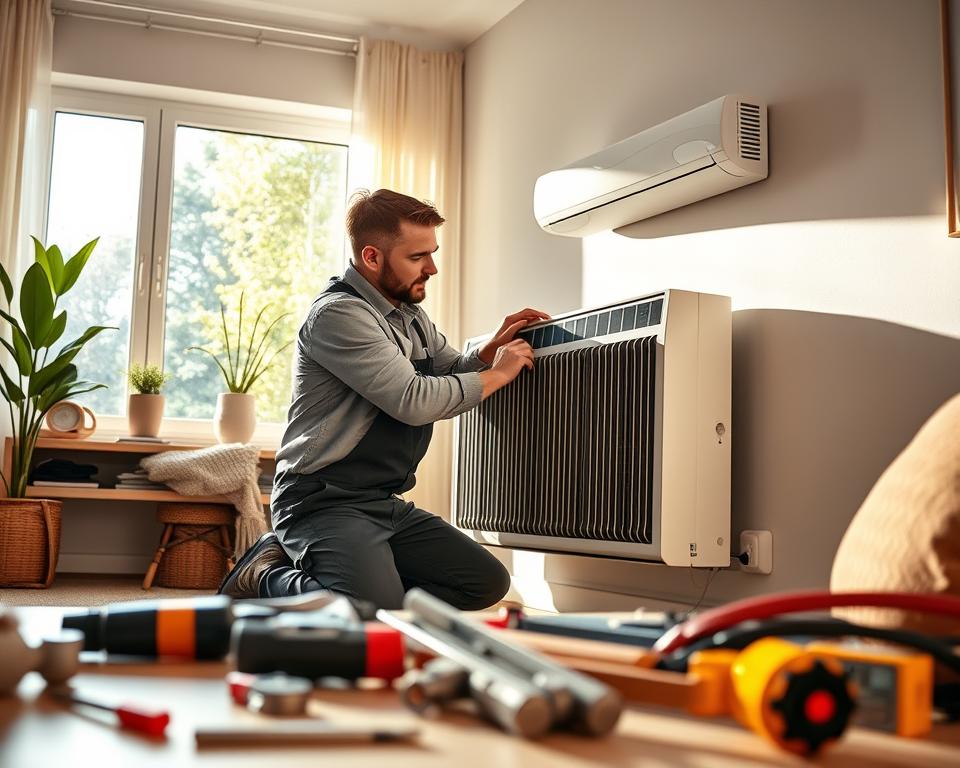
Getting your energy efficient heater installed right is key. A well-installed heater works better, lasts longer, and is safer. We’ll look at why professional installation is better than DIY. Plus, we’ll share tips on where and how big to place your heater for the best performance.
Professional Installation vs. DIY
Choosing between professional or DIY installation is your first step. DIY might save money upfront, but think about the risks and long-term costs. Professional installation means the job is done right and safely, which is vital for complex systems like hydronic heating.
If you’re good at DIY and have done similar jobs before, you might save money. But, always follow the manufacturer’s instructions and local building codes. Remember, “Plan twice, install once” when it comes to heater installation.
Placement and Sizing Tips
The right size and placement of your energy efficient heater are key to its performance. A correctly sized heater heats your space well without wasting energy. To find the right size, think about your space’s size, insulation, and desired temperature.
Where you place your heater matters too. Electric heaters should be away from flammable things and in spots where warm air can spread well. As
“The right placement can make all the difference in the world when it comes to heating efficiency,”
an expert says. If you’re unsure, get a pro to check the best spot for your heater.
- Make sure the heater is in a well-ventilated area.
- Keep it away from drafts and moisture.
- Follow the manufacturer’s guidelines for clearance and spacing.
By focusing on these details, you can have a cozy home while using less energy.
Maintenance Tips for Optimal Performance
Keeping your energy efficient heater in top shape is key. Regular care helps it work better and last longer. Here, I’ll give you some easy tips for upkeep, like cleaning, checking, and replacing filters.
Regular Cleaning
Cleaning your heater often is a must. It gets rid of dust and dirt that can make it less efficient. For electric heaters, gently wipe the outside with a soft cloth and use a small brush for the elements. For gas heaters, make sure the vents and flue are clear. Clean your heater every month when it’s in use.
Inspections and Tune-Ups
Regular checks can spot problems early. Look for wear and tear, like frayed cords or rust. For gas heaters, check the burner and igniter for cleanliness and function. A yearly check by a pro can keep it safe and efficient.
Listen for odd noises or smells during an inspection. A hissing sound from a gas heater might mean a leak. A burning smell from an electric heater could mean a faulty element.
Filter Replacement
Changing filters regularly is important for efficiency and air quality. Check the maker’s guide for when to replace them. Usually, it’s every 1-3 months, based on use and filter type. A dirty filter can make your heater less efficient and raise your bills.
In short, to keep your energy efficient heater running well, clean it often, do regular checks, and replace filters. These steps will help your heater work efficiently, saving you money and keeping you warm.
Government Incentives and Rebates
Many government incentives and rebates can help lower the cost of energy efficient heaters. This makes eco-friendly heating solutions easier for homeowners to get.
These incentives are good for the environment and can also cut down your utility bills. Let’s look at the different kinds of incentives out there.
Federal Tax Credits
The federal government gives tax credits for installing energy efficient heaters. For example, the Energy Efficient Home Improvement Credit can give a big tax credit for certain heating systems. This credit can help pay for the cost of a qualifying energy efficient heater, making it a better sustainable heating choice.
State Programs and Incentives
Many states also have their own programs and incentives for energy efficient heating. These can include rebates, tax credits, or other help. I suggest checking with your state’s energy office or utility company to find out what’s available in your area.
Utility Company Rebates
Utility companies often give rebates for customers who get energy efficient heaters. These rebates can change based on the utility company and the heater type. By using these rebates, you can lower the initial cost of your energy efficient heater even more.
In summary, government incentives and rebates can greatly lower the cost of energy efficient heaters. This makes them a good choice for many homeowners. By looking into these opportunities, you can enjoy the perks of eco-friendly heating solutions while saving on your utility bills.
Addressing Common Myths About Energy Efficient Heaters
Many myths surround energy efficient heaters, confusing consumers. It’s key to know the truth about low energy consumption heaters and their benefits for homes.
Myth: They’re Too Expensive
One big myth is that energy efficient heaters cost too much at first. While some models might be pricier, they save money on bills later. For example, energy efficient heaters use less energy, cutting down monthly costs.
Also, governments and utility companies offer rebates and tax credits for these heaters. These can help lower the initial cost, making low energy consumption heaters more affordable.
Myth: They Don’t Heat Well
Some think energy efficient heaters don’t warm homes well. But, today’s models are made to heat consistently and reliably. They use new tech to save energy without losing heat quality.
Some heaters even have smart thermostats that learn your heat needs. This keeps your home cozy and saves energy. A good low energy consumption heater means warm, efficient heating for your home.
Myth: They’re Not Reliable
There’s a myth that energy efficient heaters are less reliable. But, top brands make these heaters to last, using quality parts.
Keeping your heater clean and updated can also help it last longer. By picking a low energy consumption heater from a trusted brand and keeping it up, you’ll have reliable heat for years.
Smart Technology in Energy Efficient Heaters
Smart technology is changing heating systems. It makes energy-efficient heaters easier to use. This change improves the heating experience and saves a lot of energy.
Thermostats and Remote Controls
Smart heating technology has brought advanced thermostats and remote controls. These tools let users control their heating systems better. They can adjust temperatures from anywhere for better comfort and energy use.
Key Features of Smart Thermostats:
- Remote temperature adjustment
- Learning capabilities to adapt to your schedule
- Energy usage tracking and insights
Integration with Smart Home Systems
Energy-efficient heaters now work with smart home systems. This is a big step in home automation. It makes heating easier and more efficient, with voice control and automated routines.
Benefits of Integration:
- Enhanced energy efficiency through automated routines
- Voice control for convenience
- Improved home comfort through precise temperature control
Here’s a comparison of popular smart thermostats available in the market:
| Brand | Model | Key Features |
|---|---|---|
| Nest | Learning Thermostat | Auto-scheduling, energy reports |
| Ecobee | SmartThermostat | Remote sensors, smart alerts |
| Honeywell | Home T9 | Smart alerts, smart home integration |
The future of heating is smart. With energy-efficient heaters and smart technology, homes will be more comfortable, convenient, and eco-friendly.
The Future of Energy Efficient Heating Solutions
Looking ahead, energy efficient heating solutions will keep getting better. This is thanks to new tech and a focus on green heating options.
Innovations on the Horizon
New tech is coming that will make heaters more efficient. For example, better materials are being found for heating elements. Also, smart tech is being added to heaters for better control and efficiency.
Renewable Energy Integration
Renewable energy is becoming more popular for heaters. Solar and wind power heaters are now available. As these costs drop, we’ll see more of these green options.
By going for these new ideas, we can make heating more sustainable and efficient for the future.