

Did you know a well-kept aquarium needs a natural cleaning process? Biological filtration is key to a healthy aquatic world. It keeps your fish safe and happy.
As someone who loves aquariums, I know how vital balance is. Biological processes break down waste, making water clean for fish. We’ll look at why water treatment is important and how to keep things balanced.
Key Takeaways
- Understanding the role of biological filtration in aquariums.
- The importance of maintaining a balanced aquatic ecosystem.
- How biological processes contribute to water treatment.
- Tips for ensuring a healthy aquarium environment.
- The impact of proper filtration on aquatic life.
What is Biological Filtration in Aquariums?
To keep your aquarium thriving, it’s essential to understand the role of biological filtration. This process helps maintain a healthy environment for your fish by breaking down harmful waste products.
Understanding the Basics of Biological Filtration
Biological filtration relies on beneficial bacteria to convert toxic ammonia and nitrites into nitrates. This process, known as nitrification, is key for a balanced ecosystem in your aquarium. These beneficial bacteria colonize various surfaces like filter media, gravel, and decorations.
For effective biological filtration, a suitable environment for these bacteria is needed. This includes maintaining optimal water parameters like pH, temperature, and oxygen levels. Regularly checking water quality is also vital to ensure the system works well.
- Provide adequate surface area for beneficial bacteria to colonize.
- Maintain optimal water parameters.
- Regularly monitor water quality.
The Nitrogen Cycle Explained
The nitrogen cycle is a critical process in biological filtration. It involves converting ammonia into nitrites and then nitrates. This process is facilitated by different types of beneficial bacteria. For more information on how mechanical filtration compares to biological filtration, you can visit this article.
The nitrogen cycle has three stages:
- Ammonia conversion: Beneficial bacteria convert ammonia into nitrites.
- Nitrite conversion: Other beneficial bacteria convert nitrites into nitrates.
- Nitrate management: Nitrates are managed through regular water changes.
Understanding the nitrogen cycle is key for a healthy aquarium. By recognizing the importance of biological filtration and the nitrogen cycle, you can ensure your aquarium stays balanced and thriving.
Importance of Biological Filtration for Aquatic Life
Biological filtration is key for a safe home for aquatic life. It helps grow good bacteria, keeping the water clean.
Benefits to Fish Health and Wellbeing
Good bacteria in the filter keep fish healthy. They break down harmful waste like ammonia and nitrites. This makes the water safe for fish.
Improved water quality comes from good biological filtration. It helps fish stay healthy and live longer. Fish owners see their pets thriving thanks to this.
Reducing Toxic Ammonia and Nitrites
The filtration process turns ammonia and nitrites into nitrates. This is thanks to microbes in the filter. So, the water is safer for fish, reducing disease and stress.
| Toxic Compound | Effect on Fish | Role of Biological Filtration |
|---|---|---|
| Ammonia | Toxic, causes stress and damage to gills | Converted to nitrites by beneficial bacteria |
| Nitrites | Toxic, interferes with oxygen transport | Converted to nitrates by beneficial bacteria |
| Nitrates | Less toxic, but can cause issues at high levels | Removed through water changes |
In conclusion, biological filtration is essential for a healthy aquarium. By understanding its role and using a good filter, owners can keep their fish happy and healthy.
Key Components of a Biological Filtration System
A biological filtration system works best when all parts are in sync. It’s vital for a healthy aquarium. It helps beneficial bacteria grow, making the water safe for fish.
Types of Filter Media
Filter media are the heart of a biological system. They give bacteria a place to live. You’ll find ceramic rings, bio-balls, and sponge filters among them.
Ceramic rings are loved for their strength and big surface area. They’re made to be perfect for bacteria. Bio-balls, on the other hand, are light and simple to clean.
Role of Beneficial Bacteria
Beneficial bacteria are key to keeping the water clean. They turn harmful ammonia and nitrites into safe nitrates. Experts say they’re the real heroes of the aquarium.
“The nitrogen cycle is a critical process in aquariums, and beneficial bacteria are at the heart of it. Without these bacteria, our aquariums would quickly become toxic to fish life.”
To help bacteria grow, they need the right conditions. This includes enough oxygen, the right temperature, and a good place to live. Keeping the system clean is also important.
Knowing about biological filtration helps aquarium owners keep their fish healthy. It’s all about creating a balanced environment. With the right knowledge, anyone can have a thriving aquarium.
How to Set Up Biological Filtration in Your Aquarium
To keep your aquarium thriving, it’s vital to understand how to set up biological filtration effectively. Biological filtration is key to aquarium health. It helps convert ammonia and keeps the aquatic ecosystem balanced.
Selecting the Right Filter
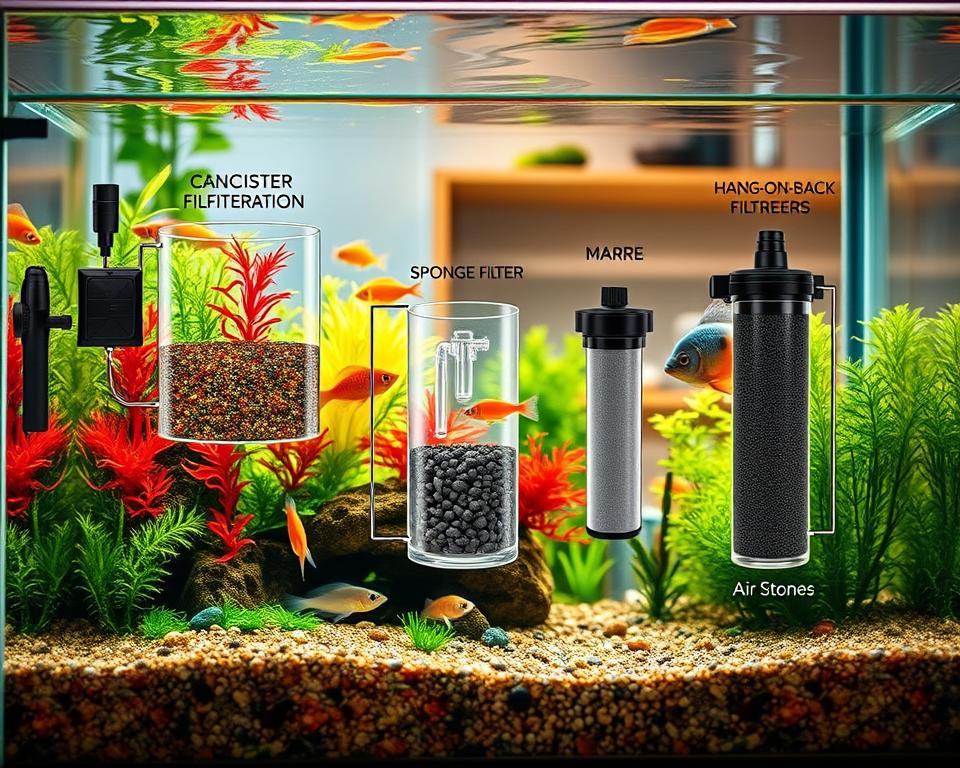
The first step is to pick the right filter for your aquarium. You can choose from hang-on-back, canister, or internal filters. Think about your aquarium size, fish type, and filtration needs. A good filter treats water well and handles your aquarium’s biological load.
Adding Filter Media
After picking your filter, add the right filter media. Media gives bacteria a place to live and break down harmful stuff like ammonia and nitrites. Use ceramic rings, bio-balls, or sponge media. They should have lots of surface area for bacteria to grow.
Introducing Beneficial Bacteria
Next, add beneficial bacteria to your aquarium. These bacteria turn toxic ammonia into safe nitrates. You can use bacterial supplements or let your filter cycle naturally. Watch your water parameters to know when your system is working well.
By following these steps, you can create a healthy home for your fish. A well-working biological filtration system supports a balanced aquatic ecosystem and ensures good water treatment.
Maintaining Your Biological Filtration System
A healthy aquarium needs a well-kept biological filtration system. It keeps the water balanced for all living things in the tank. Keeping it clean helps your fish and other sea creatures stay healthy.
Regular Monitoring of Water Parameters
It’s important to check the water in your tank often. Look at ammonia, nitrite, and nitrate levels. Ammonia and nitrite levels should always be at zero to show the system is working right. Nitrate levels should also be low to keep the water good for your fish.
- Ammonia: 0 ppm
- Nitrite: 0 ppm
- Nitrate: Less than 20 ppm
Testing the water regularly helps catch problems early. This way, you can fix them before they get worse. Keeping a log of your readings is also helpful to see how things change.
Cleaning Tips for Filter Media
Cleaning filter media is careful work. It’s where beneficial bacteria live, helping the tank stay clean. Use tank water to rinse the media, not tap water, which can harm the bacteria.
“Gentle maintenance of filter media is key to keeping the beneficial bacteria healthy. They are vital for a clean tank.”
Clean the media a little at a time. This way, you don’t upset the bacteria too much. It helps keep the tank clean and healthy.
When to Replace Filter Components
Knowing when to change filter parts is important. Mechanical parts like pads or sponges need to be replaced when they get dirty. Biological parts, like bio-balls, last longer but should be changed if they get clogged or water quality drops.
Check your filter parts often to see if they need to be replaced. Having extra parts ready helps keep the tank clean while you’re changing things out.
Common Problems in Biological Filtration
Biological filtration is key to keeping your aquarium healthy. But, it can face several challenges if not managed well. This process needs a balance of beneficial bacteria, filter media, and water conditions.
Signs of Biological Filtration Failure
Biological filtration failure can harm your aquarium’s health. Look out for these signs:
- Ammonia or nitrite spikes: A sudden rise in these harmful compounds means your biofilter isn’t working right.
- Cloudy or murky water: Cloudy water might show your biological filtration is out of balance.
- Algae growth: Too much algae could mean your ecosystem is off, possibly due to biological filtration issues.
Spotting these signs early can help fix problems before they get worse.
Troubleshooting Tips
Having trouble with your biological filtration? Here are some steps to troubleshoot:
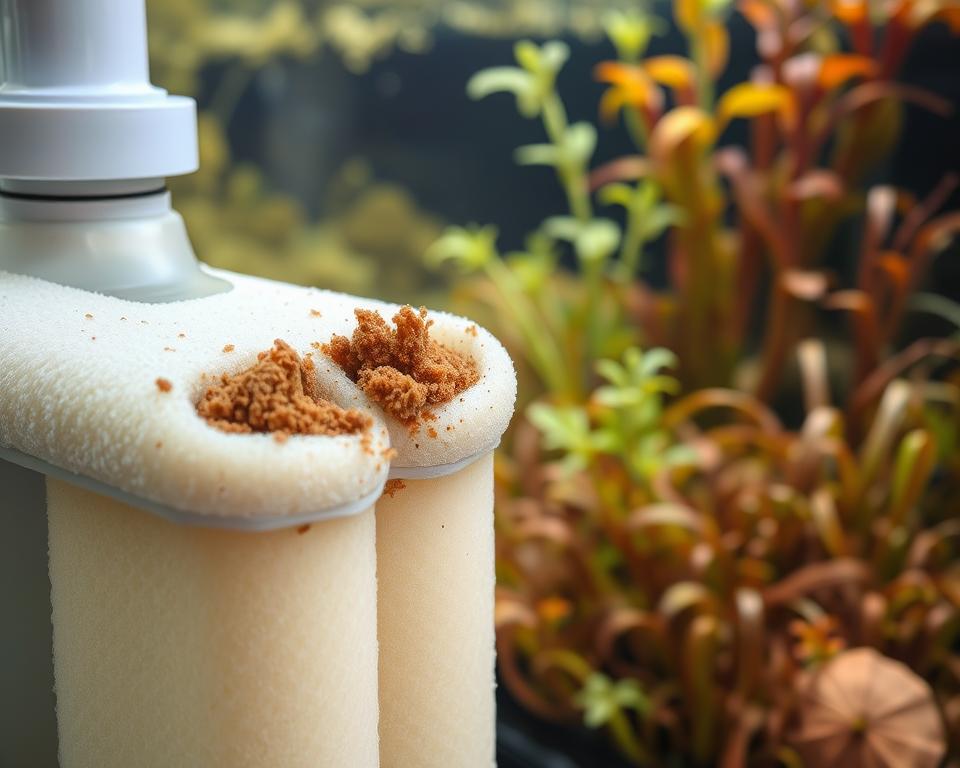
- Check your filter media: Make sure your filter media is clean and not blocked. A clogged filter can slow down your biofilter.
- Monitor water parameters: Test your water regularly for ammonia, nitrite, and nitrate. This checks if your biofilter is working right.
- Maintain adequate beneficial bacteria: Keep enough beneficial bacteria in your biofilter. Avoid over-cleaning and use bacterial supplements if needed.
By using these tips, you can find and fix biological filtration problems. This helps keep your aquarium healthy and thriving.
Enhancing Biological Filtration Efficiency
To boost biological filtration in your aquarium, think about adding extra methods. These can improve water treatment and help keep your aquatic ecosystem healthy. Biological filtration is key, relying on good bacteria to break down waste. But, you can make it even better with smart strategies.
Using Live Plants for Filtration
Live plants are a natural and effective way to boost biological filtration. They soak up nutrients and waste, keeping water quality high. Adding live plants to your aquarium makes your ecosystem more balanced. It supports the health and happiness of your fish and other aquatic life.
Some key benefits of using live plants for filtration are:
- Reduced nitrate levels
- Improved water clarity
- Enhanced biodiversity
Incorporating Additional Filter Types
Adding other filter types can also improve water treatment and aquarium health. Chemical filters get rid of harmful substances, while mechanical filters catch particles. This mix helps keep your aquarium clean and healthy.
A comparison of different filter types is provided in the table below:
| Filter Type | Function | Benefits |
|---|---|---|
| Biological Filter | Promotes beneficial bacteria growth | Effective waste breakdown |
| Chemical Filter | Removes impurities and toxins | Improved water quality |
| Mechanical Filter | Removes particulate matter | Clearer water |
By mixing these filter types, you can build a complete filtration system. This supports the health of your aquarium.
Choosing the Right Aquarium Size for Filtration Needs
Knowing how aquarium size affects biological filtration is key to a healthy tank. The tank’s size impacts how well it filters, supports microbes, and handles ammonia.
Impact of Tank Size on Filtration
The tank’s size is vital for a good biological filter. Bigger tanks are more stable, which helps beneficial bacteria thrive. These bacteria are essential for cleaning the water.
Bigger tanks have more space for bacteria to grow. This boosts microbial activity and ammonia removal. Smaller tanks, on the other hand, are harder to keep clean because they have less water and can’t handle changes well.
Ideal Volume for Biological Filtration
Finding the right tank size depends on several things. These include the fish you’ll keep and how well you can keep the water stable. Generally, bigger tanks are better for biological filtration.
Here’s a look at how different tank sizes affect biological filtration:
| Tank Size (Gallons) | Biological Filtration Efficiency | Maintenance Requirements |
|---|---|---|
| Small (10-20) | Lower | High |
| Medium (20-50) | Moderate | Moderate |
| Large (50-100) | Higher | Lower |
The table shows bigger tanks filter better and need less care. But, they take up more space and cost more.
In summary, picking the right tank size is very important. It affects your tank’s health and stability. By choosing the right size, you can make a great home for your fish.
Frequently Asked Questions about Biological Filtration
Exploring aquarium keeping brings up many questions about biological filtration. Knowing how it works helps you keep your aquatic life healthy.
Nitrification Process
Biofiltration uses the nitrification process. Beneficial bacteria turn toxic ammonia into nitrite and then nitrate. This keeps your aquarium’s ecosystem balanced.
By growing these beneficial bacteria, you boost your biological filtration system’s efficiency.
Applicability to Saltwater Aquariums
Biological filtration works in saltwater aquariums too. The same principles apply, with beneficial bacteria key to water quality. When setting up a saltwater tank, consider your marine life’s needs and choose the right biological filtration.
Learning about biological filtration answers many questions. It helps you create a thriving aquarium that showcases aquatic life’s beauty.