


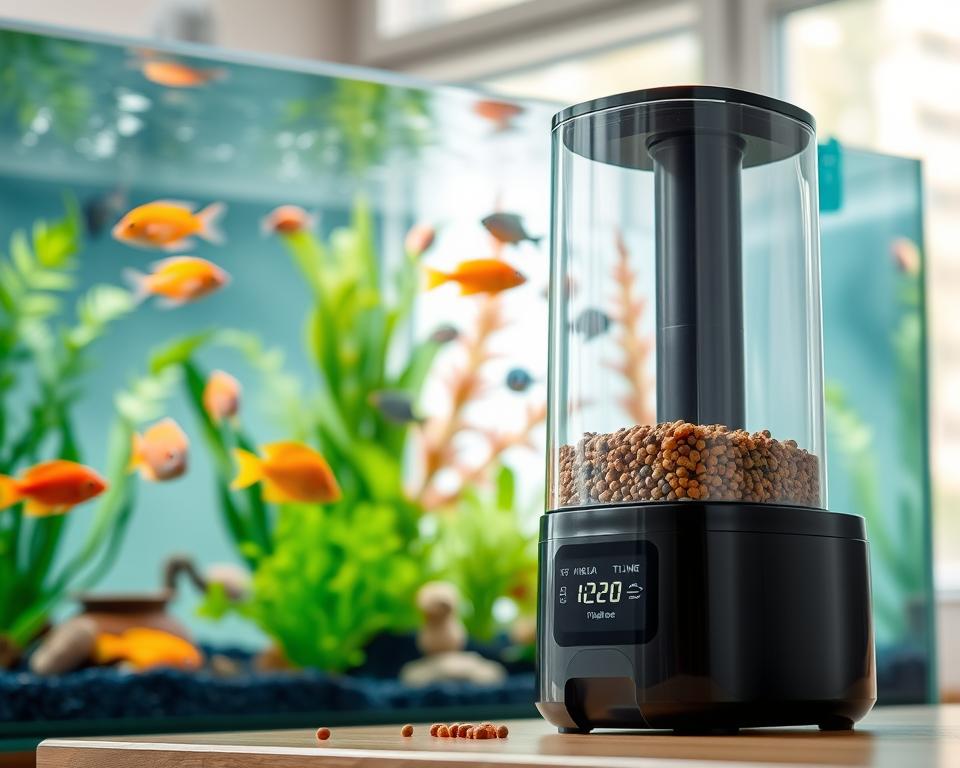
As an aquarium enthusiast, I often wondered how to make caring for my fish easier. With our busy lives, it’s hard to always be there to feed them. That’s where automatic feeders come in – a real game-changer.
These devices help keep a regular feeding schedule, even when you’re not around. This makes sure your fish get fed on time. It also cuts down on stress from unpredictable feeding times.
Key Takeaways
- Automatic feeders simplify aquarium care by maintaining a consistent feeding schedule.
- They reduce stress on fish caused by irregular feeding times.
- These devices are perfect for busy aquarium enthusiasts.
- Choosing the right feeder depends on several factors, including tank size and fish type.
- Proper use of automatic feeders can enhance the overall health of your fish.
What Are Auto Fish Feeders?
Auto fish feeders let aquarium owners feed their fish even when they’re not there. These devices dispense food at set times. They are key for keeping an aquarium healthy.
Definition and Purpose
An auto fish feeder automates feeding for your fish. It ensures your fish get the nutrients they need. As John Smith, a renowned aquarium expert, once said,
“Consistency in feeding is key to maintaining the health and well-being of your aquatic pets.”
There are many types of auto fish feeders. These include gravity feeders, electronic feeders, programmable feeders, and vacation feeders. Each type meets different aquarium needs.
How They Work
Auto fish feeders work differently based on their type. Gravity feeders use gravity to feed your fish at set times. Electronic and programmable feeders offer more flexibility. They can be set to feed at specific times and have features like portion control.
When picking an auto fish feeder, think about your tank size, fish type, and food. A programmable fish feeder is great because it lets you set feeding times based on your fish’s needs.
Benefits of Using Auto Fish Feeders
Using an auto fish feeder in your aquarium care has many benefits. It makes sure your fish eat on time, even when you’re not there.
Consistent Feeding Schedule
One key advantage of a feeder for fish tank is keeping feeding times regular. This is vital for your fish’s health. It helps keep them calm and the tank stable.
Reduced Maintenance Time
An auto fish feeder cuts down on daily tank upkeep. It feeds your fish automatically. This lets you focus on other things or just relax by your tank.
Healthier Fish and Tank Environment
Choosing a fish feeding machine means a better home for your fish. It stops overfeeding, which can harm water quality. This makes your tank cleaner and your fish happier.
In short, adding an auto fish feeder to your routine is smart. It keeps feeding times steady, saves time, and makes your tank a healthier place for your fish.
Types of Auto Fish Feeders
Auto fish feeders come in many types, each for different aquarium needs and preferences. Knowing these types helps you choose the best feeder for your fish.
Gravity Feeders
Gravity feeders are simple. They use gravity to drop food into the tank. They’re filled with food, and as it goes down, more comes out. They’re easy to use and set up.
Electronic Feeders
Electronic fish feeders are more advanced. They feed food at set times, perfect for busy owners. Look for one that’s programmable and has a reliable timer.

Programmable Feeders
Programmable feeders are even more convenient. They let you set feeding schedules for your fish. You can adjust how often and how much food is given, even when you’re not there.
Vacation Feeders
Vacation feeders are for when you’re away for a long time. They hold a lot of food and feed it out over days or weeks. Some are manual, others electronic, with more control options.
When picking an auto fish feeder, think about your aquarium’s needs and your fish. Different feeders offer benefits like simplicity or advanced features.
- Consider your tank’s size and fish number.
- Think about your food type and if the feeder works with it.
- Look at the feeder’s programmability and how easy it is to use.
Choosing the Right Auto Fish Feeder
Choosing the right auto fish feeder is key to a healthy aquarium. There are many types of feeders out there. It’s important to think about what you need to pick the best one.
Tank Size and Fish Type
The size of your tank and the fish you have are important. Larger tanks need feeders that can hold more food. Different fish eat in different ways, so you need a feeder that fits their needs.
For example, carnivorous fish need meaty foods. Herbivorous fish need vegetable-based foods. Knowing this helps you choose the right feeder.
Feed Type Compatibility
Not all feeders work with every type of fish food. Some are made for flake food, while others handle pellets or frozen foods. Make sure the feeder you choose fits your fish’s food needs.
For more tips on picking the right feeder, check out this guide.
Features to Consider
When picking a feeder, think about a few key features. Programmability lets you set feeding times and amounts. It should be easy to use and clean. And it must be reliable to keep your fish fed.
Other important features include:
- Moisture control to keep food fresh
- Adjustable feeding amounts for different fish needs
- Battery backup or power failure protection for continuous feeding
By looking at these factors, you can find an auto fish feeder that’s right for you. It will help keep your aquarium healthy and thriving.
Setting Up Your Auto Fish Feeder
Choosing the right auto fish feeder is just the first step. Next, you need to set it up for the best results. This means installing, programming, and testing it correctly.
Installation Tips
Installing your auto fish feeder right is key. Start by reading the instructions from the manufacturer. Each model might have its own needs. You’ll likely need to attach it to the tank’s side or place it on top, making sure it’s stable.
Also, make sure it’s far enough from the fish to avoid any issues.
Key installation considerations include:
- Ensuring the feeder is level to prevent uneven dispensing
- Securing the feeder to prevent it from falling
- Positioning it to minimize fish interference
Programming the Feeder
Programming your auto fish feeder lets you set up a feeding schedule. Most modern feeders have timers for this. It’s important to follow the manufacturer’s instructions to feed your fish just right.
Tips for programming include:
- Setting a consistent feeding schedule that mimics natural feeding times
- Adjusting portion sizes based on the type and number of fish
- Considering the feeder’s capacity and your fish’s needs
Testing for Accuracy
After setting it up and programming, test your auto fish feeder. Watch it during its first cycles to check if it’s dispensing the right amount of food. If not, adjust the programming or installation as needed.
Here’s a comparison of different auto fish feeder features to help you understand the setup better:
| Feature | Basic Feeders | Advanced Feeders |
|---|---|---|
| Programmability | Limited to simple timers | Advanced scheduling with multiple feeding times |
| Feed Capacity | Small, suitable for short vacations | Large, suitable for extended periods |
| Power Source | Battery-operated | Both battery and electric options |
How to Maintain Your Auto Fish Feeder
Keeping your auto fish feeder in good shape is key. A well-maintained feeder for fish tank makes sure your fish get food on time. It also keeps the feeder working well for a long time.
To keep your fish feeding machine running smoothly, follow a regular care plan. This means cleaning it and checking for any damage or issues.
Cleaning Procedures
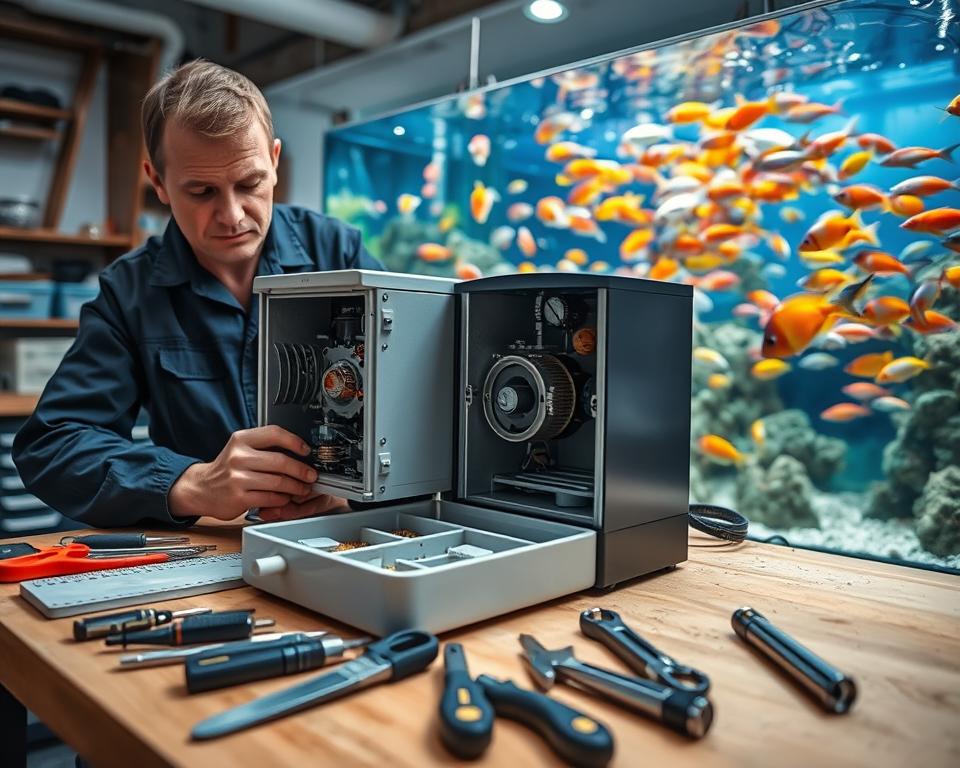
Cleaning your auto fish feeder often stops clogs and keeps bacteria away. Start by taking out any leftover food and debris. Then, soak the parts in a mix of water and safe aquarium cleaner.
After soaking, use a soft brush to gently scrub off tough spots. Rinse everything well before putting it back together.
Regular Inspection Tips
Checking your auto fish feeder regularly helps spot problems early. Look for signs of wear like rust or corrosion on mechanical parts. Make sure all electrical parts work right too. Also, check that the feeder is giving the right amount of food at the right times.
By sticking to these care tips, your feeder for fish tank will last longer. This keeps your fish healthy and fed. Regular upkeep also helps keep your aquarium a better place for your fish.
Troubleshooting Common Issues
Using an electronic fish feeder can sometimes lead to common problems. These devices aim to simplify fish care but can malfunction. It’s important to address these issues to keep your fish healthy.
Feeder Malfunctions
If your feeder isn’t working, there are a few things to check:
- Clogged dispensing mechanism: Food can block the feeder. Clean it out.
- Battery issues: Make sure batteries are fresh and correctly placed.
- Programming errors: Check that your feeder is set up right.
Fish Not Eating
If your fish aren’t eating, consider these points:
- Food quality and freshness: Make sure the food is fresh and good quality.
- Feeding amount: Check if the feeder is giving the right amount of food.
- Fish health: Look for signs of illness or stress in your fish.
By fixing these common problems, your auto fish feeder will work well. Your fish will stay healthy and happy.
Best Auto Fish Feeders on the Market
Choosing the right auto fish feeder can be tough. There are many options out there. You need to think about your tank size, the type of fish you have, and what kind of food they eat.
Top-Rated Brands
Some brands stand out for their quality and features. Eheim and Hagen are among the best. They make reliable and innovative feeders.
- Eheim: Offers a range of electronic feeders with programmable feeding times.
- Hagen: Provides programmable feeders with LCD displays for easy setting.
Budget-Friendly Options
If you’re watching your budget, don’t worry. There are affordable auto fish feeders out there. They might not have all the bells and whistles, but they work well.
| Brand | Model | Price | Features |
|---|---|---|---|
| Tetra | Timer Feeder | $15 | Simple timer, adjustable feeding times |
| API | Automatic Feeder | $20 | Gravity-fed, easy to clean |
When picking an auto fish feeder, think about what you and your fish need. Whether you choose a high-end brand or something more affordable, make sure it fits your tank and fish.
Understanding Fish Feeding Behavior
Knowing how your fish eat is key to a healthy tank. Their eating habits depend on the fish type, their natural ways of eating, and the tank’s setup.
An automatic fish feeder or a programmable fish feeder helps keep feeding times regular. This is important for your fish’s health, even when you’re not there.
How Often to Feed Your Fish
Feeding times vary by fish type. Some, like goldfish, need to eat often, while others might only need to eat once a day. Knowing your fish’s needs is vital for their health.
| Fish Type | Feeding Frequency | Recommended Feeder Type |
|---|---|---|
| Goldfish | 2-3 times a day | Programmable Fish Feeder |
| Betta Fish | Once a day | Automatic Fish Feeder |
| Tropical Fish | 2 times a day | Programmable Fish Feeder |
Portion Control Tips
Feeding too much can harm your fish and the water quality. A programmable feeder helps control food amounts, preventing overfeeding.
“The key to a healthy aquarium is not just the type of food you provide, but also ensuring that you’re not overfeeding your fish.”
To control portions well, follow these steps:
- Figure out the right food amount for your fish based on their type and size.
- Set your feeder to give the right food amount at the right times.
- Watch your fish during meals to make sure they eat what’s given.
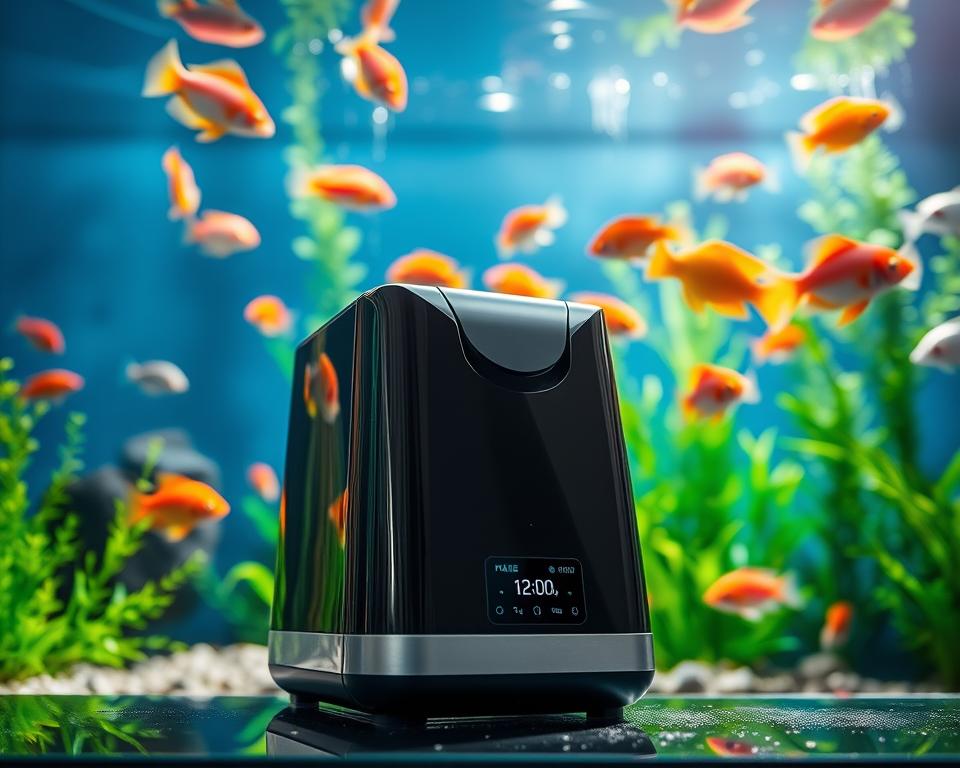
By understanding and managing your fish’s eating habits, you can make their environment healthier. Whether you use an automatic or programmable feeder, the goal is to keep feeding times consistent and controlled.
The Importance of Fish Food Quality
Choosing the right food for your fish is key to their health and the tank’s balance. The quality of fish food affects their well-being, growth, and color. It’s vital for your aquatic pets’ happiness.
Types of Fish Food
There are many types of fish food, each for different fish and needs. You can find flake, pellet, frozen, and live food. Each has its own benefits and is best for certain fish.
Flake food is easy to use and liked by many fish. But, some fish might like or need bigger foods like pellets or frozen foods.
Nutritional Requirements for Different Species
Each fish species needs different nutrients. Carnivorous fish need lots of protein, while herbivorous fish need more plants. Knowing these needs is key to caring for your fish.
| Fish Type | Nutritional Requirements | Recommended Food Type |
|---|---|---|
| Carnivorous Fish | High protein, vitamins, and minerals | Live or frozen foods like brine shrimp |
| Herbivorous Fish | Plant-based nutrients, fiber | Algae-based foods or vegetable flakes |
| Omnivorous Fish | Balanced diet with proteins and vegetables | Flakes or pellets with a mix of ingredients |
Using a fish feeding machine or feeder for fish tank helps feed your fish right. But, picking the right food is just as important.
Enhancing Your Aquarium with Technology
Technology has changed how we care for our fish. Advanced devices and apps make keeping an aquarium easier and more fun.
Smart Fish Feeders
Smart fish feeders, like electronic and timed feeders, control when and how much to feed. They can be set to feed at certain times, giving your fish a steady diet.
- Automated Feeding: No need to feed by hand, which cuts down on mistakes.
- Customizable Schedules: You can set feeding times based on your fish’s needs.
- Remote Monitoring: Some can be controlled from your phone through apps.
Integration with Aquarium Apps
Aquarium apps work with smart devices, including feeders, for full control. These apps let you:
- Keep an eye on water levels and get alerts for changes.
- Set and manage feeding times and amounts.
- Join a community for advice and support.
Using these technologies helps keep your fish healthy and happy. It makes your aquarium hobby better.
In summary, smart feeders and apps are big steps forward in aquarium tech. They make the hobby easier, more efficient, and more rewarding.
Frequently Asked Questions About Auto Fish Feeders
Thinking about using auto fish feeders in your aquarium? You might wonder how they work and their benefits. I’ll cover some common questions to help you decide.
Choosing the Right Feeder
When picking an auto fish feeder, think about your tank size and fish types. Different feeders fit different needs. For example, big tanks with many fish need a feeder that holds a lot, like the Eheim Universal Feeder.
Overfeeding Concerns
Auto fish feeders can lead to overfeeding. To prevent this, set the feeder right and watch how your fish eat. Feeders with adjustable portions, like those from API, can help too.
Learning to use auto fish feeders well means your fish get regular, healthy meals. This is true even when you’re not there.