
Did you know millions of people worldwide don’t have access to clean water? This fact really caught my attention. I started looking into sustainable water tanks. These systems can collect, store, and save water, helping communities in need.
I asked myself, “How can we make a self-contained ecosystem for water?” My research showed that Self-Sustaining Tanks aim to reduce water waste and boost efficiency.
Key Takeaways
- Understanding the importance of water conservation
- Learning to build sustainable water systems
- Discovering the benefits of self-sustaining ecosystems
- Exploring innovative solutions for water management
- Creating a reliable source of clean water
Introduction to Self-Sustaining Tanks
Building self-sustaining tanks has many benefits. They need less upkeep and are better for the environment. These tanks are great for those wanting to reduce their impact on the planet.
These tanks work by creating a balanced ecosystem. This balance means they need little outside help. Knowing how they work helps us see their value in changing how we store water.
What is a Self-Sustaining Tank?
A self-sustaining tank is a closed system. It has plants, animals, and microorganisms living together. This balance is key to the tank’s success, as it cuts down on the need for constant water changes and chemicals.
Eco-friendly tank systems like these aim to be like natural ecosystems. They encourage biodiversity and cut down on waste. This makes them a low-maintenance, efficient, and green way to store water.
Benefits of Building a Self-Sustaining Tank
Building a self-sustaining tank has many advantages. It saves money on upkeep and is better for the planet. By creating a balanced ecosystem, you reduce the need for outside help, like water changes and chemical treatments.
“A well-designed self-sustaining tank can be a haven for aquatic life, promoting biodiversity and ecological balance.” – Aquatic Expert
The main benefits of self-sustaining tanks are:
| Benefit | Description |
|---|---|
| Low Maintenance | Reduced need for water changes and chemical treatments |
| Eco-Friendly | Promotes biodiversity and minimizes waste |
| Sustainable | Creates a balanced ecosystem that is self-sustaining |
By learning about self-sustaining tanks, you can make your own eco-friendly water storage. It will be efficient and sustainable.
Getting Started: Tools and Materials Needed
Starting a self-sustaining tank project requires the right tools and materials. I’ve built my own tank and know how important preparation is.
Essential Tools for Building Tanks
You’ll need some key tools to build and keep your tank in good shape. These include:
- A reliable drill and bits for making precise holes
- A glass cutter or a diamond blade saw for cutting glass or acrylic
- A silicone sealant for ensuring watertight seals
- A gravel vacuum for maintaining water quality
- A water test kit for monitoring water parameters
Having these essential tools will help make building and keeping your tank easier.
Key Materials to Consider
Choosing energy-efficient and eco-friendly materials is key for your tank. Consider these options:
- Recycled glass or sustainable wood for the tank’s structure
- Energy-efficient pumps and filtration systems
- LED lighting that promotes plant growth without excessive heat
- Natural substrates like gravel or sand
- Plants that are native to your region for better sustainability
By picking the right materials, you can make a green water storage solution that’s good for the planet and works well.
In summary, starting your tank project with the right tools and materials is key. Focus on energy-efficient and green options to create a thriving ecosystem that’s good for you and the planet.
Designing Your Self-Sustaining Tank
A well-designed tank is key to a self-reliant storage system. It must be efficient and sustainable. When I began designing my tank, I learned the design process is vital for a thriving ecosystem.
Factors to Consider in Design
Several factors are important when designing a self-sustaining tank. These include:
- Water Volume: The tank’s water capacity impacts the ecosystem.
- Lighting: Right lighting is vital for plant and fish health.
- Filtration: A good filtration system keeps water quality high.
- Circulation: Proper circulation spreads heat and nutrients.
Choosing the Right Size and Shape
The tank’s size and shape are critical. They affect its sustainability and the health of its inhabitants. Here are some things to consider:
- Space Availability: Think about the space for the tank.
- Aesthetic Preferences: The tank’s design should match your taste.
- Ecosystem Needs: The size and shape should support your ecosystem.
By thinking about these points, you can pick a tank size and shape that supports a self-reliant system.
The design of your self-sustaining tank is what makes it efficient and sustainable. Focus on key design factors and choose the right size and shape. This way, you can create a thriving ecosystem that’s both self-sustaining and good for the environment.
Setting Up the Tank Environment
Creating the right environment for your tank is key for its health and sustainability. Reflecting on my journey, setting up the environment was a critical step.
Creating an Aquatic Ecosystem
An aquatic ecosystem is a delicate balance of plants, animals, and microorganisms. They work together to create a thriving environment. Plants are the primary producers, converting sunlight into energy that supports the ecosystem.
Aquatic plants not only provide oxygen but also help maintain water quality by absorbing nutrients. Adding a variety of plant species can enhance biodiversity and make the ecosystem more resilient.
“A well-designed aquatic ecosystem is akin to a miniature world, where each element plays a vital role in the overall health of the system.”
Maintaining Water Quality
Water quality is vital for your tank’s ecosystem health. Regular monitoring and maintenance are needed to keep conditions optimal. Key parameters to watch include pH levels, ammonia, nitrite, and nitrate concentrations.
To keep water quality high, consider a strong filtration system and regular water changes. Off-grid tank systems can greatly benefit from sustainable practices that reduce waste and external interventions.
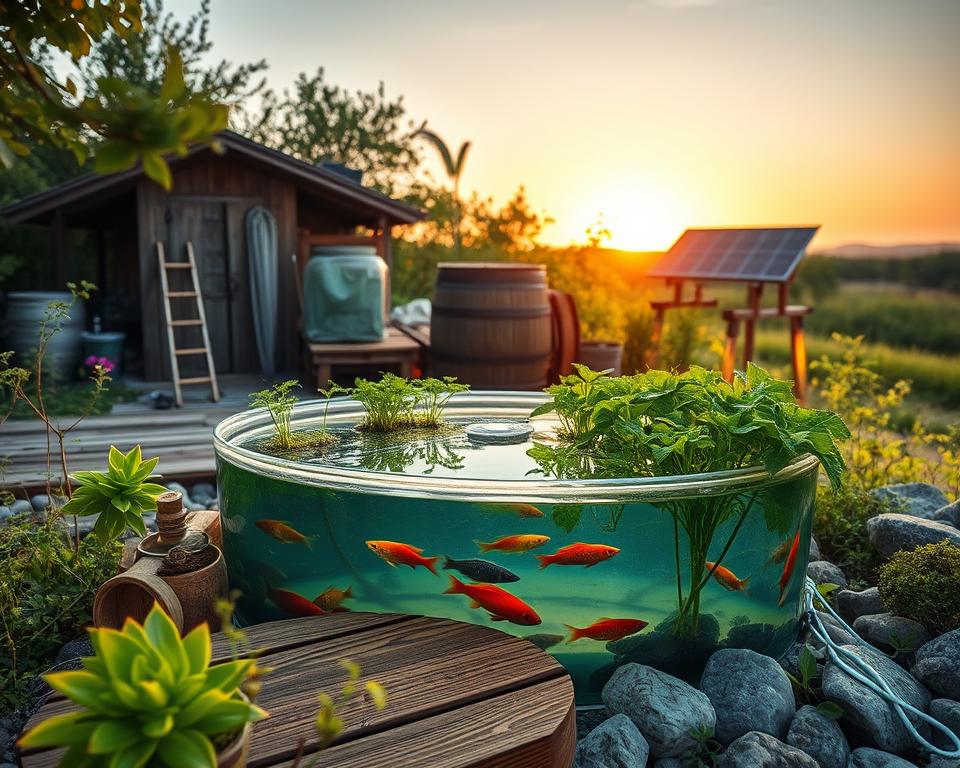
By focusing on a balanced ecosystem and high water quality, you can enjoy a thriving off-grid tank system. It will be both sustainable and visually appealing.
Incorporating Plants into the Tank
My journey to build a thriving tank started with learning about aquatic plants. I found out plants are not just pretty but also key to a balanced tank.
Best Aquatic Plants for Sustainability
Choosing the right plants for a sustainable tank is important. Java Moss, Anacharis, and Water Wisteria are top picks. They’re easy to care for and boost the tank’s health.
| Plant Species | Benefits | Care Requirements |
|---|---|---|
| Java Moss | Excellent for algae control, provides shelter for fish | Low to moderate lighting, can thrive in various water conditions |
| Anacharis | Fast-growing, helps in maintaining water quality by absorbing excess nutrients | Moderate to high lighting, prefers cooler water temperatures |
| Water Wisteria | Versatile, can be used as a background or foreground plant, helps in stabilizing the ecosystem | Moderate lighting, requires regular pruning to maintain shape |
How Plants Contribute to the Ecosystem
Plants are vital to an eco-friendly tank. They produce oxygen, absorb carbon dioxide and nutrients, and offer shelter and food. Adding different plants made my tank more balanced and strong.
The role of plants in maintaining water quality is huge. They help keep water stable, making it better for fish and other life. Plants like Anacharis and Hornwort also fight algae, preventing blooms.
In conclusion, adding the right plants to my tank was key to a sustainable ecosystem. Knowing the benefits and needs of various plants keeps my tank healthy and alive.
Adding Fish and Other Aquatic Life
As I nurtured my self-sustaining tank, I learned how key it is to pick the right fish. This step is vital for a thriving aquatic ecosystem. The fish you choose greatly affects your tank’s balance and health.
Choosing Fish Species for Your Tank
When picking fish for your tank, it’s important to match them with your tank’s environment. Researching the specific needs and characteristics of different fish species is essential. Some fish can handle changes in water better than others.
Popular fish for self-sustaining tanks include Guppies, Neon Tetras, and Harlequin Rasboras. These are hardy and can do well in a well-kept tank. But, think about the fish’s adult size and social needs too.
“The right fish can make all the difference in a self-sustaining tank. They not only add visual interest but also contribute to the overall health of the ecosystem.”
Balancing Fish and Plant Life
It’s key to balance fish and plants in your tank for a harmonious ecosystem. Plants give oxygen and food to fish, while fish help control algae by eating it and providing nutrients to plants.
To keep this balance, regularly check your tank’s conditions. This means monitoring water parameters, watching fish health and behavior, and making sure plants are doing well.
A balanced tank needs patience and attention to detail. By choosing the right fish and keeping a healthy balance between fish and plants, you can create a thriving, beautiful, and sustainable aquatic ecosystem.
Monitoring the Tank’s Ecosystem
Building a self-sustaining tank is more than just setting it up. It needs constant watching to keep its ecosystem balanced. This balance is key to a healthy tank.
Signs of a Healthy Tank
A healthy tank has clear water, growing plants, and active fish. Seeing beneficial algae is a good sign. It shows the water quality is good.
Also, watch how the fish act. If they swim well and eat well, the tank is likely healthy.
Look for signs of stress or disease in fish and plants. Gasping fish or decaying plants mean trouble. These signs need quick action.
Tools for Monitoring Water Conditions
Keeping a tank healthy means using the right tools. You’ll need water test kits, pH meters, and ammonia/nitrite test strips. These tools spot water changes that could harm your tank’s life.
Using energy-efficient tank solutions helps too. LED lights, for example, save energy and help plants grow.
| Tool | Purpose | Benefits |
|---|---|---|
| Water Test Kits | Monitor water parameters | Helps in early detection of water quality issues |
| pH Meters | Measure pH levels | Ensures optimal pH for fish and plants |
| Ammonia/Nitrite Test Strips | Detect ammonia and nitrite levels | Prevents toxic conditions for fish |
With these tools and regular checks, your self-sustaining tank stays a thriving, self-reliant storage tank ecosystem.
Troubleshooting Common Issues
Keeping a self-sustaining tank healthy needs constant watch and quick action. Even with the best planning, problems can pop up and upset the tank’s balance.
Recognizing Algae Blooms
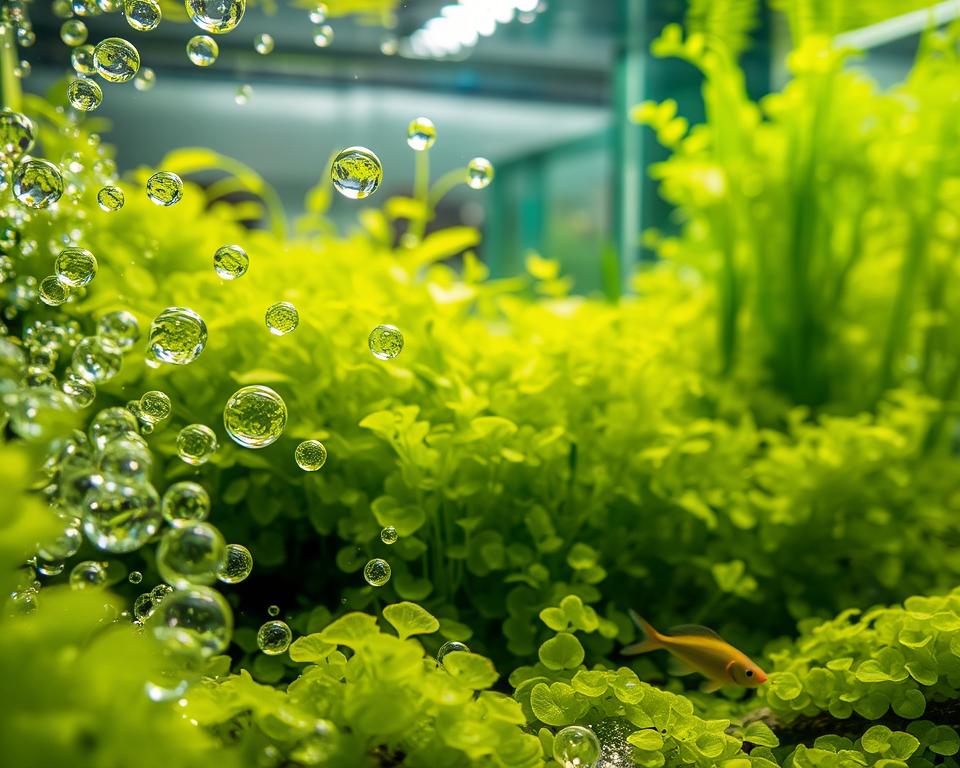
Algae blooms are a big problem in self-sustaining tanks. They happen when there’s too much light or not the right balance of nutrients. Look for green or brown water discoloration or too much algae on plants and tank walls.
To fix algae blooms, try changing how long or how bright the light is. Make sure the tank has good water flow to stop nutrients from building up. Adding fish or plants that eat algae can also help.
Addressing Fish Health Problems
Fish health issues can come from bad water, not enough food, or sickness. It’s key to watch your fish for signs of illness, like trouble breathing, being very tired, or having visible sores.
To keep fish healthy, check that the tank’s water is right for your fish. Do regular water changes and feed them well. If you think a fish is sick, keep it separate and treat it right.
| Issue | Causes | Solutions |
|---|---|---|
| Algae Blooms | Excessive light, nutrient imbalance | Adjust lighting, improve circulation, add algae-consuming species |
| Fish Health Problems | Poor water quality, inadequate nutrition, disease | Monitor water parameters, perform regular water changes, provide balanced diet, isolate and treat diseased fish |
Acting fast and solving problems quickly keeps your self-sustaining tank healthy. This way, your tank stays environmentally friendly and works well for off-grid systems.
Enhancing Your Self-Sustaining Tank
As I worked on my self-sustaining tank, I found new ways to make it better. It’s not just about looks; it’s about keeping it healthy and sustainable.
One great thing about having a self-sustaining tank is the chance to get creative with DIY projects. These projects can make your tank stand out and help keep it healthy. For example, you can build a natural home for your fish using rocks and plants. Or, you can create a custom background that makes your tank’s ecosystem look better.
DIY Projects to Make It Unique
DIY projects can be simple or complex. One idea is to create a mini-ecosystem inside the tank using a glass container for plants and small creatures. This adds beauty and helps with biodiversity.
“The art of creating a self-sustaining tank lies in its ability to mimic nature while being maintained in a controlled environment.” This quote really hits home as I’ve tried different DIY projects to balance my tank’s ecosystem.
- Creating natural shelters using rocks and driftwood
- Building custom backgrounds to enhance the tank’s ecosystem
- Designing mini-ecosystems within the tank
Adding technology to your tank can make it more sustainable and easy to care for. Modern tech offers many solutions, like automated water monitoring and advanced filtration.
Upgrading with Technology
Technology can greatly improve your tank’s health and sustainability. For instance, automated monitoring systems can alert you to water changes, so you can act fast. Advanced filtration systems can also improve water quality, reducing the need for frequent water changes.
- Automated water monitoring systems
- Advanced filtration systems
- Smart lighting systems that adjust to the needs of your plants and fish
By mixing DIY projects with tech upgrades, you can make a truly unique and sustainable tank. It will thrive with little upkeep.
Conclusion: Enjoying Your Self-Sustaining Tank
Building a self-sustaining tank is a rewarding journey. It brings peace to your space and helps the environment. Remember, a balanced ecosystem that needs little care is key.
Lessons Learned
Patience and detail are essential. Setting up the tank, adding fish and plants, each step is important. It makes a sustainable and beautiful green water storage solution.
If you’re starting a tank project, try different plants and decorations. Check out Bunnycart’s guide for more tips on eco-friendly tanks.
Future Projects
Keep exploring self-sustaining tanks. Try new tech and DIY projects to improve your tank. This will make your fish’s home better and support a green hobby.