

Exploring gardening, I’m often amazed by plants that do well in dry places. Did you know almost 40% of the world’s land is dry or arid? This affects millions of acres of gardens and landscapes. So, drought-tolerant plants are not just a choice, but a must for many gardeners.
I’ll show you the world of drought-resistant flora. We’ll find the best plants for your dry garden. With my advice, you can have a lively, easy-to-care-for garden that loves dry weather. It’s not just useful; it’s also a stunning and green way to decorate your outdoor area.
Key Takeaways
- Discover resilient plants that thrive in dry conditions.
- Learn how to create a low-maintenance, vibrant garden.
- Understand the benefits of using drought-tolerant plants.
- Explore sustainable landscaping options for dry climates.
- Find out how to make the most of your dry garden.
Understanding Drought Resistance
Drought-resistant plants are key in water-saving gardens. They help solve water problems. It’s important to know how they work in making gardens last.
What is Drought Resistance?
Drought resistance means plants can grow well with little water. They have special features like deep roots and thick leaves. These plants save water, perfect for dry places.
Some drought-resistant plants have:
- Thick, waxy leaves to keep water in
- Deep roots to find water deep in the soil
- Small or no leaves to use less water
- Parts that can hold water
The Importance of Drought-Resistant Flora
Drought-resistant plants are very important. They save water, which is great for areas with little rain. They also help keep the soil healthy.
Using drought-resistant plants in gardens has many benefits:
- They use less water
- They need less care
- They add variety to gardens
- They make gardens look beautiful
By using drought-resistant plants, we can make gardens that are both beautiful and water-friendly. Even in dry areas, these gardens can flourish.
Benefits of Drought-Resistant Plants
Choosing drought-resistant plants can make your garden more sustainable. These plants are made to grow well in dry conditions. They are ideal for gardens that focus on saving water.
Water Conservation
Low Water Plants are great for saving water. They need to be watered less often. This cuts down on the water your garden uses.
This is very helpful in dry areas or where water use is limited.
Cost Efficiency
Drought-resistant plants also save you money. They use less water, which means lower water bills. Plus, they often need less care, like fewer fertilizers and less pruning.
Soil Health Improvement
These plants are good for your soil too. They have deep roots that help the soil breathe and prevent it from washing away. Adding Low Water Plants to your garden makes the soil healthier. This is key for a Drought Proof Garden.
Using drought-resistant plants in your garden saves water and makes your garden healthier. It turns your garden into a Drought Proof Garden.
Types of Drought-Resistant Flora
Choosing the right drought-resistant plants can turn a dry garden into a lush oasis. These plants not only survive but also bloom beautifully in dry conditions. They add beauty and texture to outdoor spaces.
Native Plants for Dry Areas
Native plants are a great choice for dry areas. They are naturally adapted to the local climate and soil. Here are a few examples:
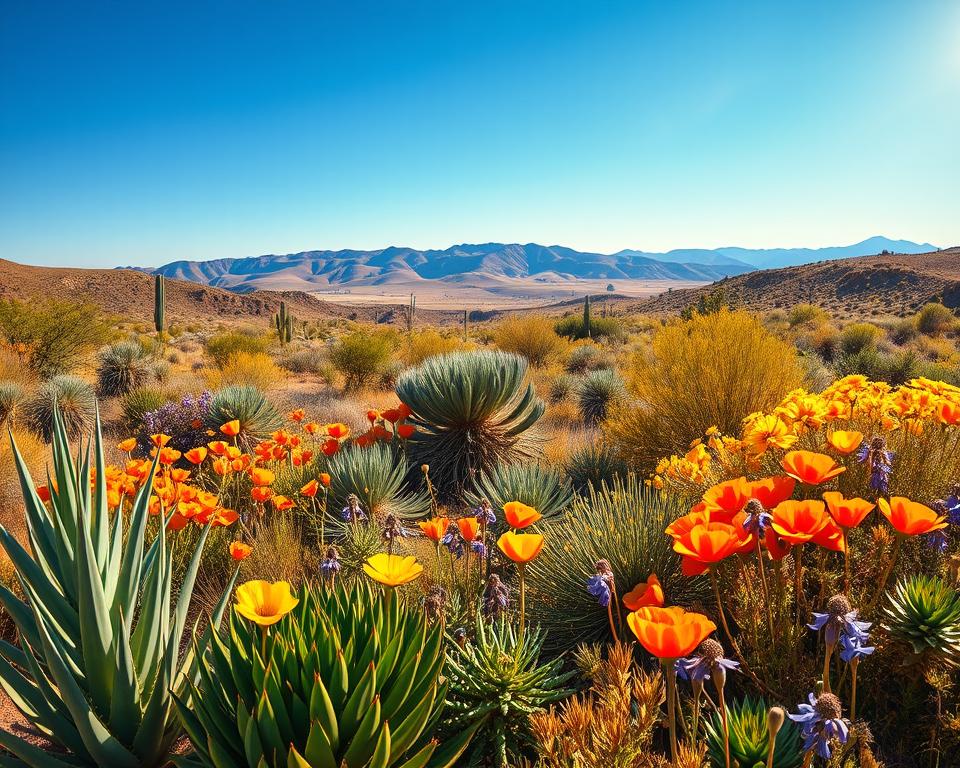
- California Poppy: Known for its vibrant orange flowers, it’s a hardy drought plant that thrives in dry conditions.
- Texas Sage: This plant is not only drought-resistant but also attracts pollinators with its purple flowers.
- Desert Marigold: With its bright yellow and orange flowers, it adds a pop of color to dry gardens.
These native plants are resilient drought flora. They need little watering and care, making them perfect for water-conscious gardening.
Succulents and Cacti
Succulents and cacti are popular for their ability to store water. Here are a few varieties:
- Aloe Vera: Known for its healing properties, it’s also a great ornamental plant.
- Prickly Pear Cactus: This cactus is not only drought-resistant but also produces edible fruits.
- Echeveria: With its beautiful rosette-shaped leaves, it adds a decorative touch to any garden.
These plants are ideal for dry areas. They can create a stunning, low-maintenance garden.
Ornamental Grasses
Ornamental grasses are a great choice for drought-resistant gardening. They add movement and texture to the garden. Here are a few examples:
- Fountain Grass: Known for its graceful, fountain-like shape, it’s a popular choice for dry gardens.
- Blue Oat Grass: This grass has a beautiful blue hue and can thrive in dry conditions.
- Little Bluestem: It’s a native grass to many dry areas and offers a nice contrast with its blue-green foliage.
Ornamental grasses are hardy drought plants. They enhance the visual appeal of any garden while requiring minimal water.
Selecting the Right Plants for Your Garden
A beautiful and sustainable garden starts with the right plants. Look for drought-tolerant plants that match your local climate and soil. When planning, think about how much water your plants will need.
Factors to Consider
Before picking plants, know your garden’s conditions. Check your soil type, sunlight, and local hardiness zone. These details help your plants grow well with less water.
- Soil Type: Different plants like different soil textures and pH levels.
- Sun Exposure: Some plants need full sun, others prefer shade.
- Hardiness Zone: Choose plants that can handle your area’s temperature.
Hardiness Zones
Knowing your hardiness zone is key. It helps pick plants that will do well in your climate. The USDA Hardiness Zone Map is a great tool for this.
Table: USDA Hardiness Zones and Drought-Tolerant Plants
| Hardiness Zone | Drought-Tolerant Plants |
|---|---|
| Zone 3-4 | Sedum, Yarrow, Russian Sage |
| Zone 5-6 | Lavender, Catmint, Daylily |
| Zone 7-8 | Succulents, Texas Sage, Lantana |
Soil Type and Sun Exposure
Soil type and sunlight are important for choosing plants. Succulents and cacti need well-draining soil and full sun. Ornamental grasses prefer richer soils and partial shade.
By considering these factors and picking the right plants, you can make a beautiful, water-saving garden. This garden will also support local wildlife.
Landscaping with Drought-Resistant Flora
Drought-resistant plants are great for making beautiful, water-saving gardens. By using water-wise landscaping ideas, you can make a garden that looks good and stays healthy even when it’s dry.
Designing a Drought-Proof Garden
To make a garden that doesn’t need much water, pick plants that like dry places. Native plants are a good choice because they need less care. For tips on making a dry garden, check out this guide on drought-tolerant landscaping.
Think about what you want your garden to look like. Drought-resistant plants come in many shapes, sizes, and colors. This lets you make a garden that’s both beautiful and unique.
Focal Points and Color Schemes
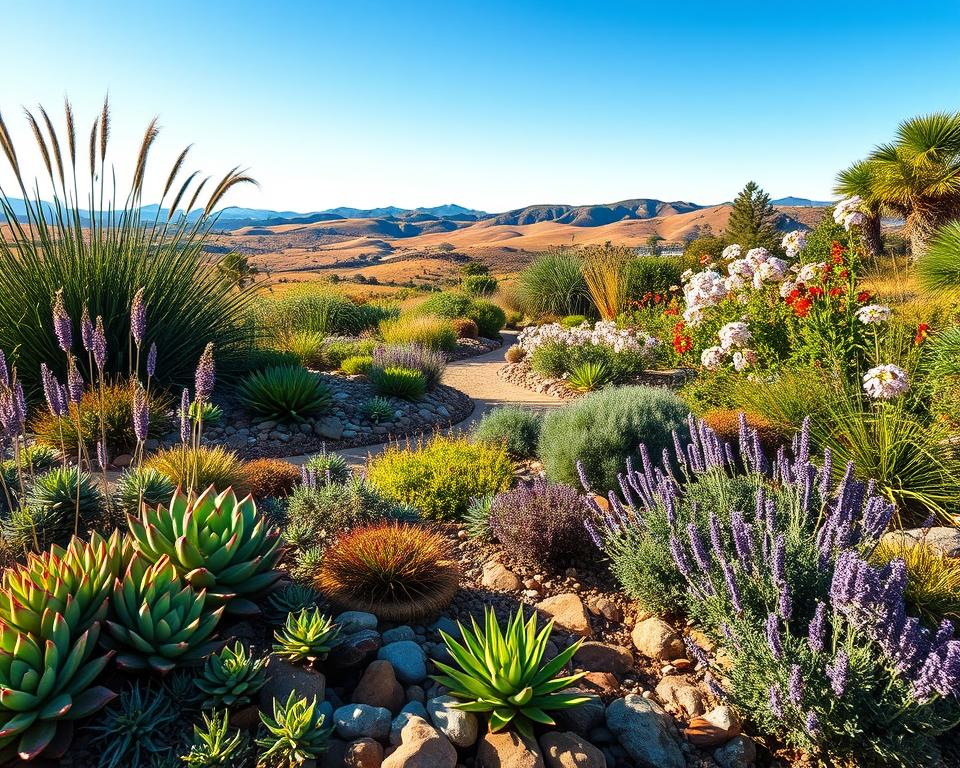
To make your garden stand out, use big plants or decorative items as focal points. Succulents and cacti are great because of their interesting shapes and bright colors. Pick a color scheme that matches the plants and the area around them for a nice look.
Landscape experts say mixing plants with different textures and colors makes your garden more interesting. This not only makes your garden look better but also makes it stronger.
Companion Planting Techniques
Companion planting means pairing plants to help them grow better. By choosing drought-resistant plants that go well together, you can make a garden that needs less care. For example, growing herbs with succulents can make the soil better and keep pests away.
Some good pairs include Lavender with Rosemary or Yarrow with Succulents. These pairs help plants stay healthy and add variety to your garden.
Maintenance Tips for Drought-Resistant Gardens
To keep your drought-resistant garden thriving, follow some key maintenance tips. Caring for a garden with low water plants requires attention. But, the reward is a beautiful, water-saving garden that supports local ecosystems.
Watering Best Practices
Drought-resistant plants need some watering, mainly when they’re young. Deep but infrequent watering helps them grow strong roots. This makes them more drought-resistant.
Water plants in the early morning or late evening to cut down on evaporation. Don’t water the leaves to avoid fungal diseases. Water at the base of the plants instead.
Soil Management Tips
Soil management is key for your drought-resistant garden’s health. Adding organic matter like compost helps the soil hold water better. It also gives plants the nutrients they need.
Mulching around plants is also beneficial. It keeps the soil cool and stops moisture loss. Mulch acts as a protective layer, reducing the need for frequent watering.
| Soil Type | Water-Holding Capacity | Nutrient Content |
|---|---|---|
| Sandy Soil | Low | Low |
| Clay Soil | High | High |
| Loamy Soil | Medium | Medium |
By following these maintenance tips, you can enjoy a lush, drought-proof garden. It will not only save water but also beautify your outdoor space.
Common Misconceptions About Drought-Resistant Plants
Drought-resistant plants are often misunderstood. Many myths surround their care and looks. Despite being bred for dry conditions, there are many misconceptions about their needs and beauty.
They Don’t Need Water at All
One big myth is that drought-resistant plants don’t need water. While they can survive with little water, they do need some. Hardy drought plants need occasional watering, even in dry spells, to stay healthy.
Succulents and cacti, popular drought-resistant plants, store water in their leaves and stems. But they also need regular watering to keep their water stores full and support their growth.
They Are Not Attractive
Another myth is that drought-resistant plants are not pretty. But, many of these plants come in a variety of colors, textures, and shapes. They can make any garden look beautiful. Ornamental grasses, for example, add a soft, flowing texture that looks great with other plants.
Drought-resistant plants can make stunning, water-efficient gardens. By choosing plants with different looks and growth times, you can create a lively and beautiful garden that does well in dry conditions.
Integrating Drought-Resistant Flora in Urban Areas
Cities are growing fast, making it key to use drought-resistant plants in urban planning. This helps save water and makes cities look better. By adding drought-resistant flora, gardeners can make outdoor spaces green and lively.
Benefits for City Gardens
City gardens gain a lot from resilient drought flora. These plants need less care and water, perfect for saving water in cities. A study in the Arboriculture & Urban Forestry journal shows they can cut water use by half.
Using drought-resistant plants in city gardens has many benefits. They lower water and maintenance costs. They also help local wildlife and grow well in tough city conditions.
Community Garden Initiatives
Community garden projects also benefit from drought-resistant flora. These plants help teach about saving water and show off green gardening. Gardens with these plants are examples of how to garden sustainably.
These efforts create green spaces and bring people together. Working on gardens with drought-resistant plants teaches the value of saving water and green gardening.
Sustainability and Drought-Resistant Flora
Choosing drought-tolerant plants for your garden is good for the planet. With climate change, using eco-friendly landscaping is more critical than ever. These plants are tough and help us build a greener future.
Eco-friendly Landscaping Practices
Eco-friendly landscaping means using plants and materials that don’t harm the environment. Drought-resistant plants are a big part of this. They need less water, making your garden beautiful and water-saving.
Benefits of Eco-friendly Landscaping:
- Less water used
- Lower upkeep costs
- More wildlife
Reducing Carbon Footprint
Drought-resistant plants also cut down our carbon footprint. They need less water and care, saving energy. Plus, many are native, so they fit well with local weather and soil, cutting down on chemicals.
| Landscaping Practice | Water Consumption | Carbon Footprint |
|---|---|---|
| Traditional Landscaping | High | High |
| Drought-Resistant Landscaping | Low | Low |
By using drought-resistant plants and smart landscaping, we can make gardens that are not only beautiful but also good for the planet. It’s key to keep finding new ways to lessen our environmental impact through gardening.
Case Studies: Successful Drought-Resistant Landscapes
Looking at drought-resistant landscapes shows us how to save water. These gardens are not just pretty; they’re also good for the planet. They inspire gardeners everywhere.
Notable Public Gardens
Public gardens lead the way in new landscaping ideas. The Boise Botanical Garden in Idaho is a great example. It uses xeriscaping plants to make gardens that use little water but look great.
The Denver Botanic Gardens in Colorado also stands out. It has many low water plants in its design. This garden teaches visitors how to save water in their own gardens.
Residential Success Stories
Homeowners are also doing well with drought-resistant gardens. A California home turned its yard into a water-saving oasis. They used succulents and other low water plants. This cut down water use and made the yard look amazing.
In Texas, a homeowner used xeriscaping to create a beautiful, water-saving garden. They picked native plants and smart irrigation. The garden did well even when it was dry.
| Location | Type of Garden | Key Features |
|---|---|---|
| Boise, Idaho | Public Botanical Garden | Xeriscaping plants, minimal water usage |
| Denver, Colorado | Public Botanic Garden | Low water plants, urban water conservation |
| California | Residential Garden | Succulents, low water plants, sustainable design |
| Texas | Residential Garden | Xeriscaping, native plants, efficient irrigation |
Resources for Drought-Resistant Gardening
I’ve gathered a list of valuable resources for drought-resistant gardening. These will help you build a Drought Proof Garden with Hardy Drought Plants.
Recommended Books and Websites
For a deeper dive into drought-resistant gardening, check out these books and websites:
- “The Drought-Tolerant Garden” by Warren Schultz – A detailed guide to a beautiful, resilient garden.
- “Xeriscape Gardening” by Jim Knopf – Practical tips for water-efficient gardening.
- The Xerces Society (https://www.xerces.org) – Sustainable gardening and pollinator conservation info.
- DroughtSmart (https://www.droughtsmart.com) – Tips and resources for drought-tolerant gardening.
Local Workshops and Classes
Local workshops and classes are great for learning by doing. You’ll get hands-on experience and expert advice on drought-resistant gardening.
| Workshop/Class | Location | Focus |
|---|---|---|
| Drought-Tolerant Planting | Local Nursery | Selecting and caring for hardy drought plants |
| Xeriscape Gardening Techniques | Garden Center | Designing and maintaining a drought-proof garden |
| Sustainable Gardening Practices | Community Garden | Eco-friendly gardening methods |
With these resources, you’ll be ready to create a stunning Drought Proof Garden. It will thrive even in dry conditions.
The Future of Drought-Resistant Flora
Looking ahead, drought-resistant plants will play a key role in our gardens. Thanks to plant breeding, we’ll see new, hardy, and beautiful plants. These will be perfect for our changing landscapes.
Advancements in Plant Breeding
Plant breeding is getting better at creating tough, drought-resistant plants. This means gardeners will have more choices for stunning, green spaces. These spaces will thrive even when it’s dry.
Navigating Climate Change
Climate change will also shape the future of drought-resistant plants. As the weather gets wilder, these plants will help our gardens stay strong. By choosing these plants, we make our gardens more sustainable and ready for anything.
Keep up with these changes to make your garden a beautiful, green oasis. It will be a place that’s good for the planet and looks amazing.