
As an aquarium enthusiast, I’ve found that adding certain invertebrates can make my aquarium ecosystem healthier. Some invertebrates can eat up to 90% of algae, cutting down on water changes.
I’ll show you the best invertebrates for a thriving aquarium. They help control algae and balance your ecosystem. In this article, we’ll cover how to introduce these invertebrates correctly.
Key Takeaways
- Discover the top invertebrates for a healthier aquarium
- Learn best practices for introducing invertebrates to your tank
- Understand how invertebrates contribute to a balanced ecosystem
- Explore the benefits of reduced algae buildup
- Create a thriving aquarium with the right invertebrates
Understanding Clean Tank Invertebrates
Clean tank invertebrates are the unsung heroes of a well-maintained aquarium. They play a vital role in keeping the tank clean and healthy. These creatures help maintain the balance of the aquarium ecosystem. This ensures your tank stays thriving and looks great.
What Are Clean Tank Invertebrates?
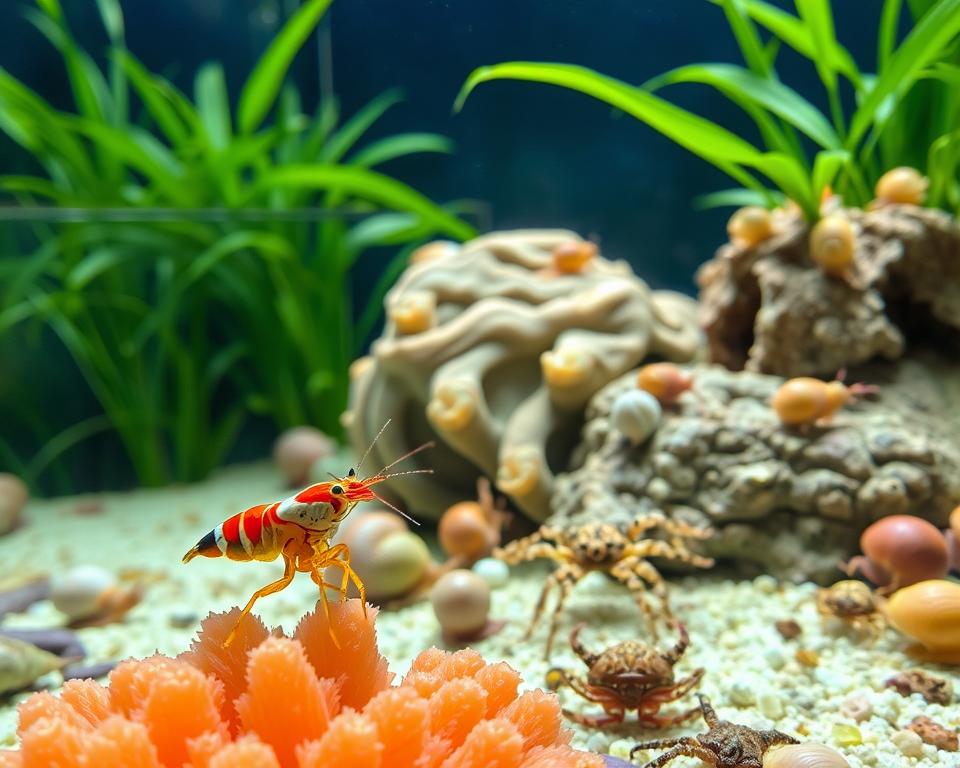
Clean tank invertebrates include snails, shrimp, crabs, and starfish. They are called “clean tank” invertebrates because they clean the aquarium. They eat algae, detritus, and other organic matter. This helps keep water quality high and reduces the need for frequent water changes.
Some of the most common types of clean tank invertebrates include:
- Snails: Known for their algae-eating abilities, snails are a popular choice for aquariums.
- Shrimp: Many species of shrimp are effective at consuming detritus and algae.
- Crabs: Some crab species help control algae and detritus levels.
- Starfish: Certain starfish species feed on algae and detritus, helping to keep the tank clean.
Benefits of Invertebrates in Aquariums
Incorporating clean tank invertebrates into your aquarium offers several benefits. They not only help maintain the cleanliness of the tank but also contribute to the overall biodiversity of the aquarium. A diverse aquarium is more resilient and better equipped to handle changes in water conditions.
The benefits of having clean tank invertebrates in your aquarium include:
- Improved Water Quality: By consuming organic matter, invertebrates help maintain better water quality.
- Reduced Algae Growth: Many invertebrates feed on algae, reducing its growth and keeping the tank looking clean.
- Increased Biodiversity: Adding invertebrates to your tank increases the diversity of your aquarium, making it more interesting and resilient.
- Less Maintenance: With invertebrates helping to clean the tank, the need for frequent water changes and cleaning is reduced.
By understanding and leveraging the benefits of clean tank invertebrates, you can create a more balanced and thriving aquarium. In the next section, we will explore the different types of clean tank invertebrates you can introduce to your tank.
Types of Clean Tank Invertebrates
Invertebrates are key to keeping aquariums clean and healthy. They help reduce algae and debris. By choosing the right invertebrates, you can maintain a pristine tank.
Snails
Snails are a top pick for clean tanks. They are excellent algae consumers and keep the glass clean. There are many snail species, each with its own traits.
Shrimp
Shrimp are loved by many aquarium fans. They have a big appetite for algae and detritus. This makes them perfect for a clean tank. Some shrimp, like the Amano shrimp, are super effective.
Crabs
Crabs can also be great for your tank. They eat algae and small invertebrates. But, some crabs can be territorial. So, make sure they get along with your other tank mates.
Starfish
Starfish, or sea stars, are used in marine tanks for cleaning. They are effective cleaners. But, they need the right water quality and space to thrive.
Knowing about different invertebrates and their roles helps create a balanced aquarium. This ensures a healthy ecosystem for your fish and other pets.
Freshwater Clean Tank Invertebrates
Adding the right invertebrates to your freshwater aquarium is key to keeping it clean and healthy. These creatures not only help with cleaning but also add beauty and diversity to your tank.
Some invertebrates are great at cleaning your freshwater aquarium. Favorites include Mystery Snails, Amano Shrimp, and Nerite Snails. Each one brings unique benefits to your tank’s ecosystem.
Mystery Snails
Mystery Snails are loved for their bright colors and ability to eat algae. They are easy to care for and need a tank with enough calcium.
Key benefits of Mystery Snails:
- Efficient algae eaters
- Variety of colors
- Relatively low maintenance
Amano Shrimp
Amano Shrimp are known for controlling algae. They are peaceful, hardy, and fit well in many tank setups. This makes them great for community aquariums.
Tips for keeping Amano Shrimp:
- Provide plenty of hiding places
- Maintain stable water parameters
- Supplement their diet with algae-based foods
Nerite Snails
Nerite Snails are popular for their love of eating algae. They are small and do well in planted tanks with good water flow.
Advantages of Nerite Snails:
- Excellent algae control
- Small size, suitable for smaller tanks
- Peaceful nature
Adding these invertebrates to your tank can make it healthier and more balanced. It’s important to learn about each species’ needs to ensure they do well in your tank.
Marine Clean Tank Invertebrates
In marine aquariums, some invertebrates are key to keeping the tank clean and healthy. These creatures are not only interesting to watch but also vital for the aquarium’s balance.
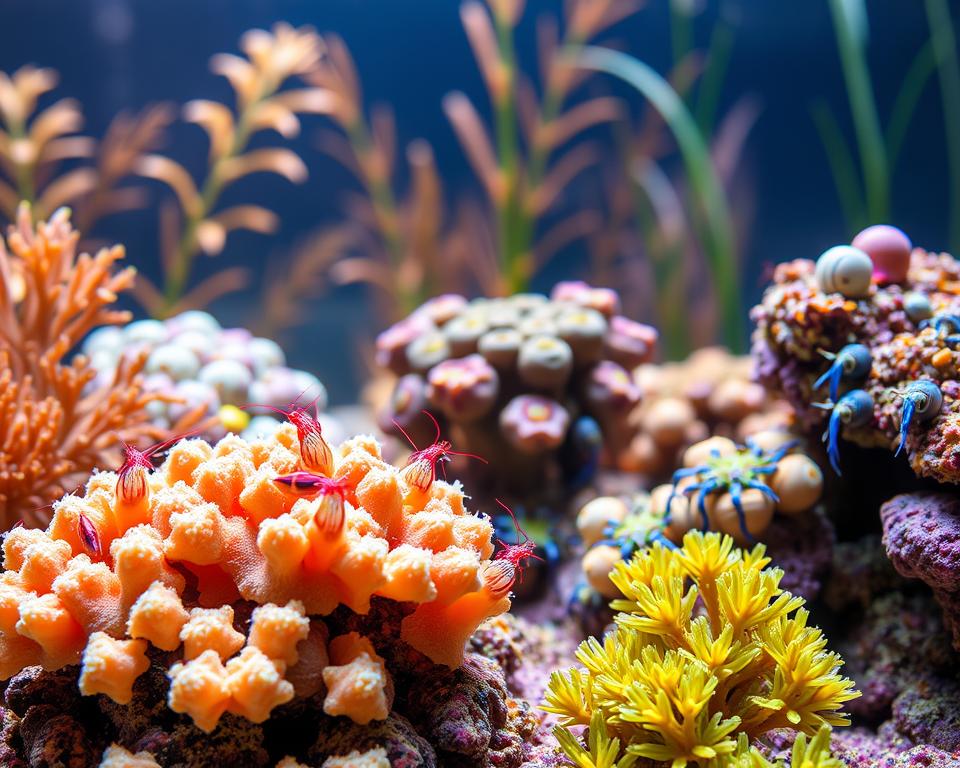
Peppermint Shrimp, Cleaner Shrimp, and Sea Cucumbers are among the most helpful. Each species has its own way of keeping the tank clean and healthy.
Peppermint Shrimp
Peppermint Shrimp are famous for eating Aiptasia, a pest anemone that can quickly take over a tank. By controlling Aiptasia, they help keep the tank looking good and healthy.
“Peppermint Shrimp are a valuable addition to any marine aquarium plagued by Aiptasia. Their voracious appetite for these pest anemones makes them a natural solution to a common problem.”
Cleaner Shrimp
Cleaner Shrimp are also great for marine aquariums. They clean fish by removing parasites and dead skin. This helps keep the tank’s inhabitants healthy and happy.
Sea Cucumbers
Sea Cucumbers eat decaying organic matter from the substrate. This helps keep the tank clean and prevents algae blooms and other problems caused by detritus buildup.
| Invertebrate | Role in Tank | Care Requirements |
|---|---|---|
| Peppermint Shrimp | Controls Aiptasia populations | Stable water conditions, varied diet |
| Cleaner Shrimp | Provides cleaning service to fish | Adequate hiding places, nutrient-rich food |
| Sea Cucumbers | Consumes detritus | Sandy substrate, occasional feeding with detritus-based foods |
To care for these invertebrates, you need to meet their specific needs. This includes the right water conditions, diet, and habitat. By doing this, you can enjoy the benefits they bring to your marine aquarium.
Compatibility of Invertebrates with Fish
To keep your aquarium peaceful, it’s key to know if invertebrates and fish can live together. Adding invertebrates can make your tank more interesting. But, you must plan carefully to prevent fights between species.
Before adding invertebrates, check if they get along with your fish. Some fish might see invertebrates as food, while others will be friends. For example, peaceful fish like Ocellaris Clownfish often get along well with many invertebrates.
Safe Tank Mates
Finding the right friends for your invertebrates is important. Some, like Amano Shrimp, get along with many fish. Here are some good choices:
- Amano Shrimp with peaceful community fish
- Nerite Snails with non-aggressive fish
- Sea Cucumbers with most marine fish species
For more info on fish that go well together, check the reef fish compatibility chart. It helps you build a balanced marine world.
Potential Conflicts
Even with good planning, problems can happen. Some fish might eat invertebrates, or they might fight over food or space. For instance, aggressive fish like Triggerfish might bother or eat invertebrates.
To avoid these issues, do your homework:
- Learn about the needs and habits of both invertebrates and fish before mixing them.
- Make sure invertebrates have places to hide and feel safe.
- Watch your tank closely and step in if you see any trouble.
By knowing how invertebrates and fish get along and taking steps to prevent problems, you can have a lively and diverse aquarium.
Essential Care Tips for Invertebrates
Keeping an invertebrate aquarium healthy requires understanding their unique needs. It’s not just about having a tank and food. You need to create a special environment for them.
Water Quality Requirements
Water quality is vital for invertebrates’ health. Each species has its own tolerance for water conditions like pH and ammonia. Regular water changes and monitoring water parameters are key to a stable environment.
Some, like shrimp and snails, are very sensitive to nitrates. They need frequent water changes to stay healthy.
Good water circulation and oxygenation are also important. Adequate filtration keeps the water clean by removing waste. But, avoid strong currents that can stress or harm them.
Feeding Recommendations
Feeding invertebrates right is important. Some are herbivores and eat algae or plants. Others are carnivores and need meaty foods.
For example, many shrimp are detritivores and eat decaying plants. Others might need brine shrimp or special diets.
Diversifying their diet is essential for their nutrition. Avoid overfeeding to prevent water quality problems. Make sure to remove any uneaten food quickly.
By following these care tips, you can make a great home for your invertebrates. This will improve their health and make your aquarium more beautiful.
Maintaining a Balanced Aquarium
A balanced aquarium is key to a thriving aquatic world. Here, fish and invertebrates live together in peace. Keeping this balance is essential for their health and happiness.
Importance of Biodiversity
Biodiversity is the heart of a balanced aquarium. It means having different species like fish, invertebrates, and microorganisms together. A diverse tank is stronger against diseases and pests, just like nature.
Dr. Paul Loiselle said, “A diverse aquarium is a healthy aquarium. It’s the secret to a thriving home for your fish and invertebrates.”
“The aquarium is a microcosm of the natural world, and it requires a similar balance and diversity to thrive.”
Adding various species makes your aquarium lively and interesting. For instance, cleaning invertebrates like snails or shrimp keep the tank clean. They also add beauty to your tank.
Role of Cleaners in Tank Health
Cleaners are vital for your aquarium’s health. They remove waste, algae, and debris that can harm your tank. Invertebrates like Amano shrimp and sea cucumbers are great at cleaning. They eat algae and decaying matter, keeping your tank spotless.
- Amano shrimp are great at eating algae, controlling its growth.
- Sea cucumbers eat decaying matter, keeping your tank clean.
By adding these cleaners, you create a balanced ecosystem. Each species has a role in keeping your tank healthy.
Common Issues and Solutions
Aquariums with Clean Tank Invertebrates can sometimes face problems. It’s important to spot these issues early and know how to fix them. This keeps your aquarium healthy.
Pests and Diseases
Pests and diseases can harm your Clean Tank Invertebrates. Common pests include planarians and hydra. They can come from new tank inhabitants or contaminated food.
To fight pests, quarantine new additions before adding them to your tank. Check your invertebrates often and keep the water clean. This helps prevent pests.
Stress Management
Stress can lead to disease in Clean Tank Invertebrates. Changes in water temperature, pH, or other factors can cause stress. As one expert says,
“Stress is often the precursor to disease in aquarium inhabitants.”
To reduce stress, keep your aquarium’s water stable and right for your invertebrates. Don’t overcrowd your tank. Give your invertebrates plenty of places to hide and see.
Using invertebrate tank cleaning tips like regular water changes helps too. It keeps your tank stress-free for your Clean Tank Invertebrates.
Where to Purchase Clean Tank Invertebrates
Ready to add clean tank invertebrates to your aquarium? Finding a reliable source is key. There are several options, each with its own benefits.
Reliable Sources
Start by visiting local fish stores. They have a variety of invertebrates and staff who know a lot. They can help you learn about caring for tank invertebrates.
Online Options
Online retailers are also a good choice. They offer many invertebrates and detailed care tips. Make sure to buy from a trusted dealer to keep your tank healthy.
Aquaculture Farms
Don’t forget about aquaculture farms. They breed invertebrates for aquariums. This is a great way to get healthy, captive-bred animals.
Before buying, research the seller, read reviews, and ask questions. This ensures you get healthy invertebrates for your tank.