

A vibrant pond can add beauty to any garden. But, too much algae growth can make it look bad.
I’ve seen many pond owners fight persistent algae issues. They find that simple steps can make their pond beautiful again.
It’s key to use algae prevention to keep your pond healthy. Knowing why algae grows too much and using easy algae control methods can make your pond clear and lively.
Key Takeaways
- Understand the causes of excessive algae growth.
- Learn simple, effective algae removal techniques.
- Discover strategies for preventing future algae issues.
- Maintain a balanced pond ecosystem.
- Enjoy a clearer, more vibrant pond with easy maintenance.
Understanding Algae: The Basics of Pond Life
To manage algae well, knowing what they are and their role in ponds is key. Algae are simple, mainly water-dwelling plants that make food from sunlight. They are vital for the pond’s food chain.
What Is Algae?
Algae are microscopic plants at the start of the aquatic food chain. They come in many types, like green algae and cyanobacteria. These plants help make oxygen in water.
Different Types of Algae
There are many algae types in ponds, each unique. Green algae can look like green scum or long strands. Cyanobacteria, or blue-green algae, can be toxic. Knowing your pond’s algae is key for choosing the right algae control products.
Why Algae Can Be Problematic
Algae are good for ponds, but too much is bad. It can lower water oxygen, harm fish, and even poison people and animals. It also makes ponds look bad, hurting their use. Good algae treatment and management are needed to keep ponds healthy.
Learning about algae and their role in ponds is the first step to managing them. This knowledge helps use the best algae control methods for a lively, healthy pond.
Signs of Algae Overgrowth in Your Pond
Understanding the signs of algae overgrowth is key to managing it. Algae can harm your pond’s look and threaten aquatic life. Spotting early signs is vital for Algae Control for Ponds.
Visual Indicators of Excess Algae
Algae overgrowth changes your pond’s look. It makes the water green and murky. You might see a slimy layer on rocks or plants.
Dense algae mats on the water’s surface block sunlight. This stops other plants from growing. Without sunlight, the water’s oxygen drops, harming fish and other life.
Effects on Aquatic Life
Algae overgrowth harms your pond’s ecosystem. It uses a lot of oxygen, creating unhealthy conditions. This can be deadly for fish and other creatures.
Some algae produce toxins. These can harm pets, wildlife, and people. Skin irritation and more serious health issues can occur. So, it’s important to watch your pond for algae signs.
Importance of Regular Monitoring
Regular checks are essential to stop algae overgrowth. By monitoring your pond, you can catch algae issues early. This lets you take action before problems grow.
Monitoring means checking water clarity and looking for algae mats. It also involves testing water quality. Keeping an eye on these helps prevent algae from taking over.
Factors That Contribute to Algae Blooms
To manage algae, knowing what causes it is key. Algae blooms harm your pond’s health and look. They’re more than just a problem.
Nutrient Imbalance
Nutrient imbalance is a big reason for algae blooms. Too much nitrogen and phosphorus feed algae. These come from:
- Fish waste and too much fish food
- Decaying plants
- Runoff from fertilizers
Keeping nutrients balanced is vital. Regular water testing shows if your pond’s nutrients are off. This lets you fix the issue.
Sunlight Exposure
Sunlight also affects algae growth. Algae need sunlight for photosynthesis. But too much sunlight can cause algae to grow too much. To control sunlight:
- Plant shade around the pond
- Use a pond shade cloth
- Place the pond in partial shade
Water Flow and Aeration
Water flow and aeration are also important. Stagnant water is perfect for algae. To prevent this:
- Install aerators or fountains
- Make sure your filtration system works well
- Clean the pond regularly
By tackling these issues, you can lower algae blooms. Easy Algae Control is possible with the right approach.
Effective Methods for Easy Algae Control
To keep your pond looking great, you need to know how to control algae. Algae can be tough to deal with, but the right methods can help. This way, you can enjoy a stunning pond.
Natural Algae Control Solutions
Starting with natural methods is a smart move. Adding beneficial bacteria to your pond is a good first step. These bacteria break down organic matter that algae feed on.
Using barley straw is another natural way to fight algae. It works by slowing down algae growth as it breaks down.
Keeping your pond’s ecosystem balanced is also key. Make sure water moves well and add plants that fight algae. Water lilies and cattails are not only pretty but also help control algae.
Chemical Treatments: What You Should Know
If natural methods don’t work, chemical treatments can help. Algaecides kill algae and come in liquids and granules. It’s important to pick a safe algaecide and follow the directions to protect your pond’s life.
Some treatments have copper, which fights algae well. But, use these products carefully. Too much copper can harm fish and other pond creatures.
Mechanical Removal Techniques
Removing algae by hand is another way to tackle the problem. Use a pond skimmer or an algae net. Skimming and removing algae regularly can help a lot.
For bigger algae issues, a pond filter can be a game-changer. It removes nutrients that algae need to grow. Keeping your filter clean is essential to stop algae from taking over.
The Role of Plants in Algae Management
Using aquatic plants is a great DIY way to control algae. Adding plants to your pond or aquarium helps manage algae and balances the ecosystem.
Beneficial Aquatic Plants
Some plants are better than others for fighting algae. Here are a few:
- Water Lilies: They block sunlight, stopping algae from growing.
- Hornwort: This plant grows fast and takes nutrients from algae.
- Anacharis: It’s great at pulling nutrients from the water, stopping algae.
How Plants Compete with Algae
Plants fight algae in a few ways:
- Nutrient Absorption: Plants take nutrients, leaving less for algae.
- Shading: Plants block sunlight, stopping algae from growing.
- Oxygen Production: Plants make oxygen, keeping the water healthy for life.
Creating a Balanced Ecosystem
A balanced ecosystem is key to fighting algae. It includes:
| Ecosystem Component | Role in Algae Control |
|---|---|
| Aquatic Plants | Compete with algae for nutrients and shade the water. |
| Beneficial Bacteria | Help break down organic matter that can contribute to algae growth. |
| Aquatic Life | Some species help control algae by consuming it. |
By using these elements, you can control algae in ponds and aquariums well.
Regular Maintenance Practices for Ponds
To keep your pond thriving, it’s key to follow consistent maintenance. Regular care boosts your pond’s look and keeps it healthy. It also helps with Easy Algae Control.
Scheduled Cleaning Tips
Cleaning your pond often is a must. It removes debris and nutrients that cause algae. Clean it once a month, or more if there’s a lot of leaves or fish activity. Take out any visible debris and check the bottom for sediment.
For more detailed cleaning tips, check out effective algae control methods.
Checking Water Quality
It’s important to check your pond’s water quality. Test it regularly for pH, ammonia, nitrite, and nitrate levels. These tests show your pond’s health and help spot problems early.
| Parameter | Ideal Range |
|---|---|
| pH | 6.5 – 8.5 |
| Ammonia | 0 – 0.25 ppm |
| Nitrite | 0 – 0.5 ppm |
| Nitrate | 0 – 20 ppm |
Ensuring Proper Filtration
A good filtration system is key for Algae Removal. Make sure your filter fits your pond size. Clean or replace the media as the maker suggests.
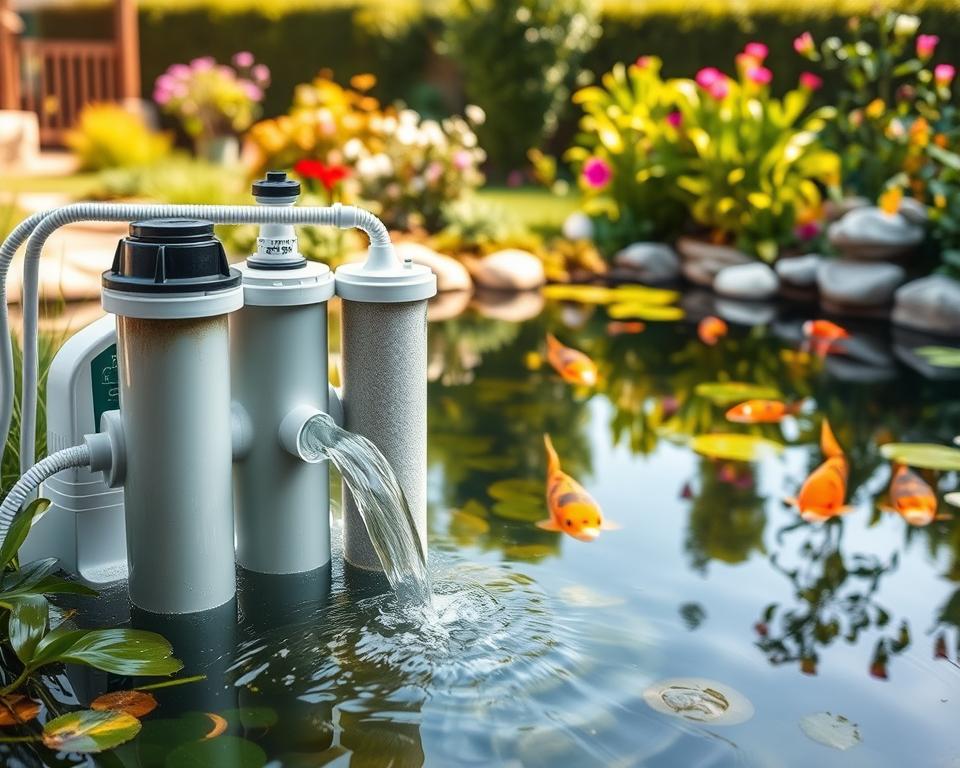
By sticking to these maintenance steps, you can lower algae risk. Your pond will stay healthy and beautiful.
Choosing the Right Equipment for Pond Care
Effective pond management starts with the right equipment. As a pond owner, I know how important it is to have the right tools. These tools help keep your pond healthy and vibrant.
Filters and Aerators
Filters and aerators are key for pond care. They work together to keep water quality high and oxygen levels right for fish and plants. Filters remove debris and nutrients that cause algae. Aerators add oxygen, helping the ecosystem stay balanced.
- Mechanical filters: Good for removing solid particles.
- Biological filters: Support beneficial bacteria that break down waste.
- Aerators: Include fountains and diffusers that boost oxygen levels.
Ultraviolet Clarifiers
Ultraviolet (UV) clarifiers are also important. They use UV light to stop algae from growing. This makes the water clearer and reduces algae.
When picking a UV clarifier, think about your pond’s size and needs.
Algae Control Products
For specific algae control, there are many products. Algae Control Products can be helpful, but they must be safe for your pond’s ecosystem.
Some Best Algae Control Methods include:
- Using algaecides carefully to protect other aquatic life.
- Trying natural methods, like barley straw, to reduce algae.
- Looking at Algae Control for Aquariums products, which work for ponds too.
By picking the right equipment and using it well, you can keep your pond healthy and algae-free. Regular care and checks are vital for your pond’s long-term health.
Seasonal Strategies for Algae Prevention
To keep your pond algae-free, you need to know how seasons affect algae growth. As a pond owner, it’s key to adjust your care routine with the seasons. This helps in keeping algae at bay.
Spring Preparation
Spring is when you should get your pond ready for the growing season. Start by cleaning out winter debris. This means removing dead leaves and plants and checking your filtration system.
Introduce beneficial bacteria to balance your pond’s ecosystem. This helps prevent algae blooms.
Summer Maintenance
Summer brings warmer temperatures and more sunlight, making your pond more prone to algae. Check your pond’s water quality often and do partial water changes when needed. Use natural algae control methods like barley straw to stop algae.
Also, make sure your pond has enough aeration. This keeps the water oxygenated.
Fall Cleanup Techniques
As fall comes, get your pond ready for winter. Remove fallen leaves and debris to stop them from decomposing and causing algae. Use a pond net to catch leaves before they fall in.
Also, check your pond equipment for winter readiness. Do any needed maintenance tasks.
By following these seasonal tips, you can keep your pond algae-free all year. Use DIY algae control methods and stay on top of maintenance. This way, you’ll have a healthy, vibrant pond environment.
Understanding Algal Toxins and Their Effects
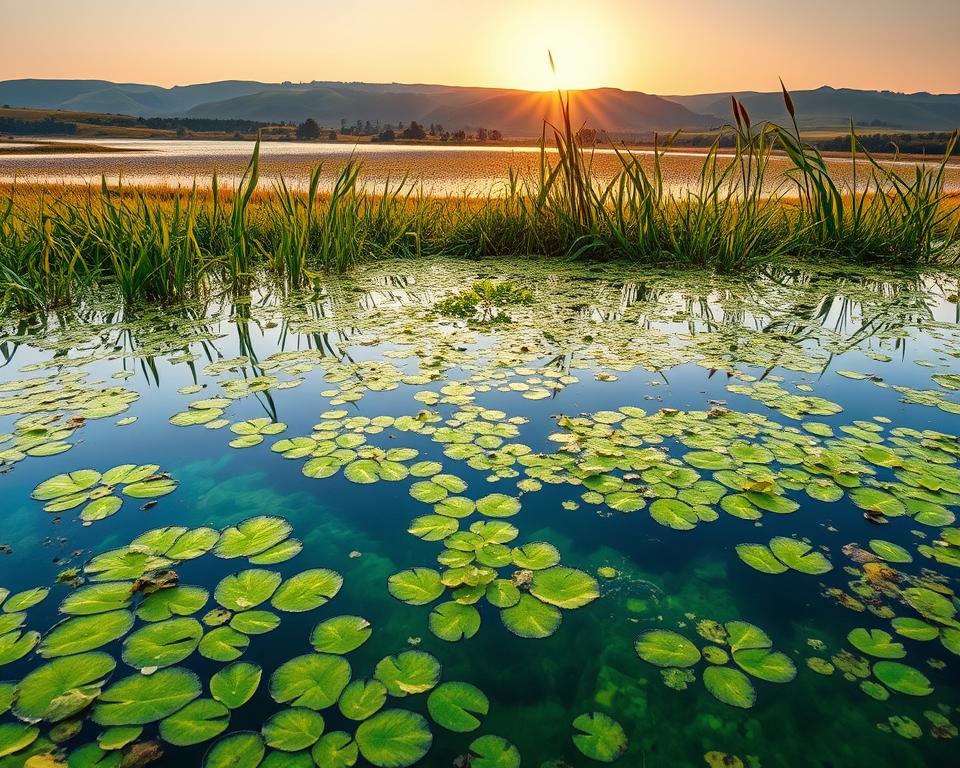
It’s important to know about algal toxins to keep pets and wildlife safe near your pond. These toxins come from certain algae that grow in ponds, often when it’s warm and there’s lots of nutrients.
How Algal Toxins Develop
Algal toxins form when algae blooms release harmful compounds. These can hurt aquatic life, pets, and people if they touch or eat contaminated water. Too many nutrients in the pond, like from fertilizers or decaying plants, can cause these toxins to grow.
Nutrient imbalance is a big reason for algal blooms. Too much nitrogen and phosphorus in the water makes algae grow, leading to toxins.
Risks to Pets and Wildlife
Pets and wildlife are at high risk from algal toxins because they might drink from or swim in bad ponds. If they eat these toxins, they could get sick, have liver problems, or even die.
To lower risks, keep pets away from algae-filled ponds and teach others about the dangers. Watch your pond closely and use easy algae control methods to cut down toxin risks.
Safe Practices to Follow
To keep your pond safe, follow these steps:
- Check your pond often for algae blooms.
- Use algae treatment like algaecides or beneficial bacteria to fight algae.
- Keep the ecosystem balanced with good water flow and air.
- Use pond-safe fertilizers and cut down on runoff.
By understanding algal toxins and managing algae, you can make your pond a safer, healthier place for everyone.
Community Resources for Pond Owners
Pond owners have many community resources to help with algae and water quality. As someone who owns a pond, I know how important it is to have the right help. It makes a big difference in keeping your pond healthy.
Local Experts and Services
Local experts and services are very valuable for pond owners. They can give advice and solutions that fit your pond’s needs. For example, they can help with water testing, algae control, and maintenance.
When looking for local experts, ask other pond owners for recommendations. You can also check online reviews to find good services. Some companies even offer DIY algae control tips for those who like to do things themselves.
| Service | Description | Benefits |
|---|---|---|
| Water Testing | Analysis of pond water quality | Identifies nutrient imbalances and other issues |
| Algae Control | Methods to reduce algae growth | Improves water clarity and aquatic life |
| Pond Maintenance | Regular cleaning and upkeep | Prevents debris buildup and maintains ecosystem balance |
Online Forums and Support Networks
Online forums and support networks are also very helpful. They let people share experiences and get advice from others. Websites and social media groups focused on pond care offer lots of information on algae control for aquariums and ponds.
“Joining a pond owners’ group was one of the best decisions I made. The advice and support I’ve received have been invaluable in managing my pond.” – Jane Doe, Pond Owner
Educational Programs
Educational programs and workshops are great for pond owners. They cover topics from basic maintenance to advanced algae management. Local colleges, extension offices, and gardening clubs often offer these programs.
By using these resources, pond owners can learn and get the support they need. Whether it’s through local experts, online forums, or educational programs, there’s a lot of help out there. It can make a big difference in your pond care journey.
Success Stories: Transforming Algae-Infested Ponds
I’ve seen how algae control can change a pond. Many pond owners have made their ponds clear and vibrant again. They used easy algae control methods to do it.
Before and After Examples
One pond was once covered in algae. But after a algae removal plan, it became clear and thriving. The plan included a UV clarifier and beneficial plants.
Another pond owner fought algae blooms every summer. They started a regular maintenance routine. This included algae prevention like checking water quality and using proper filtration. Now, their pond is algae-free all year.
Testimonials from Pond Owners
Pond owners who beat algae share their stories. “I was amazed at how quickly my pond cleared up,” says one. They used algae control products and natural methods.
Another owner says, “The advice on easy algae control was key. Now, my pond is a beautiful part of my garden, full of life and no algae.”
Lessons Learned
Success stories teach us a lot. First, algae prevention is key. Regular checks and upkeep stop algae before it starts.
Second, mixing methods works best. Natural solutions like plants and mechanical or chemical treatments can help.
Lastly, be patient and persistent. Changing an algae-filled pond takes time and effort. But with the right approach and easy algae control, it’s possible.
Your Next Steps for Algae-Free Water
Now you know why algae grows too much and how to stop it. It’s time to act. To have clear water, start by checking your pond’s health.
Pond Assessment
First, look at your pond’s water quality. Check for nutrient imbalances and the health of your aquatic life. This will show you what needs fixing.
Customized Plan
Make a plan that includes natural ways to control algae. You can add beneficial plants or try DIY methods. Also, think about using Algae Control Products to help.
Regular Maintenance
Keep up with regular care like cleaning and water checks. Good filtration is key. This keeps algae away and keeps your pond balanced.
Follow these steps and care for your pond well. Soon, you’ll have a vibrant, algae-free pond. Start today and enjoy a healthy aquatic ecosystem.