
As an aquarium enthusiast, I’ve found that adding low maintenance floating plants can be a game-changer. They not only make your tank look better but also help your fish and plants thrive.
Adding easy floating plants to your tank is very rewarding. They keep the water clean and give fish a safe place to hide. This makes them a great choice for any aquarium.
Key Takeaways
- Easy floating plants enhance the natural beauty of your aquarium.
- They are low maintenance and perfect for beginners.
- These plants help in maintaining good water quality.
- They provide shelter and reduce stress for aquatic life.
- Incorporating them into your tank is a simple process.
Benefits of Floating Plants in Aquariums
Floating plants in aquariums offer many benefits. They improve the look and water quality. These plants are not just pretty; they help create a healthy ecosystem.
Enhancing Aesthetics
Floating plants make aquariums look natural and beautiful. They come in different shapes and sizes. This lets owners create a unique underwater scene.
John H. Steele, a renowned aquarium expert, once said,
“The right plants can transform an aquarium into a breathtaking display of nature.”
Adding floating plants makes the tank more attractive. It makes watching the tank more fun and engaging.
Improving Water Quality
Floating plants help keep the water clean. They soak up extra nutrients like nitrates and phosphates. This stops algae from growing and keeps the tank balanced.
In my own tank, I’ve seen how floating plants cut down on water changes. This makes caring for the tank easier and more efficient.
Providing Shelter for Fish
Floating plants give fish places to hide and feel safe. This is great for shy or breeding fish. They need quiet spots to do well.
By adding floating plants, owners create a natural home for their fish. This helps keep the fish healthy and happy.
In summary, floating plants are great for aquariums. They improve health, look, and overall well-being. They’re perfect for better water quality, fish shelter, or adding beauty to your tank.
Top Easy Floating Plants for Beginners
Starting with aquarium-keeping? Easy floating plants make your tank look great and are easy to care for. They’re perfect for beginners because they need little upkeep and grow well in many conditions.
Water Lettuce
Water Lettuce is loved by many for its unique look and simple care. It floats on the water’s surface, giving shade and shelter to fish. It’s great for beginners because it’s tough and can handle different water conditions.
Duckweed
Duckweed is a fast-growing floating plant perfect for beginners. It quickly absorbs extra nutrients, improving water quality. It’s also a good food source for many fish.
Frogbit
Frogbit is a floating plant that’s easy to care for and adds beauty to your aquarium. Its small, rounded leaves float on the water’s surface, giving fish a place to hide. It’s low maintenance and grows well in various light conditions.
These easy floating plants are great for beginners. They improve water quality, provide shelter for fish, and make your aquarium look better. Adding these plants helps create a balanced and thriving ecosystem in your aquarium.
How to Care for Floating Plants
To keep your floating plants thriving, it’s essential to understand their care requirements. Caring for these plants involves providing the right conditions and regular maintenance.
Light Requirements
Floating plants generally require moderate to high light levels. Water Lettuce and Duckweed are examples of plants that thrive in bright conditions. On the other hand, some plants like Frogbit can tolerate lower light levels. It’s important to research the specific light needs of your floating plants to ensure they receive the right amount.
Nutrient Needs
Floating plants obtain their nutrients directly from the water. They require a balanced mix of macro and micronutrients. Regular water changes and the use of a balanced fertilizer can help maintain optimal nutrient levels. It’s also important to monitor the water quality to prevent nutrient deficiencies or excesses.
Pruning and Maintenance
Regular pruning is necessary to keep floating plants healthy and prevent overcrowding. Remove any dead or dying leaves, and thin out the plants as needed. This not only maintains the aesthetic appeal of your aquarium but also ensures the health of your plants and fish.
By following these care guidelines, you can enjoy the benefits of having floating plants in your aquarium. These benefits include improved water quality and a more natural environment for your fish.
Ideal Conditions for Floating Plants
To keep floating plants healthy, it’s essential to maintain ideal aquarium conditions. Floating plants are a wonderful addition to any aquarium. They provide numerous benefits for the aquatic environment.
Water Temperature
Most floating plants thrive in temperatures between 72-82°F (22-28°C). Keeping a stable temperature within this range is key for their growth and survival.
pH Levels
The ideal pH range for floating plants is typically between 6.5 and 8.5. It’s important to monitor pH levels regularly. This ensures they stay within this range, as big changes can harm the plants.
Tank Size Requirements
A tank size of at least 10 gallons is generally recommended for most floating plants. This size gives enough space for the plants to grow and spread out. It also helps maintain stable water conditions.
Here’s a summary of the ideal conditions for floating plants in a tabular format:
| Condition | Ideal Range |
|---|---|
| Water Temperature | 72-82°F (22-28°C) |
| pH Levels | 6.5-8.5 |
| Tank Size | At least 10 gallons |
By maintaining these ideal conditions, you can create a thriving environment for your floating plants. This enhances the overall health and aesthetic appeal of your aquarium.
How to Introduce Floating Plants to Your Aquarium
Introducing low maintenance floating plants to your aquarium needs careful planning. Make sure your tank is ready for these plants before adding them.
Preparation Steps
To add low maintenance floating plants successfully, first check if your tank is cycled and stable. This is important to ensure the water is good for both your fish and the plants.
Then, look over the plants for any damage or disease. Rinse them in a separate tank water container to remove pests or debris.
Placement Strategies
When your floating pond plants are ready, place them on the water’s surface. Be careful not to overcrowd the tank. Too many plants can cause poor water flow and competition for nutrients.
Start with a few plants and watch how they grow and fit into your tank’s ecosystem. This way, you can make changes as needed.
By following these steps, you can create a great home for your beginner-friendly floating plants. Enjoy the benefits they bring to your aquarium.
Common Floating Plant Problems
Floating plants can make your aquarium look great and keep it healthy. But, they can face problems that need fixing. Knowing these common issues helps keep your plants happy and healthy.
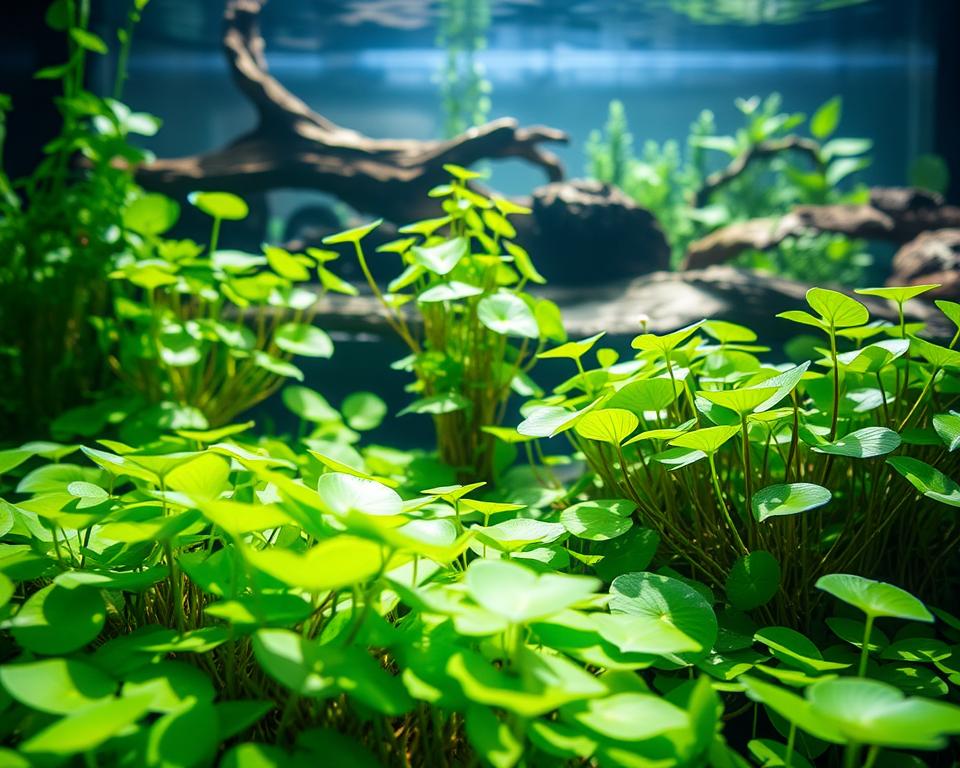
Yellowing Leaves
Yellow leaves on floating plants often mean they need more nutrients or light. To fix this, fertilize your aquarium right and make sure plants get enough light. Check your tank’s nutrients and adjust the light if needed.
Overcrowding Issues
Too many floating plants can harm your aquarium. They can block light and create dead spots. To avoid this, thin out your plants regularly. This lets all plants get enough light and keeps your tank balanced.
Pest Infestations
Pests like snails or insects can harm your plants. To fight pests, check your plants often and act fast if you see any. Quarantine new plants before adding them to your tank to stop pests.
Knowing about these problems and acting early can help your best floating plants thrive. Whether you’re new or experienced, caring for your plants is key. With the right care, your top floating plants for aquariums will add beauty and life to your tank.
Tips for Successful Growth of Floating Plants
To grow floating plants well, follow a few key steps. These tips will help your easy floating plants thrive.
Regular Monitoring
Checking your plants daily is vital. Look for signs of stress or disease. Watch for yellow leaves, too much algae, or pests.
Also, keep an eye on your aquarium’s overall health. Check water quality, light, and plant-fish balance. For low maintenance floating plants, just observe their color and growth.
Fertilization Tips
Fertilizing your plants is important. They get nutrients from the water. Use a balanced fertilizer with micronutrients like iron and potassium.
| Nutrient | Recommended Level |
|---|---|
| Nitrogen | 10-20 ppm |
| Phosphorus | 0.5-1.5 ppm |
| Potassium | 10-20 ppm |
For more info on fertilizing plants, check The Shrimp Farm’s Ultimate Guide.
Using CO2 Systems
Adding a CO2 system boosts your plants’ growth. CO2 helps with photosynthesis, leading to healthier plants.
“CO2 supplementation is beneficial for densely planted aquariums or those with high-light conditions.” – Aquarium Expert
Use a CO2 monitor to avoid too much CO2. This can harm your fish. Adjust your system to keep CO2 levels right.
By following these tips, you can enjoy the benefits of floating aquatic plants. They improve water quality and look great.
Pairing Floating Plants with Other Aquarium Plants
Pairing floating plants with other aquatic plants can really enhance your aquarium. It adds beauty and creates a balanced ecosystem.
Creating a Balanced Ecosystem
To achieve a balanced ecosystem, pick floating plants that match your aquarium plants. Water Lettuce and Duckweed are great because they provide shade and keep water quality good. Make sure your substrate plants like Java Moss or Anubias get the right light and nutrients.
- Choose plants with similar lighting needs.
- Select plants that have complementary nutrient requirements.
- Consider the mature size of the plants to avoid overcrowding.
Compatibility with Substrate Plants
Pairing floating plants with substrate plants like Java Fern or Cryptocorynes adds depth and variety. The top floating plants for aquariums, such as Frogbit and Water Hyacinth, work well with these plants. Floating pond plants also help keep water quality good and provide fish shelter.
- Start by introducing floating plants gradually to prevent stressing your fish.
- Monitor the growth of both floating and substrate plants to maintain a balance.
- Adjust lighting and nutrients as needed to support the health of all plants.
By carefully choosing and pairing floating plants with other aquarium plants, you can create a stunning, balanced, and healthy aquatic environment.
Floating Plants for Different Types of Aquariums
Floating plants are great for any aquarium, from Betta fish tanks to community tanks. They look good and help the fish and plants in your tank.
Freshwater Aquariums
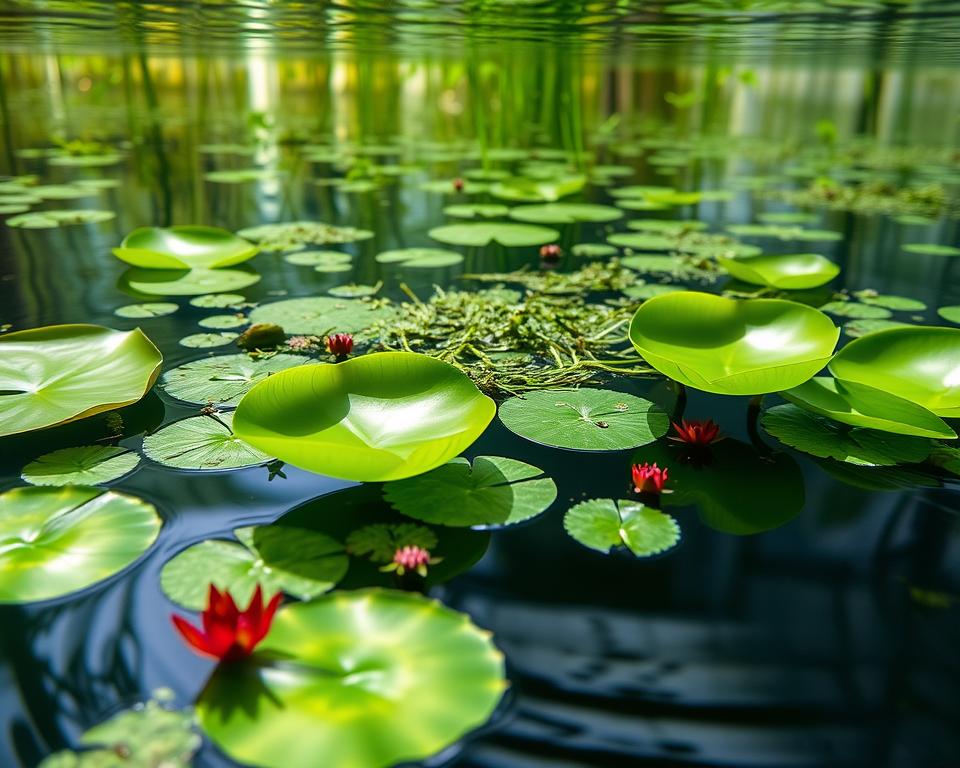
Floating plants do well in freshwater aquariums. Plants like Water Lettuce and Duckweed are perfect for beginners. They clean the water by taking in extra nutrients.
These plants also give shade, which stops algae from growing. They provide hiding spots for fish, making them less stressed and happier.
Betta Fish Tanks
Betta fish tanks are perfect for floating plants too. Plants like Frogbit give Betta fish places to hide and rest. The plant’s roots also clean the water by removing waste.
It’s important to pick plants that fit well with Betta fish. Avoid plants with sharp edges or that might catch the fish. Frogbit is a good choice because it’s safe for the fish and easy to take care of.
Community Tanks
Community tanks, with many fish species, also benefit from floating plants. These plants help create a balanced ecosystem. They provide food and shelter for the fish and make the tank look natural and colorful.
When picking floating plants for a community tank, think about the plants’ and fish’s needs. Easy-to-care-for plants like Duckweed or Water Lettuce are great. They’re flexible and offer many benefits.
The Role of Floating Plants in Fish Breeding
In my experience, adding floating aquatic plants to breeding tanks boosts fry survival rates. These plants are not just pretty; they play key roles in breeding.
Providing Shelter for Fry
Top floating plants for aquariums offer fry a safe place to hide. Their dense leaves protect the fry from bigger fish that might eat them. This protection is vital for the fry to grow safely.
Contributing to Natural Habitat
Best floating plants help make a natural habitat in the tank. They reduce stress in breeding fish, making them healthier. These plants also encourage natural behaviors like foraging and hiding, which are good for the fish.
Adding floating plants to your breeding tank makes it better for your fish. They make the tank look good and help fish breed successfully.
Floating Plants and Algae Control
Low maintenance floating plants are key to a balanced aquarium. They help control algae, making the tank healthier for fish.
These plants compete with algae for nutrients. Algae need nutrients to grow, and floating plants take them away. This limits algae growth.
How They Compete for Nutrients
Floating plants soak up nutrients like nitrogen and phosphorus from the water. This starves algae and keeps the tank clean.
Nutrient Absorption: Easy floating plants are great at taking in excess nutrients. This reduces algae blooms.
Natural Algae Suppressants
Some floating plants also release chemicals that stop algae from growing. For example, duckweed can harm algae, helping control it.
Creating a Balanced Ecosystem: Mixing floating plants with other algae-control methods makes a strong defense against algae.
| Floating Plant | Nutrient Absorption | Allelopathic Effects |
|---|---|---|
| Water Lettuce | High | Moderate |
| Duckweed | Very High | Strong |
| Frogbit | High | Moderate |
Conclusion: Why Floating Plants are a Must-Have
Floating plants are a simple yet effective way to enhance your aquarium’s ecosystem. By adding beginner-friendly floating plants like Water Lettuce or Duckweed, you can create a thriving environment. This environment benefits both you and your fish.
Key Benefits Recap
These best floating plants not only add visual appeal but also play a key role in maintaining water quality. They provide shelter for your fish. By understanding their needs and how to care for them, you can enjoy the many benefits they offer.
Experiment with Floating Water Plants
I encourage you to try out different types of floating water plants and observe the positive impact they can have on your aquarium. With their numerous benefits and relatively low maintenance, it’s no wonder why floating plants are a popular choice among aquarium enthusiasts.