

Did you know that Anubias plants are among the most popular choices for aquariums? They are loved for their ease of maintenance and beauty.
Starting with these plants might seem hard, but with the right help, you can have beautiful aquatic flora at home.
In this guide, I’ll show you how to care for your Anubias. We’ll cover everything from the best growing conditions to how to multiply them.
Key Takeaways
- Understand the ideal growing conditions for Anubias plants.
- Learn how to propagate Anubias effectively.
- Discover the importance of proper lighting and nutrition.
- Identify common mistakes to avoid in Anubias care.
- Explore tips for maintaining healthy Anubias plants.
Introduction to Anubias Plants
Anubias plants come from Africa and thrive in many water environments. They are loved by aquarium fans for their toughness and flexibility. This makes them great for many different tank setups.
What are Anubias Plants?
Anubias plants are a type of water plant in the Araceae family. They have strong leaves and do well in dim light. This makes them perfect for tanks with little light.
Some key traits of Anubias plants include:
- Robust leaves that can withstand minor damage
- Ability to grow in low-light conditions
- Adaptability to various water parameters
Common Varieties of Anubias
There are many Anubias plant types, each with its own look. Some popular ones are:
- Anubias barteri: Known for its broad leaves and robust growth
- Anubias nana: A compact variety suitable for smaller aquariums
- Anubias coffeaefolia: Characterized by its coffee-like leaves
These varieties can make your aquarium look amazing. Knowing about different Anubias plants helps you pick the right ones for your tank.
Ideal Growing Conditions for Anubias
To keep your Anubias thriving, it’s essential to understand their ideal growing conditions. Creating the right environment involves several key factors. These factors contribute to the overall health and growth of these plants.
Water Temperature and Quality
Anubias plants prefer water temperatures between 72°F and 82°F (22°C to 28°C). This makes them suitable for most community aquariums. Keeping the water clean is also key. Regular water changes and a reliable filtration system help prevent toxin buildup.
It’s also important to monitor water parameters. This ensures they are within the acceptable range for Anubias. Keep an eye on ammonia, nitrite, and nitrate levels. High concentrations can be harmful.
Lighting Requirements
Anubias are known for thriving in low-light conditions. They are an excellent choice for aquariums with limited lighting. Yet, they need some light to photosynthesize and grow. Low to moderate lighting is ideal, as high-intensity lighting can lead to algae growth on the leaves.
Using fluorescent or LED lighting can provide the necessary spectrum for Anubias. It’s also beneficial to have a lighting schedule that mimics natural day-night cycles.
Substrate Choices
While Anubias can grow in various substrates, they do best in nutrient-rich substrates that support root growth. A substrate with a mix of sand, soil, and other nutrients can provide the necessary nutrients for healthy root development.
It’s worth noting that Anubias can also be grown attached to rocks or driftwood. This method can help prevent root rot by keeping the rhizome above the substrate. It also adds a natural aesthetic to the aquarium.
By focusing on these ideal growing conditions, you can create a thriving environment for your Anubias. This ensures they remain healthy and continue to be a beautiful addition to your aquarium.
Planting Anubias: Step-by-Step
To make sure your Anubias does well, you need to plant it right. Planting Anubias needs care and a soft touch to avoid harming the plant.
Preparing the Plant
Before you start, check your Anubias for any bad leaves. Take out any unhealthy leaves to stop disease and help it grow. Rinse the roots under water to get rid of dirt.
It’s smart to trim the roots a bit if they’re too long or twisted. This makes it easier for the plant to settle into the substrate.
Planting Techniques
You can plant Anubias in the substrate or attach it to something like a rock or driftwood.
- To plant in the substrate, gently put the roots in, making sure the rhizome is not covered.
- To attach to a decoration, use a thread or non-toxic glue to hold it until it roots itself.
Placement in the Aquarium
Where you put Anubias in your tank depends on what you want your tank to look like and what the plant needs. Anubias likes shaded spots, so pick a place that’s not too bright.
| Placement Consideration | Benefit |
|---|---|
| Near a cave or behind a decoration | Provides shade, reducing algae growth |
| Attached to driftwood or rocks | Creates a natural, visually appealing arrangement |
| In the background | Allows for a layered aquascape effect |
By following these steps and thinking about what your Anubias needs, you can make a great place for it to grow and thrive.
Anubias Fertilization Basics
To keep your Anubias thriving, understanding fertilization basics is key. Fertilization gives essential nutrients for healthy growth and development.
Why Fertilize Anubias?
Fertilizing your Anubias is vital. It supplements the nutrients in the aquarium, ensuring your plants get a balanced diet. Without enough fertilization, Anubias may lack nutrients, leading to poor growth or discoloration.
Nutrient deficiencies can show in many ways, including:
- Yellowing or pale leaves
- Slow or stunted growth
- Weak or spindly stems
Types of Fertilizers to Use
There are many fertilizers for aquarium plants like Anubias. The best ones offer a wide range of nutrients.
Common types of fertilizers include:
- Liquid fertilizers
- Root tabs
- Substrate fertilizers
How to Fertilize Anubias Properly
Proper fertilization is more than just picking the right fertilizer. It also means considering dosage and how often to apply.
To fertilize your Anubias well:
- Follow the manufacturer’s instructions for dosage
- Watch how your plants respond and adjust as needed
- Avoid over-fertilizing, which can harm your plants and aquatic life
Water Parameters for Anubias Health
To keep your Anubias thriving, it’s essential to understand the ideal water conditions. Maintaining the right water parameters is key for your Anubias plants’ health and well-being.
Anubias plants are adaptable but need specific conditions to flourish. One critical factor is achieving optimal pH levels. Most Anubias species prefer a slightly acidic to neutral pH, between 6.0 and 7.5. This range helps promote healthy growth and prevents stress to the plant.
Optimal pH Levels
Maintaining the optimal pH is vital because it affects the plant’s ability to absorb nutrients. If the pH is too high or too low, it can lead to nutrient deficiencies, impacting the plant’s health. Regularly monitoring the pH levels and making adjustments as necessary is key to creating a conducive environment for your Anubias.
Importance of Hardness and Acidity
Water hardness and acidity are also important factors in Anubias care. While Anubias can adapt to a range of water hardness levels, they generally thrive in moderately soft to moderately hard water. Extreme hardness or softness can affect the plant’s growth and overall health. Maintaining stable acidity levels helps prevent sudden changes that could stress the plant.
To ensure the best conditions for your Anubias, it’s recommended to regularly test the water parameters and make adjustments as needed. This proactive approach will help maintain a stable environment, promoting healthy growth and longevity for your Anubias plants.
Common Anubias Pests and Diseases
Understanding Anubias care means knowing about pests and diseases. As an aquarist, being ready to face these issues is key. It helps keep your Anubias healthy.
Recognizing Pests
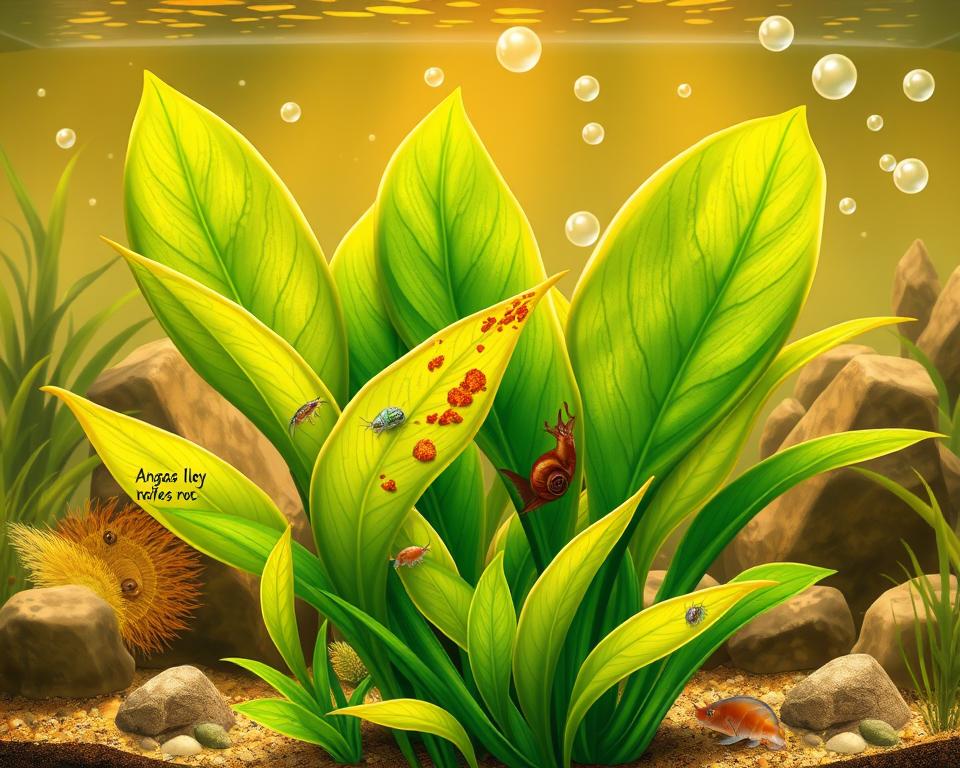
Anubias plants face many pests like snails, algae, and insects. It’s important to check your plants often. Look for signs like:
- Holes or tears in the leaves
- Visible snails or eggs on the leaves
- Algal growth on the leaves or substrate
For more on fighting bugs on Anubias, check this resource.
Dealing with Diseases
Diseases in Anubias come from bacteria, fungi, or viruses. Look out for signs like discoloration, rot, or weird growth. To fight diseases, do the following:
- Keep water quality high with regular changes
- Don’t overcrowd plants to stop disease spread
- Quarantine sick plants to protect others
By following these Anubias care best practices, you can keep pests and diseases away. This ensures your plants stay healthy and flourish in your aquarium.
Pruning and Trimming Anubias
Anubias plants need regular care, like pruning and trimming, to grow well. Knowing when and how to prune is key for their health and look. This is part of your Anubias Maintenance Guide.
Pruning is more than just cutting back plants. It keeps them healthy and helps them grow. It also stops disease from spreading.
Timing for Pruning
When to prune your Anubias depends on its growth. Prune when you see dead or dying leaves. This means the plant is stressed or sick.
Prune during the plant’s active growth phase. This is usually in spring or early summer. It helps the plant recover fast.
- Check your Anubias often for decay or disease.
- Remove dead or dying leaves to stop infection.
- Use sharp, clean tools to avoid harming the plant.
Techniques for Effective Trimming
Trimming Anubias needs care to avoid harming the rhizome or roots. Focus on removing too much leaf growth or shaping the plant.
Good trimming techniques include:
- Cut back tall stems for bushy growth.
- Take off lower leaves that are buried or shaded.
- Shape the plant to look natural.
Here’s a table with key points for pruning and trimming Anubias:
| Task | Timing | Technique |
|---|---|---|
| Pruning Dead Leaves | Anytime | Cut at the base |
| Trimming Excess Growth | During active growth phase | Cut back to desired shape |
| Shaping the Plant | As needed | Trim to enhance appearance |
By following these tips, you can keep your Anubias healthy and beautiful. Regular pruning and trimming are key parts of your Anubias Maintenance Guide. They help your plants thrive.
Anubias in Aquascaping
Aquascaping with Anubias can turn your aquarium into a stunning underwater world. Anubias plants are both beautiful and versatile. They’re perfect for creating amazing aquascapes.
Designing with Anubias
Designing with Anubias means knowing how it grows and how to use it. Anubias plants grow slowly. This makes them great for lasting designs.
- Use Anubias as a focal point or background plant.
- Combine Anubias with other plants to create texture and depth.
- Place Anubias in areas where you want to draw attention.
Complementary Plants for Anubias
Choosing the right plants to go with Anubias can make your aquascape look even better. Some good plants to pair with Anubias are:
- Java Moss
- Amazon Swords
- Cryptocorynes
| Plant | Growth Rate | Lighting Needs |
|---|---|---|
| Java Moss | Slow | Low |
| Amazon Swords | Medium | Medium |
| Cryptocorynes | Slow to Medium | Low to Medium |
Propagation Techniques for Anubias
Are you ready to grow more Anubias plants? I’ll show you how. Propagating Anubias is a fun way to share plants or grow more for your tank. With the right steps, you can make your tank look even greener and more interesting.
Cutting Method
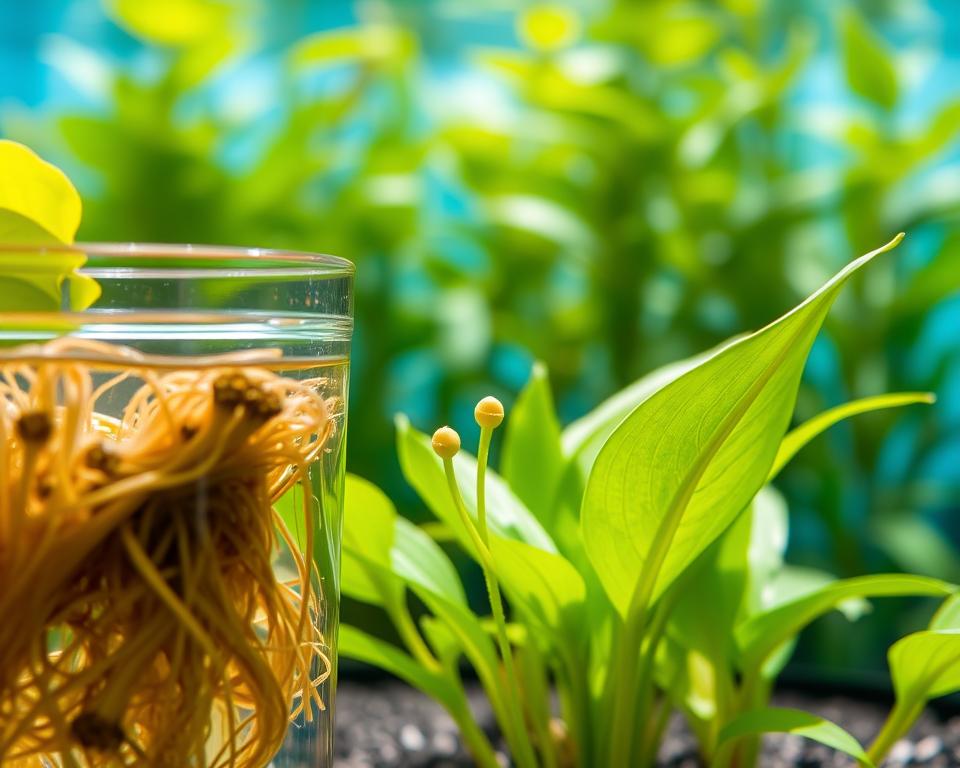
The cutting method is a popular way to grow Anubias. You’ll need a sharp, clean tool to cut a healthy leaf or rhizome from the mother plant. Make clean cuts just above a node to help new growth.
After cutting, you can plant it right away or grow roots in a separate container. Make sure the cutting is secure and not too deep to avoid rot. With the right care, your cutting will grow into a new plant.
Division Method
The division method is great for big Anubias plants. It’s for when plants outgrow their pots or look pot-bound. To divide, gently remove the plant from the soil, being careful with the roots. Then, separate the rhizome into sections with leaves and a bit of rhizome.
Plant the sections in good soil and follow Anubias Care Tips. Over time, these sections will become new plants. You can grow more for your tank or share them with friends.
Learning these propagation methods will let you enjoy more Anubias in your tank. Whether you use the cutting or division method, these steps will help you succeed.
FAQs About Anubias Care
Caring for Anubias is easy, but many people have questions. We’ll answer some common ones to help you care for your Anubias plants well.
How Often Should I Water My Anubias?
Anubias plants live in water and don’t need to be watered like plants on land. Instead, keep the water clean and flowing well. Change the water often and keep the water quality right for Anubias.
Can Anubias Grow without Soil?
Yes, Anubias can grow without soil. They’re great for aquariums because they can do well attached to rocks or driftwood. Just make sure the rhizome isn’t buried to avoid rot.
Knowing how to care for Anubias is key to a healthy aquarium. By understanding these basics, you can enjoy your Anubias plants for a long time.
Troubleshooting Anubias Care Issues
When caring for Anubias, you might face some common problems. Issues like leaf discoloration or slow growth can happen. But knowing the causes and solutions can help fix these problems.
Anubias plants are tough but need specific conditions to grow well. By following Anubias Care Best Practices, you can avoid many issues. Let’s look at some common problems and how to solve them.
Leaf Discoloration
Leaf discoloration is a common problem in Anubias care. It often means there’s an issue with the plant’s environment. “The health of your Anubias is directly reflected in the color of its leaves,” say aquatic experts. Yellow or brown leaves can mean too much light, not enough nutrients, or poor water quality.
To fix leaf discoloration, first check your aquarium’s lighting. Anubias likes low to moderate light. If your lights are too strong, try reducing the time or intensity. Also, make sure your water is right for Anubias, and add needed nutrients.
Slow Growth Concerns
Slow growth in Anubias can be a worry, but it’s often easy to fix. An effective Anubias Maintenance Guide includes watching your plant’s growth and making changes as needed.
One reason for slow growth is not enough nutrients. Anubias needs regular fertilization, like iron and potassium. Make sure you’re using a balanced fertilizer for your plants.
Also, check the plant’s rhizome. If it’s buried, it can rot and slow growth or kill the plant. Keep the rhizome above the substrate to avoid this.
By using these tips and sticking to Anubias Care Best Practices, you can solve common problems. This will help your plants thrive in your aquarium.
Conclusion: Mastering Anubias Care
Caring for Anubias plants can be very rewarding. It makes your aquarium look beautiful and keeps your plants healthy. By following the Anubias Care Guide in this article, you’re on the right path to a thriving aquarium.
Key Takeaways
We’ve talked about the best conditions for Anubias, like water temperature and quality, and lighting. We also covered the importance of the right substrate, fertilization, pruning, and propagation. Mastering these will help you enjoy the many benefits of these plants.
Continuing Your Aquatic Journey
Remember, caring for Anubias is just the start. With patience and the right guidance, you can make a stunning aquarium. It will bring joy and peace to your life.