

Did you know over 12 million households in the United States have an aquarium? With so many fish species to pick from, choosing the right ones can be tough, even for new aquarists.
If you’re new to aquariums, you’re likely excited to fill your tank with ideal fish. These fish should be easy to care for and do well in a home setting. In this article, I’ll show you the top 10 beginner-friendly fish for your new aquarium.
These fish species are not only simple to care for but also fun to watch. I’ll share my knowledge to help you pick the best fish for your tank.
Key Takeaways
- Top 10 fish species suitable for new aquarists
- Characteristics of ideal fish for beginners
- Tips for creating a thriving aquarium
- Common mistakes to avoid when stocking your tank
- How to choose the right fish for your aquarium
Why Choose Beginner Fish Species?
For new aquarists, picking beginner-friendly fish is key. These fish are easy to care for and do well in a clean aquarium.
Easy to Care For
Beginner fish are hardy and adaptable. They’re great for beginners because they need less special care. This lets new aquarists learn without worrying about losing their fish right away.
Resilient Nature
These fish can handle small changes in water. This is important for beginners who are learning about keeping water quality right. It helps them understand the need for regular tank upkeep.
Great for Learning
Starting with beginner fish is a great way to learn. It teaches about aquarium care, fish behavior, and keeping a balanced ecosystem. It’s a practical way to get ready for more complex setups later.
| Characteristics | Beginner Fish Species | Advanced Fish Species |
|---|---|---|
| Care Level | Easy | Complex |
| Hardiness | High | Variable |
| Cost | Generally Affordable | Can be Expensive |
Starting with beginner fish makes the hobby rewarding and safe. It’s a great way to learn and enjoy aquarium keeping. It also helps beginners appreciate the hobby more.
Overview of Freshwater versus Saltwater Fish
Starting your aquarium journey means choosing between freshwater or saltwater fish. This choice affects the care and equipment you’ll need for your fish.
Freshwater and saltwater fish have their own pros and cons. Knowing these differences helps create a healthy aquarium. Beginners should think about ease of care, cost, and personal preference when deciding.
Benefits of Freshwater Fish
Freshwater fish are great for beginners because they’re hardy and easy to care for. They’re also cheaper to keep than saltwater fish. Freshwater tanks don’t need the fancy filtration or temperature control that saltwater tanks do.
Popular freshwater fish for beginners include Betta fish, Neon Tetras, and Guppies. These fish are not only pretty but also easy to care for. Learn more about them in our article on navigating the waters: freshwater vs saltwater.
Advantages of Saltwater Fish
Saltwater fish are unique and exotic, attracting many aquarium lovers. They’re more challenging to care for but can be rewarding for those willing to learn. Saltwater tanks offer a wider range of species and colors, making them visually stunning.
But, saltwater tanks need advanced equipment and a good grasp of water chemistry. With the right care, saltwater fish can be a fulfilling addition to your aquarium.
The Top 10 Beginner Fish Species
Let’s explore the top 10 beginner fish species for your aquarium. These simple fish to care for are great for new aquarists. They’re a perfect start to aquarium-keeping.
Choosing fish for your beginner fish tank species is key. Look for hardiness, ease of care, and compatibility. The following species are beautiful, resilient, and easy to care for.
1. Betta Fish
Betta fish, also known as Siamese fighting fish, are a favorite for beginners. They’re low-maintenance and can do well in small tanks. But, they need a heater for warm water.
2. Neon Tetra
Neon tetras are schooling fish that brighten any aquarium. They’re easy to care for and thrive in schools of six or more. They prefer soft, slightly acidic water and lots of hiding places.
3. Guppies
Guppies are popular for beginners because of their bright colors and peaceful nature. They’re small, easy to care for, and can live in community tanks. But, they breed a lot, so be ready for more fish.
4. Zebra Danio
Zebra danios are active, hardy fish that are easy to care for. They can handle different water conditions. They’re schooling fish and should be in groups of six or more. They’re also good for community tanks with other peaceful fish.
These four species are just the start of our top 10 list. Stay tuned for the next six species. Get ready to create a thriving and diverse aquarium perfect for beginners.
Ideal Tank Setup for Beginners
Setting up your tank right is key for your fish’s health and happiness. The right setup makes aquarium keeping fun and rewarding. It ensures your fish thrive.
Tank Size and Shape
Choosing the right tank size is important. Bigger tanks are better for beginners because they are more stable. A 20-gallon tank is a good start.
The tank’s shape matters too. A longer tank is better than a tall one. It offers more space for gas exchange.
Filtration and Heating
A good filter keeps the water clean and healthy. For beginners, a hang-on-back or canister filter is a good choice. They are easy to maintain and effective.
Heating is also key, mainly for tropical fish. Most fish prefer temperatures between 76°F and 82°F. A reliable heater keeps the temperature stable.
Here is a comparison of different filtration types:
| Filtration Type | Maintenance Level | Effectiveness |
|---|---|---|
| Hang-on-Back Filter | Easy | High |
| Canister Filter | Moderate | Very High |
| Internal Filter | Easy | Moderate |
Substrate and Decoration
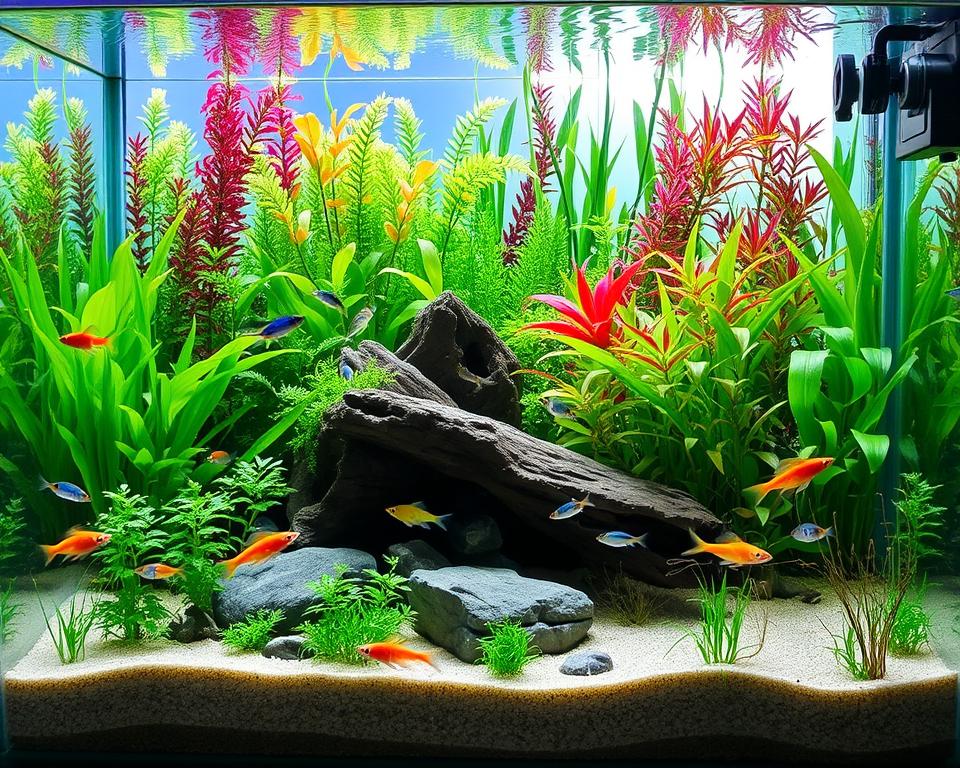
Substrate and decorations add beauty and health to your tank. For beginners, gravel or sand is a good choice. Decorations like plants, rocks, and driftwood provide hiding spots and reduce stress.
Live plants are great because they improve water quality. They absorb nutrients.
When picking decorations, remember:
- Choose safe aquarium decorations.
- Provide various hiding spots for your fish.
- Pick plants that fit your fish and tank conditions.
By focusing on these elements, you can create a beautiful and healthy aquarium. It will be a great home for your Low Maintenance Fish for Beginners.
Feeding Your Fish Properly
As a new aquarist, it’s key to know how to feed your fish right. It’s not just about giving them food. It’s about giving them the right food at the right time. Different fish need different foods, and it’s important for their health.
Best Diet for Beginner Species
Most beginner fish do well on a mix of commercial flake food, pellets, and live or frozen foods. Commercial foods have all the nutrients they need. Live or frozen foods like brine shrimp or bloodworms are great as treats.
Some fish, like betta fish, need special foods. Betta fish are meat-eaters and need a lot of protein. They do well on betta-specific pellets or flakes, and sometimes live foods.
Feeding Schedule
It’s important to have a regular feeding schedule. Most fish should eat 2-3 times a day. Only give them as much as they can eat in a few minutes. Eating too much can harm the water and the fish.
Here’s a sample feeding schedule:
| Day | Morning | Afternoon | Evening |
|---|---|---|---|
| Monday | Flake Food | Live Brine Shrimp | Flake Food |
| Tuesday | Pellets | Flake Food | Pellets |
| Wednesday | Flake Food | Live Bloodworms | Flake Food |
Common Feeding Mistakes
One big mistake is overfeeding. This can make the water bad and stress the fish. Another mistake is not changing the diet, which can cause nutritional problems.
To avoid these mistakes, learn what your fish need to eat. Watch how they react to different foods. Changing the food and schedule as needed will keep your fish healthy.
Health Considerations for New Fish Owners
Keeping your fish healthy starts with knowing the signs of illness and good water quality. As a new fish owner, it’s key to stay ahead in keeping your Beginner-Friendly Fish Species well.
Recognizing Symptoms of Illness
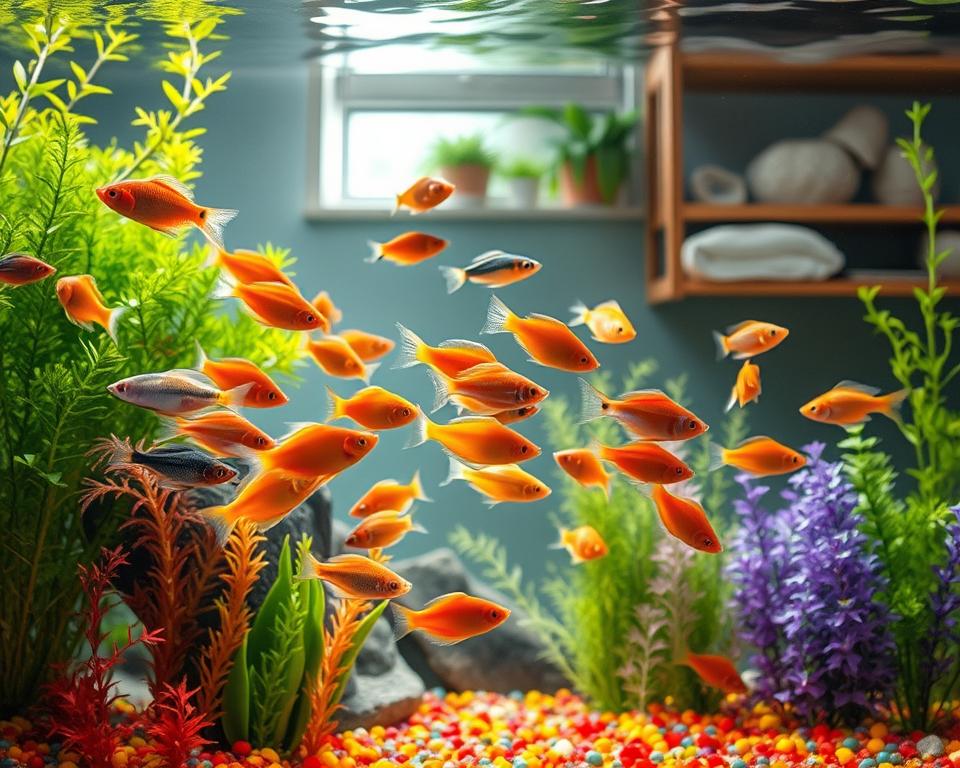
Fish show signs of illness like labored breathing, lethargy, or visible infections. Watching them closely helps spot these problems early. For example, if your easy-to-keep fish for beginners swims erratically or hides a lot, it might be sick or stressed.
Routine Maintenance and Water Quality
Good water quality is vital for your fish’s health. You need to do regular water changes, check water levels, and make sure the filter works well. Also, don’t overfeed, as it can harm water quality and stress your fish.
- Regularly test the water for ammonia, nitrite, and nitrate levels.
- Perform partial water changes (about 25% every week).
- Ensure your tank is not overcrowded, as this can lead to water quality issues.
When to Seek Professional Help
If your fish keeps showing signs of illness or you’re not sure about their health, get help. Many pet stores have experts who can help with fish health. You might also need to see a vet who knows about aquatic animals.
Social Dynamics: Fish Compatibility
Creating a peaceful aquarium starts with knowing your fish’s social behavior. Choosing the right fish can be tough for beginners. But, with the right info, you can make a great aquatic home.
Understanding Aggression
Many fish show aggression naturally. Some are territorial or competitive. Knowing these traits helps keep your aquarium peaceful.
Betta fish are aggressive and should be alone. But, Neon Tetras do well in groups. Watch for signs of aggression like fin nipping or chasing.
If you see aggression, separate the fish or change the tank layout. This can help reduce fights.
Schooling versus Solitary Fish
Some fish like to be in groups, while others prefer to be alone. Schooling fish like Zebra Danios and Guppies are fun to watch. They also do better in groups.
Solitary fish might get stressed or bored with too many tank mates. Knowing their social needs helps you decide if they should be alone or with others.
Mixing Different Species
Mixing species can make your tank more interesting. But, it needs careful thought. Consider size, temperament, and needs of each fish.
Start with the calmest fish first. Watch how they interact. Researching compatibility is key for a peaceful tank.
Understanding your fish’s social needs helps create a beautiful aquarium. Whether you have Top Fish for Novice Aquarists or exotic species, knowing their behavior is essential.
Tips for Success as a New Aquarist
Starting your aquarium journey is exciting. It’s important to begin with Simple Fish to Care for. These fish are hardy and great for learning aquarium care.
Connecting with Fellow Aquarists
Joining local aquarist groups is a great idea. These groups are full of experienced hobbyists. They love to share tips and advice on fish care.
By connecting with others, you’ll learn a lot. You’ll get tips on creating a thriving aquarium.
Leveraging Online Resources
There are also many online resources to help you. Forums, blogs, YouTube channels, and online courses are all available. They offer a lot of information on fish care and tank maintenance.
Using these resources keeps you updated on aquarium keeping. You’ll learn the latest best practices and trends.
Embracing Continuous Learning
Success as a new aquarist comes from continuous learning and trying new things. As you gain experience, you’ll improve your techniques. You’ll learn how to create the best environment for your fish.
Stay curious and open to new ideas. This will help you become a skilled aquarist.